Imagine this: You wake up one morning, a respected director on several corporate boards, only to find your career frozen solid. Your Director Identification Number (DIN) is deactivated. You’re publicly listed as ‘disqualified’ by the Ministry of Corporate Affairs. Your phone starts ringing, but they’re not calls for your expertise—they’re calls asking why you’ve been forced to vacate your board positions.
This isn’t a corporate horror story. It’s the stark, automatic reality of director disqualification under Section 164 of the Companies Act, 2013. It happens to hundreds of directors every year, often without warning.
But it doesn’t have to happen to you. In this in-depth, no-fluff guide, we’ll pull back the curtain on Section 164. You’re not just going to learn the rules; you’re going to understand the real-world risks, the devastating consequences I’ve seen play out, and most importantly, the proactive strategies to safeguard your career and reputation. Forget the dense legal jargon. Let’s talk business.
What is Director Disqualification, Really? (Beyond the Legalese)
Think of Section 164 as the corporate world’s “fit and proper” test. It’s a legal filter designed to protect companies, shareholders, and the public from individuals who are deemed unfit to hold a position of trust and authority. Its purpose is to uphold corporate governance and ensure that boardrooms are occupied by responsible, compliant, and ethical leaders.
The law creates two distinct paths to disqualification. This is the most critical distinction you need to grasp:
- Section 164(1): The Personal Fault Path. This is about you. It triggers disqualification based on your personal status, actions, or legal history, completely independent of any company’s performance.
- Section 164(2): The Company Fault Path. This is the one that catches most directors by surprise. It disqualifies you because of a major compliance failure at a company where you serve on the board—even if you weren’t directly responsible for the error.
Understanding the difference is the first step in building your defense. Let’s break them down.
The Personal Red Flags: Disqualification Under Section 164(1)
Section 164(1) is fairly straightforward. It lists specific, personal conditions that automatically bar you from being a director. These are non-negotiable red flags related to your personal integrity, solvency, and legal standing. If you tick any of these boxes, you’re out.
Here’s a clear breakdown of these personal grounds for director disqualification.
| Ground for Disqualification | What It Means in Plain English |
|---|---|
| Unsound Mind | A competent court has officially declared you mentally incapable of making rational decisions. |
| Insolvency | You are an undischarged insolvent, or you’ve applied to be declared one and the application is pending. If you can’t manage your own finances, you can’t manage a company’s. |
| Criminal Conviction | You’ve been convicted of a crime involving ‘moral turpitude’ (like fraud or theft) and sentenced to 6+ months in jail. This disqualification lasts for 5 years after your sentence ends. |
| Court/Tribunal Order | A court or the National Company Law Tribunal (NCLT) has specifically passed an order disqualifying you from being a director. |
| Unpaid Share Calls | You hold shares in a company but have failed to pay a required ‘call’ (a payment installment) for over six months. |
| Related Party Transaction Offence | You’ve been convicted for illegal dealings with related parties (under Section 188) within the last five years. This targets conflicts of interest. |
💡 Pro Tip
Before accepting any new directorship, perform due diligence on yourself. Run a quick personal check against the Section 164(1) criteria. It seems obvious, but in our experience, a pending legal issue you’ve overlooked can surface at the worst possible time. A clean slate is non-negotiable.
The Silent Career Killer: Disqualification Under Section 164(2)
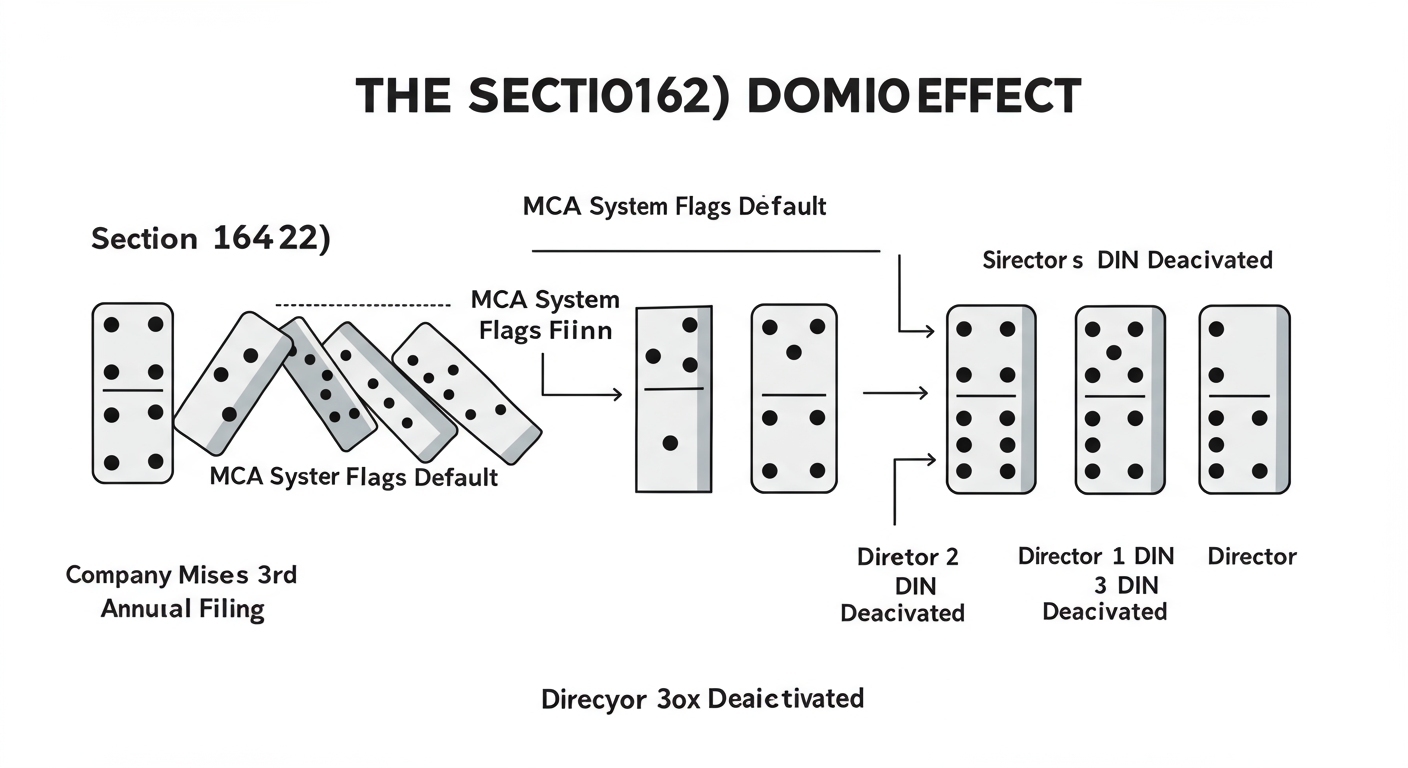
Now for the big one. Section 164(2) is the provision that causes the most widespread damage. Why? Because your fate is tied to the company’s actions. You could be the most diligent director in the world, but if one of the companies on whose board you sit commits a specific default, all the directors of that company get disqualified. Simultaneously.
It’s a form of vicarious liability that holds the entire board accountable. The law doesn’t care if you were a non-executive director who only attended four meetings a year. If you were on the board during the default period, you’re on the hook.
The triggers are surprisingly simple and devastatingly common:
- Failure to File Financials: The company has not filed its financial statements or annual returns for a continuous period of three financial years.
- Failure to Meet Financial Obligations: The company has failed to repay deposits, redeem debentures, or pay interest on them for one year or more. This also includes failing to pay a declared dividend for one year or more.
That’s it. No complex legal maneuvering. Just a simple, data-driven check by the Ministry of Corporate Affairs (MCA) system. If a company hits one of these triggers, the system automatically flags all its directors for disqualification for a period of five years.
⚠️ Watch Out
The “passive director” is a myth. Many non-executive or independent directors believe they are insulated from operational failures. Under Section 164(2), this is a dangerous assumption. The law makes no distinction. If your name is on the board list during the default period, you share the consequences. Your vigilance is your only shield.
Section 164(1) vs. 164(2): A Head-to-Head Comparison
To truly internalize the risks, you need to see the two subsections side-by-side. Their implications are vastly different, especially concerning the “vacation of office” rule under Section 167.
| Basis of Comparison | Section 164(1) (Personal Fault) | Section 164(2) (Company Fault) |
|---|---|---|
| Cause of Disqualification | Based on the individual director’s personal status or actions (e.g., insolvency, conviction). | Based on the company’s compliance failures (e.g., non-filing of returns). |
| Responsibility | Directly attributable to the person. | Vicarious liability; applies to all directors of the defaulting company. |
| Vacation of Office (Sec 167) | The director must immediately vacate their position in ALL companies where they are a director. | The director must vacate their position in all companies EXCEPT the defaulting company. This is a crucial nuance. |
| Appointment Eligibility | Cannot be appointed or re-appointed in any company for the disqualification period. | Cannot be appointed in a new company or re-appointed in any other company for 5 years. |
The vacation of office rule is brutal. A personal disqualification under 164(1) wipes out your entire portfolio of directorships instantly. A company-level disqualification under 164(2) cripples your ability to grow but, in a strange twist, allows you to remain on the board of the very company that caused the problem—presumably to help fix it.
The Aftermath: What Happens the Day You’re Disqualified?
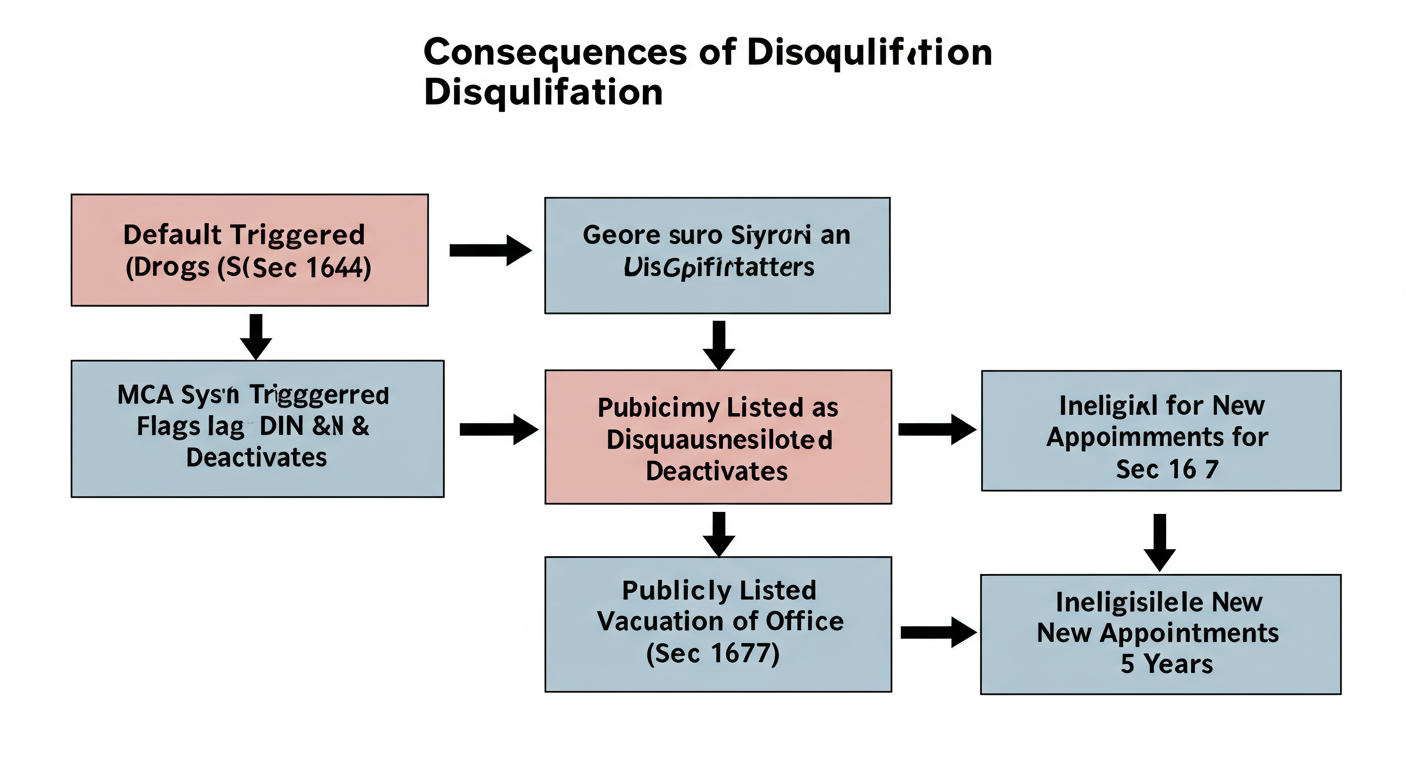
Disqualification isn’t a letter in the mail. It’s an immediate, system-driven event with cascading consequences: GST Annual Return GSTR-9: A Complete Guide to the GST annual return GSTR-9 filing process
- DIN Deactivated: Your Director Identification Number is marked as ‘Disqualified’ in the MCA database. This is the digital switch that freezes your career.
- Public Listing: The MCA publishes a list of all disqualified directors on its website. Your name, your DIN, and your period of disqualification are there for the world to see. It’s a significant reputational blow. You can check the status on the official MCA portal.
- Automatic Vacation of Office: As per Section 167, you are legally deemed to have vacated your directorships. Staying on is illegal.
- Severe Penalties: If you continue to act as a director while disqualified, you face imprisonment for up to one year or a fine that can range from ₹1 lakh to ₹5 lakh, or both. It’s not worth the risk.
🎯 Key Takeaway
Director disqualification is automatic, severe, and public. The biggest risk often comes from a company’s compliance failure, not your own. This makes proactive, personal vigilance over every board you sit on an absolute, non-negotiable part of your duty.
Can Disqualification Be Reversed? A Step-by-Step Guide to Seeking Relief
So, the worst has happened. Is it game over? Not necessarily, but the path back is a difficult, expensive, and uncertain legal battle. Based on our experience with such cases, here is the typical process for challenging a disqualification under Section 164(2).
- Step 1: Do Not Panic. Consult a Corporate Lawyer Immediately. Time is of the essence. You need an expert who understands the nuances of the Companies Act and has experience with writ petitions in the High Court.
- Step 2: File a Writ Petition. Your lawyer will file a writ petition before the appropriate High Court, challenging the disqualification. This is not a simple appeal; it’s a constitutional remedy.
- Step 3: Argue Your Case. The core of your argument will likely be that the principle of natural justice was violated (you weren’t given a chance to be heard) or that you, as a director, had taken all reasonable steps to ensure compliance. Proving this is tough.
- Step 4: Seek an Interim Stay. The immediate goal is to get the High Court to grant an interim stay on the disqualification. If successful, this temporarily “pauses” the disqualification and can lead to the provisional reactivation of your DIN while the case proceeds.
- Step 5: The Final Order and DIN Reactivation. If the court rules in your favor, it will quash the MCA’s disqualification order. Your lawyer will then use this court order to get the MCA to permanently reactivate your DIN. If the case fails, the 5-year disqualification stands.
⚠️ Watch Out
This legal process is neither quick nor cheap. It can take months, or even years, and involves significant legal fees with no guarantee of success. Trust me on this one: preventing disqualification is infinitely better—and cheaper—than trying to cure it.
Your Proactive Defense Strategy: How to Never Face Disqualification
You don’t have to live in fear of Section 164. You can build a bulletproof defense with proactive habits and systems. Here’s your personal and corporate checklist.
For You, the Director:
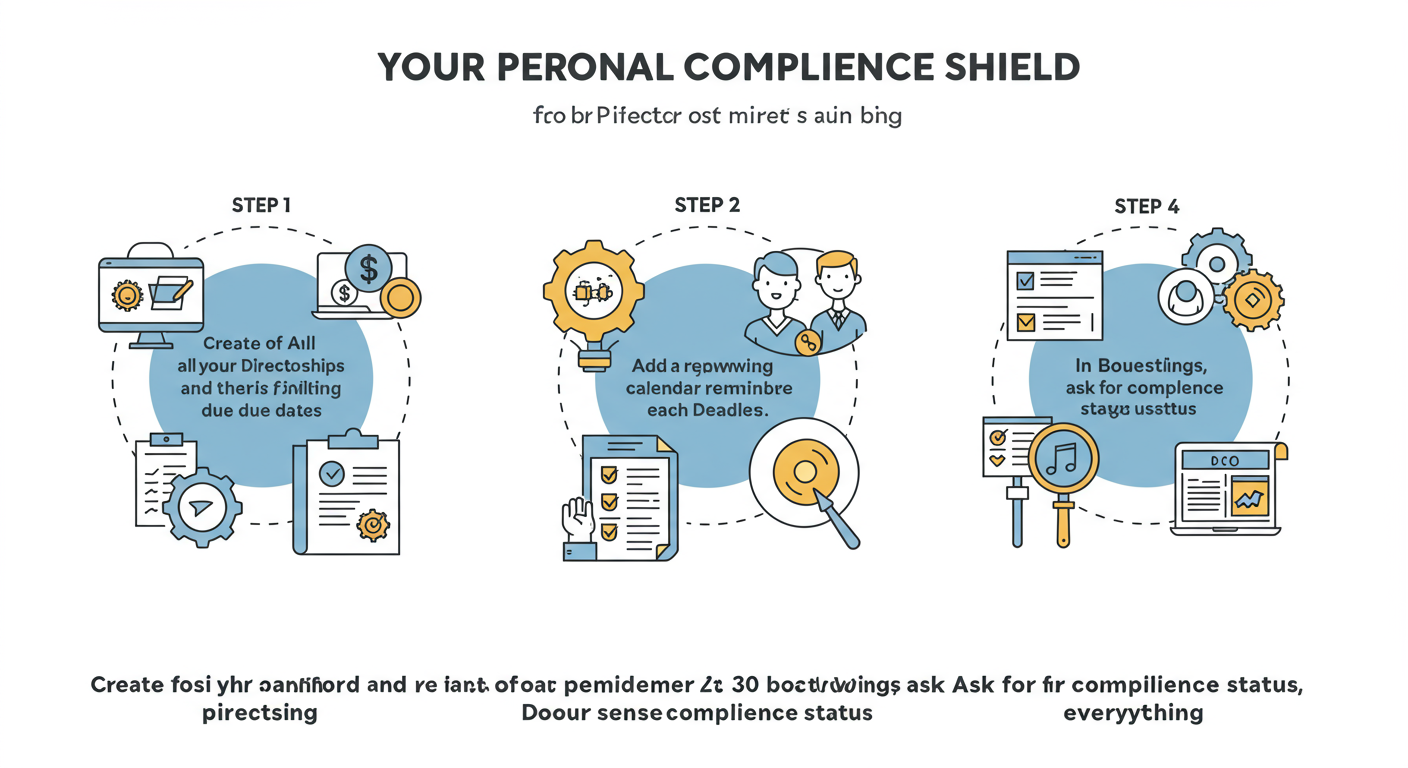
- Maintain a Compliance Dashboard: Keep a personal spreadsheet or use an app to track the Annual Return and Financial Statement filing dates for every single company where you are a director.
- Ask the Right Questions: In every board meeting, ask the Company Secretary or CFO directly: “Are all our statutory filings up to date? Are there any pending repayments of deposits or debentures?”
- Document Your Dissent: If you suspect a compliance lapse and the board isn’t acting, formally record your concerns and dissent in the meeting minutes. This can be a crucial piece of evidence later.
- Review Board Minutes: Always read the minutes of meetings before they are approved. Ensure they accurately reflect discussions about compliance.
💡 Pro Tip
Set up Google Alerts for the names of all the companies where you are a director. While not a substitute for internal checks, it can sometimes alert you to public news or issues (like credit rating downgrades) that might signal underlying financial trouble, a precursor to the defaults mentioned in Section 164(2).
For the Company:
- Invest in a Company Secretary: A qualified Company Secretary (CS) is your first line of defense. Their entire job is to manage compliance. The resources from the Institute of Company Secretaries of India (ICSI) are invaluable here.
- Implement a Compliance Calendar: Don’t rely on memory. Use compliance management software or a simple shared calendar with automated reminders for all key filing and payment deadlines.
- Board-Level Reporting: Make “Compliance Status” a mandatory, standing agenda item in every single board meeting. This forces accountability and transparency.
❓ Frequently Asked Questions
What is the exact period of director disqualification?
For defaults under Section 164(2) and most grounds under 164(1), the disqualification period is five years. However, if a director is convicted of an offence and sentenced to imprisonment for seven years or more, the disqualification is for life.
Can a disqualified director join a new company’s board?
No. During the five-year disqualification period, an individual is ineligible to be appointed as a director in any company, new or existing. They are also barred from being re-appointed to any board they had to vacate.
Does disqualification apply to independent or non-executive directors?
Yes, absolutely. Section 164(2) makes no distinction between executive, non-executive, or independent directors. If you were a director of the defaulting company during the period of non-compliance, you are subject to disqualification.
How can I check if a director is disqualified?
The Ministry of Corporate Affairs (MCA) maintains a public database. You can check the list of disqualified directors on their website or check the director’s DIN status in the ‘View Signatory Details’ section for any company on the MCA portal.
What is Form DIR-8?
Form DIR-8 is a declaration a director provides to a company stating that they are not disqualified under Section 164. Companies are required to obtain this from directors annually and before any new appointment to ensure they are compliant. It’s a key part of the company’s own due diligence.
Where can I read the original text of the law?
For those who want to review the source, the full text of the Companies Act, 2013 is available on India’s official legislative portal. Section 164 outlines these specific grounds for disqualification.
Conclusion: Be a Guardian, Not Just a Director
Look, Section 164 of the Companies Act isn’t just another piece of bureaucratic red tape. It’s a fundamental standard of conduct. It’s the law’s way of saying that a directorship is a position of active responsibility, not a passive title.
The biggest takeaway is this: your personal reputation is directly linked to the compliance health of every company you’re associated with. Ignorance is not a defense. Passivity is not an excuse. The system is automated, and the consequences are severe.
So, take the steps outlined today. Build your personal compliance dashboard. Ask the tough questions in the boardroom. Be engaged, be vigilant, and be informed. Don’t just be a director on a list; be a guardian of the company’s integrity and, in doing so, safeguard your own career. Your reputation is worth it.