
That sinking feeling. You open an email from the Income Tax Department, and your heart drops. It’s a notice for a late TDS filing, complete with a penalty that makes your eyes water. All for a deadline you simply forgot.
Sound familiar? You’re not alone. Thousands of businesses, from startups to established firms, stumble over the complexities of Tax Deducted at Source (TDS) compliance every quarter. But it doesn’t have to be this way.
This isn’t just another dry list of dates. This is your battle plan. By the end of this article, you’ll have a crystal-clear understanding of every TDS return filing due date for 2026, the exact forms to use, and a foolproof process to ensure you file correctly and on time, every single time. Let’s turn that compliance anxiety into confidence.
TDS Compliance: Why It Matters More Than You Think in 2026
Look, let’s be honest. TDS can feel like a chore. It’s a system where you, the payer, are tasked with deducting tax from payments and depositing it with the government. But viewing it as just administrative overhead is a massive mistake. In our experience, solid TDS compliance is a hallmark of a financially healthy and trustworthy business.
Think of it this way: timely TDS filing is a signal. It tells the government, your vendors, and your employees that you’re organized, responsible, and financially disciplined. It builds trust. On the flip side, delays and errors send the opposite message, attracting scrutiny and, worse, hefty financial penalties that can eat into your profits.
The entire system is managed through the TRACES portal (TDS Reconciliation Analysis and Correction Enabling System), which acts as the central nervous system for all TDS transactions. Getting it right here is non-negotiable.
The Official TDS Return Filing Due Date Calendar for 2026 (FY 2025-26)
First things first, let’s clear up the confusion between paying TDS and filing a TDS return. They are two different tasks with two different deadlines.
- TDS Payment: This is the monthly deposit of the tax you’ve deducted. The due date is generally the 7th of the following month.
- TDS Return Filing: This is the quarterly statement you submit detailing all deductions and payments. This is our focus.
For the Financial Year 2025-26 (the period from April 1, 2025, to March 31, 2026), the deadlines are consistent and predictable. Mark these on your calendar right now.
| Quarter | Period Covered | TDS Return Filing Due Date (for Forms 24Q, 26Q, 27Q) |
|---|---|---|
| Quarter 1 | April 1, 2025 – June 30, 2025 | July 31, 2026 |
| Quarter 2 | July 1, 2025 – September 30, 2025 | October 31, 2026 |
| Quarter 3 | October 1, 2025 – December 31, 2025 | January 31, 2027 |
| Quarter 4 | January 1, 2026 – March 31, 2026 | May 31, 2026 |
Notice that the Q4 deadline is May 31st, not April 30th. This is a deliberate extension provided by the government every year. Why? It gives deductors extra time to collate all annual proofs and details, especially for salary returns (Form 24Q), which require comprehensive employee investment declarations and other year-end data.
💡 Pro Tip
Don’t wait for the last day! We’ve seen countless businesses scramble on July 31st or October 31st, only to have the portal slow down due to high traffic. Aim to file your return at least 3-5 business days before the TDS return filing due date. This gives you a buffer to handle any unexpected errors or technical glitches.
Your TDS Form Arsenal: Choosing the Right Weapon (24Q vs. 26Q vs. 27Q)
Using the wrong form is as bad as missing the deadline. It leads to a “defective return” notice and requires you to refile everything. It’s a headache you don’t need. Each form serves a very specific purpose.
Here’s a simple breakdown to ensure you always pick the right one.
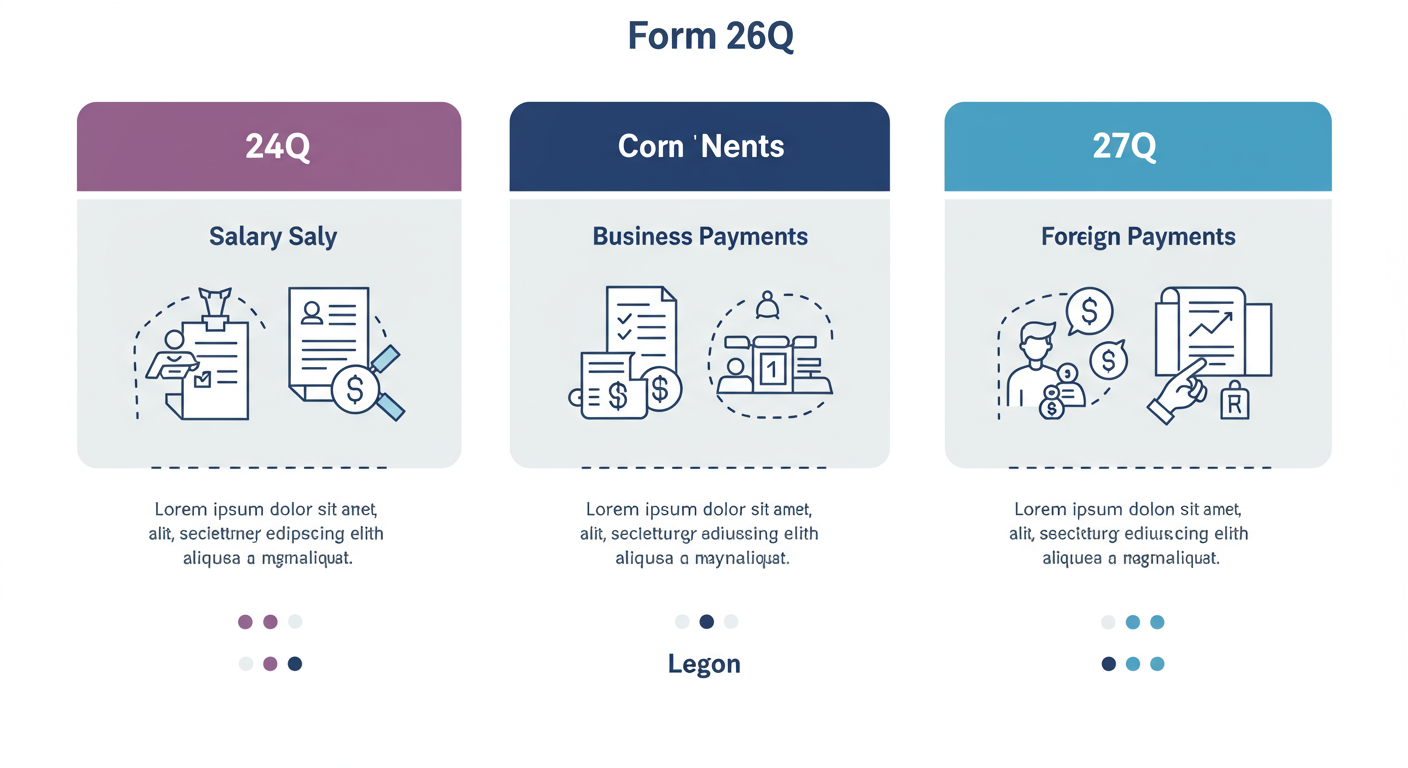
| Form | Primary Use | Who It’s For | Key “Gotcha” to Remember |
|---|---|---|---|
| Form 24Q | TDS on Salary payments to resident employees. | Any employer paying salaries. | The Q4 return is the most complex. It requires a detailed breakdown of each employee’s entire salary, deductions, and tax calculations in Annexure II. |
| Form 26Q | TDS on payments other than salary to residents. | Businesses paying rent, commission, professional fees, interest, dividends, etc. | This is the most common form. You must correctly quote the PAN of the deductee; otherwise, you’re required to deduct TDS at a much higher rate. |
| Form 27Q | TDS on payments to Non-Residents (excluding salary). | Companies making payments like royalties, technical fees, or interest to foreign entities or NRIs. | Compliance is stricter here. You often need to consider Double Taxation Avoidance Agreements (DTAA) and may require Form 15CA/CB. Get this wrong, and the penalties are severe. |
The Real Cost of Delay: A Brutal Look at TDS Penalties
So, what happens if you miss a TDS return filing due date? The consequences are swift, automatic, and expensive. The Income Tax Act has two main sections designed to penalize delays and inaccuracies.
1. The Daily Bleed: Late Filing Fee under Section 234E
This is the first penalty that hits you. It’s automatic and merciless.
- The Cost: A fee of ₹200 for every single day of delay.
- The Catch: The total fee cannot exceed the amount of TDS you were supposed to report.
Let’s make this real. Say your TDS for the quarter was ₹25,000. You filed the return 40 days late.
Calculation: 40 days × ₹200/day = ₹8,000 in late fees.
That’s ₹8,000 straight out of your pocket for a simple administrative slip-up.
⚠️ Watch Out
This fee is mandatory and must be paid before you can file the delayed return. The system will not accept your filing until the Section 234E fee is paid and the challan details are included in the return file. There’s no escaping it.
2. The Hammer: Penalty under Section 271H
If the delay is significant or you’ve filed an incorrect return, the Assessing Officer (A.O.) can levy an additional, much larger penalty. This isn’t automatic but is often triggered by: Applying for NGO Darpan Grant: Step-by-Step Guide
- Failing to file the return for more than a year from the due date.
- Filing an incorrect return (e.g., wrong PAN, incorrect TDS amount).
The penalty under Section 271H ranges from a minimum of ₹10,000 to a maximum of ₹1,00,000. This is at the discretion of the A.O. and is in addition to the daily late fee under Section 234E. Trust me on this one, you don’t want to be in a position where this is even a possibility. What is a CIN Certificate? The Ultimate 2026 Guide for India
🎯 Key Takeaway
TDS compliance isn’t just about avoiding penalties; it’s about financial hygiene. The system is designed to make non-compliance expensive and painful. Mastering the quarterly deadlines for Forms 24Q, 26Q, and 27Q is a fundamental business practice, not an optional one.
The Foolproof TDS Return Filing Process: A Step-by-Step Guide
Filing a TDS return can seem technical, but it’s a logical process. Here’s a simplified, step-by-step guide based on hands-on testing and real-world campaign management.
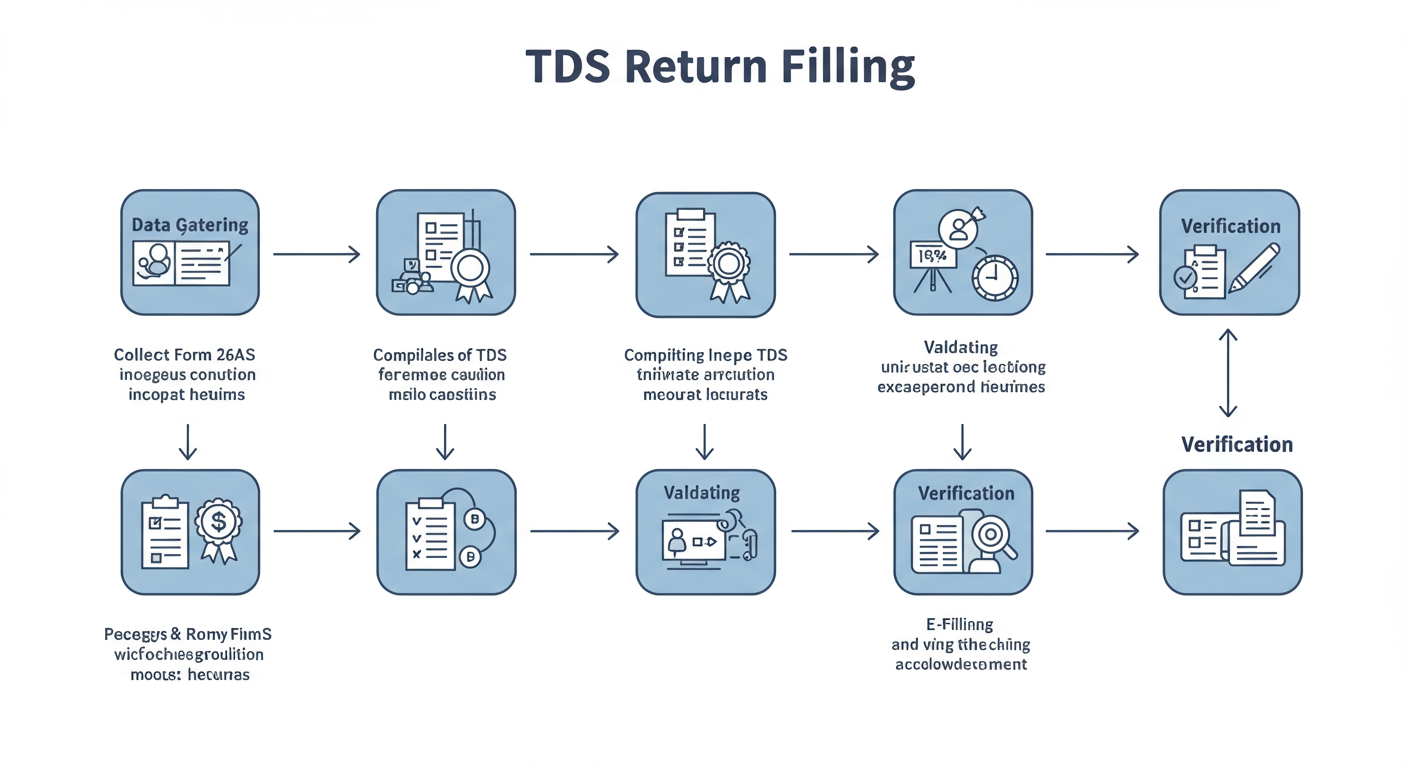
- Gather Your Tools & Data: Before you start, make sure you have everything. This includes your TAN details, all TDS challans (confirming you’ve paid the tax), and a complete list of deductees with their PANs, payment amounts, and TDS deducted. Accuracy here is everything.
- Download the Right Utilities: Go to the TIN-NSDL portal and download the latest version of the Return Preparation Utility (RPU). Using an outdated version is a common reason for file rejection.
- Prepare the TDS Statement: Open the RPU and start by importing the challan file (a .csi file you can download from the TRACES portal). Then, meticulously enter the deductee details. Double-check every PAN and every amount. This is where most errors happen.
- Create the Validation File: Once all data is entered in the RPU, click ‘Create File’. The utility will generate a draft .fvu file. This file needs to be checked for errors.
- Validate with FVU: Now, use the File Validation Utility (FVU), also available on the TIN-NSDL portal. Run your draft file through the FVU. It will either generate a final, upload-ready `.fvu` file or an error report detailing exactly what you need to fix. Fix the errors in the RPU and repeat until the FVU gives you a clean file.
- Upload and Verify: Log in to the Income Tax e-filing portal with your TAN credentials. Navigate to ‘e-File’ > ‘Income Tax Forms’ > ‘File Income Tax Forms’. Select the TDS return option, upload your final `.fvu` file, and verify it using a Digital Signature Certificate (DSC) or EVC.
⚠️ Watch Out
A common mistake is a PAN-Name mismatch. The name of the deductee in your records must match the name associated with their PAN in the Income Tax Department’s database. Even a small spelling error can cause the return to be flagged. Always verify PANs on the tax portal before finalizing your return.
The Final Step: Issuing TDS Certificates (Form 16 & 16A)
Your job isn’t done after you file the return. You have a legal obligation to provide a TDS certificate to each person or entity from whom you’ve deducted tax. This certificate is their proof of tax paid, which they need to claim credit in their own income tax returns.
- Form 16: For salary payments. Issued annually, by June 15th following the financial year.
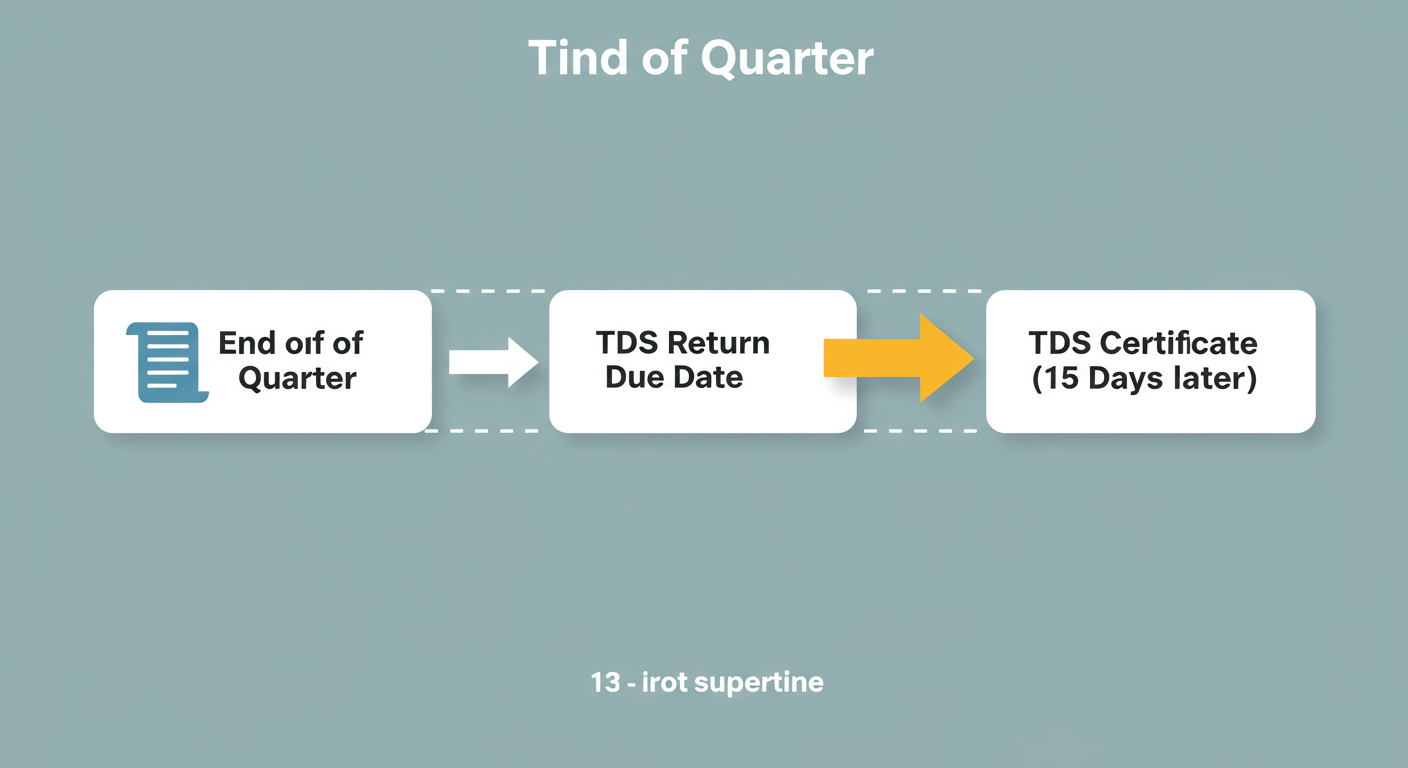
- Form 16A: For all non-salary payments. Issued quarterly, within 15 days from the TDS return filing due date.
Failure to issue these certificates on time carries its own penalty—₹100 per day of default. These certificates must be downloaded from the TRACES portal after your return has been processed.
💡 Pro Tip
After filing your return, wait about 4-5 days for it to be processed by TRACES. Once processed, you can download the TDS certificates. Don’t wait until the last minute. Download and email them to your deductees promptly. It’s a professional courtesy that builds good business relationships.
Conclusion: Your Path to TDS Mastery
TDS compliance in 2026 is a game of diligence. It’s not about complex tax law gymnastics; it’s about process, discipline, and respecting deadlines. By understanding the quarterly cycle, using the correct forms (24Q, 26Q, 27Q), and being aware of the steep cost of failure, you can transform this task from a source of stress into a smooth, predictable part of your business operations.
Bookmark this guide. Set calendar reminders for July 31st, October 31st, January 31st, and May 31st. Your future self—and your bottom line—will thank you.
Your next step? Review your calendar for the next TDS return filing due date and schedule a block of time one week in advance to begin the process outlined above. Proactive action is the ultimate secret to penalty-free compliance.
❓ Frequently Asked Questions
What’s the difference between a ‘regular’ and a ‘correction’ return?
A ‘regular’ return is the first return you file for a specific quarter. If you discover an error after filing (like a wrong PAN or amount), you must file a ‘correction’ return to rectify it. You can file multiple correction returns, but based on our experience, it’s always best to get it right the first time to avoid complications.
Is a Digital Signature Certificate (DSC) mandatory for filing TDS returns?
For all companies and any other deductor whose accounts are required to be audited under Section 44AB of the Income Tax Act, using a DSC is mandatory. For other deductors, like individuals or HUFs not under audit, the return can be verified using an Electronic Verification Code (EVC).
What happens if I deduct TDS but forget to deposit it with the government?
This is a more serious offense than late filing. Late payment of TDS attracts interest at 1.5% per month (or part of a month) from the date tax was deductible to the date it’s actually paid. This is levied under Section 201(1A) and is separate from late filing fees.
Can the late filing fee under Section 234E be waived?
No. According to the Income Tax Act, the late filing fee of ₹200 per day is mandatory and cannot be waived by any authority. It’s an automatic consequence of filing after the TDS return filing due date.
Where can I check if the TDS I paid is reflecting correctly?
You can check the status of your deposited challans on the TRACES portal using the ‘Challan Status Inquiry’. For deductees, the TDS deducted on their behalf reflects in their Form 26AS, which is essentially their tax passbook and can be viewed on the Income Tax e-filing portal.