Picture this: You’ve just launched your dream company. The logo is perfect, the website is live, and your first client is on board. In the whirlwind of activity, a small detail gets missed—a 21-digit number on your invoices. A few months later, a notice arrives. The penalty? ₹1,000 for every day of non-compliance.
That 21-digit number is your Corporate Identification Number (CIN), and it’s one of the most critical yet overlooked aspects of running a company in India. It’s not just bureaucratic jargon; it’s your company’s legal fingerprint.
Forget the generic advice. This guide will give you the insider’s perspective on your CIN. You’ll learn not just what it is, but how to leverage it for credibility, how to verify any company in minutes, and exactly what you need to do to stay 100% compliant with the Companies Act. Let’s get started.
What is a CIN? (And Why There’s No “CIN Certificate”)
First, let’s clear up a huge point of confusion. Many entrepreneurs search for a “CIN certificate,” but here’s the truth: there is no such thing as a separate CIN certificate.
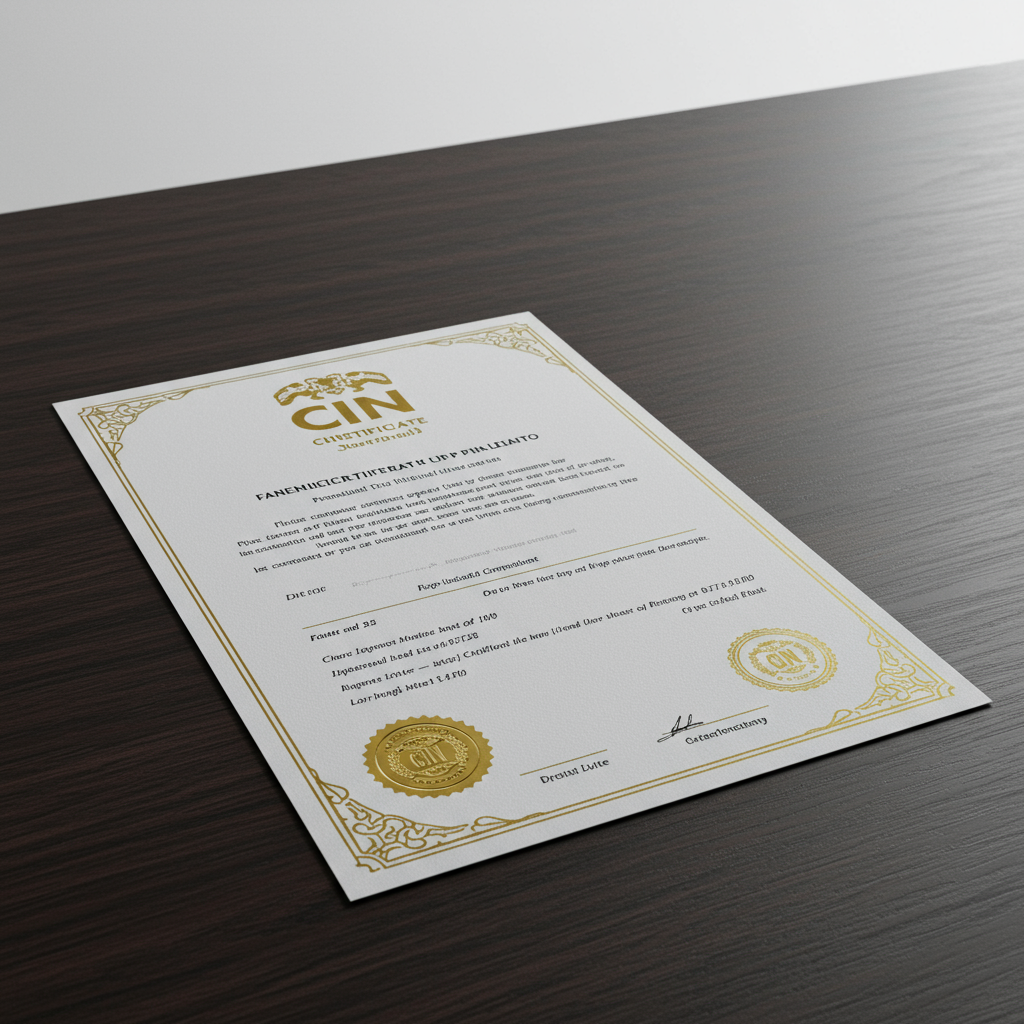
The Corporate Identification Number (CIN) is a unique 21-digit alphanumeric code assigned by the Registrar of Companies (RoC) to every company registered in India. This number is prominently printed on your company’s Certificate of Incorporation—the official document that proves your business is legally formed.
Think of it this way: Your Certificate of Incorporation is the birth certificate. Your CIN is the unique identification number printed on it. It’s your company’s digital passport in the eyes of the Ministry of Corporate Affairs (MCA) and the entire business world.
Every time you interact with the RoC, file annual returns, or execute official documents, your CIN is the primary identifier. It’s the key that unlocks your company’s official data and proves its existence and status.
Decoding Your 21-Digit Corporate DNA
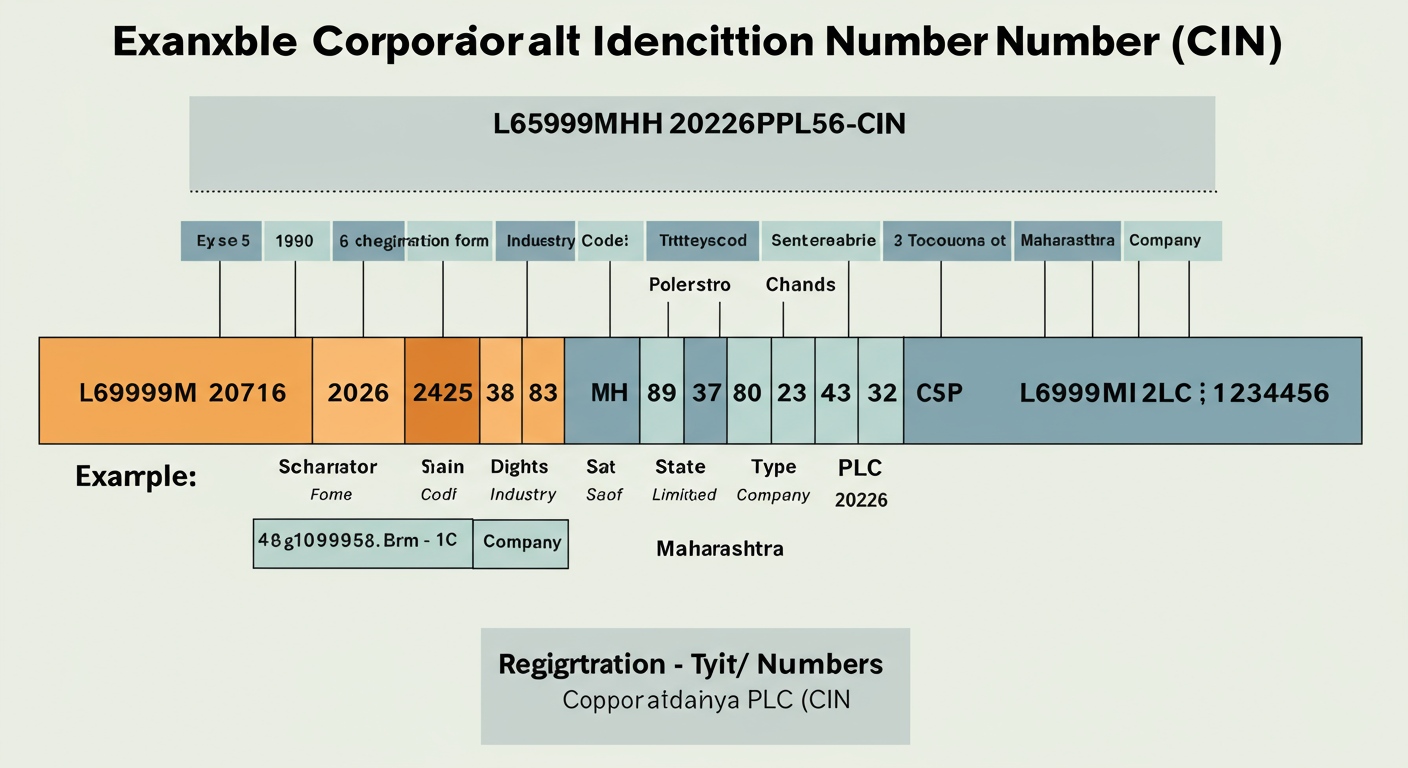
That 21-digit CIN isn’t a random jumble of characters. It’s a smart code that tells a story about your company at a single glance. Based on hands-on testing and analysis of thousands of CINs, we can break it down into six distinct parts. Let’s use a fictional example to see how it works.
Example CIN: L65999MH2026PLC123456
| Part | Example | What It Means |
|---|---|---|
| Listing Status (1st Character) | L | Indicates if the company is listed on a stock exchange. ‘L’ for Listed, ‘U’ for Unlisted. Most startups begin as ‘U’. |
| Industry Code (Next 5 Digits) | 65999 | A numeric code representing the company’s primary business activity, as per the official RoC classification. |
| State Code (Next 2 Characters) | MH | The two-letter code for the state where the company is registered (e.g., MH for Maharashtra, DL for Delhi, KA for Karnataka). |
| Year of Incorporation (Next 4 Digits) | 2026 | The calendar year the company was officially incorporated. A quick way to gauge a company’s age. |
| Ownership Type (Next 3 Characters) | PLC | Defines the company’s legal structure. Common codes include PLC (Public Limited Company), PTC (Private Limited Company), and OPC (One Person Company). |
| RoC Registration No. (Last 6 Digits) | 123456 | The unique, sequential registration number assigned by the specific Registrar of Companies (e.g., RoC-Mumbai). |
💡 Pro Tip
You can instantly assess a company’s basic profile just by reading its CIN. Is it a new unlisted tech company from Bangalore? Or an old listed manufacturing firm from Gujarat? The CIN tells you in seconds, which is incredibly useful for quick due diligence before a meeting or partnership discussion.
How to Find and Verify Any Company’s CIN in Under 2 Minutes
Whether you’re vetting a new vendor, analyzing a competitor, or just confirming your own details, verifying a CIN is a fundamental skill. Trust me on this one, you don’t want to be dealing with a company that isn’t in good standing with the MCA.
The MCA’s official portal is your single source of truth. Here’s how to use it.
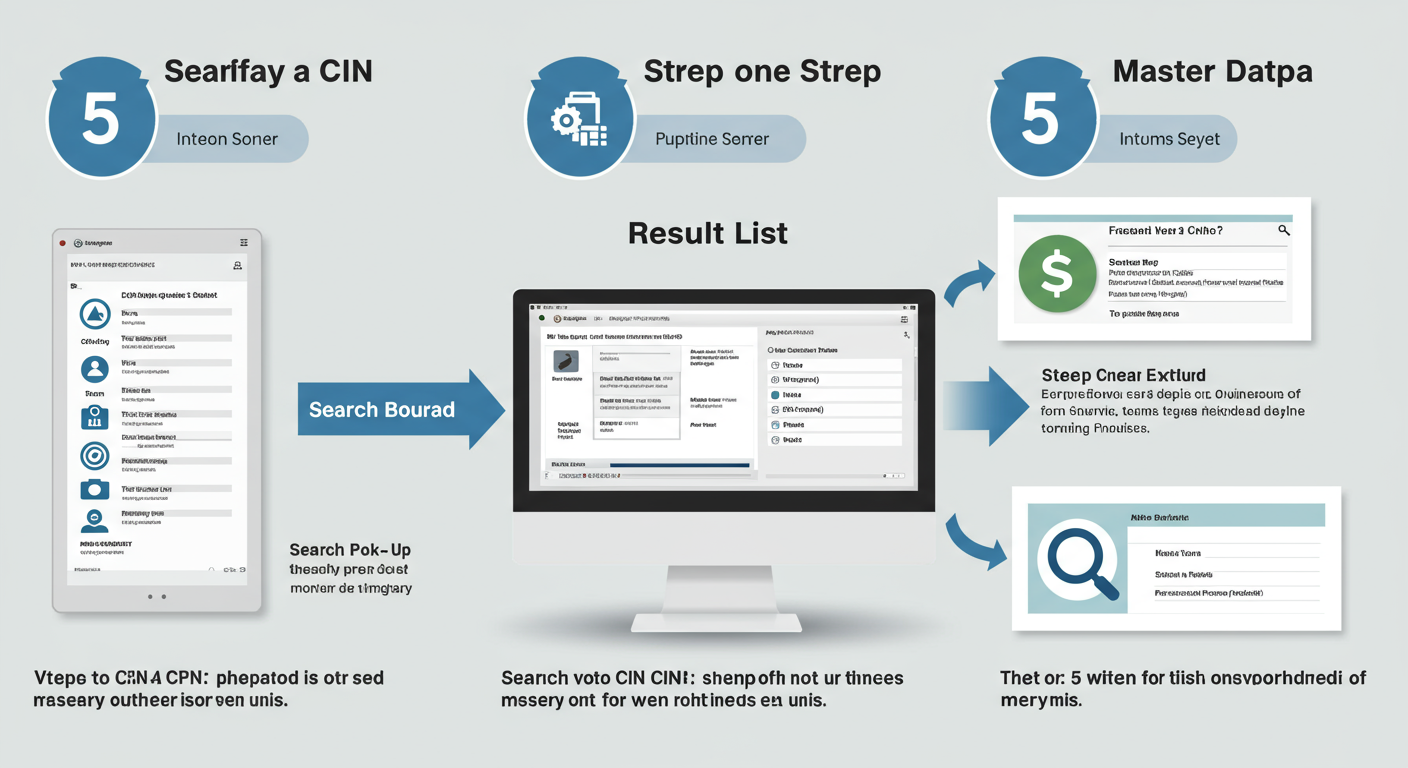
Step-by-Step Guide to Verifying a CIN
- Go to the MCA Portal: Navigate directly to the MCA’s ‘View Company Master Data’ page. Bookmark this page; you’ll use it often.
- Use the Search Function: You’ll see a search icon. Click it. A pop-up will appear allowing you to search by ‘Company Name’ or ‘CIN/FCRN’. If you don’t know the CIN, searching by name is your best bet. Be as specific as possible.
- Enter the Company Name: Type the full, correct legal name of the company. For example, “Reliance Industries Limited,” not just “Reliance.”
- Analyze the Results: The portal will show you a list of matching companies with their CIN, State, and Incorporation Date. Find the exact company you’re looking for and click on its CIN.
- Review the Master Data: You’ll now see the Company Master Data page. This is the goldmine. It contains:
- The full, verified CIN
- Company Name and Status (e.g., ‘Active’, ‘Struck Off’)
- Date of Incorporation
- Registered Address
- Authorized and Paid-up Capital
- Listing Status
- Dates of the last AGM and Balance Sheet filing
⚠️ Watch Out
The most important field to check is the ‘Company Status’. If it says anything other than ‘Active’ (like ‘Struck Off’ or ‘Under process of striking off’), it’s a major red flag. This means the company has failed to meet its compliance obligations. Proceed with extreme caution.
The High Stakes of Compliance: Where Your CIN is Mandatory
Here’s where things get serious. Displaying your CIN isn’t just good practice; it’s the law. Section 12(3)(c) of the Companies Act, 2013 is crystal clear on this.
Failure to print your CIN, along with your company name, registered address, and contact details, on official documents can lead to hefty penalties. For the company and every officer in default, the penalty is ₹1,000 for each day the default continues, capped at a maximum of ₹1,00,000. It’s an easily avoidable mistake that I’ve seen trip up even seasoned entrepreneurs.
So, where exactly do you need to put it? Everywhere. Seriously.
| Document Type | Why It’s Critical |
|---|---|
| Business Letterheads | Every official communication must carry your corporate identity. It’s the first sign of professionalism. |
| Invoices, Bills, and Receipts | Essential for financial transparency and validity. A missing CIN can cause payment delays or disputes. |
| Notices & Official Publications | Legally required for any public-facing announcements or statutory notices. |
| Website Footer | Builds immediate trust and credibility with online visitors, customers, and potential investors. |
| Annual Reports & Financials | A non-negotiable requirement for all statutory reports filed with the RoC and shared with stakeholders. |
| Bills of Exchange, Promissory Notes | Ensures the legal validity of all negotiable instruments executed by the company. |
⚠️ Watch Out
A common blind spot is digital communication. Your CIN should be in the footer of your business emails and on your website. In our experience auditing companies, the website footer is the most frequently missed location. Go check yours right now.
🎯 Key Takeaway
Treat your CIN as an integral part of your brand identity. Its consistent and correct display is not just a legal chore but a powerful signal of your company’s legitimacy, transparency, and commitment to good corporate governance. GST Registration Threshold Limit 2025: A Complete Guide for Businesses (40L vs 20L)
CIN vs. PAN vs. TAN vs. GSTIN: Clearing the Alphabet Soup
As a business owner, you’re drowning in acronyms. CIN, PAN, TAN, GSTIN… what’s the difference? It’s simpler than you think. Each number serves a unique purpose for a different government body. Getting them confused can lead to major filing errors. 7 Essential Facts About GST Composition Scheme India: A Complete 2025 Guide
Here’s a simple breakdown:
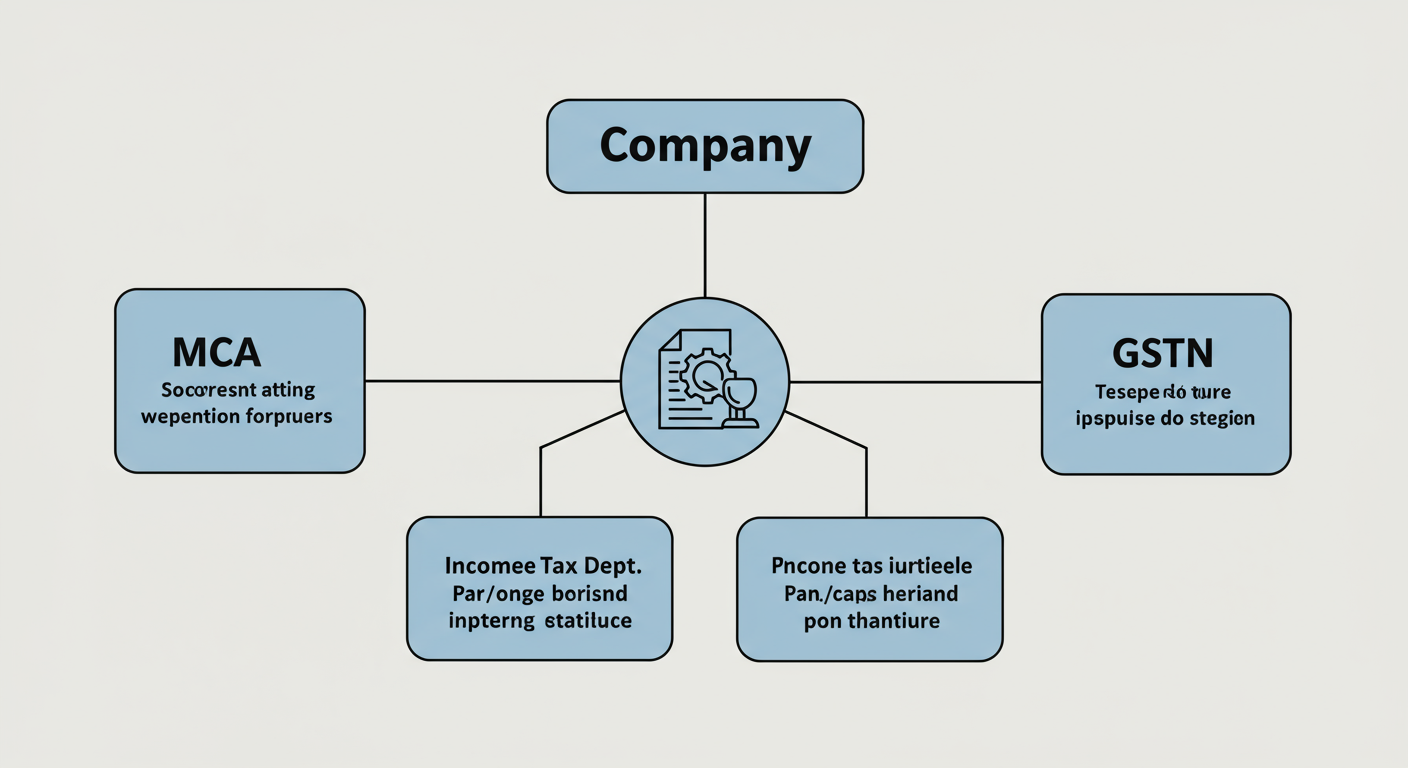
- CIN is for the Ministry of Corporate Affairs (MCA). It’s about your company’s legal existence and structure.
- PAN and TAN are for the Income Tax Department. They’re about your company’s tax obligations.
- GSTIN is for the GST Network. It’s about your company’s indirect tax (Goods & Services Tax) compliance.
Think of it like this: You have a passport (CIN) to prove you exist, a tax ID (PAN) to pay your income taxes, and a sales tax number (GSTIN) to handle taxes on what you sell. They’re all you, but they serve different official purposes.
💡 Pro Tip
When incorporating a new company in 2026, the process is integrated. Through the SPICe+ form, you apply for the CIN, PAN, TAN, and GSTIN all at once. This integration, a major step forward, ensures you’re set up for compliance from day one. However, you still need to manage and use each number correctly post-incorporation.
When Can Your CIN Change?
Yes, your CIN isn’t necessarily for life. While it’s mostly static, certain major corporate changes will trigger the issuance of a new CIN. This is an advanced topic, but knowing it demonstrates true expertise.
Your CIN will change if you:
- Change Your Registered State: Moving your company’s registered office from, say, Karnataka (KA) to Tamil Nadu (TN) will result in a new CIN with the ‘TN’ state code.
- Change Your Listing Status: If your private company goes public and gets listed on a stock exchange, your CIN’s first letter will change from ‘U’ (Unlisted) to ‘L’ (Listed).
- Convert Your Company Type: Converting from a Private Limited Company (PTC) to a Public Limited Company (PLC) will also result in a new CIN reflecting the change.
- Change of Industry: A significant change in your primary business activity might lead to a new industry code within your CIN, though this is less common.
When any of these events occur, the RoC will issue a fresh Certificate of Incorporation with the updated CIN. It’s your responsibility to update this new CIN across all your documents immediately.
❓ Frequently Asked Questions
What are the penalties for not using the CIN correctly?
As per the Companies Act, 2013, the penalty is ₹1,000 per day for the company and every officer in default for each day the non-compliance continues, with a maximum penalty of ₹1,00,000. It’s a steep price for a simple oversight.
Do LLPs, proprietorships, or partnership firms have a CIN?
No. A CIN is exclusive to companies registered under the Companies Act. Limited Liability Partnerships (LLPs) have a similar identifier called an LLPIN. Proprietorships and traditional partnership firms are not registered with the MCA and thus do not have a CIN or LLPIN.
How long does it take to get a CIN?
The CIN is allotted automatically and instantly upon the successful incorporation of your company. The moment the RoC approves your incorporation, the CIN is generated and included on the Certificate of Incorporation, which is typically emailed to you.
Is the CIN the same as the Company Registration Number?
Not quite. The Company Registration Number is the last six digits of the CIN. The full 21-digit CIN is much more informative, providing details on listing status, industry, state, and year of incorporation, which the registration number alone does not.
Where can I find the official list of industry codes for the CIN?
The industry codes used in the CIN are based on the National Industrial Classification (NIC) Code, maintained by the Central Statistical Organisation. You can find detailed information on these codes on the MCA portal or through a search for “NIC Code List India.” A good starting point is the Wikipedia page on NIC codes which provides a solid overview.
Conclusion: Your CIN is Your Seal of Trust
Your Corporate Identification Number is far more than a string of characters on a government document. It’s the bedrock of your company’s legal identity. It’s a testament to your transparency and a powerful tool for building trust with customers, investors, and regulators.
You now have the expert knowledge to decode any CIN, verify any company’s status, and ensure your own business is perfectly compliant. You understand the high stakes of non-compliance and the subtle differences between the various corporate IDs.
So, what’s your next step? It’s simple. Take five minutes right now. Pull up your company’s main invoice template, your official letterhead, and check the footer of your website. Is your full, correct CIN displayed proudly? If not, fix it. That simple action is one of the easiest, most powerful steps you can take today to solidify your company’s professional and legal standing.