The Imperative Need for GST Registration for E-commerce Sellers India in 2026
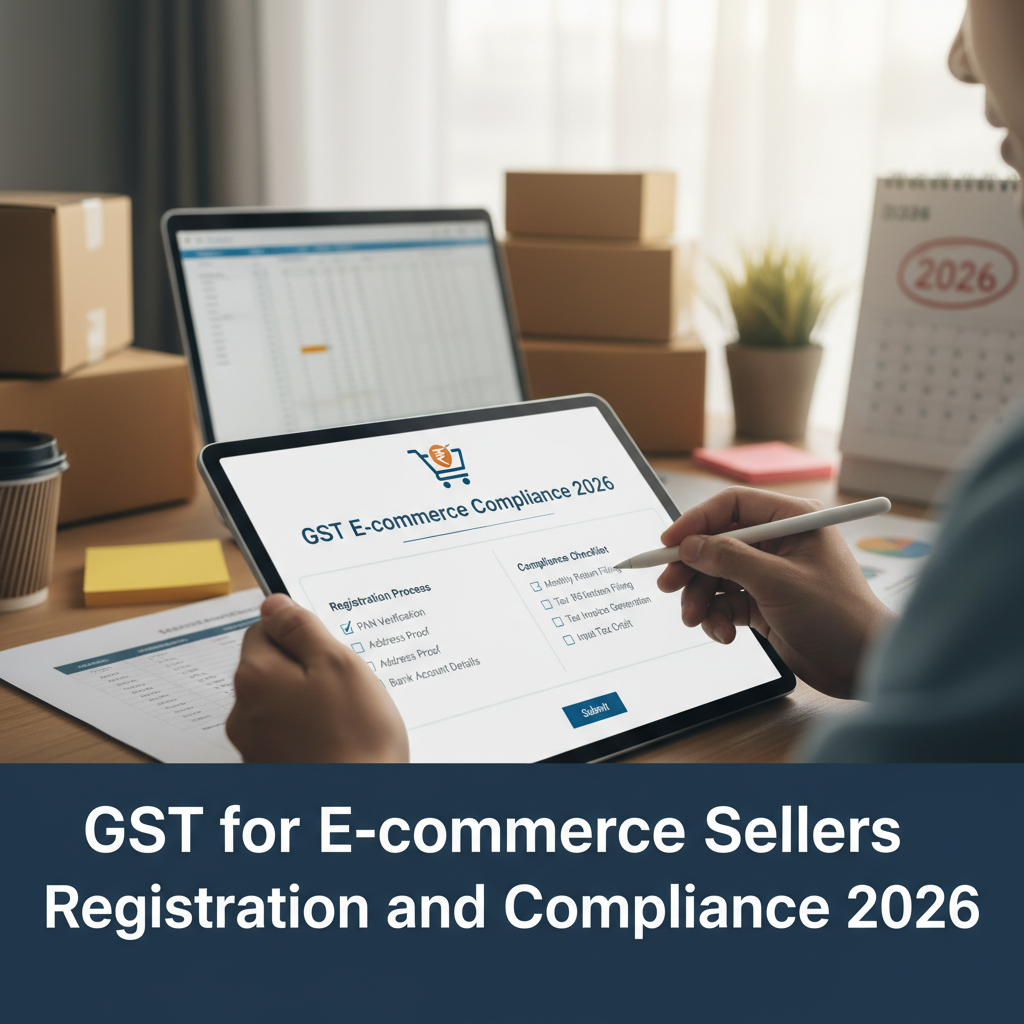
The digital marketplace in India continues its explosive growth trajectory, making e-commerce a cornerstone of the modern retail economy. If you are selling goods or services online—whether through your own website or major platforms like Amazon, Flipkart, or Meesho—understanding Goods and Services Tax (GST) compliance is not optional; it is mandatory. Specifically, obtaining GST registration for ecommerce sellers India is a critical first step, irrespective of the standard turnover threshold applicable to traditional businesses.
The GST framework, particularly the provisions governing Tax Collected at Source (TCS) and mandatory registration for interstate supplies, dictates strict compliance for online vendors. As we move into 2026, the regulatory environment is only becoming more stringent and digitized, emphasizing the need for accurate and timely adherence to these laws. Failing to secure proper registration can lead to penalties, operational roadblocks, and exclusion from major marketplaces.
Why Mandatory GST Registration for E-commerce Sellers India is Crucial
For most regular businesses, GST registration is typically mandatory only when their annual aggregate turnover exceeds Rs 40 lakh (or Rs 20 lakh in special category states). However, e-commerce sellers operate under a different set of rules defined specifically under the GST Act.
The Interstate Supply Rule and E-commerce Platforms
The most significant distinction for online sellers is the requirement for mandatory registration if they engage in interstate supply of goods or services. Even if your turnover is Rs 1 lakh, if you sell a product from Maharashtra to a customer in Karnataka through an Electronic Commerce Operator (ECO), you must have a valid GSTIN. This rule ensures that tax is properly accounted for across state lines.
Furthermore, according to Section 24(ix) of the CGST Act, 2017, persons who supply goods or services through an ECO who is required to collect tax at source (TCS) must compulsorily register for GST. This effectively covers nearly every seller operating on major Indian marketplaces.
Standard Threshold vs. E-commerce Rule
Standard Business: Registration mandatory above Rs 40L (or Rs 20L/10L depending on state and goods/services type).
E-commerce Sellers:
E-commerce Seller: Registration mandatory regardless of turnover if selling through an ECO required to collect TCS, or if making interstate supplies of goods.
The Step-by-Step Process for GST Registration for E-commerce Sellers India
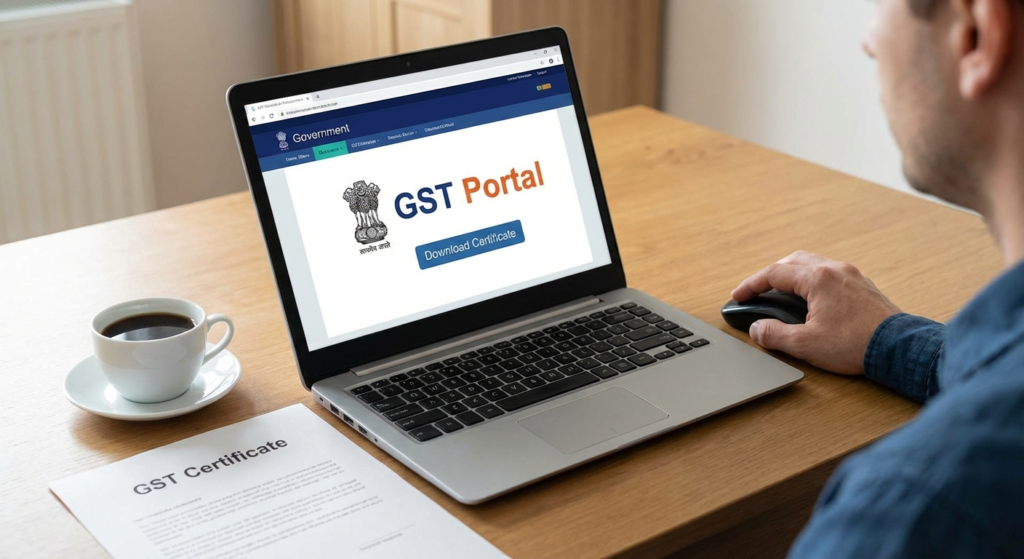
The process of obtaining your GSTIN is primarily digital and conducted via the official GST Portal. While seemingly straightforward, precision in documentation and category selection is vital for smooth approval.
- Preparation of Documents: Gather all necessary legal and identity proofs.
- Part A Submission: File Part A of Form GST REG-01 using your PAN, mobile number, and email. You will receive a Temporary Reference Number (TRN).
- Part B Submission: Use the TRN to fill out Part B of GST REG-01, providing detailed business information, bank account details, and uploading required documents.
- Verification and Approval: The GST officer verifies the application. This may involve an inquiry or physical verification. Upon satisfaction, the GST registration certificate (GST REG-06) is issued.
Required Documents for E-commerce GST Registration
- Permanent Account Number (PAN) of the applicant.
- Aadhaar Card of the Proprietor/Partners/Directors.
- Proof of Business Registration (e.g., Incorporation Certificate).
Business and Location Proofs
- Proof of Principal Place of Business (rent agreement, electricity bill, etc.).
- Bank account details (Cancelled cheque or bank statement).
- List of goods and services supplied.
Digital Requirements
- Digital Signature Certificate (DSC) or E-verification Code (EVC).
- Authorized Signatory details and photograph.
- High-resolution photographs of the premises (sometimes requested).
Understanding TCS (Tax Collected at Source) for E-commerce Operations
One of the most unique aspects of GST compliance for online sellers is the provision for Tax Collected at Source (TCS). This mechanism ensures that tax is collected at the point of sale by the e-commerce operator (ECO) before the funds are transferred to the seller.
The ECO (like Amazon or Flipkart) is mandated to deduct 1% TCS (0.5% CGST + 0.5% SGST, or 1% IGST for interstate sales) on the net value of taxable supplies made through their platform.
Who Deducts TCS?
The Electronic Commerce Operator (ECO) – the marketplace – is responsible for deducting and remitting the TCS to the government.
TCS Rate
The current rate is 1% of the net taxable value of goods or services supplied (excluding GST component).
Seller Benefit
The TCS amount deducted is reflected in the seller’s GSTR-2A/2B and can be claimed as an input tax credit (ITC) against the seller’s final GST liability.
Compliance Obligations: GSTR-8 and GSTR-1/3B
GSTR-8 Filing by the E-commerce Operator
The e-commerce operator is required to file GSTR-8 monthly. This return contains details of all supplies made through the platform and the corresponding TCS collected. Once the ECO files GSTR-8, the TCS credit is automatically populated in the GSTR-2B of the respective seller.
Seller’s Monthly Filing Duties (GSTR-1 and GSTR-3B)
As an e-commerce seller, you must accurately report all sales, including those made through the ECO, in your monthly returns (GSTR-1 for outward supplies and GSTR-3B for summary and tax payment). The TCS amount reflected in your GSTR-2B is used to offset the tax payable shown in your GSTR-3B.
A major focus area for compliance is ensuring that the details reported by the marketplace (in GSTR-8) match the sales reported by the seller (in GSTR-1). Discrepancies often trigger notices from tax authorities.
“In the highly regulated e-commerce sector, accurate mapping of sales data, especially reconciling marketplace statements with GSTR-1, is paramount. This diligence minimizes compliance risk and ensures smooth utilization of TCS credits.”
Navigating Interstate Sales and Compliance Challenges
The rule mandating E-commerce GST registration for interstate suppliers of goods eliminates the turnover threshold entirely. This means even a small home-based seller who makes a single sale outside their state through an online platform must be registered.
However, an important exemption exists for service providers. If you only sell services (like online tutoring or digital downloads) interstate through an ECO, you are generally eligible for the standard turnover threshold (Rs 20 lakh or Rs 10 lakh). This distinction is vital when determining mandatory registration.
Interstate Sales of Goods
Mandatory Registration: Yes. Turnover threshold does not apply. Requires immediate GST registration for ecommerce sellers India before commencement of sales.
Interstate Sales of Services
Standard Threshold Applies: Registration required only if aggregate annual turnover exceeds the prescribed threshold (Rs 20 Lakh or Rs 10 Lakh).
Key Compliance Pitfalls to Avoid
While the digital nature of e-commerce simplifies sales, it complicates tax jurisdiction. Sellers often face issues related to place of supply, stock transfers, and incorrect HSN/SAC codes.
Pitfall 1: Unregistered Storage
Storing inventory in a Fulfillment by Amazon (FBA) warehouse or third-party logistics (3PL) facility in another state without obtaining a separate GST registration for that state (as an Additional Place of Business). This is treated as a supply between distinct persons and requires compliance.
Pitfall 2: Incorrect Place of Supply
Misclassifying the place of supply, leading to the incorrect levy of IGST instead of CGST/SGST, or vice versa. For goods sold online, the location of the customer is usually the place of supply.
Pitfall 3: Ignoring TCS Reconciliation
Failing to regularly check GSTR-2B to ensure the TCS deducted by the ECO matches the sales reported by the seller. Unreconciled amounts can lead to blocked credits.
The Future of GST Registration for E-commerce Sellers India in 2026
The year 2026 is expected to cement several technological advancements in the GST ecosystem. The integration between the GST Network (GSTN) and e-commerce platforms is likely to deepen, potentially leading to real-time invoice reporting and automated compliance checks.
One major trend is the increased emphasis on data accuracy. With the implementation of e-invoicing becoming widespread for medium and large businesses, and potential expansion to smaller e-commerce entities, the margin for error in reporting sales data will shrink significantly. Sellers must invest in robust accounting software that integrates seamlessly with both the GST portal and their marketplace sales reports.
For detailed official guidance on the structure and operation of GST, consulting the official documentation from the Central Board of Indirect Taxes and Customs (CBIC) is highly recommended. The CBIC portal provides the latest circulars and clarifications relevant to e-commerce taxation.
Leveraging Technology for Seamless Compliance
To handle the complexity of multi-state inventory, various tax rates, and TCS reconciliation, e-commerce sellers must leverage technology. Modern ERP systems and specialized GST reconciliation tools are no longer luxuries; they are necessities for high-volume sellers. These tools help automate GSTR-1 preparation, analyze place of supply rules, and match marketplace settlement reports against the seller’s books.
For those starting out, understanding the nuances of company registration and legal compliance early on is key to scalability. For instance, if you plan to convert your existing proprietorship into a more structured LLP or Private Limited Company later, advanced tax planning is required. While not directly related to GST filing, ensuring the underlying business structure is sound is foundational.
Another area of increasing scrutiny is MSME compliance. While MSME registration doesn’t override the need for GST registration for ecommerce sellers India, it offers distinct benefits. Keeping your MSME certificate updated, as outlined in guides like How to Update MSME Certificate, ensures access to government schemes and priority lending, complementing your GST compliance efforts.
In conclusion, the e-commerce landscape in India demands proactive and meticulous compliance. Mandatory registration, accurate handling of TCS, and diligent monthly filing are the pillars of sustainable online selling. By securing your GSTIN and implementing rigorous reconciliation processes, you ensure that your digital business is legally robust and ready for growth in 2026 and beyond.
For ongoing updates and expert advice on tax compliance, reliable sources like the official GST portal should be monitored regularly.
FAQs
Yes, if you sell goods through an Electronic Commerce Operator (ECO) like Flipkart, and those sales involve interstate supply (selling outside your home state), GST registration is mandatory regardless of your turnover. The turnover threshold does not apply to interstate suppliers of goods selling via ECOs.
The e-commerce operator files GSTR-8, which reports the TCS deducted. This amount is automatically credited to your Electronic Cash Ledger and reflected in your GSTR-2B. You can claim this credit by utilizing it to offset your liability when filing GSTR-3B.
GSTR-8 is filed monthly by the E-commerce Operator (ECO) detailing the supplies made through their platform and the TCS collected. GSTR-3B is filed by the seller (taxpayer) monthly, summarizing all inward and outward supplies and calculating the final tax liability payable to the government.
No, generally one GST registration per state is sufficient. You will list all the e-commerce platforms you use under the ‘Additional Places of Business’ section or simply use your primary registered address. However, if you store inventory (e.g., FBA) in a different state, you must obtain a separate GST registration for that state.
No. The mandatory registration rule for interstate suppliers of goods through an ECO does not apply to service providers. If you only sell services, you are generally eligible for the standard GST turnover threshold (Rs 20 lakh or Rs 10 lakh, depending on the state).