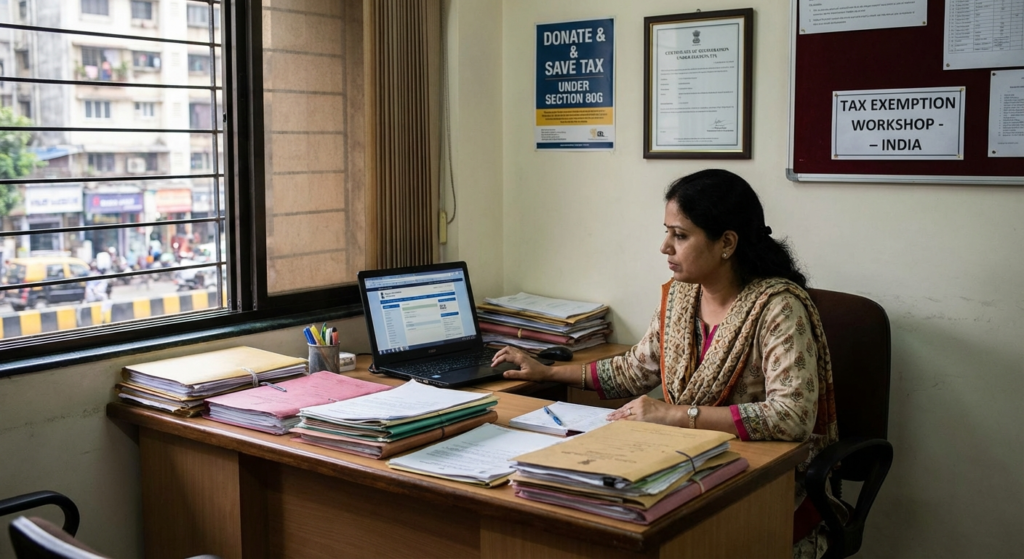
Navigating Foreign Funding: Essential Guide to FCRA Registration for NGO Eligibility
For non-governmental organizations (NGOs) and charitable trusts operating in India, accessing foreign funding is often essential for expanding their reach and impact. However, this vital source of capital is strictly regulated by the Indian government under the Foreign Contribution Regulation Act (FCRA), 2010. Understanding the nuances of FCRA registration for NGO eligibility is the critical first step toward compliance and sustainable foreign resource utilization.
The Ministry of Home Affairs (MHA) oversees the FCRA framework, ensuring that foreign contributions are used only for bonafide charitable purposes and do not compromise national interests. Failure to secure this registration can lead to severe penalties, including freezing bank accounts and outright bans on receiving international donations. This comprehensive guide breaks down the eligibility requirements, procedural hurdles, and the step-by-step application process required for NGOs seeking FCRA approval.
Understanding the Foreign Contribution Regulation Act (FCRA)
The FCRA was primarily enacted to regulate the acceptance and utilization of foreign contributions or hospitality by certain individuals and associations. Its goal is transparency and accountability. Any organization—whether a Trust, Society, or a Section 8 Company—that wishes to receive foreign funds must comply with the provisions of this Act.
Who Needs FCRA Registration?
The requirement applies universally to all entities accepting foreign contributions. Most NGOs in India are registered under one of the following legal structures:
- Trusts: Registered under the Indian Trusts Act, 1882.
- Societies: Registered under the Societies Registration Act, 1860.
- Section 8 Companies: Incorporated under the Companies Act, 2013 (the preferred structure for many organizations seeking organized governance). If you are considering establishing a formal structure, learn more about NGO Registration as a Section 8 Company.
Regardless of the structure, if the funds originate from a foreign source, FCRA compliance is mandatory.
Decoding the Core FCRA Registration for NGO Eligibility Criteria
To successfully apply for FCRA registration (Form FC-3), an NGO must satisfy strict conditions laid down by the MHA. These criteria ensure that the organization is stable, operational, and committed to its stated objectives. Meeting the FCRA registration for NGO eligibility standards is non-negotiable.
Eligibility Path 1: Full Registration (Standard)
This is the preferred route for established NGOs. Requires a minimum of three years of active existence and verifiable expenditure on charitable activities during that period. Grants a 5-year registration, renewable thereafter.
Eligibility Path 2: Prior Permission (New NGOs)
If the NGO is newly registered (less than three years old) or hasn’t met the expenditure criteria, it must apply for ‘Prior Permission’. This allows the organization to receive a specific amount of foreign contribution for a specific project from a specific foreign donor.
Key Requirement: Charitable Activity
The NGO must demonstrate that its primary objectives and planned activities (as defined in its Memorandum or Trust Deed) are genuinely charitable, cultural, economic, educational, or social in nature.
The Mandatory 3-Year Operational Requirement
The single most debated criterion for standard FCRA registration is the three-year rule. The MHA requires that the applicant organization must have been in existence for at least three years and must have spent a minimum of Rs. 15 lakh on its core objectives during the last three financial years, excluding administrative expenditure. This financial threshold demonstrates the organization’s capacity and proven track record.
“FCRA registration is not just a license; it’s a certification of institutional maturity and financial prudence. The three-year rule ensures that only committed, stable organizations are entrusted with foreign resources.”
If the NGO does not meet this financial benchmark, even if it has operated for three years, it will likely be directed to apply for Prior Permission first.
Financial Prerequisites for FCRA Registration for NGO Eligibility
Beyond the operational history, the financial health and structure of the NGO are heavily scrutinized. Accurate bookkeeping and adherence to specific banking regulations are paramount for maintaining FCRA registration for NGO eligibility.
The Critical Role of the Designated FCRA Bank Account
A major amendment introduced in 2020 drastically changed the banking requirements for foreign contributions. Previously, NGOs could receive funds in any scheduled bank account designated for FCRA purposes. Now, all FCRA registered entities must adhere to the following:
- Mandatory Account: The primary FCRA receipt account must be opened at the State Bank of India (SBI), Main Branch, 11 Sansad Marg, New Delhi (IFSC Code: SBIN0000691).
- Purpose: This account is strictly for receiving the foreign contribution. No domestic funds or operational expenditures can be routed through this account.
- Transfer to Utilization Account: Once received in the SBI Delhi account, the funds must be transferred to a separate ‘Utilization Account’ maintained in any scheduled bank (including other SBI branches) for actual expenditure on projects.
This centralized banking approach ensures maximum regulatory oversight over the inflow of foreign funds.
Impact of 2020 FCRA Amendments
The FCRA Amendment Act, 2020, tightened compliance significantly. Key changes include mandatory Aadhaar for key personnel, reduced limits on administrative expenditure (now 20% of foreign funds), and the mandatory SBI Delhi account for receipt.
Administrative Expenditure Cap
NGOs must ensure that administrative expenses (salaries, rent, office supplies) do not exceed 20% of the total foreign contribution received in that financial year. This is a significant reduction from the earlier 50% limit.
Documentation and Audit Requirements
Before applying for FCRA registration, the NGO must have its books audited by a Chartered Accountant for the preceding three financial years. The audit reports (including receipts and payment accounts, balance sheets, and income and expenditure statements) must clearly reflect the expenditure on charitable activities, demonstrating that the organization is functioning effectively.
Furthermore, the NGO must be registered on the Darpan portal of NITI Aayog. This registration provides a unique ID (NGO Darpan ID) which is now mandatory for the FCRA application.
For more insights on compliance requirements for registered entities, organizations should review related financial regulations, such as those governing NITI Aayog registration, which often intersect with FCRA obligations.
Step-by-Step FCRA Online Application Process
The application for FCRA registration for NGO eligibility (Form FC-3) is entirely processed online through the official MHA FCRA portal. The process requires careful preparation and accurate document submission.
- Portal Registration: Register the organization on the FCRA portal using the NGO Darpan ID.
- Form FC-3 Filling: Fill out Form FC-3 (for registration) or Form FC-4 (for prior permission). This includes providing details about the organization’s history, objectives, sources of domestic funding, and details of the governing body.
- Uploading Documents: Upload all requisite documents (Trust Deed/MoA, 3 years of audited financials, activity reports, NITI Aayog ID, commitment letters from foreign donors if applying for Prior Permission).
- Payment: Pay the prescribed government fee (currently Rs. 10,000 for registration).
- Physical Submission (if required): Although the application is online, the MHA reserves the right to request physical copies of documents for verification.
- Inspection and Verification: The MHA forwards the application to the intelligence bureau (IB) for due diligence and inspection of the organization’s premises and activities. This process can take several months.
- Grant of Certificate: If satisfied, the MHA grants the FCRA Registration Certificate (valid for five years).
Key Documents Required for FCRA Application
Statutory Documents
Self-certified copy of the Certificate of Registration (Society, Trust Deed, or Incorporation Certificate). Memorandum of Association/Rules and Regulations.
Financial Records
Audited statements (Balance Sheet, Income & Expenditure, Receipts & Payments) for the preceding three financial years, certified by a Chartered Accountant.
Operational Proof
Annual activity reports detailing charitable work for the last three years. Proof of achieving the minimum expenditure threshold (Rs. 15 Lakh).
Identity and Banking
Details of the governing body (Aadhaar/PAN of key members). Proof of the designated FCRA account (SBI Main Branch, New Delhi) and the Utilization Account.
Post-Registration Compliance and Annual Returns (FC-4)
Obtaining FCRA registration is only the beginning. Maintaining compliance is an ongoing obligation. Every FCRA registered entity must file an annual return in Form FC-4, detailing the receipts and utilization of foreign contributions, even if no funds were received during the financial year. This return must be filed electronically by December 31st of the following financial year. Strict adherence to the 20% limit on administrative expenses must also be maintained.
Organizations must also notify the MHA within 15 days of any changes to their name, address, objectives, or the composition of the executive committee, ensuring that the regulatory body always has accurate information.
For detailed information regarding the official FCRA guidelines and forms, organizations should refer directly to the Ministry of Home Affairs FCRA Portal, which is the definitive source for regulatory updates.
Why Strict Compliance Matters
The FCRA framework is dynamic and subject to frequent amendments aimed at increasing transparency. Non-compliance, late filing, or misappropriation of funds can lead to severe consequences, including:
- Suspension of the registration for up to 180 days.
- Cancellation of the registration (leading to a 3-year ban on reapplying).
- Financial penalties and prosecution of the organization’s key functionaries.
Ensuring internal controls, maintaining separate books of accounts for foreign contributions, and conducting regular internal audits are crucial strategies for mitigating risk. Furthermore, understanding general legal frameworks related to charitable work, such as those governing tax exemptions, is beneficial for holistic compliance. For example, understanding the requirements for Income Tax compliance is essential for all charitable organizations operating in India.
Conclusion
Achieving FCRA registration for NGO eligibility requires meticulous planning, a clean track record of charitable work over at least three years, and rigorous financial discipline. While the process is stringent, successful registration unlocks access to global resources, significantly enhancing an NGO’s ability to serve its community and achieve its mission. By ensuring strict adherence to the 3-year operational rule, maintaining the mandatory SBI designated account, and submitting accurate, timely documentation, NGOs can navigate the regulatory landscape successfully and secure their path to foreign funding.
FAQs
The NGO must demonstrate that it has spent a minimum of Rs. 15 lakh on its core charitable activities over the three financial years immediately preceding the date of application. Administrative expenses are excluded from this calculation.
Yes, but they cannot apply for standard FCRA Registration. They must apply for ‘Prior Permission’ (PP). Prior Permission is granted for a specific project, a specific amount, and from a specific donor. Once the PP project is complete, and the NGO meets the 3-year operational and expenditure criteria, they can apply for full registration.
Under the amended FCRA rules (2020), an NGO cannot use more than 20% of the foreign contribution received in a financial year towards administrative expenses. This includes salaries for administrative staff, office rent, utilities, and general overhead.
Yes, as per the FCRA Amendment Act, 2020, every FCRA applicant must mandatorily open the primary ‘FCRA receipt account’ exclusively for receiving foreign contributions at the State Bank of India, Main Branch, 11 Sansad Marg, New Delhi.
Standard FCRA registration is granted for a period of five years. Organizations must apply for renewal at least nine months before the expiry date to ensure continuous compliance.