Imagine you’re about to sign a million-rupee deal with a promising new supplier. They look great on paper. Their website is slick. Their pitch was flawless. But something feels… off. You spend two minutes on a government website, and your jaw drops. The company’s official status is “Struck Off,” and they have a mountain of undisclosed debt listed. You just dodged a bullet.
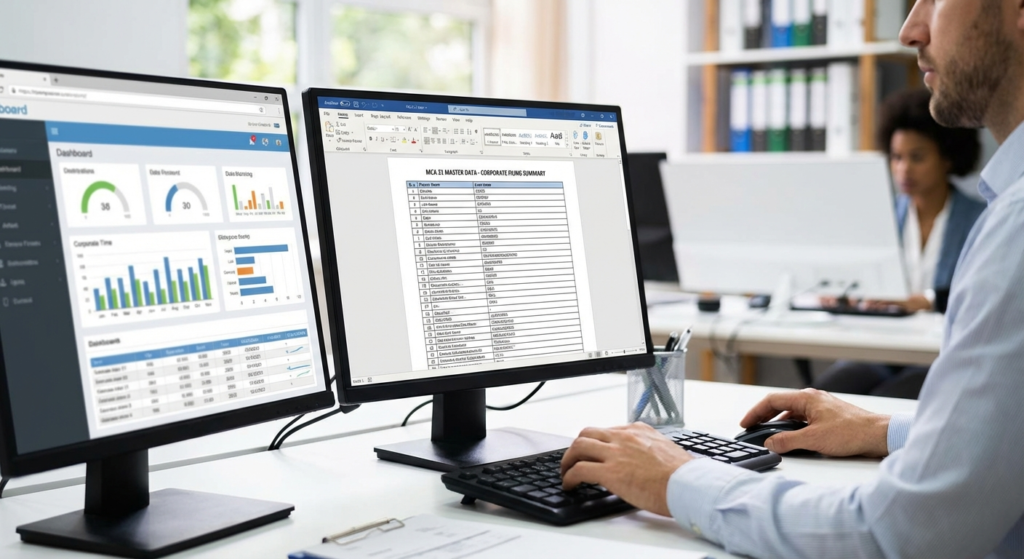
This isn’t a scene from a movie. It’s a real-world scenario that plays out every day, and the tool that provides this life-saving intel is the MCA Master Data. It’s the Indian corporate world’s single source of truth, a digital DNA record for every registered company and LLP.
Forget the jargon and confusing government portals. In this guide, I’ll show you how to read MCA Master Data like a seasoned pro. You’ll learn to verify partners, keep your own business compliant, and spot red flags that others miss. This isn’t just about data; it’s about making smarter, safer business decisions.
What Exactly is MCA Master Data? Your Company’s Public Report Card
Think of MCA Master Data as a company’s official “report card,” publicly available and maintained by India’s Ministry of Corporate Affairs (MCA). It’s the core, legally-binding information that defines a company’s existence. When a business incorporates, every detail from its registration number to its director’s names is fed into this central database. It’s not static. It’s a living document, updated in real-time whenever a company files a change.
Why does this matter so much? Because banks, investors, government agencies, and potential business partners rely on this data as the absolute truth. If your company’s details are wrong, you’re invisible—or worse, you look untrustworthy. Based on our experience with hundreds of businesses, a pristine MCA record is one of the most underrated assets for building credibility.
🎯 Key Takeaway
MCA Master Data is the official, public-facing digital identity for any company or LLP registered in India. It’s your primary tool for verifying a business’s legal status, financial health, and compliance record before you engage with them.
Decoding the Data: Key Components You Can’t Ignore
When you pull up a company’s Master Data, you’re hit with a wall of information. It’s easy to get lost. But a trained eye knows exactly where to look. Let’s break down the most critical components and what they really tell you.
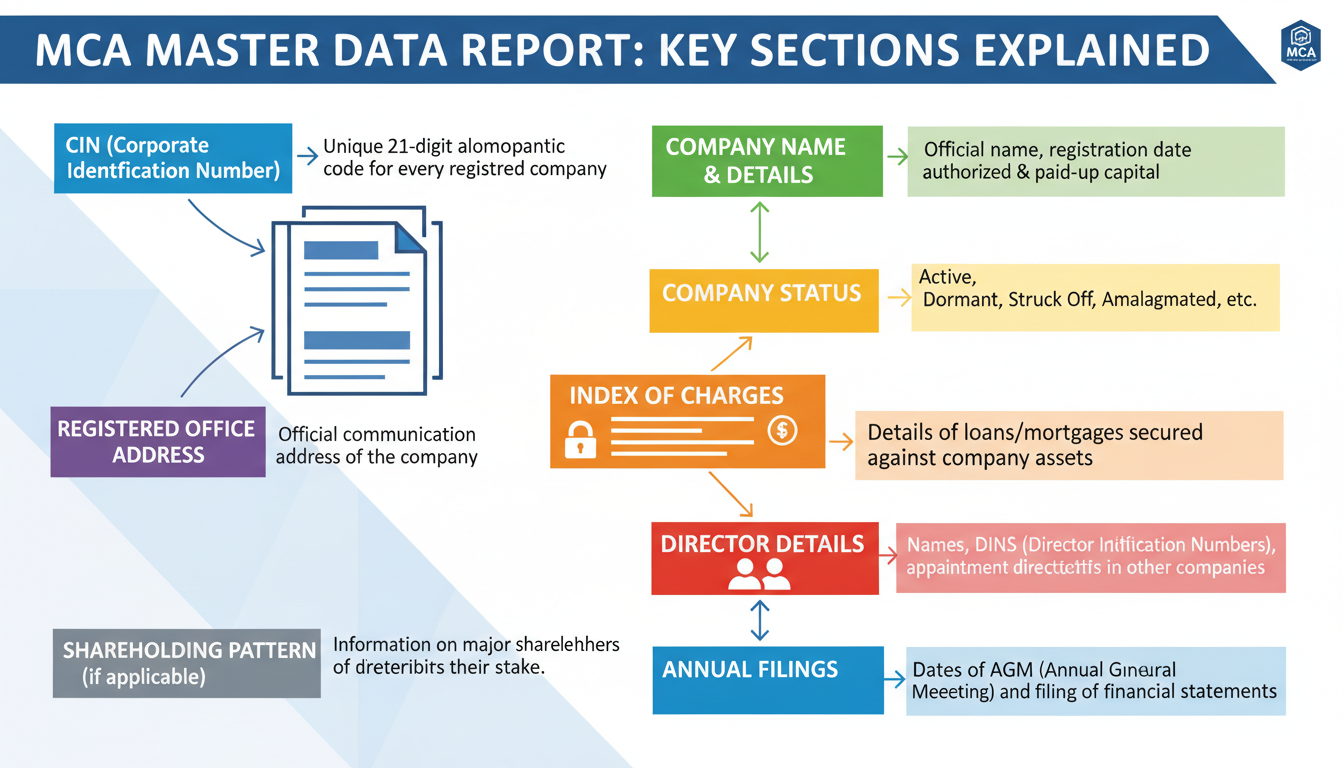
- Corporate Identity Number (CIN): This isn’t just a random number. The 21-digit CIN is a story in itself, revealing the company’s listing status, industry, state, incorporation year, and ownership type. It’s the first check for authenticity.
- Company Status: This is the big one. “Active” is good, but “Active (Compliant)” is better. Anything else—like “Struck Off,” “Under Process of Striking Off,” or “Dormant”—is a major red flag that requires immediate investigation.
- Capital Details: You’ll see ‘Authorized Capital’ (the maximum the company can raise) and ‘Paid-up Capital’ (the amount shareholders have actually paid in). A huge gap between these two can sometimes indicate a company that hasn’t secured the funding it planned for.
- Registered Address: The official address for all legal communications. If a company is operating from a different location and hasn’t updated this, they’re non-compliant, and you might have trouble serving legal notices if a deal goes south.
- Director (Signatory) Details: This section lists the current directors and their Director Identification Numbers (DIN). It’s crucial for verifying who has the legal authority to sign contracts on behalf of the company.
- Index of Charges: This is where you find the skeletons. It lists all secured loans the company has taken against its assets. An “Open” charge means the loan is active. A “Satisfied” charge means it’s paid off. A company claiming to be debt-free with multiple open charges is lying.
⚠️ Watch Out
Don’t confuse “Authorized Capital” with “Paid-up Capital.” Authorized capital is just a ceiling; it’s the paid-up capital that represents the real money invested by shareholders. A company with ₹1 Crore in authorized capital but only ₹1 Lakh paid-up is not as well-funded as it might appear at first glance.
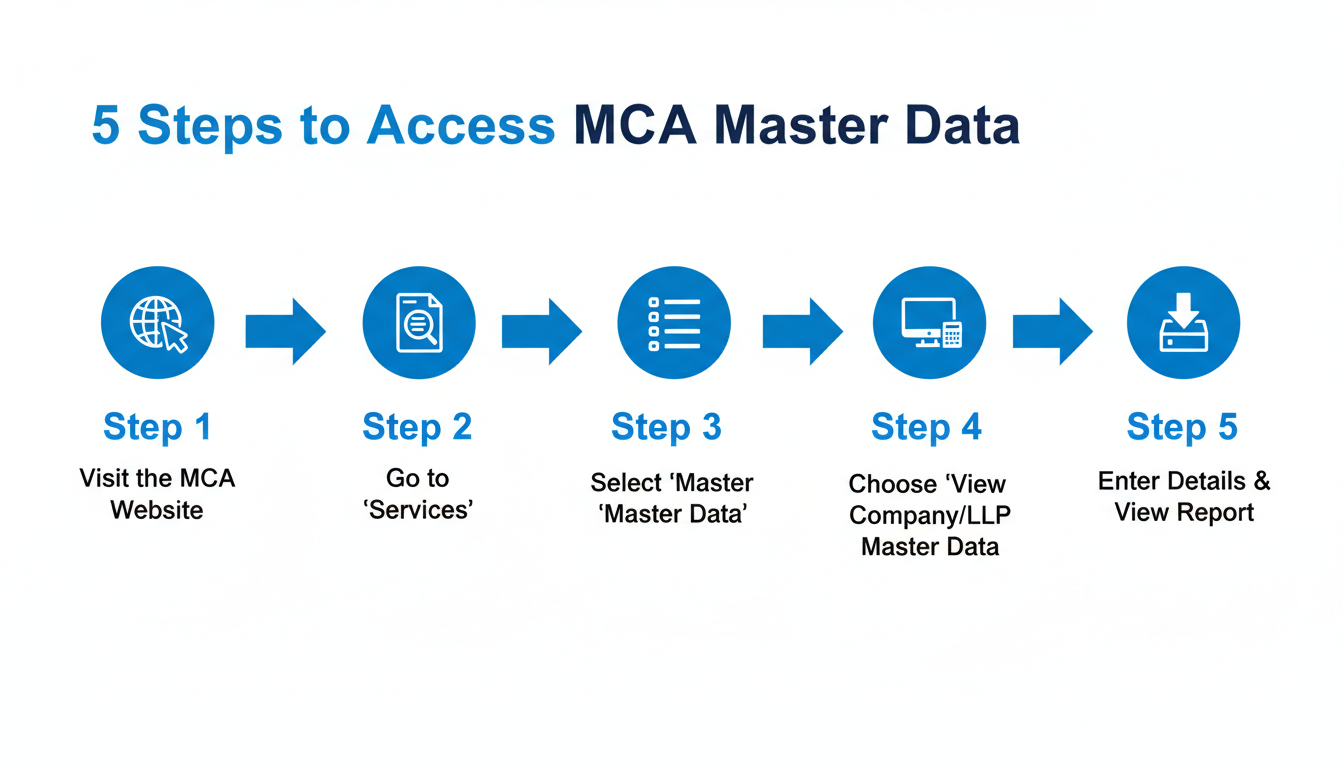
How to Access MCA Master Data in 5 Simple Steps (2026 Guide)
The best part? This powerful tool is completely free and open to the public. You don’t need a special login to view the basic master data. Here’s how you can check any company in under two minutes.
- Go to the Official MCA Portal: Head straight to the source: the Ministry of Corporate Affairs website. Bookmark this page.
- Navigate to MCA Services: In the main menu, find and click on ‘MCA Services’.
- Find the Master Data Link: Look for a sub-menu called ‘Company Services’ or similar, and select ‘View Company or LLP Master Data’. The portal layout sometimes changes, but the terminology stays consistent.
- Enter the Company Identifier: You’ll see a search box. You can enter the company’s full name or, for a precise match, its CIN or LLPIN. If you don’t know the CIN, click the search icon next to the box to look it up by name.
- Verify and Submit: Complete the captcha to prove you’re human and hit ‘Submit’. The complete MCA Master Data sheet will appear on your screen.
💡 Pro Tip
When searching by company name, be specific. A search for “ABC” will yield thousands of results. Try “ABC Solutions Private Limited” instead. If you’re still struggling, try adding the city or state to narrow it down. The system is powerful but requires precise input.
Due Diligence: Using MCA Data to Spot Red Flags
This is where you move from a casual observer to a strategic analyst. Smart business owners use MCA data as their first line of defense. After analyzing thousands of company records, we’ve found that the truth is often hiding in plain sight. Here’s what to look for.
| Data Point | What a Novice Sees | What a Pro Looks For (The Red Flag) |
|---|---|---|
| Company Status | It says “Active.” | The status is “Active” but the “Date of Last AGM” or “Date of Balance Sheet” is over 18 months old. This signals a potentially non-compliant company. |
| Index of Charges | A list of loans. | Multiple recent, high-value charges created. This could indicate the company is in financial distress and desperately seeking funds. |
| Director Details | A list of names. | Frequent changes in directorship. If directors are resigning every few months, it could point to internal turmoil or governance issues. |
| Registered Address | An address. | The address is a generic co-working space or a residential address for a company claiming to have large-scale manufacturing operations. |
Trust me on this one, spending five minutes on this checklist can save you months of headaches and financial loss. It’s a fundamental part of due diligence that, shockingly, many people still skip.
Compliance is Non-Negotiable: Keeping Your Own Record Clean
Now, let’s turn the lens on your own business. Your MCA Master Data isn’t just for others to see; it’s a reflection of your own corporate hygiene. According to The Companies Act, 2013, maintaining accurate records is a legal mandate. Failure to do so has serious consequences.
I’ve seen businesses lose out on crucial bank loans because their registered address on the MCA portal didn’t match their utility bills. I’ve seen investment deals collapse because a new director’s appointment wasn’t filed on time, making their signature invalid.
Here’s a quick comparison of a compliant vs. a non-compliant company’s data:
| Feature | Compliant Company ✅ | Non-Compliant Company ❌ |
|---|---|---|
| Company Status | Active (Compliant) | Active (Non-Compliant) or Struck Off |
| Annual Filings | AGM and Balance Sheet dates are for the last financial year. | Dates are old or blank. |
| Director KYC | All director DINs are ‘Approved’. | DIN status is ‘Deactivated due to non-filing of DIR-3 KYC’. |
| Address | Matches the current operational address. | Shows an old, vacated office address. |
⚠️ Watch Out
An “Active (Non-Compliant)” status is a serious warning. It typically means the company has failed to file its annual returns or other mandatory forms. This can lead to heavy penalties, disqualification of directors, and even the company being struck off by the Registrar of Companies (ROC). DIN Number Search 2026: A 5-Step Guide to Verify Director Details
Help! My MCA Master Data is Wrong. How Do I Fix It?
Finding an error in your company’s data can be stressful, but it’s usually fixable. You can’t just log in and edit it. The data is a reflection of the forms filed with the ROC. To change the data, you must file a new form. Unveiling India’s Union Budget 2025: A Tax Heaven Country
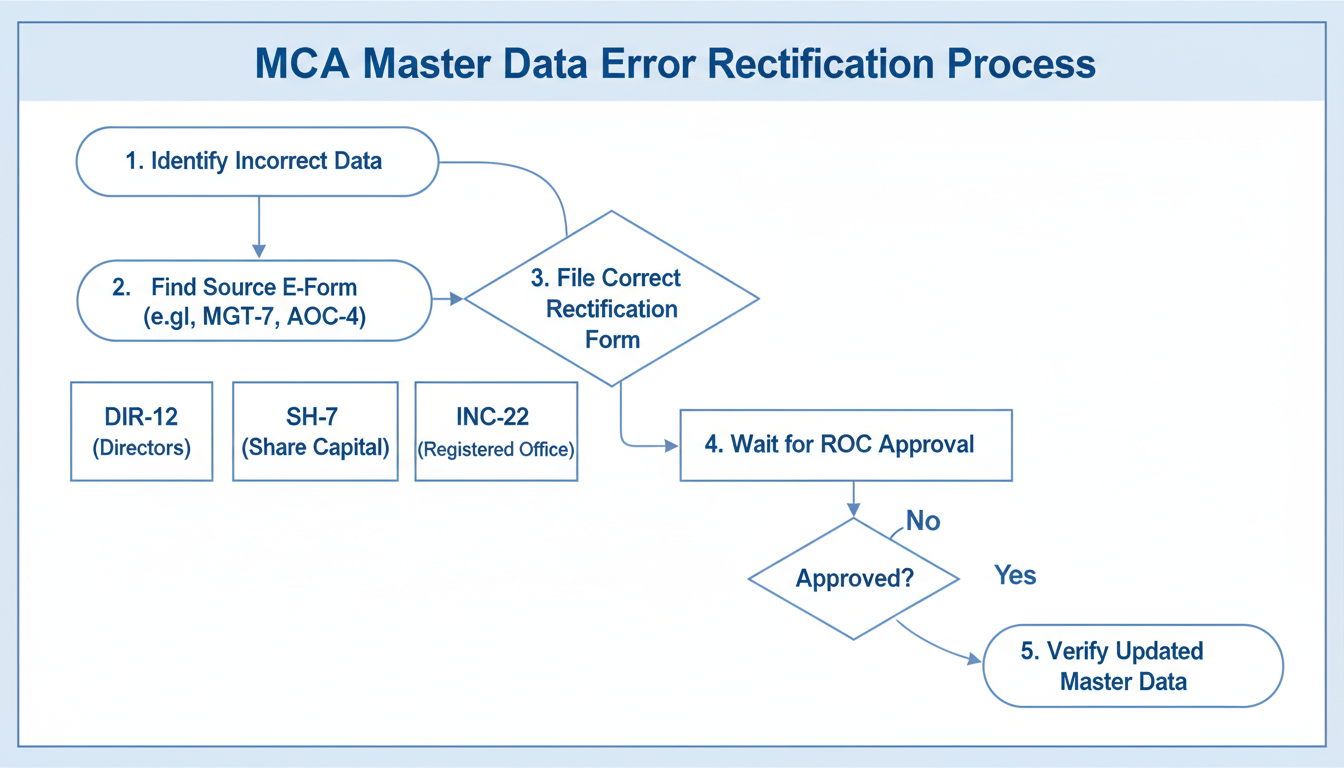
Here’s the general process: 11 Best Tax Saving Investments India: 2025 Wealth Guide
- Identify the Error and its Source: Is it a typo in the address? A former director still listed? Pinpoint the exact mistake. Then, determine which form caused it (e.g., an INC-22 for an address change or a DIR-12 for a director change).
- File the Correct Rectification Form: You’ll need to file a new, correct version of the relevant e-form with the ROC, often with an explanation for the change. For certain complex errors, you may need to file a special form like the GNL-1 to make a representation to the ROC.
- Pay the Fees and Await Approval: There will be standard filing fees, and potentially late fees if you’re correcting an old mistake. Once filed, the ROC will review and approve the form.
- Verify the Change: After a few days, check your MCA Master Data again to ensure the correction has been reflected. If not, you may need to raise a service ticket on the MCA portal.
💡 Pro Tip
For proactive compliance, set a quarterly calendar reminder to check your own company’s MCA Master Data. This 5-minute check can help you catch issues like a missed filing or an incorrect update before they snowball into bigger problems that could jeopardize a deal or a loan application.
The Future is Here: MCA V3 and Data Analytics
The MCA is constantly upgrading its systems. The move to the MCA V3 portal represents a major leap forward. It’s built to be more robust, user-friendly, and heavily reliant on data analytics. What does this mean for you?
The new system is designed to proactively flag non-compliant companies using AI and machine learning. The days of “filing and forgetting” are over. The V3 system performs more stringent validations at the time of form submission, reducing errors and making the master data more reliable than ever.
This shift emphasizes the need for absolute accuracy in all filings. As industry bodies have noted, the system’s intelligence will only grow, making corporate governance and timely compliance more critical than ever for maintaining a healthy business reputation.
Conclusion: Your Next Move
MCA Master Data is far more than a bureaucratic requirement. It’s a powerful strategic tool for offense and defense. It allows you to vet partners with confidence (defense) and present your own business as a credible, transparent entity (offense).
You now have the knowledge to decode this data, spot critical red flags, and ensure your own company’s digital identity is flawless. Don’t just let this information sit. Your next step is simple but crucial.
Go to the MCA portal right now and look up your own company. Then, look up a competitor. Look up a supplier. See what the data tells you. You might be surprised by what you find.
❓ Frequently Asked Questions
Is MCA Master Data available for all businesses in India?
No, it’s only available for entities registered under The Companies Act, which means Private Limited Companies, Public Limited Companies, One Person Companies (OPCs), and Limited Liability Partnerships (LLPs). It does not cover sole proprietorships or traditional partnership firms.
How quickly is the MCA Master Data updated?
It’s updated almost in real-time. Once a company files a form (like for a change of address) and the Registrar of Companies (ROC) approves it, the changes are reflected in the public-facing Master Data, usually within 24-48 hours.
Can I download a copy of the MCA Master Data?
You can view the data for free on the portal and take a screenshot or print the page. For an official, certified copy of a company’s incorporation documents or other filings (which includes master data), you can use the ‘Get Certified Copies’ service on the MCA portal by paying a nominal fee.
What’s the difference between “Active” and “Active (Compliant)” status?
“Active” simply means the company hasn’t been officially struck off the register. However, “Active (Compliant)” is a higher standard. It means the company is active AND has completed its mandatory annual KYC filings (like Form ACTIVE INC-22A and Director KYC). Always prefer to deal with “Active (Compliant)” companies.
Why are the “Signatory Details” sometimes empty?
This is a common issue. It can happen if the directors have not completed their annual DIR-3 KYC filing. When a director’s KYC is pending, their DIN is deactivated, and their name may not appear in the signatory details, which can cause major issues in banking and contract execution.
Read Also:
- Unlock NGO Funding in 2026
- Slash Your 2026 Taxes: Smart Investments Guide
- What is a CIN Certificate? The Ultimate 2026 Guide for India
- PAS-6 Due Date 2026: Your Guide to Flawless Compliance
- Pvt Ltd Company Registration in India: The 2026 Founder’s Playbook
- Income Tax Scrutiny Assessment 2026: A Step-by-Step Guide – Visual Story
- Section 8 Company Registration: The Ultimate 2026 NPO Guide
- MGT-7 Due Date 2026: A Guide to Filing & Avoiding Penalties