Let’s be honest: nobody starts a business because they love filing paperwork. But in India’s current tax regime, your invoice isn’t just a request for payment—it’s the golden ticket to claiming Input Tax Credit (ITC). For any business registered under Goods and Services Tax, the tax invoice is the bedrock of compliance. Mess it up, and you’re looking at disallowed credits, angry clients, and potential fines.
I’ve seen businesses lose lakhs simply because they missed a mandatory field or messed up the timing. Understanding the GST invoicing rules isn’t just ‘nice to have’ anymore—it’s a survival skill. Whether you are a seasoned CA or a founder figuring out the private company registration process, you need to get this right.
In this guide, we’re cutting through the legal jargon of Rule 46 and the 2025 e-invoicing mandates to help you ensure your documentation is audit-proof.
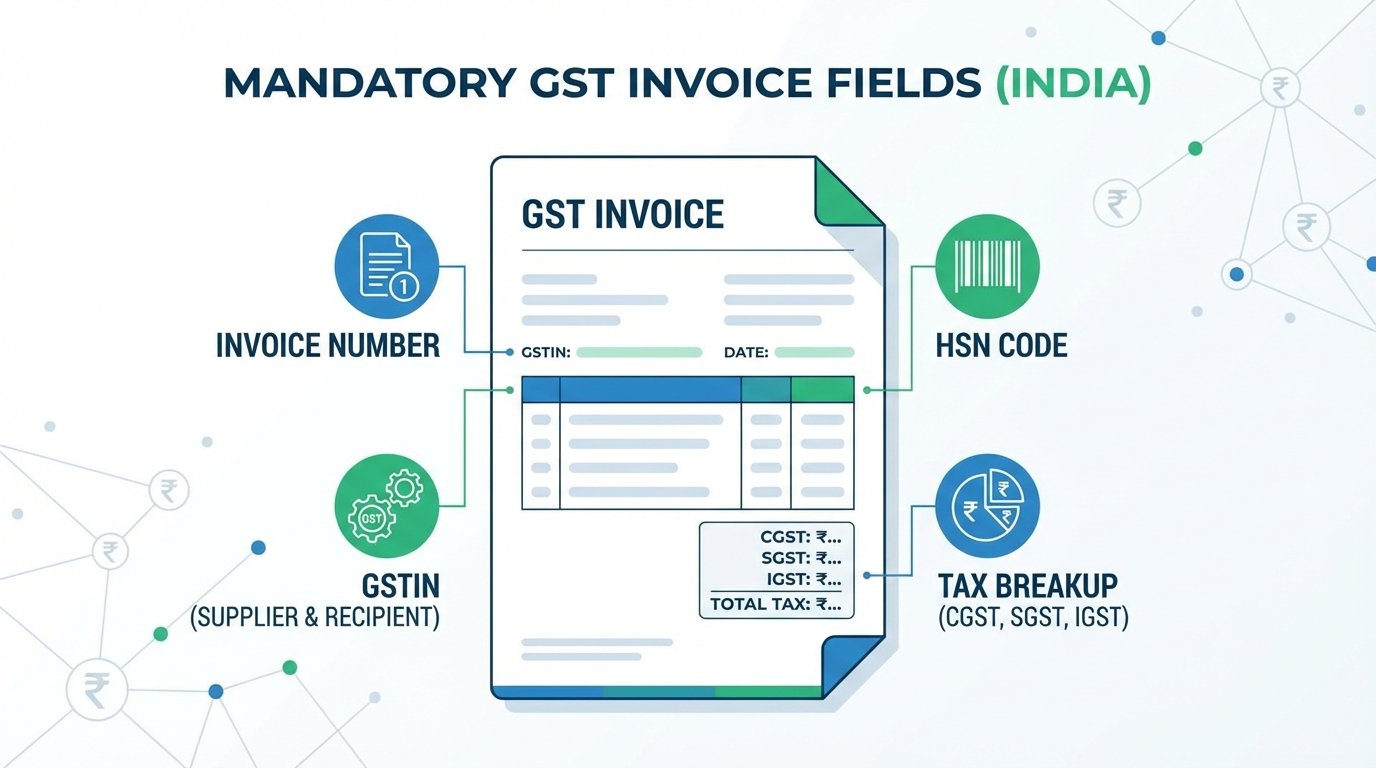
The Non-Negotiables: Mandatory GST Invoicing Rules (Rule 46)
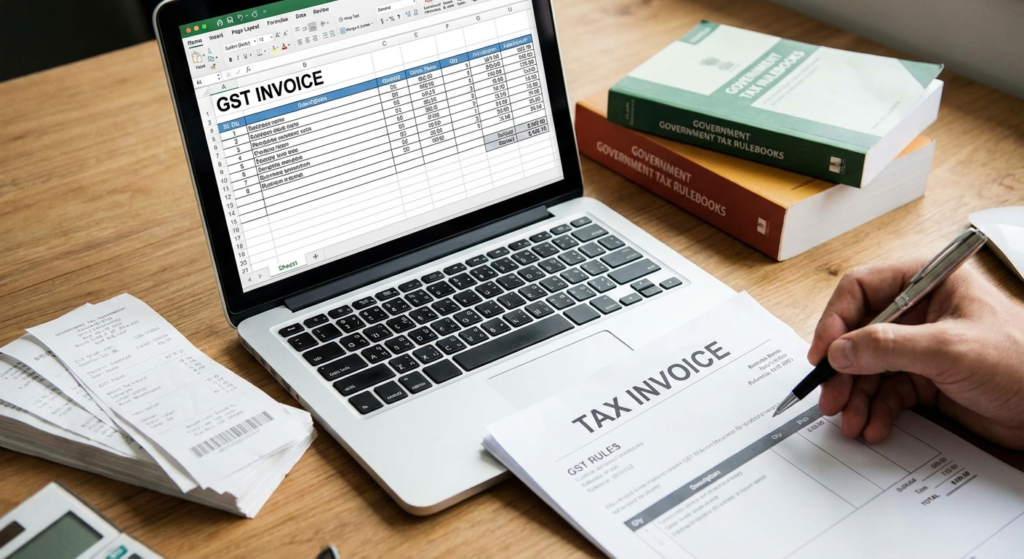
According to the CGST Rules, 2017, a tax invoice is a legal document with strict parameters. The government isn’t flexible here. If you miss specific fields mandated by Rule 46, your buyer can’t claim credit, and that friction can cost you business relationships.
Here is what your invoice must contain to be valid:
- Invoice Number & Date: A consecutive serial number (max 16 characters), unique for that financial year. Don’t restart numbering mid-year!
- Customer Details: Name, address, and GSTIN (if they are registered).
- Supplier Details: Your name, address, and GSTIN.
- HSN/SAC Code: The Harmonized System of Nomenclature for goods or Service Accounting Code for services.
- Description: A clear description of what you are selling.
- Quantum & Value: Quantity (for goods), total value, taxable value, and the tax breakup (CGST, SGST, IGST, UTGST, and Cess).
- Signature: A digital signature (DSC) or a physical signature of the authorized person.
For MSME business owners handling this manually, the risk of error is high. If you are struggling with the paperwork, check out our resources in the MSME category for tools that can help.
Time Limits: When Must You Issue the Invoice?
One question I get asked constantly is, “Can I just issue the invoice at the end of the month?” The answer is usually no. The GST invoicing rules dictate specific timeframes. Miss these, and you could be flagged for non-compliance.
1. For Supply of Goods
If your supply involves moving goods (e.g., shipping a laptop), the invoice must be issued before or at the time of removal of goods. If there’s no movement (e.g., over-the-counter sale), it must be issued at the time of delivery.
2. For Supply of Services
Service providers have a bit more breathing room. You must issue the invoice within 30 days from the date of supply. However, if you are an insurer or a bank, you get 45 days.
Tax Invoice
Issued By: Registered Dealers.
Purpose: Allows the buyer to claim Input Tax Credit (ITC).
Applicability: Taxable supplies to registered or unregistered persons.
Bill of Supply
Issued By: Composition Dealers or for Exempt Goods.
Purpose: No tax collected; buyer cannot claim ITC.
Applicability: Exempt supplies or Composition Scheme taxpayers.
The New Era: E-Invoicing Mandates for 2025
E-Invoicing has completely shifted the landscape. As of the latest updates, if your business has an aggregate turnover exceeding ₹5 Crore in any financial year since 2017-18, you fall under the mandatory e-invoicing ambit.
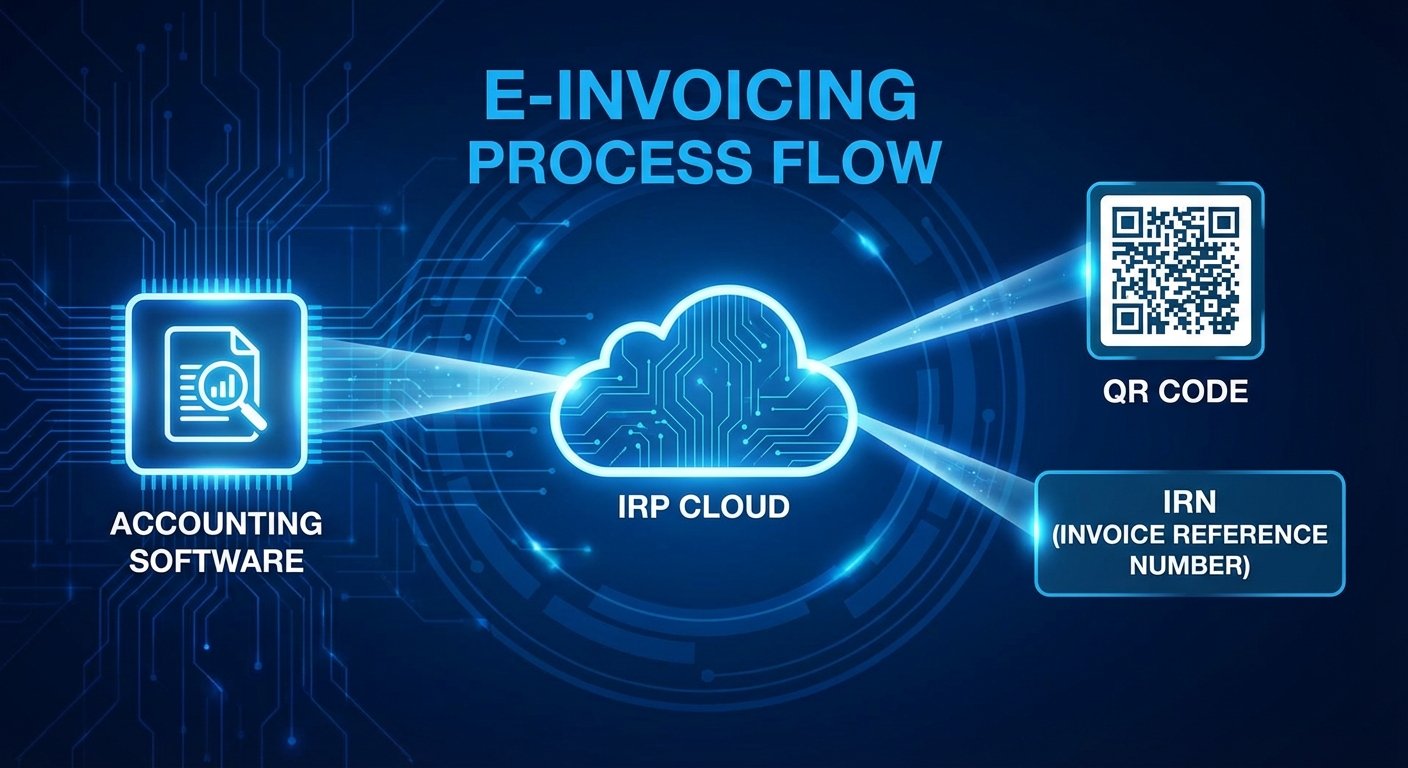
Under these GST invoicing rules, you don’t generate the invoice on the government portal. You generate it on your software, which then talks to the Invoice Registration Portal (IRP). The IRP stamps it with a unique Invoice Reference Number (IRN) and a QR code.
Special Rules for Exports
Exports are zero-rated, but the paperwork is specific. Whether you are exporting goods or services, your invoice needs a specific endorsement heading: Private Company Audit Due Date for F.Y. 2023-24
- “Supply Meant For Export On Payment Of Integrated Tax” (If you paid IGST to claim a refund later)
- “Supply Meant For Export Under Bond Or Letter Of Undertaking Without Payment Of Integrated Tax” (If you are using an LUT)
Also, while you might bill in USD or EUR, you generally need to record the conversion to INR for your GSTR-1 reporting. GeM Portal: What It Is and How to Use It
Penalties: The Cost of Ignoring GST Invoicing Rules
The tax authorities are using data analytics to spot discrepancies faster than ever. Ignoring these rules isn’t just risky; it’s expensive.
Incorrect Invoicing
Penalty: Up to ₹25,000. This kicks in if you issue an invoice incorrectly or simply fail to issue one when required.
Fraudulent Intent
Penalty: 100% of the tax evaded or ₹10,000 (whichever is higher). This applies if you issue invoices without actual supply (fake invoicing).
ITC Denial
Impact: The recipient loses their Input Tax Credit. This damages your business reputation and can lead to lost contracts.
Fixing Mistakes: Debit and Credit Notes
We’re humans; mistakes happen. Maybe you overcharged, or goods were returned. The GST invoicing rules handle this via Debit and Credit Notes. These must be linked to the original invoice in your GST return.
- Credit Note: Issued when you need to reduce the tax liability (e.g., sales return, bad quality, discount given post-sale).
- Debit Note: Issued when you need to increase the tax liability (e.g., you undercharged the customer initially).
The Role of Aggregate Turnover
Your aggregate turnover is the deciding factor for many of these rules (like HSN code digits or E-invoicing applicability). Remember, “Aggregate Turnover” isn’t just your taxable sales. It includes exempt supplies, exports, and inter-state supplies across all your branches with the same PAN.
Always verify the latest limits on the official GST Portal, as notifications change frequently.
Conclusion
Navigating the labyrinth of GST invoicing rules might seem daunting, but it follows a logical structure designed to ensure transparency. From ensuring your invoice carries the correct HSN code to verifying the IRN for e-invoicing, every step protects your business from litigation and ensures smooth cash flow via Input Tax Credit.
As we move further into 2025, automation and strict adherence to these rules will separate compliant, growing businesses from those bogged down by notices. Don’t let a piece of paper be the reason your business stalls.
FAQs on GST Invoicing
Generally, no. You should issue a Tax Invoice for taxable goods and a Bill of Supply for exempt goods. However, if you are dealing with an unregistered person, you may issue a combined “Invoice-cum-Bill of Supply.”
Under current GST invoicing rules: Turnover up to ₹5 Cr requires a 4-digit HSN for B2B. Turnover above ₹5 Cr requires a 6-digit HSN for all invoices.
No. If the e-invoice contains the QR code and IRN generated from the IRP, a physical or digital signature is not required under the IT Act and GST rules.
Once an e-invoice is reported to the IRP, you cannot modify it. You must cancel it within 24 hours and generate a new one. For standard invoices in GSTR-1, you can amend details in subsequent returns, but issuing a debit/credit note is often cleaner for value corrections.
If you skip the registered buyer’s GSTIN, the system treats it as a B2C supply. The buyer will be unable to claim ITC, which will likely lead to a payment dispute with you.