
Ever wonder how a billion-dollar company goes from a wild idea on a coffee-stained napkin to a legal, functioning entity? It’s not magic. It’s a company promoter.
Most people think of founders or CEOs, but there’s a ghost in the machine, a critical figure who operates in the shadows before the company even has a name. This person is the architect, the strategist, and the initial risk-taker all rolled into one. They lay the entire foundation, often bearing immense personal liability, long before the first employee is ever hired.
So, who is a company promoter, really? And why is this the most misunderstood role in business?
In this deep dive, you’re not just getting a textbook definition. You’ll learn the seven core responsibilities that define the role, the critical legal tightrope they walk, and how to distinguish them from directors and founders. By the end, you’ll see business formation in a completely new light. Let’s get into it.
Who is a Promoter? The Official Definition, Demystified
The term ‘promoter’ isn’t just business slang; it’s a specific legal concept with serious implications. While the role feels intuitive, the law has a precise way of identifying who qualifies. According to Section 2(69) of the Indian Companies Act, 2013, a promoter is someone who fits one of these descriptions:
- Named as a Promoter: They are explicitly named as a promoter in the company’s key documents, like the prospectus or the annual return. This is the most straightforward case.
- Controls the Company: They have control over the company’s affairs, either directly or indirectly. This could be through holding a significant number of shares, being a director, or by other means. It’s about influence.
- The “Puppet Master”: The company’s Board of Directors is accustomed to acting on their advice, directions, or instructions. They might not have an official title, but their guidance steers the ship.
Here’s the thing: it’s a functional role. You can be a promoter by your actions, even if you never sign a document that says so. If you’re conceiving the idea, raising the initial funds, and making the key decisions to bring a company to life, you’re likely acting as a promoter. And with that role comes a mountain of responsibility.
The Promoter’s Playbook: 7 Core Responsibilities
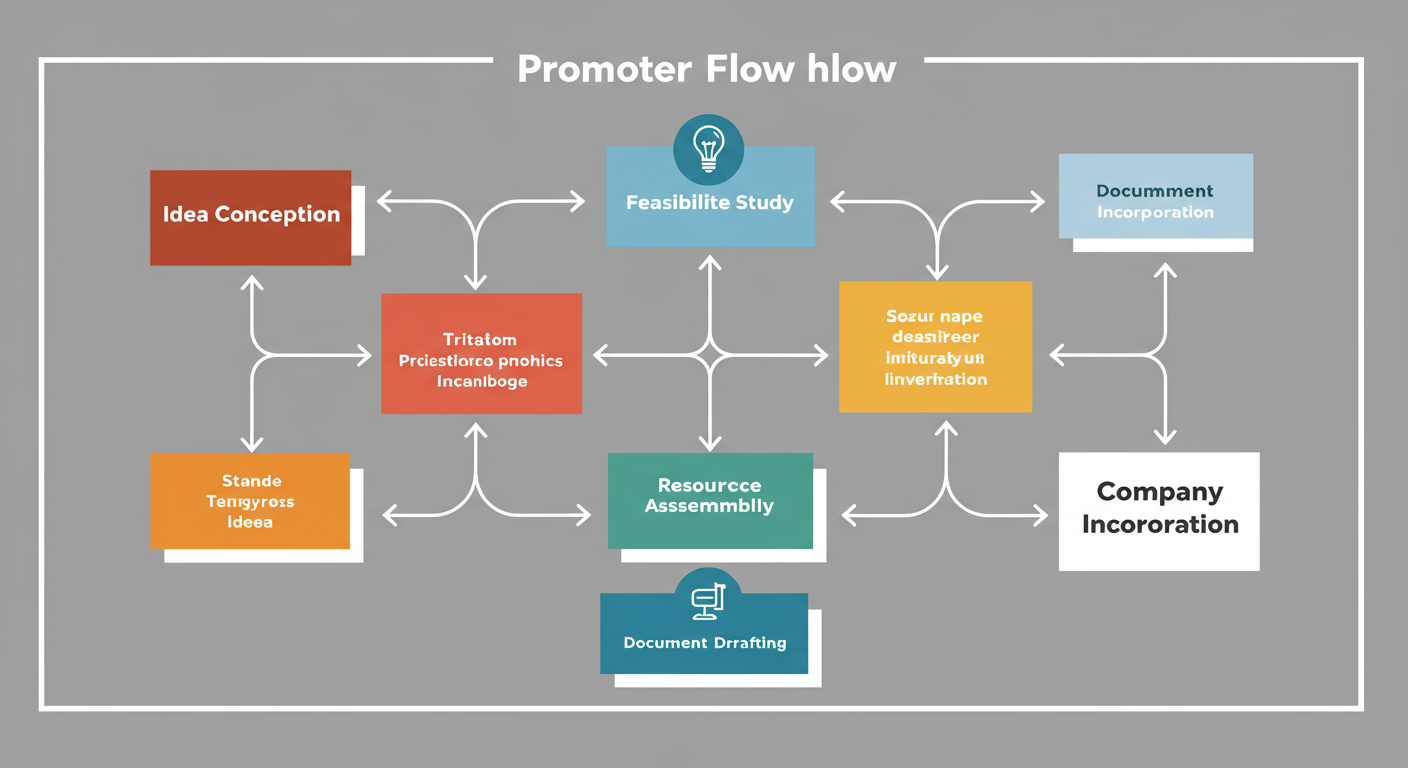
A promoter’s job isn’t a single task; it’s a complex project management challenge that happens before “Day 1.” They are the engine of the pre-incorporation phase. Based on our experience guiding hundreds of new ventures, their work boils down to these seven critical areas.
1. Conceiving the Big Idea (And Proving It’s Not a Dud)
It all starts with a spark. But an idea is worthless without validation. The promoter’s first job is to move beyond the “what if” and rigorously test the concept’s viability. This isn’t just a gut check. It involves deep market research, competitive analysis, and creating a preliminary financial model. Is there a real market? Can it be profitable? What’s the secret sauce? Answering these questions separates a hobby from a business.
2. Assembling the “Day Zero” Resources
Before a company can hire, it needs things. A promoter is the one who pulls these initial resources together. This could mean securing a lease for an office, negotiating with initial suppliers, identifying co-founders or key technical talent, and acquiring essential assets. They are the ultimate deal-makers, piecing together the puzzle before the picture is clear.
💡 Pro Tip
Before you spend a dime, create a Minimum Viable Product (MVP) or a detailed pitch deck. Use this to test your idea with potential customers and investors. Their feedback is more valuable than any market research report and can save you from pursuing a flawed concept.
3. Drafting the Company’s DNA: The MoA and AoA
This is where the legal heavy lifting begins. A promoter oversees the creation of two foundational documents:
- Memorandum of Association (MoA): This defines the company’s purpose, scope, and objectives. It tells the world what the company is being created to do.
- Articles of Association (AoA): This outlines the internal rules of governance. It dictates how the company will be run, from board meetings to shareholder rights.
Getting these documents right is non-negotiable. They are the constitution of the new company.
4. Naming the Business (And Getting It Approved)
What’s in a name? A lot of legal red tape. The promoter chooses a name for the company and then must get it approved by the Registrar of Companies (RoC). The name must be unique and adhere to strict naming conventions. It can’t be too similar to an existing company or trademark, and it can’t be misleading. This seemingly simple step can often involve several attempts.
5. Appointing the First Board of Directors
A company needs leaders from the moment it’s born. The promoter is responsible for nominating and appointing the first directors. These individuals are often named directly in the Articles of Association and are entrusted with managing the company immediately upon its legal formation. In many startups, the promoters themselves become the first directors.
6. Securing the First Cheque: Raising Seed Capital
Ideas and documents don’t pay the bills. The promoter’s most crucial financial task is raising the initial capital. This “seed money” covers incorporation fees, legal costs, and the first few months of operational expenses. This can come from:
- Personal savings (bootstrapping)
- Friends and family
- Angel investors
- Venture capital seed funds
This is a high-stakes sales job, selling a vision of a company that doesn’t exist yet.
⚠️ Watch Out
Any contracts signed on behalf of the “future company” before it’s legally incorporated are called pre-incorporation contracts. The promoter is personally liable for these. If the company decides not to adopt the contract after its formation, the promoter is left holding the bag. Always seek legal counsel before signing anything.
7. Navigating the Incorporation Maze
Finally, the promoter manages the entire process of legally registering the company. This involves filing all the prepared documents, paying the required fees, and obtaining the Certificate of Incorporation from the RoC. This certificate is the company’s official birth certificate.
Promoter vs. Director vs. Founder: Clearing the Confusion
These terms are often used interchangeably, but they mean very different things. I’ve seen this confusion lead to serious governance issues down the line. A promoter can become a director, and a founder is often a promoter, but the roles are distinct. Let’s break it down.
| Role | Primary Focus | Timeline of Involvement | Legal Relationship |
|---|---|---|---|
| Company Promoter | Conception & Formation (Pre-Incorporation) | Begins with the idea; primary duties end at incorporation. | Fiduciary (a relationship of trust with the unborn company). |
| Director | Governance & Management (Post-Incorporation) | Begins after incorporation; ongoing for their term. | Fiduciary and often contractual (as an agent of the company). |
| Founder | Vision & Culture (Conceptual) | Often a lifelong association with the company’s story. | Not a legal term, but typically an occasional promoter who takes on a long-term leadership role (like CEO or Director). |
Think of it this way: The promoter is the architect who designs the skyscraper and gets the building permits. The director is the building manager who runs it day-to-day. And the founder is the visionary whose name is forever associated with the project. Master Your Taxes in 2026: 12 E-Filing Portal Quick Links
The Three Faces of a Promoter
Not all promoters wear the same hat. They come from different backgrounds with unique motivations. Understanding these archetypes helps clarify who you might be dealing with in a business venture. 7 Key Aspects of the Role of Chartered Accountant in Business Success (2025 Guide)

1. The Professional Promoter
These are the specialists. Their entire business is creating other businesses. They are experts in corporate law, finance, and strategy. They’ll identify a market opportunity, build a company from the ground up, stabilize it, and then hand it over to new management or take it public. It’s a calculated, repeatable process for them.
2. The Occasional Promoter (The Passionate Entrepreneur)
This is the most common type. Think of a software developer with a brilliant app idea or a chef who wants to start a restaurant chain. They aren’t in the business of promoting companies; they are driven by a passion for a specific idea. Their goal isn’t to flip the company but to build it and lead it. Most founders fall into this category.
3. The Financial Promoter
This group includes venture capital firms, private equity groups, and investment banks. For them, company promotion is an investment strategy. They provide the financial muscle and strategic oversight to build a company in a promising sector, aiming for a significant return on investment through a future sale or IPO. Their motivation is primarily financial.
🎯 Key Takeaway
A company promoter is the foundational architect of a business, responsible for everything from idea validation to legal incorporation. This role carries immense pre-company risk and a strict fiduciary duty, making it distinct from that of a director or founder.
The Legal Tightrope: A Promoter’s Duties and Liabilities
The power to create a company comes with serious legal obligations. A promoter stands in a fiduciary position relative to the company they are forming. This is a legal relationship of the utmost trust, similar to a trustee for a beneficiary. As the highly respected Harvard Business Review explains, this duty demands loyalty and care. Breaking this trust has severe consequences.
Here’s what that means in practice.
| Fiduciary Duty | What It Means | Consequence of Breach |
|---|---|---|
| No Secret Profits | A promoter cannot personally profit from transactions with the company without full disclosure. (e.g., buying land for $50k and selling it to the new company for $100k without telling anyone). | The company can cancel the transaction or force the promoter to hand over the secret profit. |
| Full and Frank Disclosure | The promoter must disclose any personal interest in any deal the company makes. Transparency is mandatory. | Failure to disclose can lead to the contract being voided and potential legal action for damages. |
| Truthful Prospectus | If the company issues a prospectus to raise public funds, the promoter is liable for any untrue statements or misrepresentations within it. | Promoters can be held personally liable for financial losses suffered by investors who relied on the false information. |
⚠️ Watch Out
The “secret profit” rule is a huge trap. Even if the deal seems fair, the lack of disclosure is what constitutes the breach. From a legal standpoint, the company you’re forming is a separate entity that you have a duty to protect, even from yourself. Always disclose, disclose, disclose.
💡 Pro Tip
How should a promoter be paid? Compensation should be formally documented. Common methods include: reimbursement for all legitimate pre-incorporation expenses (with receipts!), a pre-agreed lump-sum fee, or an allotment of shares (equity) in the new company. This avoids any appearance of secret profits.

Your Step-by-Step Guide to the Promoter’s Incorporation Process
Feeling overwhelmed? Let’s simplify it. Here is the typical step-by-step journey a promoter takes to bring a company to life in 2026.
- Step 1: Validate the Business Idea. Conduct market research, analyze competitors, and build a basic financial projection. Get feedback.
- Step 2: Assemble the Founding Team. Identify co-promoters, initial directors, and any key advisors (legal, financial).
- Step 3: Choose and Reserve the Company Name. Brainstorm names and use the official portal to check for availability and file for reservation.
- Step 4: Draft the MoA and AoA. Work with a legal professional to create the company’s constitutional documents. This is not a DIY job.
- Step 5: Secure Initial Funding. Finalize commitments for seed capital from investors or personal funds. Open a bank account for the proposed company.
- Step 6: File Incorporation Documents. Submit all required forms (like SPICe+ in India), the MoA, the AoA, and director consents to the Registrar of Companies.
- Step 7: Receive the Certificate of Incorporation. Once the RoC verifies everything, they will issue the certificate. The company is now a legal entity, and the promoter’s primary job is done.
❓ Frequently Asked Questions
Can a company have more than one promoter?
Yes, absolutely. It’s very common for a team of co-founders to act as promoters. In this case, they all share the fiduciary duties and liabilities that come with the role.
Is a promoter automatically an employee of the company?
No. The promoter’s relationship is fiduciary, not employment-based. After incorporation, a promoter can be appointed to a role like CEO or Managing Director, at which point they would sign an employment contract and become an employee.
What’s the best way to compensate a promoter?
The cleanest way is through a formal agreement. This can include reimbursement of documented preliminary expenses, a fixed fee, or, most commonly, an equity stake in the new company. The key is transparency and ensuring the compensation is approved by the first board of directors.
Does a promoter’s liability end after the company is formed?
Not entirely. While their main promotional duties are complete, certain liabilities can persist. For instance, a promoter remains liable for misstatements in a prospectus long after the company is up and running. According to Investopedia, a fiduciary’s responsibilities are among the highest recognized by law.
Can a corporation act as a promoter?
Yes. A promoter can be an individual, a group of individuals, or another corporate body. For example, a parent company can act as the promoter for a new subsidiary it is creating.
Conclusion: The Unsung Hero of Every Business Story
So, who is a company promoter? They are the indispensable, unsung heroes of the business world. They are not just founders with an idea; they are the architects who draw the blueprints, the engineers who lay the foundation, and the initial guardians who protect the company before it can protect itself.
From navigating the legal maze of incorporation to bearing personal risk for pre-company contracts, the promoter’s role is foundational. It’s a role defined by vision, execution, and an unwavering fiduciary trust.
The next time you see a successful company, look past the flashy CEO and the bustling office. Remember the promoter who, months or years earlier, was working in the shadows, turning a simple concept into a concrete reality. Now that you understand the weight of this role, you’re better equipped to either step into it yourself or to evaluate the foundation of any new venture you encounter.