It starts with a single click. A simple “I Agree.” Or maybe a quick signature on a PDF that you barely skimmed. You just hired a new marketing agency, signed up for a SaaS tool, or leased a new piece of equipment. The deal is done. Or is it?
Months later, disaster strikes. The software crashes, wiping out a week’s worth of critical data. The agency’s campaign accidentally uses a copyrighted image, and now you’re facing a demand letter. Suddenly, you’re scrambling, trying to figure out who’s responsible. You dig up that contract and your stomach drops as you read the “Limitation of Liability” section for the first time. The provider’s total liability? Capped at the last month’s fee of $299. Your total loss? Over $20,000.
This isn’t a scare tactic. It’s a scenario that plays out every single day. These powerful, risk-shifting sentences—liability clauses—are the most important and most overlooked part of any agreement. They are the legal guardrails that determine your financial exposure when things go wrong.
In this article, we’re not just going to tell you what they are. We’re going to show you exactly where to find them, how to decode their language, and how to spot the red flags that can save your business from financial ruin. Let’s get started.
Decoding the Fine Print: What Is a Liability Clause, Really?
Before we go on a hunt for the liability clause location, let’s get crystal clear on what we’re looking for. A liability clause is a provision in a contract that manages risk by allocating responsibility for potential damages, losses, or legal claims. Think of it as the prenuptial agreement of your business deal. It spells out who pays for the broken dishes.
These clauses aren’t just for massive corporations. They’re critical for freelancers, small businesses, and anyone signing a contract. Based on our experience reviewing thousands of agreements, they typically fall into three main categories.
| Clause Type | Primary Function | Common Example |
|---|---|---|
| Limitation of Liability | Caps the maximum amount of money one party can be forced to pay for damages. | “Party A’s total liability under this agreement shall not exceed the total fees paid by Party B in the preceding six (6) months.” |
| Exclusion Clause (Exculpatory) | Attempts to completely absolve a party from responsibility for specific types of damages. | “In no event shall the software provider be liable for any lost profits, lost data, or other indirect or consequential damages.” |
| Indemnity Clause | One party promises to cover the other party’s losses if a third party sues them over something related to the contract. | “The Contractor agrees to indemnify and hold harmless the Client from any claims arising from injuries to the Contractor’s employees on the job site.” |
Understanding these distinctions is the first step. A limitation clause might be acceptable, but a broad exclusion clause could be a deal-breaker. Knowing the difference is power.
The Hunt: 7 Key Documents Where Liability Clauses Hide
Liability clauses are masters of disguise, appearing in documents you might consider trivial. Here are the seven most common places you’ll find them. Ignoring them is a gamble you can’t afford to take.
1. Service Agreements & Professional Contracts
This is the big one. Whether you’re a freelancer signing a client or a business hiring a consultant, the service agreement is ground zero for liability. This clause defines the boundaries of professional responsibility. I’ve seen this play out countless times: a well-drafted clause protects a web developer when a client’s business fails for unrelated reasons, while a poorly drafted one can drag them into a costly legal battle.
What to look for: Headings like “Limitation of Liability,” “Professional Responsibility,” or “Indemnification.”
2. Terms of Service (ToS) / Terms & Conditions (T&C)
You know that box you check without reading? It’s legally binding. Every app, SaaS product, and website you use has a ToS agreement packed with liability-limiting language. These “click-wrap” agreements are designed to shield the company from almost everything—service outages, data loss, software bugs, you name it. While their enforceability can be challenged, they are a formidable first line of defense for tech companies.
⚠️ Watch Out
The “I Agree” button is a legally binding action. Courts have consistently upheld click-wrap agreements. Never assume you can ignore the terms just because you didn’t print and sign them. You are agreeing that the provider’s liability clause location is within those terms, and you’ve accepted them.
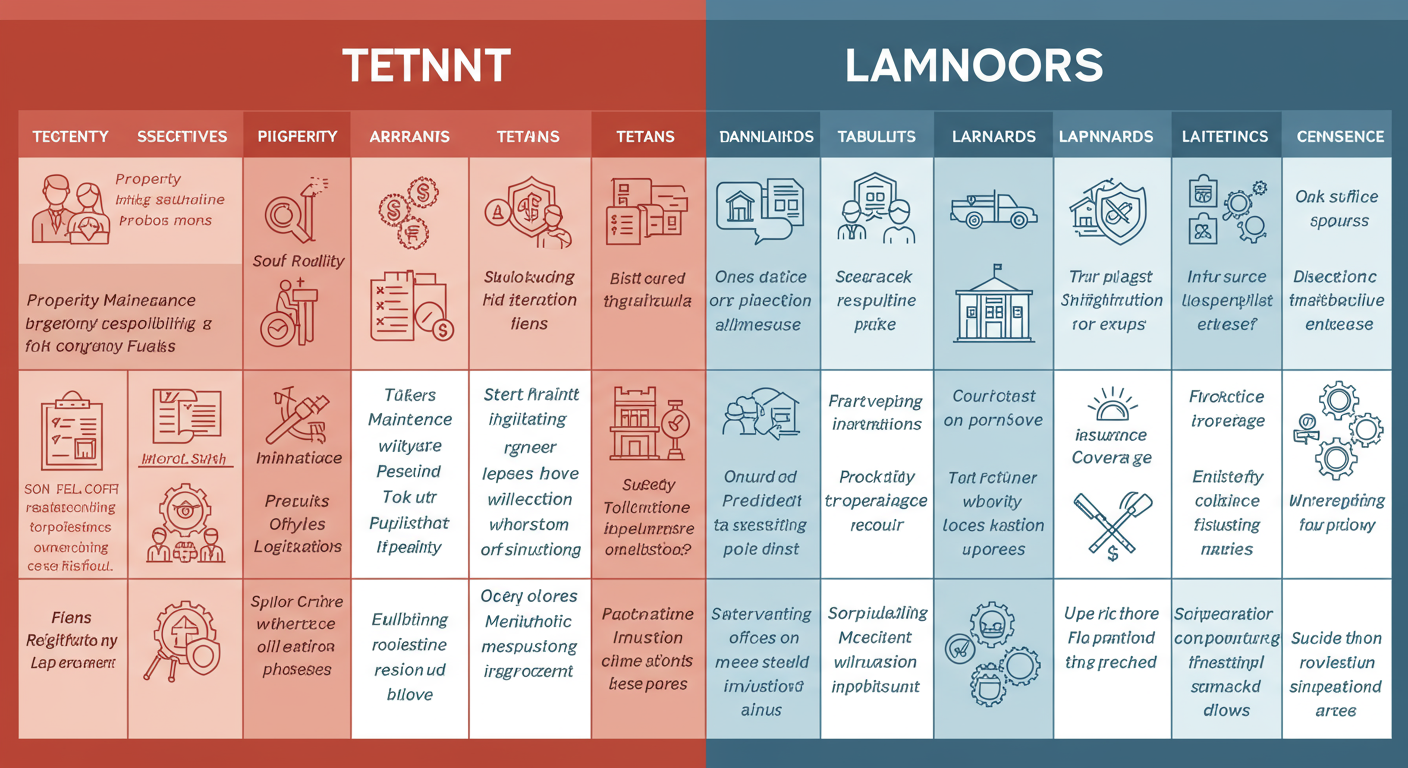
3. Rental & Lease Agreements (Property and Equipment)
Renting an apartment, a car, or even a photocopier for the office? The lease agreement is a minefield of liability clauses. These provisions dictate who pays for damages to the property, injuries on the premises, and other potential disasters. For a commercial lease, this section can determine if you’re on the hook for a slip-and-fall lawsuit from a customer. It’s absolutely critical reading.
4. Purchase Orders & Invoices
Here’s a spot most people miss. Many businesses print their standard terms and conditions on the back of purchase orders (POs) and invoices. This “fine print” often includes a liability clause that dramatically alters the deal. For example, it might limit a supplier’s liability for a defective part to merely the cost of the part itself, ignoring the $50,000 in production downtime it caused you. Always flip the paper over.
5. Employment Contracts & Offer Letters
In an employment context, these clauses define an employee’s duties and the consequences of their actions. They might hold an employee financially responsible for damages caused by gross negligence or a breach of an NDA. More importantly, they often indemnify the company’s directors and officers, protecting their personal assets from lawsuits related to their corporate duties. As an employee, it also clarifies the limits of your liability when acting within the scope of your job.
💡 Pro Tip
When reviewing an employment contract, check if the indemnification for officers is “mutual.” Does the company also agree to cover your legal fees if you are sued for actions you took in good faith as part of your job? This is a key protection you should look for.
6. Website Disclaimers & Privacy Policies
While not a formal two-party contract, these documents function as a public declaration of limited liability. A financial advice blog will have a disclaimer stating its content is for informational purposes only and they aren’t liable for your investment losses. Privacy policies may attempt to limit liability for data breaches, though regulations like the GDPR and various state-level privacy laws have significantly strengthened consumer rights in this area. According to Cornell Law School’s Legal Information Institute, liability is a cornerstone of ensuring legal duties are upheld, and these regulations are a key example.
7. Partnership & Shareholder Agreements
For any business with more than one owner, this is the foundational document. A partnership agreement explicitly states the liability of each partner for the business’s debts. A shareholder agreement defines the protections for the board of directors. Understanding the liability clause location in these documents is fundamental to knowing your personal risk exposure as a business owner. It’s the difference between corporate debts staying with the company versus them coming after your personal home.
🎯 Key Takeaway
Liability clauses are not just in major contracts; they are embedded in everyday business documents like invoices, terms of service, and lease agreements. Proactively finding and understanding these clauses is the single most effective step you can take to manage your contractual risk.
Your 4-Step Blueprint for Analyzing Any Liability Clause
Finding the clause is only the first step. You need to decode what it actually means. Don’t let the legalese intimidate you. Use this simple, four-step process we use in our own contract reviews.
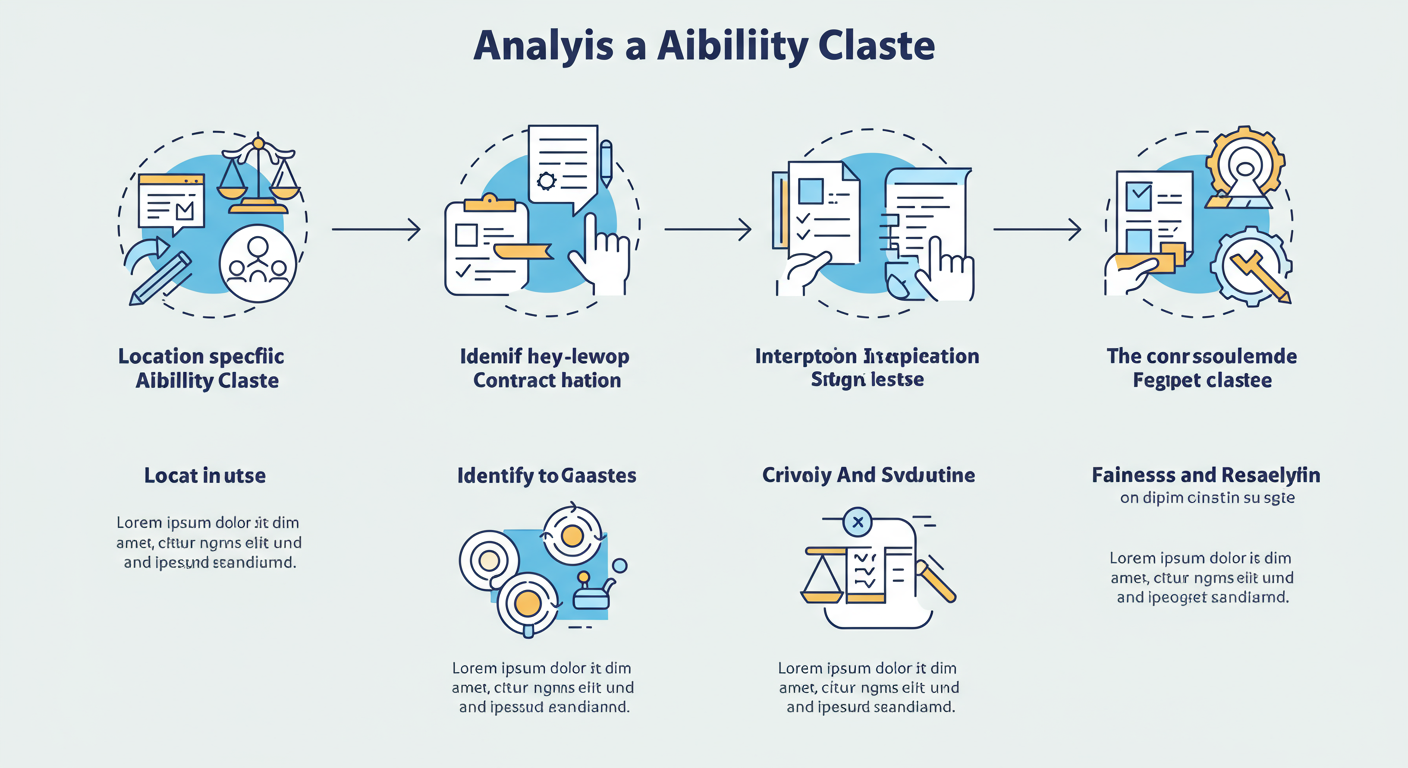
- Locate the Language: Scan the document’s table of contents or use Ctrl+F to search for keywords. Look for headings and phrases like: “Liability,” “Limitation of Liability,” “Indemnity,” “Disclaimer of Warranties,” and “Exculpation.”
- Define the Scope: Ask yourself: Who is being protected? What specific events does it cover (e.g., negligence, data loss, product failure)? What types of damages are excluded (e.g., “indirect,” “consequential,” “lost profits”)?
- Quantify the Cap: This is the most important part. Is the liability capped at a specific dollar amount? The value of the contract? The fees paid over the last 3, 6, or 12 months? A clause without a clear financial cap is a major red flag.
- Identify the “Carve-Outs”: No limitation of liability is absolute. Look for exceptions. Liability is almost never limited for things like “gross negligence,” “willful misconduct,” “fraud,” or “breach of confidentiality.” These carve-outs tell you where the line of protection ends.
Let’s see how this works in the real world.
Before & After: The Impact of a Negotiated Clause
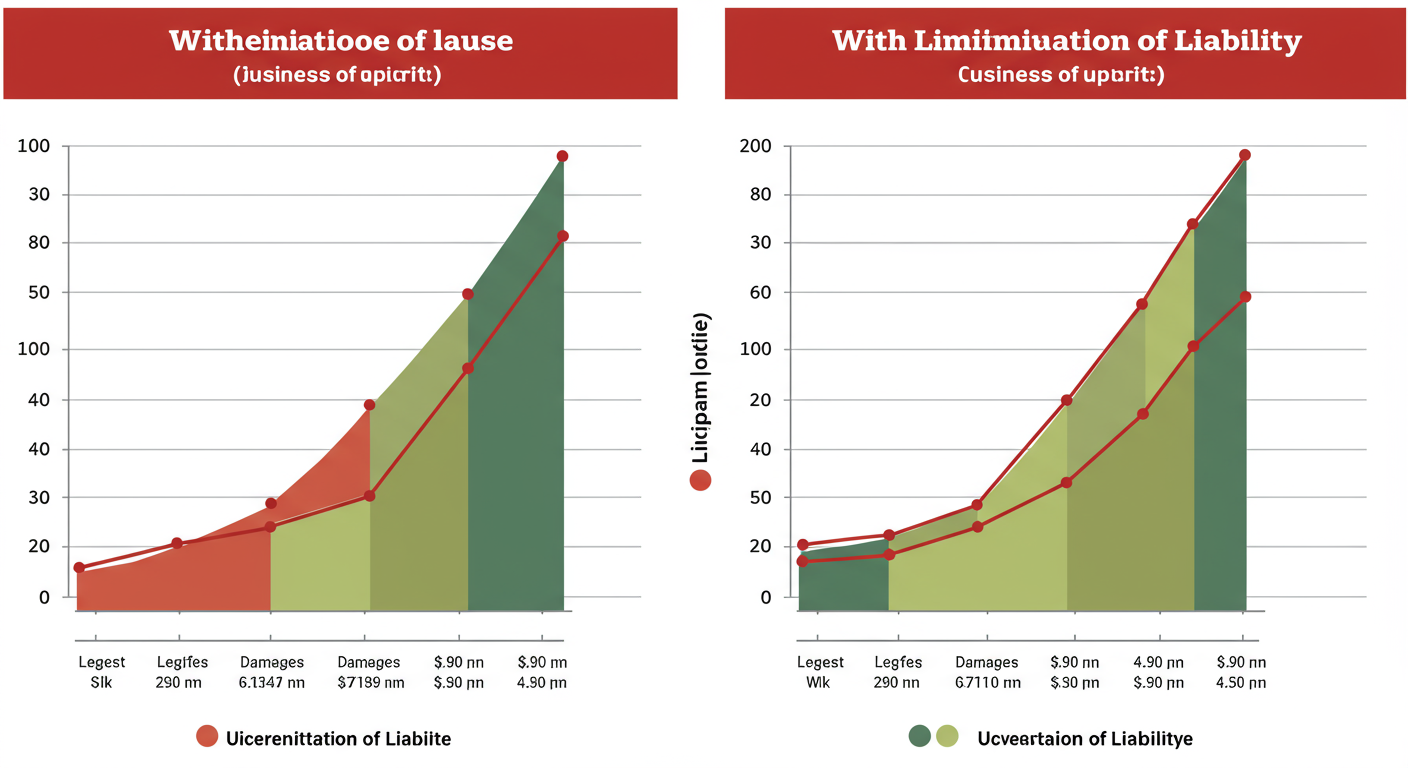
Imagine you’re hiring a software developer for a $15,000 project. Here’s the difference between accepting their standard clause and negotiating a fair one.
| Scenario | Original “Boilerplate” Clause | Negotiated “Fair” Clause |
|---|---|---|
| The Clause | “Developer’s total liability for any and all claims shall be limited to the fees paid in the one (1) month preceding the claim.” | “Developer’s total liability shall be limited to the total value of this contract ($15,000). This limitation shall not apply to breaches of confidentiality, gross negligence, or willful misconduct.” |
| The Disaster | A critical bug in the developer’s code corrupts your customer database, causing $30,000 in damages. | |
| The Outcome | Your maximum legal recovery is capped at one month’s fee (e.g., $5,000). You absorb a $25,000 loss. | Your maximum legal recovery is capped at $15,000. You also have full recourse if the act was grossly negligent. This is a much more balanced risk. |
💡 Pro Tip
When negotiating, propose a “mutual” limitation of liability. If they want to cap their liability at the contract value, it’s fair for your liability to be capped at the same amount. This demonstrates a partnership approach to risk and is often seen as a reasonable request. Many government resources, like those from the U.S. Small Business Administration, emphasize the importance of clear and fair contract terms.
⚠️ Watch Out
Beware of overly broad or one-sided language. A clause that tries to absolve a party of all liability for everything, forever is a huge red flag. Courts often find such clauses “unconscionable” and may refuse to enforce them. As a general rule, a party cannot contract away their liability for intentional harm or gross negligence. Industry bodies like the International Bar Association frequently publish guidance on principles of contractual fairness.
Conclusion: Your First Line of Defense
The question isn’t if you’ll encounter a liability clause; it’s where it’s hiding and what it says. These clauses are the silent architects of your contractual risk. They’re not just “fine print”—they are the core of the agreement that dictates the financial consequences when a deal goes south.
You now have the map. You know the seven most common hiding spots, from sprawling service agreements to the back of a simple invoice. You have a four-step blueprint to analyze any clause you find. You’ve seen the dramatic, real-world difference between a boilerplate clause and a fairly negotiated one.
Trust me on this one: the five minutes you spend locating and reading the liability clause are the highest-ROI activity you can perform before signing any document. The next time a contract lands on your desk, don’t just skim. Hunt for that clause. Read it. Understand it. It’s your proactive defense in a world of hidden risks.
❓ Frequently Asked Questions
Can a liability clause ever eliminate all responsibility?
Generally, no. Courts in most jurisdictions will not enforce a clause that attempts to waive a party’s liability for gross negligence, willful misconduct, fraud, or illegal acts. These are typically considered against public policy and are unenforceable.
Are liability clauses in online “click-through” agreements really enforceable?
Yes, they are usually enforceable. However, their power isn’t absolute. A court might scrutinize them for fairness, especially if the terms are buried, written in confusing language, or are excessively one-sided (“unconscionable”). But you should always operate under the assumption that they are valid.
What’s the difference between a limitation of liability and an indemnity clause?
They’re related but different. A limitation of liability clause caps your own financial exposure in a direct claim from the other party in the contract. An indemnity clause is a promise to pay for the other party’s losses if a third party (someone outside the contract) sues them because of something you did.
What should I do if I don’t understand a liability clause?
Do not sign the agreement. Your first step is to ask the other party for clarification, preferably in writing. For any significant contract, your best move is to invest in a review from a qualified legal professional. That small upfront cost can save you a fortune later.
Where is a liability clause stated for a simple online purchase?
For a typical e-commerce transaction, the liability clause location is in the “Terms and Conditions” or “Terms of Sale” page. You implicitly agree to these terms when you complete your purchase. The clause almost always limits the retailer’s liability to, at most, the total cost of the product you bought.