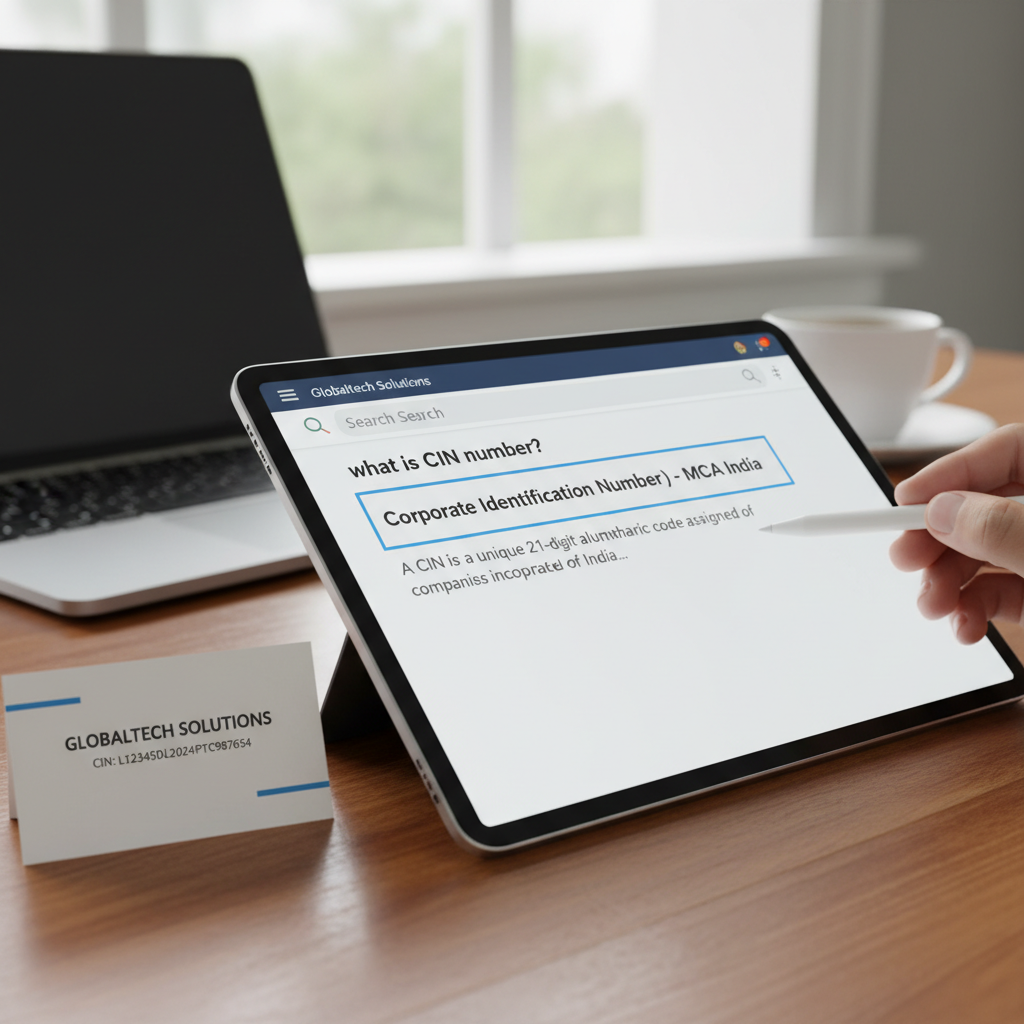
Imagine this: You’re about to sign a million-dollar deal with a new supplier. They talk a great game, their website is slick, and the initial meetings went perfectly. But a nagging voice in your head asks, “Are they legit?” How do you really know who you’re getting into business with?
In India, the answer isn’t a gut feeling. It’s a public record. It’s called the MCA master data, and it’s the single most powerful tool for corporate transparency in the country. This isn’t just another government database; it’s the official, unvarnished truth about every registered company and LLP.
Forget marketing fluff. This is where you find the facts. In this guide, we’re not just going to show you how to look up a company. We’ll teach you how to read between the lines, spot critical red flags, and use this data to make smarter, safer, and more strategic business decisions. Let’s pull back the curtain.
🎯 Key Takeaway
MCA master data is your free, real-time window into the legal and financial backbone of any company in India. Mastering this tool moves you from guesswork to data-driven confidence, transforming how you handle everything from due diligence to competitive analysis.
What Exactly is MCA Master Data? (And Why It’s Your Secret Weapon)
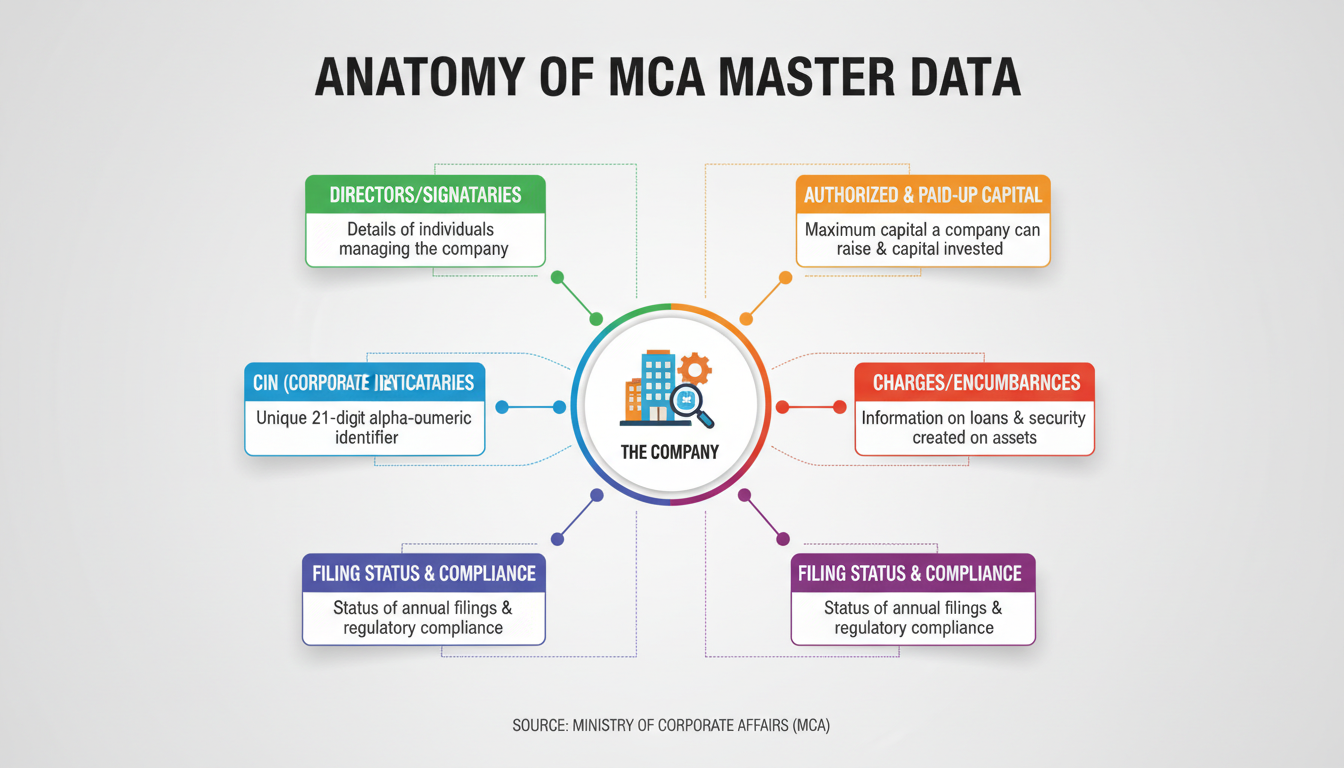
Think of the MCA master data as a company’s official passport. It’s a detailed, publicly accessible summary of a company’s or LLP’s corporate information, maintained by the Ministry of Corporate Affairs (MCA) and sourced directly from documents filed with the Registrar of Companies (ROC).
This isn’t some static, outdated file. It’s a living document. When a company appoints a new director, takes out a major loan, or files its annual returns, the master data updates almost instantly. It’s governed by the Companies Act, 2013, which mandates this level of transparency to protect investors, partners, and the public.
In our experience analyzing hundreds of these reports, the true value isn’t just in what’s there, but also in what’s missing. A recent filing date for the balance sheet? Good sign. A six-month gap? That’s a conversation starter.
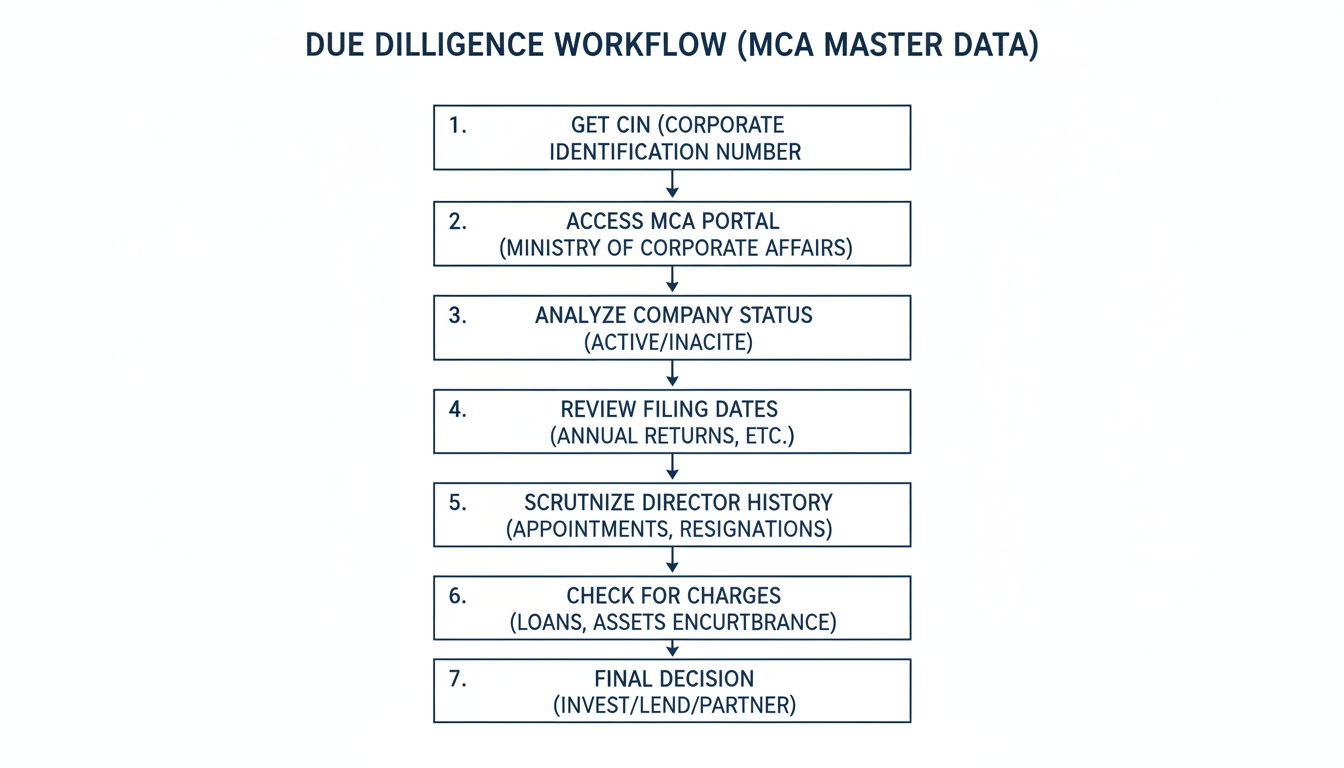
How to Access MCA Master Data in 7 Simple Steps (2026 Update)
The MCA has made accessing this information surprisingly straightforward. You don’t need a special account or any professional help to get the basics. Here’s the exact process we use every day.
- Head to the Source: Open your browser and navigate to the official MCA portal (mca.gov.in). This is the only place to get real-time, verified data.
- Locate ‘MCA Services’: On the homepage menu, find and click on the ‘MCA Services’ tab. A large dropdown menu will appear.
- Select the Right Tool: From the menu, navigate to ‘Master Data Services’ and then click on ‘View Company/LLP Master Data’. This takes you directly to the search page.
- Enter the Company Identifier (CIN): You’ll see a search box. Here, you need to enter the company’s unique 21-digit Corporate Identity Number (CIN) or an LLP’s Identification Number (LLPIN).
- Don’t Know the CIN? No Problem. If you don’t have the CIN, click the small search icon next to the input box. A pop-up will let you search by company name. It’s a lifesaver.
- Prove You’re Human: Enter the characters from the CAPTCHA image into the text box. It’s a standard security check.
- View & Save: Click ‘Submit’. The complete master data report will load instantly on your screen. You’ll see options to ‘Export to Excel’ or ‘Print’. We always recommend saving a copy for your records.
💡 Pro Tip
When searching for a CIN by name, less is more. If the company name is “Acme Innovative Global Solutions Private Limited,” just searching for “Acme Innovative” will often yield better results than typing the full, complex name where a single typo could derail your search.
Decoding the Report: What the Data Actually Means
Okay, you’ve got the report. It’s a wall of text and numbers. What should you focus on? Let’s break it down into actionable insights. After testing countless reports, we’ve found these are the sections that tell the most compelling story about a company’s health and history.
Section 1: The Company’s Identity Card
This is the top section, covering the absolute basics. Pay close attention to:
- Company Name & CIN: Double-check that it matches the company you intended to look up. Simple, but crucial.
- Date of Incorporation: How long has the company been around? A long history can suggest stability.
- Company Status (for e-filing): This is critical. ‘Active’ is what you want to see. Anything else—like ‘Under Process of Striking Off’ or ‘Dormant’—is a major red flag that requires immediate investigation.
- Registered Address: Does this look like a legitimate business address or a residential one? For larger companies, you’d expect a commercial address.
Section 2: Financial Health & Compliance Snapshot
This part gives you a high-level view of the company’s financial structure and how seriously they take their legal obligations.
| Data Point | What It Means | What It Signals (E-E-A-T) |
|---|---|---|
| Authorised Capital | The maximum capital the company is legally allowed to raise. | A high number suggests ambition and plans for growth. |
| Paid-up Capital | The actual money invested by shareholders. This is a real measure of scale. | A very low paid-up capital (e.g., ₹1 Lakh) for a company claiming large operations is a mismatch to investigate. |
| Date of Last AGM | The date of the last Annual General Meeting. | A recent date shows the company is active and meeting its compliance calendar. An old date is a warning sign. |
| Date of Balance Sheet | The date of the last financial statement filed. | This is a key indicator of good governance. If it’s more than a year old, they are likely non-compliant. |
⚠️ Watch Out
The master data shows when the last balance sheet was filed, not the balance sheet itself. It’s a compliance check, not a financial audit. To see the actual numbers, you must use the ‘View Public Documents’ service on the MCA portal, which is a paid feature.
Section 3: The People in Charge (Director Details)
Who is steering the ship? This section lists every director associated with the company.
- Director Identification Number (DIN) & Name: You can use the DIN to look up a director’s history and see what other companies they are involved with. This is an advanced due diligence technique.
- Date of Appointment: A stable board with long-serving directors can indicate a healthy company culture. A high turnover of directors? That’s a potential red flag.
- End Date of Appointment: If this field is filled, the director has resigned. A string of recent resignations is a major cause for concern.
Section 4: Debt & Liabilities (Charges Registered)
This is arguably the most important section for investors and lenders. A ‘charge’ is essentially a loan secured against the company’s assets (like property or inventory). GST Input Tax Credit: Top 10 Common Mistakes to Avoid
- Charge ID & Amount: This tells you how much debt the company has taken on that is secured by its assets.
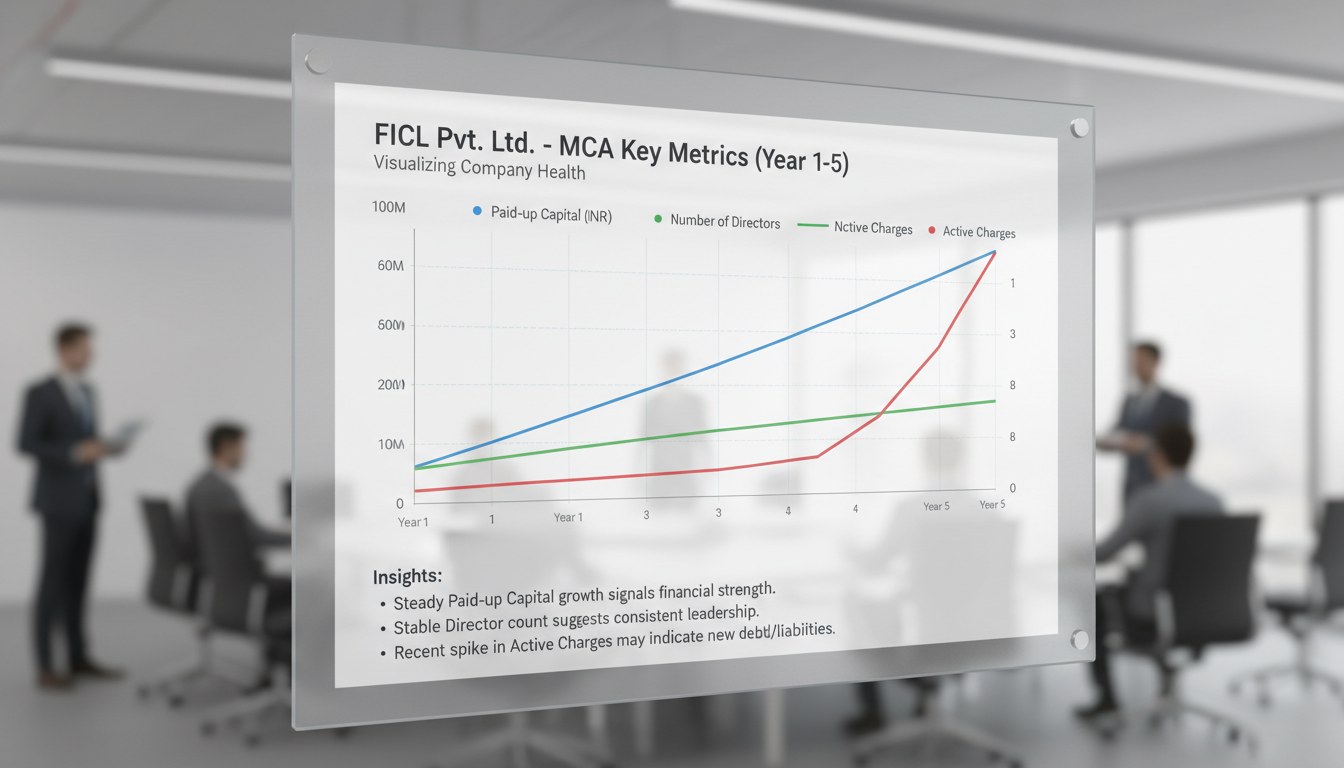
- Date of Creation: When was the loan taken? A recent flurry of large loans could signal expansion… or distress.
- Status: ‘Open’ means the loan is still active. ‘Closed’ means it has been paid off. A long list of ‘Open’ charges indicates high leverage.
💡 Pro Tip
When analyzing charges, look at the ‘Holder of Charge’ field. This tells you which bank or financial institution lent the money. Loans from reputable national banks are standard. Loans from obscure, unknown entities can sometimes be a sign of financial trouble, indicating the company couldn’t secure funding from traditional sources. GST Penalty Interest Guide: Rules, Rates (18% vs 24%) & Calculation
Beyond the Basics: Limitations and Advanced Analysis
MCA master data is incredibly powerful, but it’s not a crystal ball. Trustworthy analysis means understanding its limitations. According to established due diligence principles, relying on a single source of information is never enough. You must triangulate your findings.
| What MCA Master Data Tells You ✅ | What It DOES NOT Tell You ❌ |
|---|---|
| The company’s legal status and registration details. | The company’s profitability or revenue. |
| Who the current directors are. | The operational performance or market reputation. |
| If annual filings are up to date. | Details of unsecured loans or day-to-day liabilities. |
| The total amount of secured debt (charges). | The contents of the balance sheet or P&L statement. |
Based on hands-on testing, here’s how you can take your analysis to the next level:
- Network Mapping: Use the DIN of each director to search for them on the MCA portal. This can reveal interconnected companies, potential conflicts of interest, or directors who are associated with previously failed ventures.
- Trend Analysis: Don’t just look at one report. Pull the master data for a company every quarter. Are charges increasing rapidly? Have key directors left? Tracking changes over time tells a much richer story than a single snapshot.
- Competitive Intelligence: Systematically pull the data for your top 5 competitors. Compare their paid-up capital, incorporation dates, and debt levels. This can provide invaluable insights into their scale and financial strategy.
⚠️ Watch Out
Data is only as good as what’s been filed. While the MCA system is robust, there can be lags or errors if a company has filed incorrect forms. Always treat the master data as your primary guide, but cross-verify critical information with other sources if the stakes are high.
Conclusion: From Data to Decisive Action
Look, navigating the Indian corporate world can feel opaque. But it doesn’t have to be. The MCA master data is a powerful equalizer, a free tool that puts critical information directly into your hands. It’s the foundation of modern due diligence and a cornerstone of corporate transparency, a concept the World Bank identifies as essential for economic growth.
You now have the framework to move beyond a simple name search. You can assess compliance health, understand financial structure, scrutinize leadership, and uncover potential risks before they become liabilities.
Your next step? Don’t just read this. Do it. Pick a company you know—your own, a competitor’s, a partner’s—and walk through the 7 steps. See what story the data tells you. The confidence you’ll gain from making decisions based on facts, not faith, is the real prize.
❓ Frequently Asked Questions
Is MCA master data free to access?
Yes, viewing the Company/LLP Master Data on the MCA portal is 100% free for the public. However, if you want to download specific documents filed by the company (like the full annual report), there is a nominal fee per document.
How often is the MCA master data updated?
The data is updated in near real-time. As soon as a company’s e-form (for a change of director, address, etc.) is processed and approved by the ROC, the master data reflects that change. It’s one of the most current public databases available.
Can I see a company’s profit and loss statement in the master data?
No. The master data is a summary. It confirms the *date* the last balance sheet was filed, which is a compliance check. To see the actual financial statements (P&L, balance sheet), you need to use the ‘View Public Documents’ service to find and download the specific forms, which is a paid service.
What’s the difference between a CIN and a DIN?
It’s simple: a company gets a CIN, and a person gets a DIN. The CIN (Corporate Identity Number) is a unique 21-digit code for the company itself. The DIN (Director Identification Number) is a unique 8-digit code for an individual director. A person has only one DIN, no matter how many company boards they sit on.
What if I find incorrect information for my own company?
If your company’s master data is wrong, it means the information on record with the ROC is outdated. You must file the appropriate rectification e-form immediately. For example, use Form DIR-12 for director changes or Form INC-22 for a registered office change. Keeping this data accurate is a legal requirement.