Your Brand is Worthless Without This. (No, Seriously.)
Imagine this: You’ve spent two years building your business. Your brand, “Zenith Brews,” is finally getting traction. People love your logo. They recognize your name. Then, one Tuesday morning, a certified letter arrives. It’s a cease and desist. A company you’ve never heard of, three states away, trademarked “Zenith Coffee Roasters” five years ago. Suddenly, everything you’ve built is at risk. Your website, your packaging, your social media handles—all of it, gone.
This isn’t a scare tactic. It’s a reality I’ve seen play out for countless entrepreneurs who thought trademarking was a “later” problem. They get blindsided by the one question they should have asked first: what are the real trademark registration fees?
Forget the vague estimates and confusing government websites. In this article, we’re pulling back the curtain. You’ll get a crystal-clear, no-fluff breakdown of every single cost involved in securing your brand in 2026. You’ll learn:
- The two main categories of trademark costs (and which one trips people up).
- A detailed look at government fees and the “per class” system that multiplies your costs.
- The hidden fees—from mandatory searches to responding to examiner objections—that most guides conveniently ignore.
- A real-world budget scenario so you can see exactly how the numbers add up.
- Actionable strategies to lower your costs without putting your brand at risk.
Let’s turn that looming expense into a smart, manageable investment in your brand’s future.
The Two Buckets of Trademark Costs: Government vs. Professional
First things first, let’s simplify. Every dollar you spend on trademarking will fall into one of two buckets. Understanding the difference is critical to building a realistic budget.
Bucket #1: Government Fees. These are the mandatory, non-negotiable fees you pay directly to the government’s intellectual property office (like the USPTO in the U.S. or the CGPDTM in India). Think of this as the price of admission to get your application reviewed and officially recorded.
Bucket #2: Professional Fees. These are the fees you pay to an expert—typically a trademark attorney or a specialized firm—to navigate the process for you. While technically optional, trying to save money here is often a classic case of being “penny wise and pound foolish.”
Based on our experience handling hundreds of filings, a DIY approach often leads to costly mistakes that a professional would have caught from the start. Here’s a quick comparison:
| Cost Category | What It Covers | Is It Optional? | Typical Cost Range (per application) |
|---|---|---|---|
| Government Fees | Application filing, examination, and registration. | No, these are mandatory. | ₹4,500 – ₹10,000+ per class (India) / $250 – $350+ per class (U.S.) |
| Professional Fees | Comprehensive search, legal advice, application drafting, and communication with the trademark office. | Yes, but highly recommended. | ₹5,000 – ₹25,000+ (India) / $500 – $2,000+ (U.S.) |
⚠️ Watch Out
Don’t fall for “all-in-one” filing packages that seem too good to be true. Many cheap online services only cover the initial filing. They won’t help you when the trademark office issues an objection, leaving you to hire an attorney anyway—often at a higher, rushed rate.
Deep Dive: Government Trademark Registration Fees in 2026
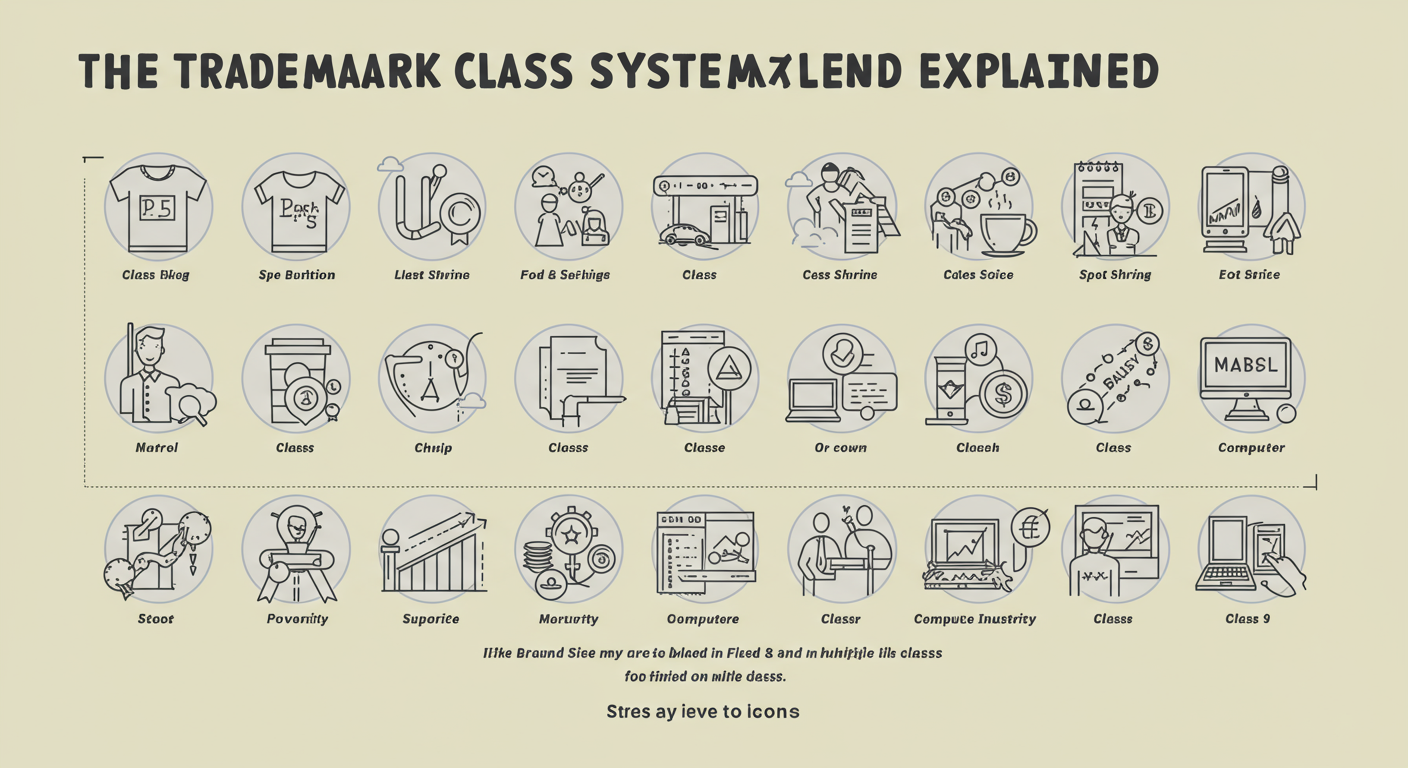
The core of your budget starts with the government fees. The single most important concept to grasp here is the Trademark Class system. Your brand isn’t just protected in a general sense; it’s protected for specific categories of goods or services.
The International (Nice) Classification system groups everything into 45 classes. For example:
- Class 25: Clothing, footwear, headwear.
- Class 30: Coffee, tea, flour, and preparations made from cereals.
- Class 41: Education, providing of training, entertainment.
You pay a separate government fee for each class you file in. If you sell branded t-shirts (Class 25) and also run a coffee shop (Class 43 for services), you’ll pay the application fee twice.
Here’s a breakdown of the current government filing fees in India for 2026, which illustrates a common tiered structure:
| Applicant Type | Filing Method | Government Fee (Per Class) | Who Qualifies? |
|---|---|---|---|
| Individual / Startup / Small Enterprise | E-Filing (Online) | ₹4,500 | Sole proprietors, DPIIT-recognized startups, or MSME-certified businesses. |
| Other Entities | E-Filing (Online) | ₹9,000 | Private limited companies, LLPs, partnerships, etc., that don’t qualify as a small enterprise. |
| Individual / Startup / Small Enterprise | Physical Filing (In-Person) | ₹5,000 | (Not recommended due to higher cost and slower processing) |
| Other Entities | Physical Filing (In-Person) | ₹10,000 | (Not recommended due to higher cost and slower processing) |
💡 Pro Tip
Focus on your core business first. It’s tempting to register for every class you might expand into someday, but that gets expensive fast. Secure your primary goods/services now. You can always file new applications for additional classes later as your business grows and generates more revenue.
The Hidden Iceberg: Unpacking the “Other” Trademark Costs
The initial filing fee is just the tip of the iceberg. Smart entrepreneurs budget for the entire journey, not just the departure. Here are the other critical costs you must anticipate.
1. The Comprehensive Trademark Search (Non-Negotiable)
Before you spend a single rupee on an application, you must conduct a thorough search. Filing a “confusingly similar” mark is the #1 reason for rejection. A basic search on the public database is a start, but it’s not enough.
A professional search, conducted by an attorney, is different. They use specialized software and legal analysis to uncover:
- Phonetically similar marks (“Koke” vs. “Coke”).
- Translated marks (a Spanish word that means the same as your English mark).
- Marks that are visually or conceptually similar.
This is your insurance policy against a guaranteed rejection. Expect to invest ₹3,000 – ₹10,000 ($50 – $400) for a proper, comprehensive search and legal opinion. It’s the best money you’ll spend in this entire process.
2. Responding to Office Actions (The Unexpected Hurdle)
After you file, an examiner reviews your application. It’s very common for them to issue an “Office Action” or “Examination Report.” This is a formal letter detailing objections. They might claim your mark is:
- Merely Descriptive: Calling your new apple brand “Sweet Juicy Apples” is descriptive, not a unique brand name.
- Confusingly Similar: Your “Starbux Coffee” logo is too close to an existing, famous brand.
- Geographically Deceptive: Naming your wine “Napa Valley Finest” when the grapes are from somewhere else.
Responding requires a formal, legal argument. If you filed yourself, this is where panic sets in. An attorney will charge a separate fee to draft and file this response, typically ranging from ₹4,000 to ₹15,000+ ($100 – $750+), depending on the complexity. Budgeting for at least one potential response is a savvy move.
3. Maintenance and Renewal Fees (The Long Game)
A trademark isn’t a one-and-done purchase. It’s a living asset. Your initial registration is valid for 10 years. To keep it, you must file for renewal. The current e-filing renewal fee in India is ₹9,000 per class. In the U.S., you also have a maintenance filing due between the 5th and 6th years. Forgetting to renew means your trademark is abandoned. It’s gone. All your rights evaporate. Master the GST Refund Process India: 7-Step Comprehensive Guide (2025)
🎯 Key Takeaway
The true cost of a trademark isn’t the initial filing fee. It’s the sum of the search, filing, potential objection responses, and long-term renewal fees. Budgeting for the entire lifecycle, not just the application, is the key to avoiding financial surprises and protecting your brand effectively. 12A Registration under Income Tax Act
Step-by-Step Cost Scenario: Trademarking “Aura Coffee” in 2026
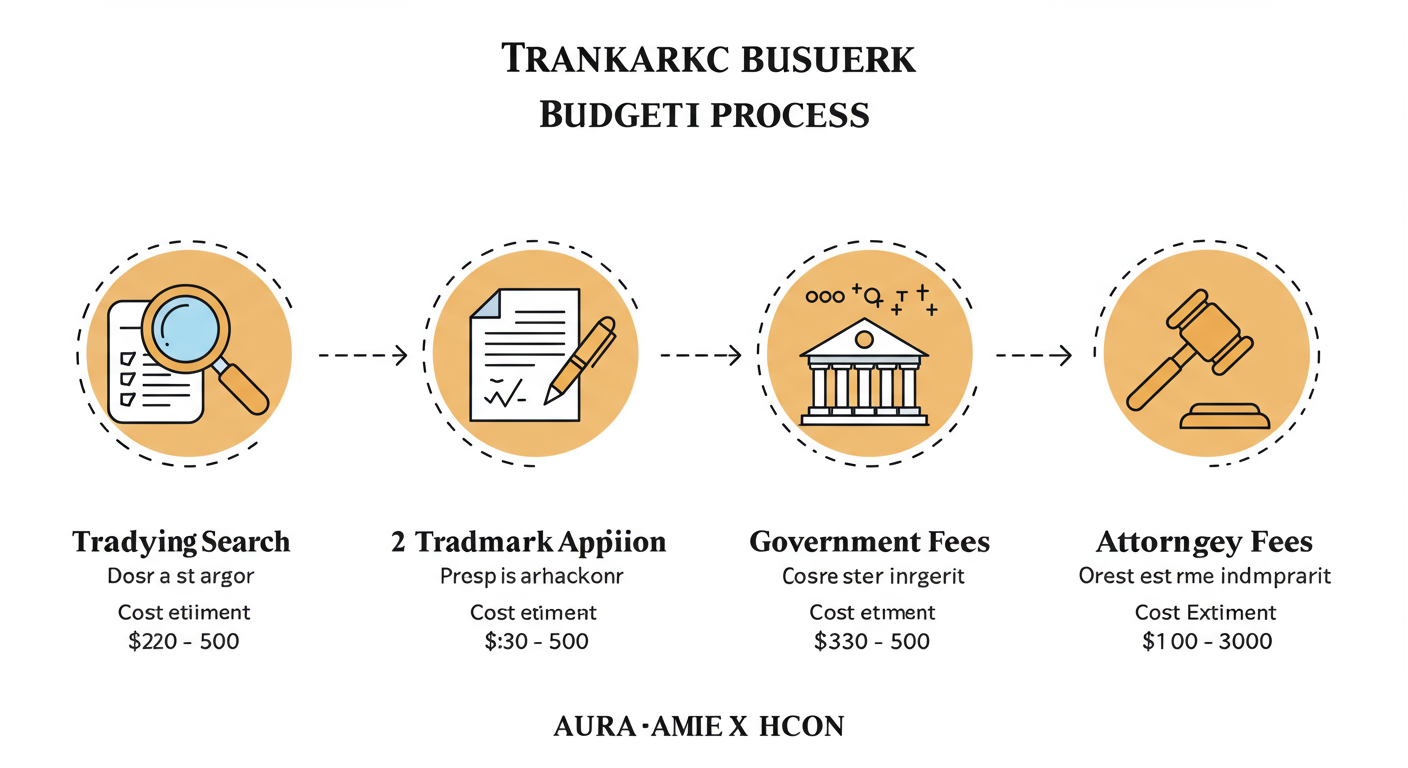
Let’s make this real. Imagine you’re a startup launching “Aura Coffee.” You plan to sell coffee beans online and also sell branded ceramic mugs. Here’s a step-by-step breakdown of your estimated costs in India, assuming you qualify for the startup discount.
Step 1: The Foundational Search
You wisely decide not to skip this. You hire a firm to conduct a comprehensive search for “Aura Coffee” across relevant classes. They check for similar names, logos, and phonetic equivalents.
Estimated Cost: ₹5,000
Step 2: Filing the Application in Two Classes
Your attorney confirms the mark is available. Now you file.
- Coffee Beans: This falls under Class 30.
- Ceramic Mugs: This falls under Class 21.
Since you’re a recognized startup filing online, the government fee is ₹4,500 per class.
Government Fee: ₹4,500 x 2 = ₹9,000
Professional Fee for Filing: ₹8,000 (covers both classes)
Subtotal for Filing: ₹17,000
Step 3: Budgeting for a Potential Office Action
The examiner might issue a minor objection, perhaps asking for a clearer description of the goods. Your attorney needs to draft a response. You’ve planned for this.
Estimated Cost for Response: ₹4,000
Step 4: Calculating the Total Estimated Investment
Now, let’s add it all up for a realistic first-year budget.
- Comprehensive Search: ₹5,000
- Application & Filing Fees: ₹17,000
- Contingency for Office Action: ₹4,000
Total Estimated Cost: ₹26,000
See how that works? The initial ₹9,000 government fee is only a third of the realistic total cost. This kind of planning is what separates successful brands from the ones that get nasty surprises.
💡 Pro Tip
If your budget is tight, consider filing for a word mark first (the name “Aura Coffee” in plain text). This gives you broad protection for the name itself. You can file a separate application for your specific logo (a device mark) later on when you have more capital. This phases your investment.
How to Strategically Lower Your Trademark Fees (Without Being Cheap)
Managing costs is smart, but cutting the wrong corners is disastrous. Here’s how to be strategic.
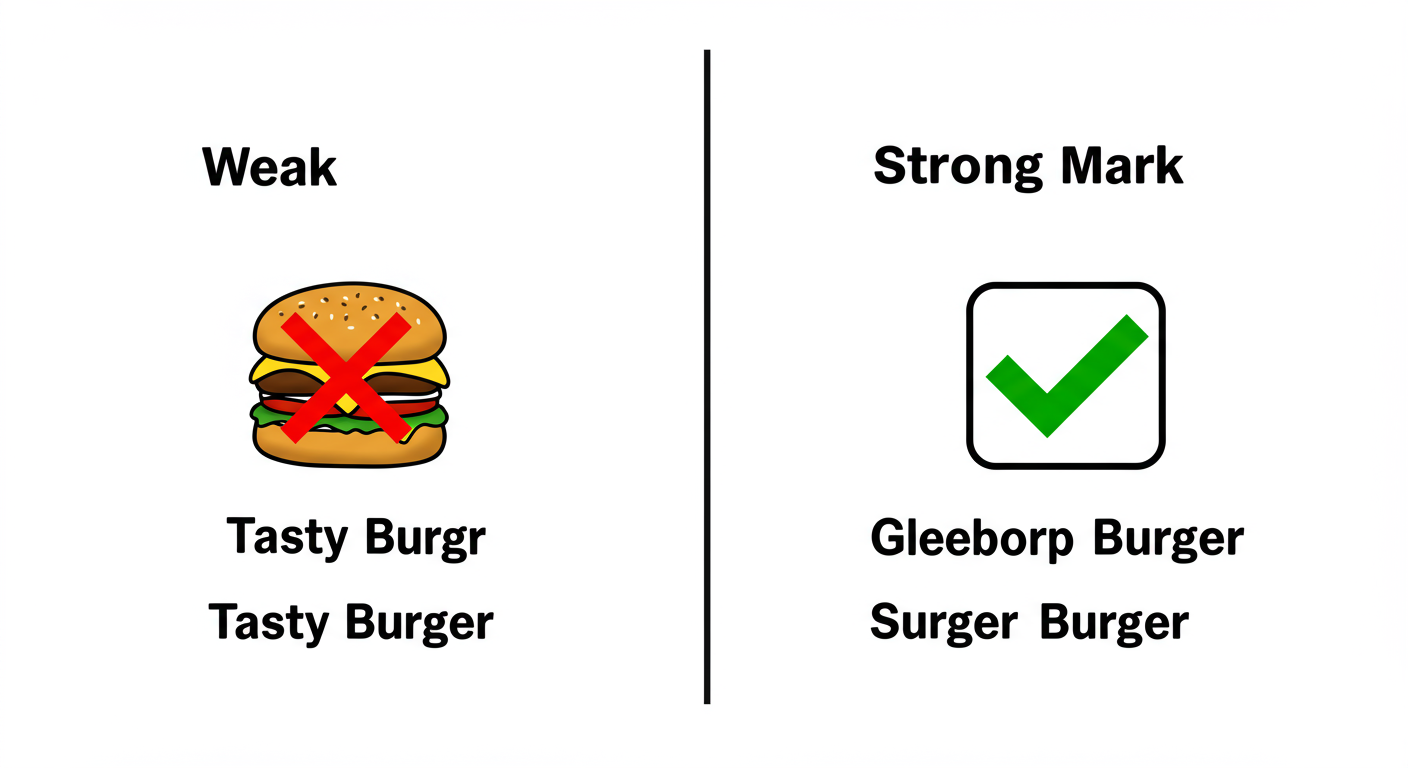
- Choose a Strong, Fanciful Mark. The biggest hidden cost is fighting objections. A weak, descriptive mark like “Fast Car Repair” is almost guaranteed to get an objection. A strong, fanciful mark like “Zyppr Auto” is unique and far easier (and cheaper) to register. According to leading experts, including guidance from the U.S. Patent and Trademark Office, stronger marks get registered faster and with fewer complications.
- Leverage All Available Discounts. Are you an individual? Do you have an MSME certificate? Are you a DPIIT-recognized startup? Make sure you claim the 50% government fee concession. It’s free money.
- Always File Online. There is zero advantage to filing a physical paper application in 2026. It’s more expensive, slower, and harder to track. E-filing is the standard for a reason.
- Don’t Over-File on Classes. Be ruthlessly realistic about what you sell right now. Protect your core revenue streams first. Expanding into apparel next year is great, but you don’t need to pay for Class 25 today if you’re only selling coffee.
⚠️ Watch Out
When describing your goods/services, being too broad can get you rejected, but being too narrow can limit your future protection. For example, listing just “t-shirts” is okay, but if you might sell hoodies and hats, listing “clothing, namely, t-shirts, hoodies, and headwear” is much better. This is where an attorney’s advice is invaluable.
Your Brand Is Your Most Valuable Asset—Treat It That Way
Look, the numbers can seem daunting. But reframing your mindset is everything. Trademark registration fees aren’t an expense; they are an investment in the single most valuable asset you own: your brand’s reputation and identity.
The cost of proper registration—even with professional help—is a tiny fraction of the cost of a lawsuit, a forced rebrand, or losing your business overnight. You wouldn’t build a house without insurance, so don’t build a brand without securing its foundation.
By understanding the full cost spectrum—from government fees and class systems to professional help and long-term renewals—you can budget intelligently and move forward with confidence. Your next step? Don’t put it off. Start with a professional trademark search today. It’s the first, most critical move in transforming your business name from a simple idea into a legally protected, powerhouse brand.
❓ Frequently Asked Questions
How much does it really cost to trademark a name in 2026?
It varies, but a realistic budget for a single-class filing in India, including professional help, is typically between ₹12,000 and ₹25,000. This covers a comprehensive search, government fees, and professional filing fees. For multi-class or more complex international filings via systems like the Madrid Protocol, costs can be significantly higher.
Can I just trademark it myself to save money?
You can, but it’s risky. The trademark process is a legal proceeding, not just filling out a form. From our experience, DIY applications have a much higher rate of rejection due to errors in class selection, improper specimen submission, or weak responses to office actions. The money you save on an attorney is often lost when you have to start over.
Are trademark registration fees a one-time payment?
No. The initial fees secure your registration for the first 10 years. To maintain your rights indefinitely, you must pay a renewal fee every 10 years. Think of it like renewing a domain name, but for your brand’s legal rights.
What’s the biggest mistake people make with trademark fees?
The biggest mistake is only budgeting for the initial government filing fee. They get completely blindsided by the cost of a comprehensive search or the fees required to respond to an office action. This leads to them abandoning the application midway, wasting all the money they’ve already spent.
Why are there different fees for startups vs. large companies?
Governments worldwide often implement tiered fee structures to foster innovation and support entrepreneurship. By offering a significant discount (often 50% or more) on trademark registration fees for individuals, startups, and small businesses, they make brand protection more accessible and encourage new ventures to secure their intellectual property early on.