
Picture this: You’ve spent years building your consulting firm. Your brand name is synonymous with quality. Then, a cease-and-desist letter arrives. A competitor, who registered their similar name under Trademark Class 35, claims you’re infringing on their territory. Your world just got turned upside down. Why? Because you protected what you *make*, but not the *service* you provide.
This isn’t just a scary story; it’s a reality I’ve seen play out for too many entrepreneurs. They don’t realize that for service-based businesses—from ad agencies and HR firms to e-commerce stores and business consultants—Class 35 isn’t just an administrative box to check. It’s the legal fortress protecting your entire business model.
Forget the dense legal jargon. In this guide, we’re going to break down exactly what Trademark Class 35 is, who desperately needs it, and how to secure it correctly in 2026. You’ll walk away knowing how to shield your brand, avoid costly mistakes, and build a more valuable, defensible business.
What Is Trademark Class 35, Really? The “Business of Business” Class
At its heart, Trademark Class 35 is the international category for services that help other businesses operate, manage, and promote themselves. It’s part of the Nice Classification, a global system that standardizes how we categorize goods and services for trademark registration. Think of it as the “business of doing business” class.
The single most important concept to grasp is this: Class 35 protects the service, not the product.
Let’s make that real. A company like Nike makes shoes. They register their “Nike” brand and swoosh logo for the shoes themselves under Class 25 (Clothing, Footwear). But the Nike retail stores? The ones that bring together shoes, apparel, and sports equipment for you to browse and buy? That’s a retail store service. And that service is protected under Class 35.
This distinction is everything. Failing to understand it is how you leave your brand’s back door wide open for competitors.
The Three Pillars of Class 35
To simplify, nearly all services in this class fall into one of three main pillars. If your business does any of these things for other companies or for the public, you need to pay close attention.
| Pillar | Core Function | Real-World Examples |
|---|---|---|
| Advertising & Promotion | Helping others market and sell their products or services. | Digital marketing agencies, PR firms, sales promotion services, market research companies. |
| Business Management & Admin | Assisting with the core operations and administration of a business. | Business management consultants, HR recruitment agencies, accounting/bookkeeping services, office support (e.g., virtual assistants). |
| Retail & Clerical Services | Bringing together various goods to enable customers to purchase them conveniently. | E-commerce marketplaces (like Amazon), department stores, online retail stores, procurement services for others. |
⚠️ Watch Out
The most common mistake we see is confusing the act of selling your own products with providing a retail service. If you only sell your own branded t-shirts on your website, you primarily need Class 25. But if your website sells t-shirts from multiple brands, you’re providing a retail service that belongs in Class 35.
Deep Dive: Core Services Covered by Class 35
The official descriptions can be vague. Let’s cut through the noise with concrete examples of services that fall squarely within Trademark Class 35. See if your business fits.
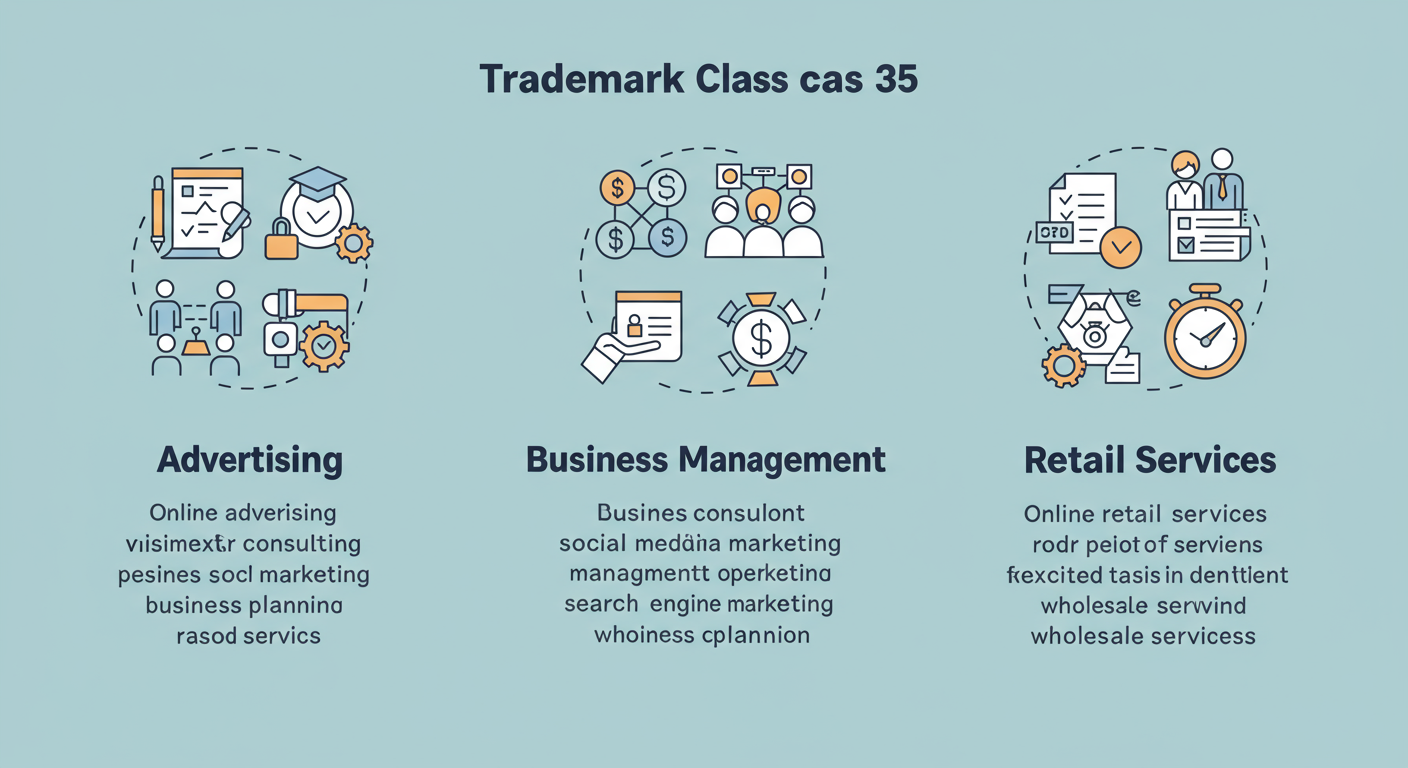
1. Advertising, Marketing, and Promotional Services
This is the most obvious category. If your service helps another company find and persuade customers, you’re in the right place. It’s not just about TV commercials anymore.
- Digital Marketing Services: SEO consultancy, pay-per-click (PPC) advertising management, social media marketing management for others.
- Public Relations (PR): Managing a brand’s public image and communications.
- Market Research and Analysis: Providing data and insights on consumer behavior and market trends.
- Affiliate Marketing Services: Promoting the goods and services of others through an affiliate network.
- Sales Promotion for Others: Designing and running loyalty programs, contests, and coupon strategies for other businesses.
2. Business Management, Administration, and Office Functions
These are the essential back-office and strategic services that companies outsource to run more efficiently. Based on our experience, this is where many consultants and B2B service providers find their home.
- Business Management and Strategy Consultancy: Advising companies on efficiency, growth strategies, and organizational structure.
- Data Processing and Database Management: Compiling and systematizing information for business purposes.
- Accounting, Auditing, and Tax Preparation: Note the distinction: while high-level financial investment advice is in Class 36, the operational tasks of bookkeeping, auditing, and preparing tax returns for a business are in Class 35.
- Outsourced Office Functions: Services like telephone answering, appointment scheduling, and transcription.
💡 Pro Tip
When describing your service in a trademark application, be hyper-specific. Instead of “Business consulting,” use “Business management consulting in the field of information technology.” Instead of “Marketing,” use “Advertising and marketing services, namely, promoting the goods and services of others through social media.” Specificity creates a stronger, more defensible mark.
3. Retail, Wholesale, and E-commerce Services
This is the category that trips up most people, but it’s vital for the modern economy. Remember, it’s about the service of selling, not the goods themselves.
- Online Retail Store Services: The service of providing a website where consumers can browse and purchase a variety of goods. This is essential for any multi-brand e-commerce site.
- Procurement Services for Others: Acting as an intermediary to purchase goods or services for other businesses (e.g., sourcing raw materials).
- Arranging Subscriptions to a Service for Others: For example, a website that aggregates and sells subscriptions to various software tools or media publications.
🎯 Key Takeaway
Trademark Class 35 protects the services that facilitate commerce. It’s not about what you make, but about how you help others run their business, promote their products, or sell goods to the public. Getting this right is fundamental to your brand’s legal protection.
Class 35 vs. The World: Avoiding Costly Filing Errors
Choosing the wrong class is like buying insurance for a car you don’t own. It’s a waste of money and leaves your actual asset unprotected. Trademark examiners are strict, and confusion between Class 35 and its neighbors is a top reason for application rejection. Here’s a clear breakdown.
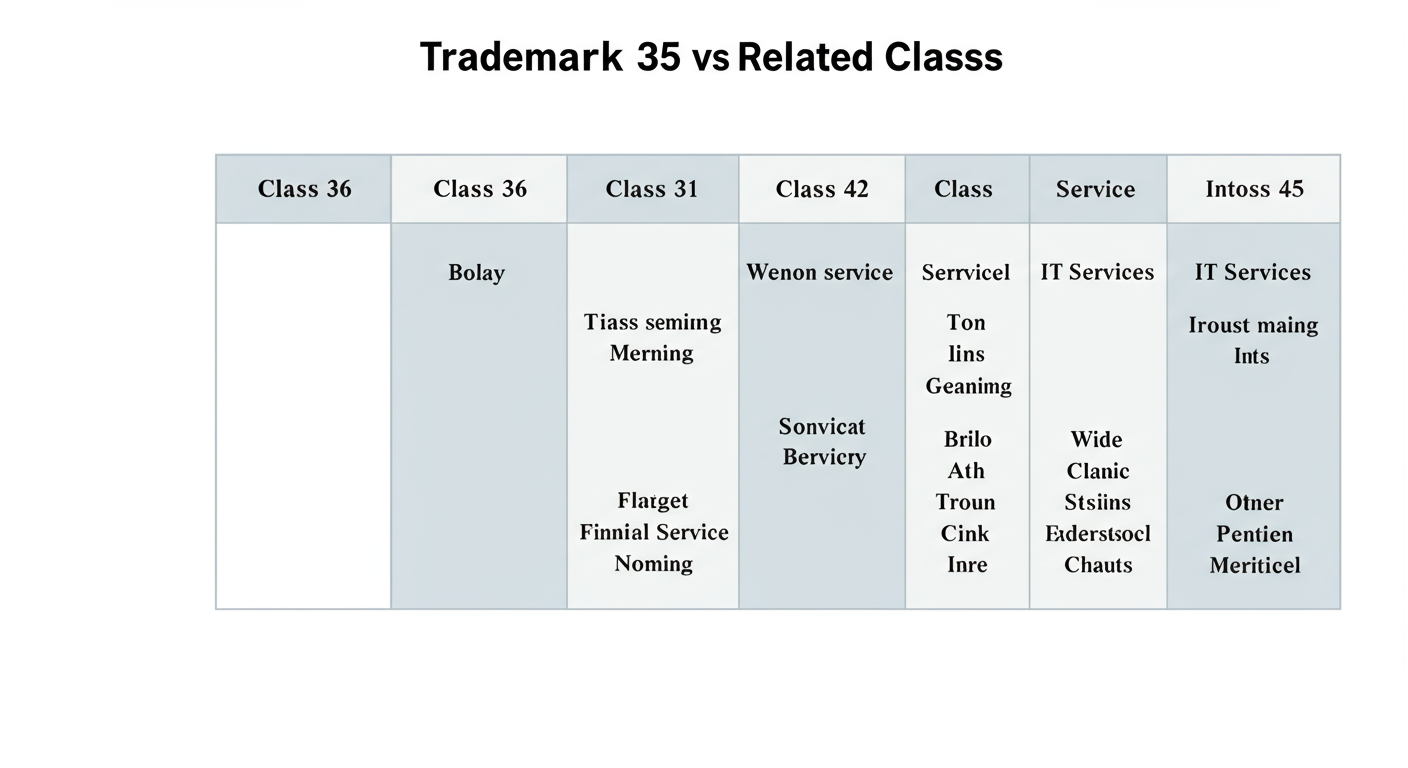
| Scenario | ✅ Correct in Class 35 | ❌ Incorrect (Belongs in Another Class) |
|---|---|---|
| Money & Finance | Business auditing; Tax preparation; Payroll processing. (Managing business records) | Class 36: Financial analysis; Investment advice; Insurance underwriting; Real estate brokerage. (Managing money and assets) |
| Technology & IT | Business consulting on the use of IT; Compiling data in computer databases. (Using tech for business ops) | Class 42: Software as a Service (SaaS); Website design and development; IT consultancy on hardware/software. (Creating or providing the technology itself) |
| Education & Training | Business organization consultancy; Arranging and conducting of business conferences. (Business-focused events) | Class 41: Providing corporate training in the field of leadership development; Arranging educational seminars; Entertainment services. (Primarily educational or entertainment content) |
| Legal & Security | Personnel recruitment; Business administration. (Commercial business services) | Class 45: Legal services; Security services for the physical protection of property; Personal matchmaking services. (Legal, security, and personal social services) |
⚠️ Watch Out
SaaS is a major point of confusion. Providing a SaaS platform is a Class 42 service. However, if you provide “Business management consulting featuring the use of non-downloadable software for analyzing business data,” that consulting service falls under Class 35. It’s a nuanced but critical difference. Master GST Liability Calculation: 7-Step Guide (2025)
A 3-Step Guide: Do You Need Class 35 Protection?
Feeling overwhelmed? Let’s simplify. Follow these three steps to determine if you need to file in Class 35. MCA Master Data: The Ultimate Guide for Due Diligence (2026)
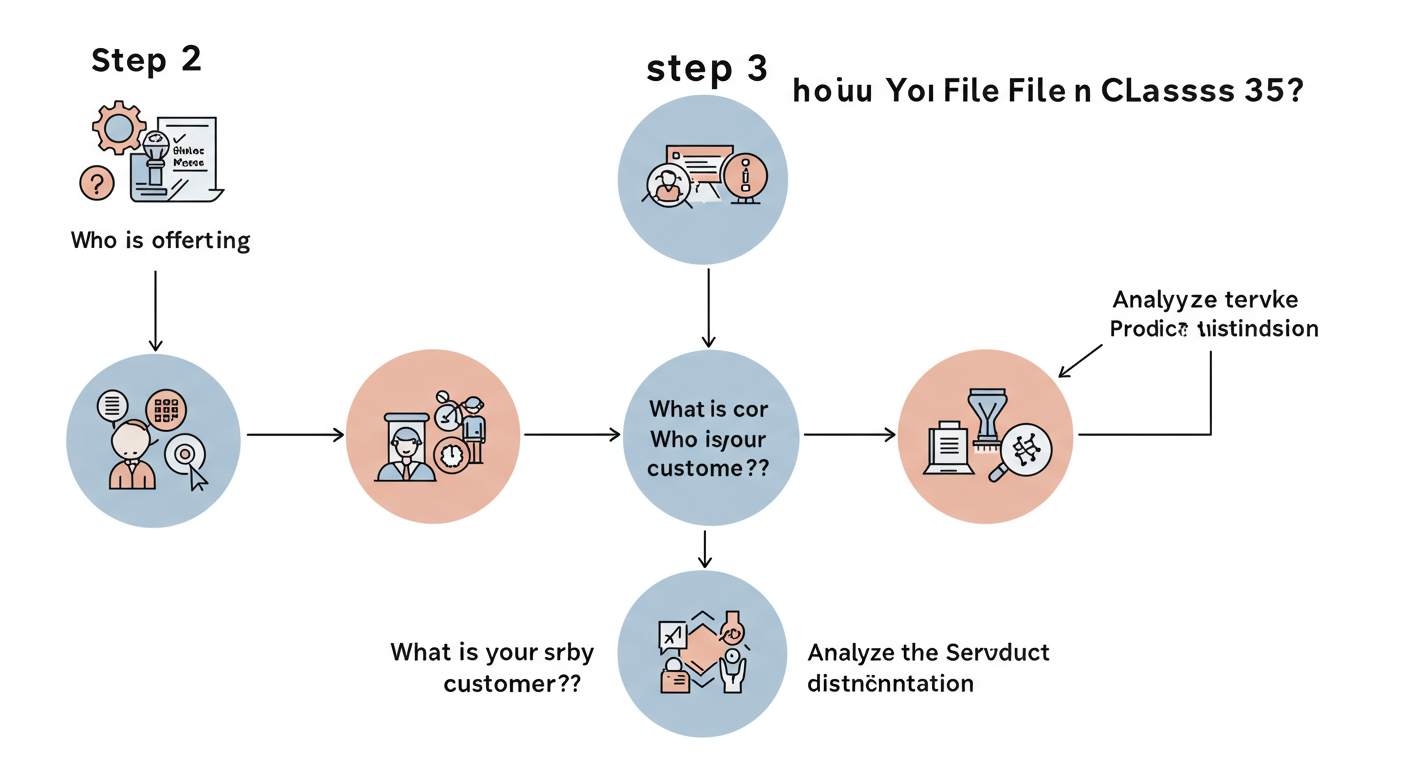
- Step 1: Identify Your Core Service. Forget your mission statement for a second. What do you actually do for money? Write it down in plain language. “We help companies get more leads through Google Ads.” “We run an online store that sells artisan home goods from 20 different creators.” “We handle payroll and HR for small businesses.”
- Step 2: Ask “Am I Doing This for Others?” The key to Class 35 is that the service is rendered for the benefit of others.
- Are you promoting another company’s products? → Likely Class 35.
- Are you managing another company’s business operations? → Likely Class 35.
- Are you selling a variety of goods from other brands? → Likely Class 35.
- Step 3: Draft a Precise Service Description. Using your answers, look at the official lists from the USPTO’s Trademark ID Manual or your country’s equivalent. Find the pre-approved language that most closely matches what you do. This is your starting point for a strong application. Trust me on this one, using pre-approved language dramatically speeds up the examination process.
💡 Pro Tip
Consider a “belt and suspenders” approach. Many businesses need to file in multiple classes. A tech company might file in Class 42 for their SaaS product and in Class 35 for “providing business information and consultancy related to the use of said software.” This creates a comprehensive shield around their entire business model.
Why This All Matters: The Strategic Value of a Class 35 Mark
Securing a trademark in Class 35 isn’t just a defensive move; it’s a powerful offensive strategy that builds tangible value for your company.
“A registered trademark is more than a legal shield; it’s a commercial asset. For service businesses, Class 35 is often the category that turns a brand name into a line item on the balance sheet.”
Here’s what a registered mark in Class 35 unlocks:
- Exclusive Nationwide Rights: It gives you the legal right to stop others in the U.S. from using a confusingly similar brand name for similar business services. This prevents customer confusion and protects your hard-earned reputation.
- A Valuable, Sellable Asset: Your trademark has a monetary value. It can be sold, licensed to others (think franchising), or used as collateral for a loan. As your brand grows, this asset appreciates.
- The Foundation for Growth: Planning to franchise your successful retail concept or consulting model? A registered trademark is the absolute, non-negotiable cornerstone of any franchise agreement.
- Enhanced Brand Credibility: Using the ® symbol next to your name signals to the market that you are a serious, established player who has taken the formal steps to protect your brand identity.
Conclusion: Your Brand’s First Line of Defense
Look, navigating trademark law can feel like a minefield. But understanding Trademark Class 35 is one of the most empowering things you can do as a service-based entrepreneur in 2026.
It’s the difference between owning your brand and just renting it. It’s the legal backbone for your marketing agency, your e-commerce platform, your consulting practice, or your HR firm. By identifying whether your services fall under advertising, business administration, or retail, you can take the single most important step in building a defensible, valuable, and lasting brand.
Your next step? Don’t just wonder. Take 15 minutes right now to perform the 3-step audit we outlined above. Write down your services and compare them against the examples. This simple exercise will give you the clarity you need to either file with confidence or seek expert legal advice to secure your most valuable asset.
❓ Frequently Asked Questions
Can I register my e-commerce store brand in Class 35?
Yes, absolutely. The service of “online retail store services featuring…” a variety of goods is a classic Class 35 service. This protects your store’s brand name (e.g., “Thrive Market,” “Wayfair”), not the individual products you sell, which would have their own trademarks from their manufacturers.
Does Class 35 cover software development or SaaS?
No, it doesn’t. This is a critical distinction. The creation, design, and provision of software, including Software-as-a-Service (SaaS), falls under Class 42 (Scientific and Technological Services). However, if you provide business consulting on how to use software for business efficiency, that consulting service could be registered in Class 35.
What if my business offers services in multiple classes?
This is very common and a sign of a comprehensive business model. You must file in every class that is relevant to your core offerings. For example, a business that develops project management software (Class 42) and also offers business project management consultancy (Class 35) should file in both classes for complete protection.
How specific should my service description be in a Class 35 application?
Extremely specific. Vague terms like “business services” will almost certainly be rejected by the trademark office. Based on hands-on testing of the application process, using precise, pre-approved language from the Trademark ID Manual is the best practice. For example, use “Personnel recruitment” instead of “HR services.”
Does a Class 35 trademark in my country protect me internationally?
No. Trademark rights are territorial, meaning a registration in your home country (like the U.S.) only provides protection within that country’s borders. For international protection, you must either file directly in each country of interest or use an international treaty system like the Madrid Protocol to streamline the process.
I’m a solo consultant. Is a Class 35 trademark really necessary?
Yes, 100%. As a consultant, your name and brand are your entire business. Registering your brand in Class 35 for “business management consultancy” or a similar service prevents another consultant from using a similar name and poaching clients who are looking for you. It’s a crucial asset, even for a business of one.