It’s 2026. You open your email or check the compliance portal, and there it is—a notice regarding a discrepancy from four years ago. Panic sets in. Why is the tax department asking about 2021 now?
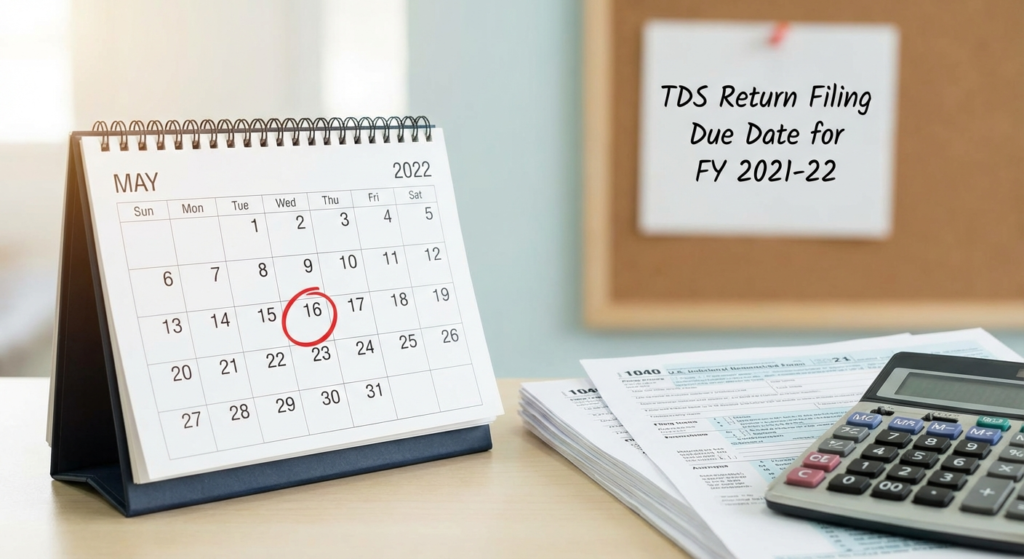
Here’s the reality: Tax audits operate on a lag. While the world has moved on, the Income Tax Department’s AI-driven scrutiny systems are currently deep-diving into historical data, specifically targeting the tds return filing due date for fy 2021-22.
If you are reading this, you likely fall into one of two camps: you’re an accountant doing a historical cleanup, or you’ve just realized a return from that period was never filed. In either case, the stakes are higher now than they were back then. The interest meters have been running for years.
In this guide, we aren’t just listing old dates. We’re going to look at exactly what those deadlines were, calculate the financial damage of missing them by four years, and walk you through the specific steps to fix this mess before it escalates to prosecution.
🎯 Key Takeaway
Even though we are in 2026, the deadlines for FY 2021-22 remain the benchmark for calculating penalties. Missing these dates triggers a mandatory late fee of ₹200 per day (Section 234E) and potential penalties up to ₹1,00,000 (Section 271H). Immediate filing of belated returns is the only way to stop the interest meter.
The Official Timeline: TDS Return Filing Due Date for FY 2021-22
To understand your current liability, you first need to know exactly when you should have filed. The penalty clock started ticking the day after these deadlines passed.
In our experience handling retrospective audits, the most common slip-up occurred in Quarter 4, as the deadline differed from the standard pattern. Here is the definitive schedule mandated by the Income Tax Department of India.
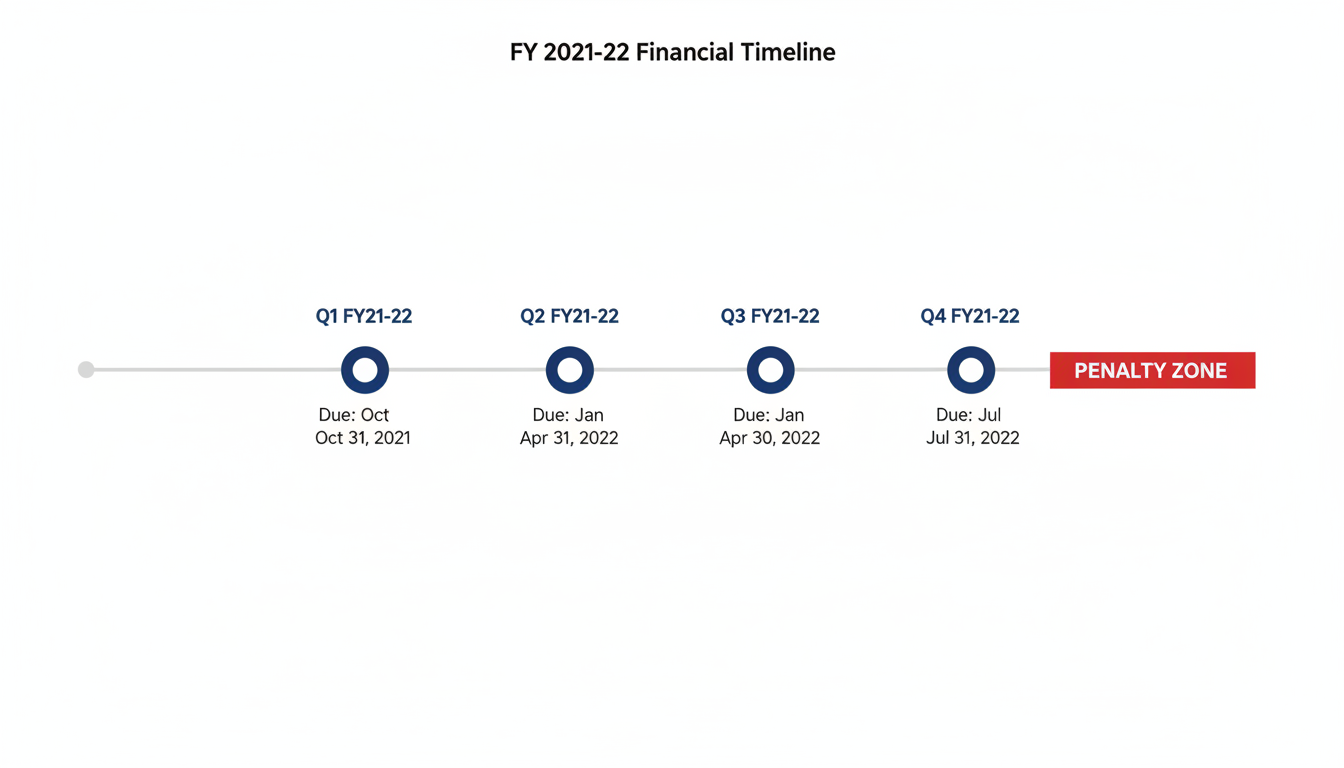
| Quarter | Period Covered | Original Due Date | Status in 2026 |
|---|---|---|---|
| Q1 | Apr 1 – Jun 30, 2021 | July 31, 2021 | Overdue by 4+ Years |
| Q2 | Jul 1 – Sep 30, 2021 | October 31, 2021 | Overdue by 4+ Years |
| Q3 | Oct 1 – Dec 31, 2021 | January 31, 2022 | Overdue by 4+ Years |
| Q4 | Jan 1 – Mar 31, 2022 | May 31, 2022 | Overdue by 3.5+ Years |
If you missed the Q1 deadline of July 31, 2021, and you are filing today in 2026, you are looking at over 1,600 days of delay. We’ll break down the math on that shortly—it’s not pretty, but it is manageable if you know the caps.
Which Form Did You Miss?
Not all TDS returns are created equal. When we review client files for historical corrections, we often see confusion between salary and non-salary forms. Using the wrong form for a belated return will result in an “Invalid Return” notice, forcing you to start the process all over again.
Here is a quick reference to ensure you select the correct utility for FY 2021-22:
- Form 24Q: Strictly for Salaries. If you had employees in 2021, this is the form. Note: Q4 requires Annexure II (salary breakup).
- Form 26Q: The most common form. Covers professionals, contractors, rent, and interest payments to residents.
- Form 27Q: For payments to Non-Residents (NRIs) or foreign companies.
- Form 27EQ: For TCS (Tax Collected at Source), such as scrap sales or luxury car sales.
💡 Pro Tip
When filing a belated return for FY 2021-22 in 2026, ensure you download the latest RPU (Return Preparation Utility) from the Protean (NSDL) website. Do not use the software version from 2021. The data structure has been updated, and old utilities will generate files that get rejected by the TIN-FC.
The Financial Impact: Calculating Penalties in 2026
This is the part that hurts. Because the tds return filing due date for fy 2021-22 has long passed, you are no longer dealing with simple compliance; you are dealing with damage control.
Let’s look at the two specific sections of the Income Tax Act that will impact your wallet.
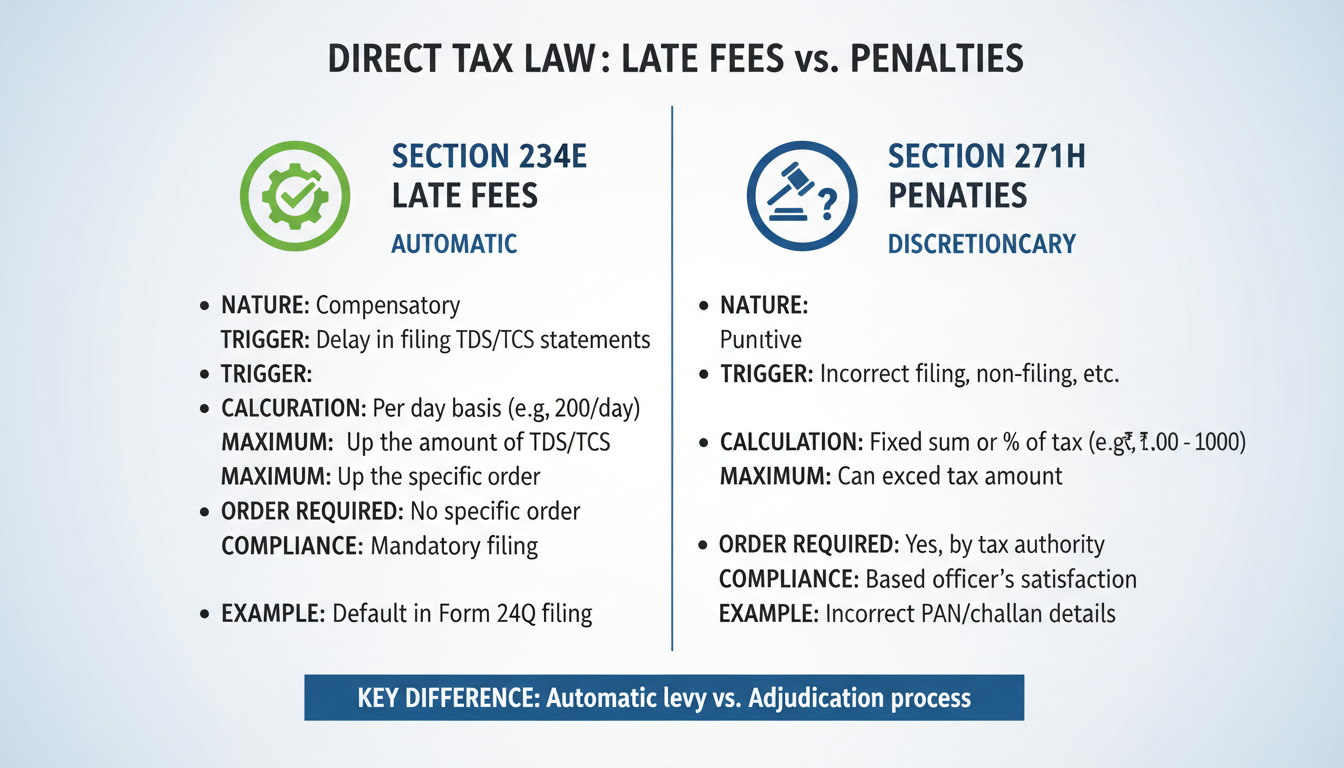
1. The “Late Fee” (Section 234E)
This is a mandatory fee. There is no discretion here—the computer system calculates it automatically.
- The Rate: ₹200 per day.
- The Duration: From the due date until the date you actually file.
- The Cap: The total fee cannot exceed the total TDS amount.
Real-World Scenario:
Imagine you deducted ₹50,000 in TDS for Q2 (Due Oct 31, 2021) but forgot to file. You are filing today.
- Delay: Approx. 1,600 days.
- Calculation: 1,600 days x ₹200 = ₹3,20,000.
- Actual Payable: ₹50,000. (Since the fee is capped at the TDS amount).
This is a crucial distinction. Many business owners panic thinking they owe lakhs in fees. You don’t. You owe the lower of the calculated fee or the TDS amount.
2. The “Penalty” (Section 271H)
This is different from the late fee. This is a penalty levied by an Assessing Officer if they believe you intentionally delayed filing for more than a year.
- Minimum: ₹10,000
- Maximum: ₹1,00,000
Unlike the late fee, this isn’t automatic. It usually comes via a notice. However, filing your return voluntarily before receiving a notice is your best defense against Section 271H. October 2023 Compliance Calendar: Navigating Crucial Deadlines
Step-by-Step: How to File a Belated TDS Return for FY 2021-22
Ready to clean up the books? Filing a return for a financial year that is four years old requires specific care. The process is slightly different than filing a current return because you must ensure the challans from 2021 are still valid and unmatched. The Ultimate Guide to Choosing: LLP vs Private Limited Company for Your Business
Follow this exact workflow:
- Verify Challan Status: Go to the “OLTAS Challan Status Inquiry” on the tax portal. Enter the details of the tax paid in 2021. Ensure the status is “Unmatched.” If it says “Matched,” that challan has already been used in another return.
- Download RPU: Get the latest RPU version from the Protean-TIN website.
- Select Financial Year: In the utility, carefully select “FY 2021-22” from the dropdown. This sets the validation rules back to the laws applicable at that time.
- Input Data: Enter deductee details. Crucial: Ensure PANs are valid. If a vendor has closed their business and surrendered their PAN since 2021, you will face a “Invalid PAN” error, triggering a 20% tax rate.
- Calculate 234E Fee: The utility will calculate the late fee. You must pay this fee using a separate challan (or add it to the tax challan if there is a balance) before generating the FVU file.
- Generate & Upload: Create the FVU file and upload it via the Income Tax Portal.
⚠️ Watch Out
Do not forget the interest! If you deducted tax in 2021 but are paying it to the government now in 2026, you owe interest at 1.5% per month for every month of delay. That is roughly 72% interest on top of the principal tax amount. This must be paid before filing.
Comparison: Original vs. Revised vs. Belated Returns
It’s easy to get lost in the terminology. Here is how these filings differ, specifically for the 2021-22 context.
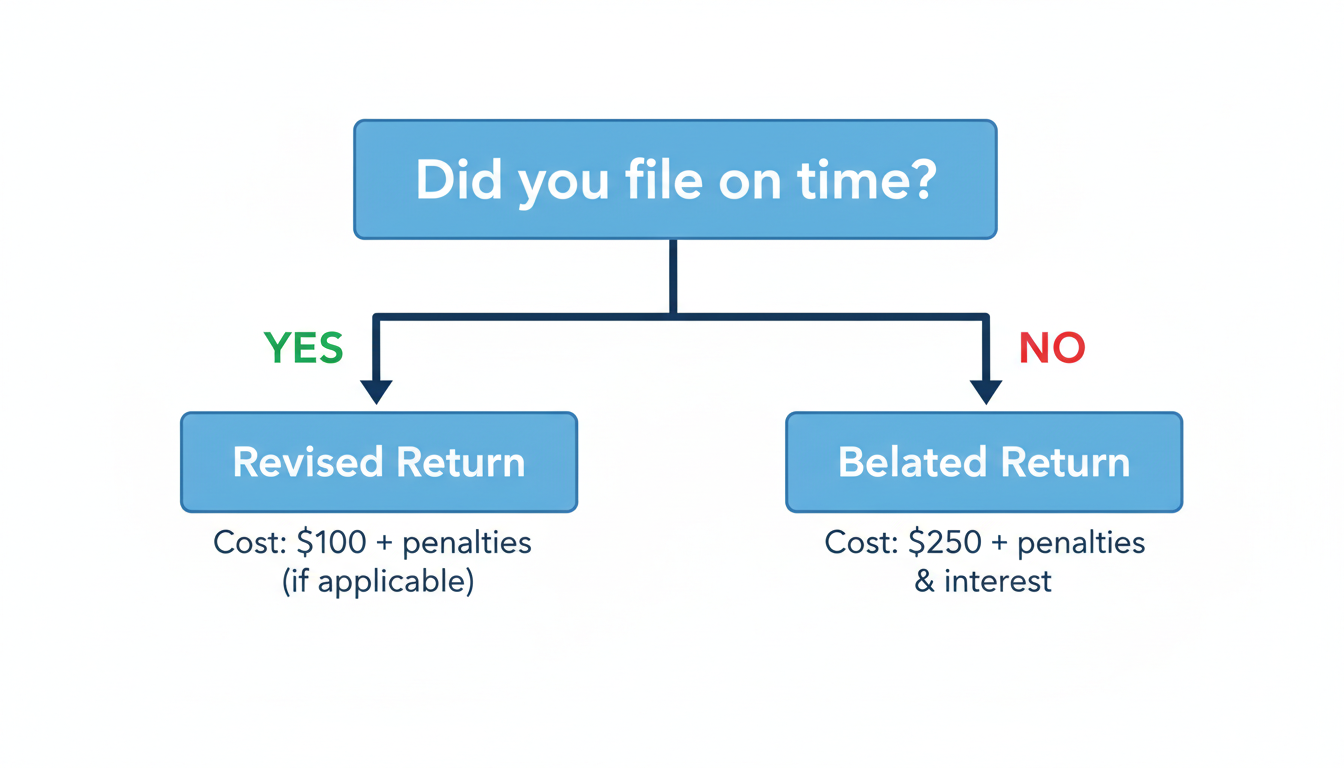
| Feature | Original Return | Belated Return | Revised Return |
|---|---|---|---|
| Timing | Filed on/before due date | Filed after due date | Filed to fix errors in Original/Belated |
| Section 234E Fee | No | Yes (Mandatory) | No (unless adding new late deductions) |
| Penalty Risk | None | High (Sec 271H) | Low |
| Prerequisite | None | All taxes + interest paid | Original Token Number required |
Why Compliance Matters More in 2026
You might be wondering, “Why bother filing now? It’s been years.”
Here is the thing: The government’s data integration is now nearly flawless. The Annual Information Statement (AIS) shows every transaction. If a vendor reported income in their ITR for FY 2021-22 but your TDS return is missing, the mismatch is flagged automatically.
Furthermore, for businesses, open TDS demands can block current-year refunds. We have seen companies waiting for a ₹50 Lakh refund in 2026, only to have it adjusted against a ₹50,000 demand from 2021. Clearing these historical dues is essential for current cash flow.
For a deeper dive into how these regulations evolved, you can check the historical archives on Wikipedia’s TDS page.
Conclusion
The tds return filing due date for fy 2021-22 may be a date in the distant past, but its financial repercussions are very much present in 2026. Ignoring a missed filing won’t make it go away; it only allows the interest to compound and invites stricter scrutiny.
Your best move? Treat this as an emergency cleanup. Verify your challans, calculate the capped late fees, and file the belated return immediately. By doing so, you close the door on potential litigation and ensure your business’s financial history is clean, compliant, and audit-proof.
❓ Frequently Asked Questions
Can I still file TDS returns for FY 2021-22 in 2026?
Yes, you can file a belated return. However, you must pay the late filing fee under Section 234E and any applicable interest under Section 201(1A) before the system will accept your return.
What is the maximum penalty for late filing?
The late fee (Sec 234E) is ₹200 per day, capped at the total TDS amount. However, a separate penalty (Sec 271H) can be levied by an officer ranging from ₹10,000 to ₹1,00,000 if the delay exceeds one year.
Do I need to pay interest if I deducted tax but didn’t file the return?
If you paid the tax to the government on time but just failed to file the return form, you only owe the late filing fee (₹200/day). You do not owe interest on the tax amount itself.
How do I find the Token Number for a 2021 return to file a correction?
You can find the Token Number (Receipt Number) on the TRACES portal. Log in, go to the ‘Dashboard’ or ‘View Filed Returns’ section, select FY 2021-22, and the system will display the acknowledgement details.
What happens if the deductee has already filed their income tax return?
If the deductee has already filed their ITR without claiming your TDS (because you hadn’t filed), they may need to revise their ITR to claim the refund once you file your TDS return. This often causes friction with vendors/employees.