It’s 2026, and an official-looking envelope lands on your desk. It’s a tax notice. Your heart sinks as you read it—a query about a transaction from the financial year 2020-21.
Do you remember the exact TDS rate you were supposed to apply back then? During the pandemic? Weren’t there some special, temporary rules? Panic starts to creep in.
You’re not alone. The FY 2020-21 period was a minefield of temporary tax changes, and years later, those details are causing major headaches for businesses and individuals during audits and reconciliations. Many search for a “TDS rates for FY 2020-21 PDF download,” hoping for a quick answer. But a static PDF won’t cut it.
This guide is different. It’s your definitive, interactive reference for that unique period. We’ll not only give you the complete rate chart but also explain the why behind the changes, show you how to verify your past compliance, and tell you exactly what to do if you find a mistake. Let’s defuse that ticking time bomb.
Why FY 2020-21 Was a Tax Anomaly: The COVID-19 Relief Measures
To understand the TDS rates of FY 2020-21, you have to remember the global situation. The COVID-19 pandemic had brought economies to a standstill. In response, as part of the Atmanirbhar Bharat Abhiyan economic package, the Government of India announced a bold move to inject liquidity into the system.
The solution? A temporary, but significant, 25% reduction in the rates of Tax Deducted at Source (TDS) and Tax Collected at Source (TCS) for a huge range of non-salaried payments.
This wasn’t just a minor tweak. It was a critical lifeline designed to increase the disposable income in the hands of businesses and individuals, hoping to spur economic activity. But here’s the catch: it was only for a specific window. Applying it correctly, both then and now for verification, is crucial. Based on our experience helping clients with tax assessments, this specific period is a frequent source of compliance errors.
The Rate Reduction at a Glance
Before we dive deep, here’s a quick summary of that landmark decision. Understanding these three pillars is non-negotiable.
| Aspect | Details |
|---|---|
| The Core Change | A 25% reduction of the existing TDS/TCS rates. For example, a 10% rate became 7.5%, and a 2% rate became 1.5%. |
| Applicability Period | Strictly for payments made or credits given from May 14, 2020, to March 31, 2021. |
| Key Exclusions | Did NOT apply to TDS on Salary (Sec 192), payments to non-residents, or cases where a higher rate was due for not providing a PAN. |
⚠️ Watch Out
The most common mistake we see is applying the reduced rates to payments made before May 14, 2020, or after March 31, 2021. The date of payment or credit is the only thing that matters. Get this wrong, and you’re looking at a short-deduction notice plus interest.
The Complete TDS Rate Chart for FY 2020-21 (Better Than a PDF)
Forget hunting for a static, hard-to-read PDF. Bookmark this page instead. This interactive chart is your single source of truth for the TDS rates applicable during FY 2020-21, clearly showing both the standard rate and the special reduced rate.
| Section | Nature of Payment | Standard Rate | Reduced Rate (May 14, 2020 – Mar 31, 2021) |
|---|---|---|---|
| 192 | Payment of Salary | Applicable Slab Rates | No Change |
| 193 | Interest on Securities | 10% | 7.5% |
| 194A | Interest (other than on securities) | 10% | 7.5% |
| 194C | Payment to Contractors (Individual/HUF) | 1% | 0.75% |
| 194C | Payment to Contractors (Others) | 2% | 1.5% |
| 194D | Insurance Commission | 5% | 3.75% |
| 194DA | Payment in respect of Life Insurance Policy | 5% | 3.75% |
| 194H | Commission or Brokerage | 5% | 3.75% |
| 194-I(a) | Rent for Plant & Machinery | 2% | 1.5% |
| 194-I(b) | Rent for Land, Building, or Furniture | 10% | 7.5% |
| 194J | Fees for Professional or Technical Services, Royalty, etc. | 10% (2% for technical services/royalty on film) | 7.5% (1.5% for technical services/royalty on film) |
| 194LA | Compensation on acquisition of certain immovable property | 10% | 7.5% |
For an exhaustive list and official circulars, you can always cross-reference with the Income Tax Department of India’s official resources.
💡 Pro Tip
When reviewing old bank statements, filter your transactions for the period between May 14, 2020, and March 31, 2021. For any payment that falls under the sections above, the TDS deducted should match the ‘Reduced Rate’ column. It’s a quick first-pass check that can instantly flag potential issues.
Deep Dive: How the Changes Played Out in the Real World
Let’s move beyond the numbers. How did this actually affect businesses? Here’s a breakdown of the most common sections and what the changes meant on the ground.
Section 194C: Payments to Contractors
This is a big one for almost every business. It covers payments for everything from advertising services and event management to transport and catering.
- The Scenario: Imagine you ran a small e-commerce business in 2020. You paid a marketing agency (a private limited company) ₹1,00,000 for a campaign in June 2020.
- Before the Change: You would have deducted TDS at 2%, paying the agency ₹98,000 and depositing ₹2,000 as tax.
- With the Change: You should have deducted TDS at the reduced rate of 1.5%. This means you’d pay the agency ₹98,500 and deposit only ₹1,500 as tax. That’s ₹500 extra cash flow for the agency, right when they needed it most.
Section 194J: Fees for Professional & Technical Services
This section covers payments to freelancers and professionals like lawyers, architects, consultants, and software developers. The change here was particularly impactful.
A key amendment in FY 2020-21 also split Section 194J. The rate for “fees for technical services” was lowered to 2%, while “fees for professional services” remained at 10%. The 25% reduction then applied to both these new rates, creating even more confusion.
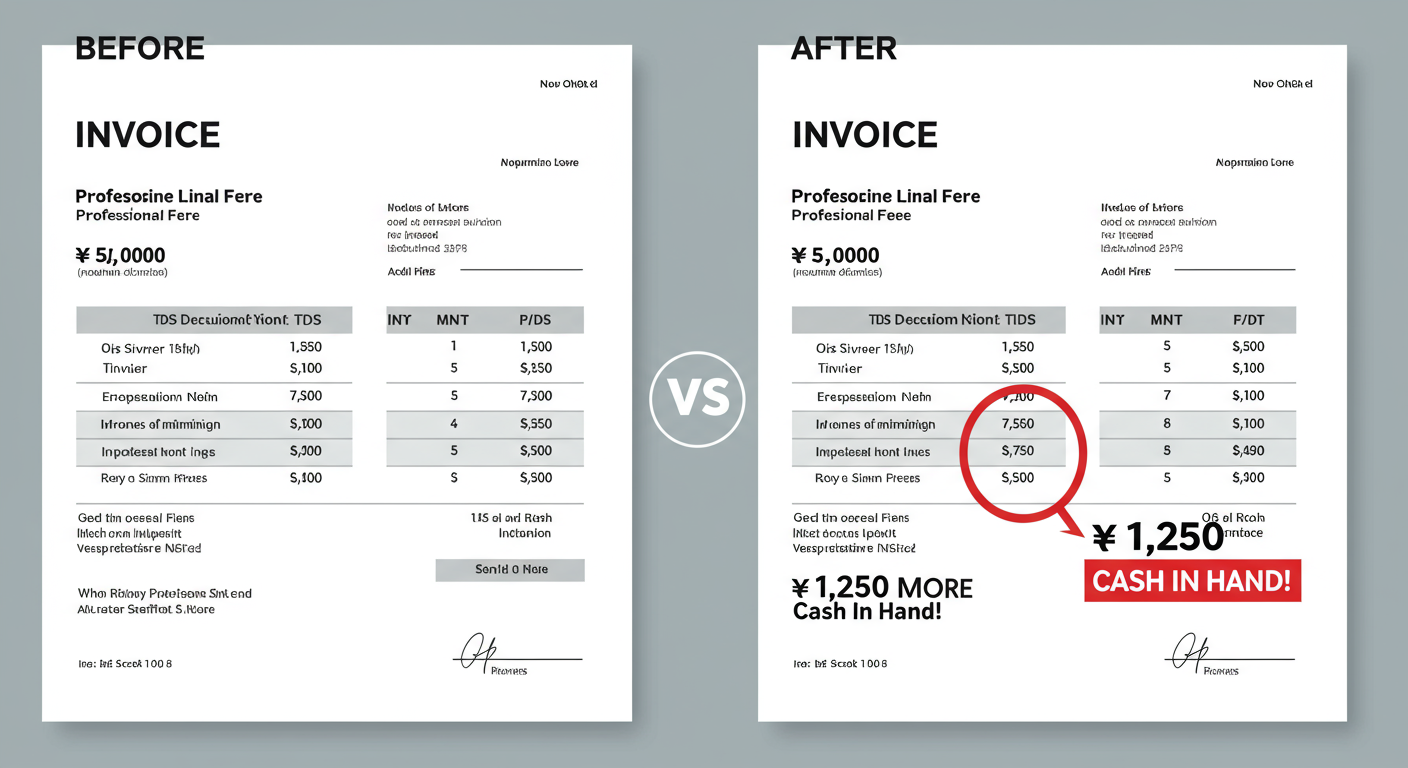
- The Scenario: You paid a freelance web developer ₹50,000 in October 2020 for technical maintenance of your website.
- The Correct Rate: This falls under “fees for technical services.” The standard rate was 2%. With the 25% reduction, the applicable rate was 1.5%. You should have deducted ₹750.
- The Common Error: Many businesses, used to the old 10% rule for all 194J payments, mistakenly applied the reduced 7.5% rate, deducting ₹3,750. This led to excess tax being deducted from the freelancer’s payment.
🎯 Key Takeaway
The FY 2020-21 TDS rate reduction was a targeted, temporary measure to boost liquidity during the pandemic. For businesses and individuals, correctly identifying which transactions fell within the May 14, 2020 – March 31, 2021 window is the single most important step for ensuring historical compliance and avoiding future tax notices. Understanding the GST Threshold Limit Rules: A Comprehensive Guide for Businesses
Your Step-by-Step Guide to Verifying FY 2020-21 Compliance
Feeling a little anxious? Don’t be. You can easily audit your own records from that period. Here’s a simple, step-by-step process our experts use for preliminary checks. TDS on Rent Payment Section 194I: A Comprehensive Guide with Examples
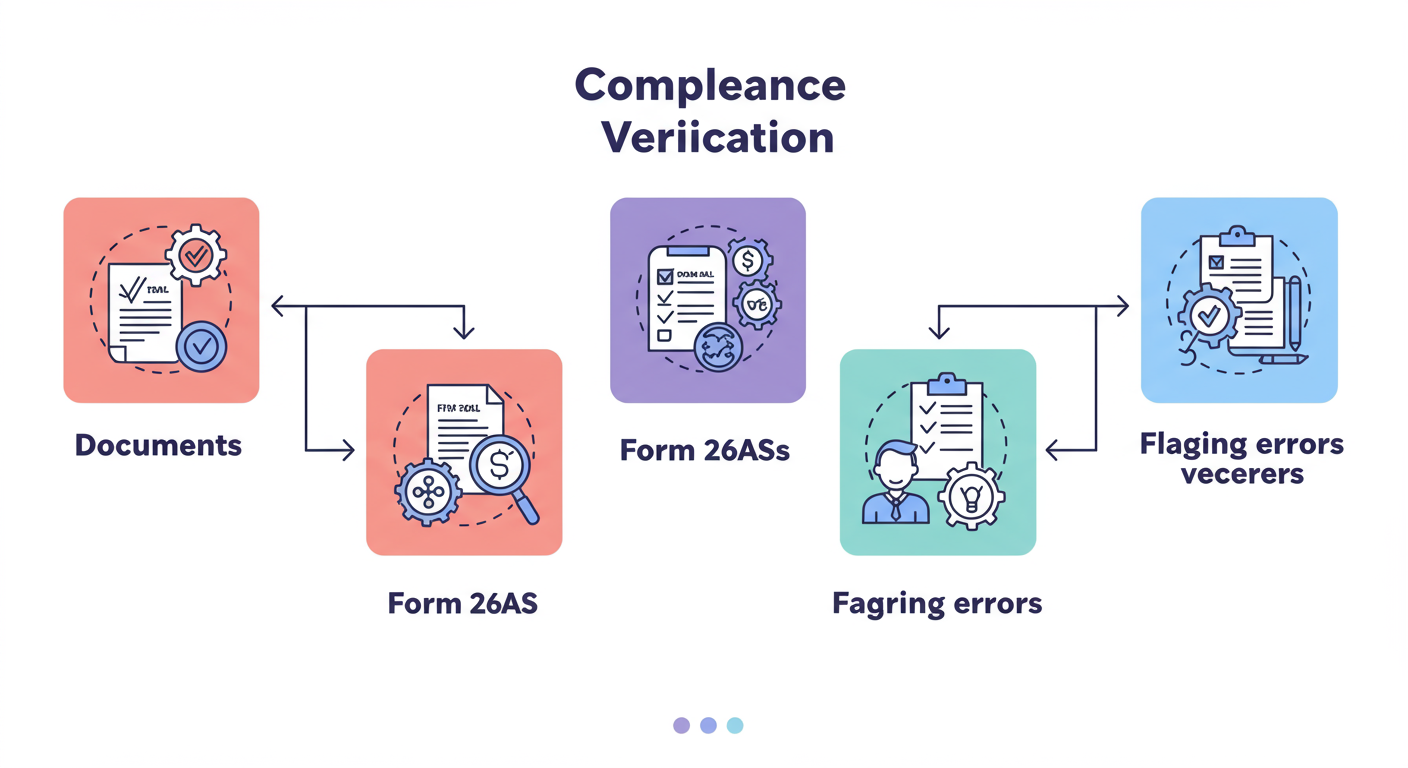
- Gather Your Records: Pull up your bank statements and accounting software records for the period from April 1, 2020, to March 31, 2021. You’ll also need the corresponding invoices for any major payments you made or received.
- Download Your Form 26AS: This is your tax passbook. Log in to the income tax portal and download your Form 26AS for the Assessment Year 2021-22 (which corresponds to Financial Year 2020-21). This form shows all the TDS deducted on your PAN.
- Cross-Reference and Reconcile: For deductors (those who made payments), match the TDS you deposited against the rates in our chart. For deductees (those who received payments), check if the TDS reflected in your Form 26AS matches the correct rate for the payment date.
- Flag Discrepancies: Create a simple list of any transactions where the TDS amount seems off. Pay close attention to the May 14, 2020 cut-off date. Did the rate change correctly on that day?
💡 Pro Tip
Most modern accounting software allows you to filter transactions by date and type. Create a custom report for all ‘Contractor Payments’ or ‘Professional Fees’ between May 14, 2020, and March 31, 2021. This can help you spot-check dozens of transactions in minutes.
Found an Error? Here’s What to Do Next
Okay, so you ran the check and found a mismatch. Don’t panic. It’s a fixable problem, but the solution depends on whether you deducted too much or too little.
⚠️ Watch Out
Ignoring a short-deduction of TDS is not an option. The Income Tax Department’s systems will automatically flag the mismatch. This results in a demand notice for the shortfall, plus interest (typically 1% per month), and potentially penalties. It’s always cheaper to fix it proactively.
Here’s how the two most common scenarios play out:
| Scenario | What Happened | Solution for Deductor (Payer) | Solution for Deductee (Recipient) |
|---|---|---|---|
| Excess TDS Deducted | You applied the old, higher rate during the relief period (e.g., 10% instead of 7.5%). | No immediate action is required, but you should inform the deductee. Your TDS return reflects the higher deduction. | Good news! You haven’t lost money. The full, higher TDS amount will show in your Form 26AS. You can claim this excess tax as a refund when filing your ITR. |
| Short TDS Deducted | You applied the reduced rate before May 14, 2020, or didn’t deduct enough tax. | This is critical. You must deposit the shortfall amount using Challan 281 and file a revised TDS return for that quarter to correct the records. You will also be liable for interest on the delay. | Your Form 26AS will show less tax paid, increasing your final tax liability when you file your ITR. You should coordinate with the deductor to ensure they correct the error. |
This entire situation highlights the importance of the government’s economic response during the pandemic, a topic well-documented by institutions like the Wikipedia page on India’s COVID-19 economic response, and announced through official channels like the Press Information Bureau.
❓ Frequently Asked Questions
Were the reduced TDS rates in FY 2020-21 applicable to salaries?
No, absolutely not. The 25% reduction in TDS rates did not apply to TDS on salary payments under Section 192. Salaries were still subject to TDS based on the individual’s applicable income tax slab rates.
What was the exact period for the reduced TDS rates?
The reduced TDS and TCS rates were only applicable for payments made or credited from May 14, 2020, through March 31, 2021. Any transaction outside this specific window was subject to the normal, un-reduced TDS rates.
What if my client deducted more tax than they should have during this period?
You haven’t lost any money. The entire amount of tax deducted will appear in your Form 26AS. You simply claim the excess TDS amount as a refund when you file your Income Tax Return (ITR) for FY 2020-21 (AY 2021-22).
Did this TDS rate reduction apply to payments made to Non-Residents (NRIs)?
No, the benefit of the 25% TDS rate reduction was exclusively for specified payments made to residents of India. Payments to non-residents remained subject to the regular TDS rates as specified in the Income Tax Act.
Why is this historical data still relevant in 2026?
Tax records and assessments can be scrutinized for up to seven years (or more in some cases). If you face an audit or receive a notice related to FY 2020-21, having this precise information is crucial for proving your compliance and avoiding unnecessary penalties and interest.
Conclusion: Your Permanent Reference for a Complex Year
The financial year 2020-21 was an anomaly, and its tax implications are still being felt today. The temporary 25% TDS rate reduction was a critical economic measure, but it left a trail of complexity that many are still navigating.
You no longer need to hunt for a confusing PDF. This guide is your living, breathing resource. You have the complete chart, real-world examples, and a step-by-step verification process at your fingertips.
Your next step is simple. Bookmark this page. The next time a question about FY 2020-21 comes up—whether in an audit, a team meeting, or your own financial review—you’ll have the definitive answer right here, saving you time, money, and a whole lot of stress.