
You’ve just signed the term sheet. The champagne is popped, the team is celebrating, and the funds are about to hit the bank. It feels like the hard part is over. But for many founders, the real headache is just beginning—and it comes in the form of a tax notice.
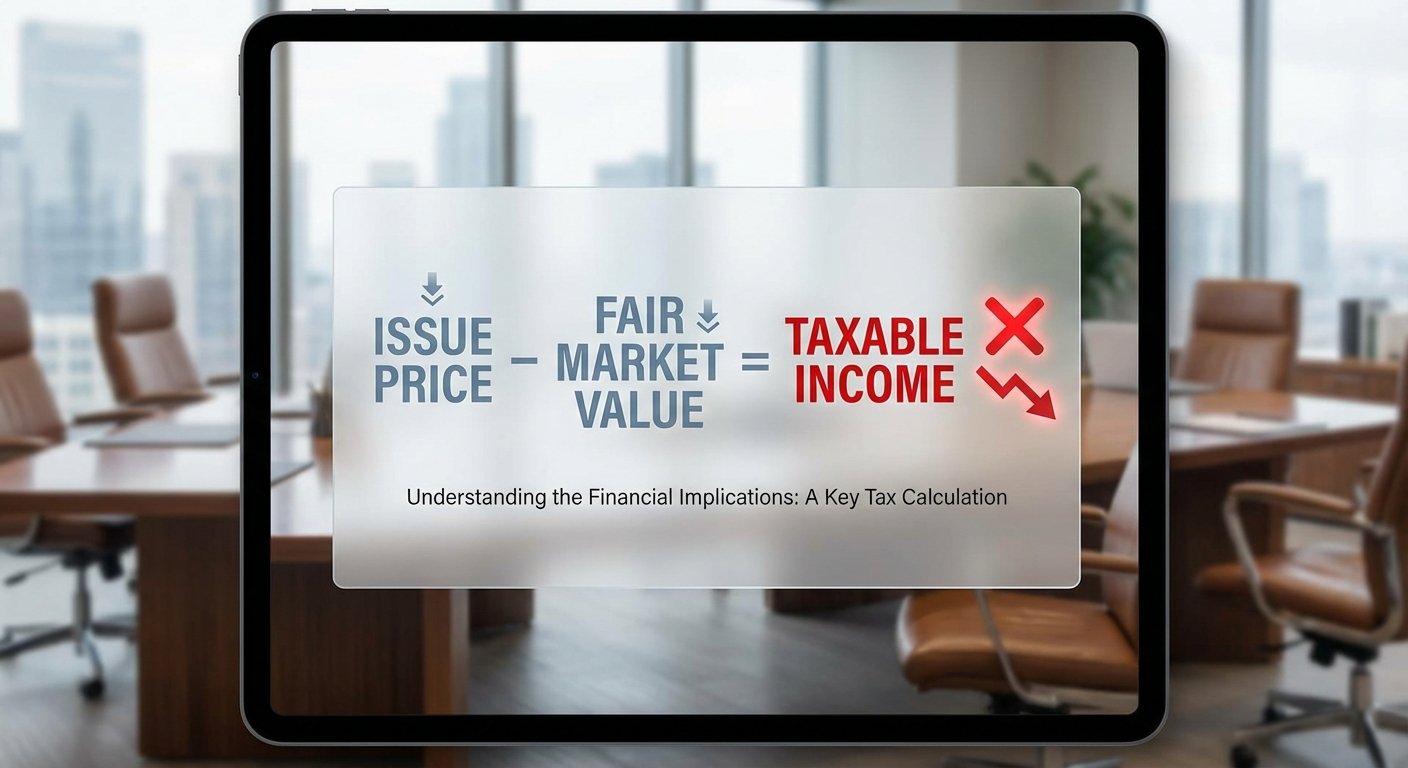
I’ve worked with hundreds of startups over the last two decades, and I can tell you that nothing kills the post-fundraising buzz faster than the startup valuation tax (often infamously known as the "Angel Tax"). It’s the silent financial partner that demands a cut of your capital before you’ve even spent a dime on product development.
Here is the brutal reality: if the tax authorities believe you raised money at a valuation higher than what they think your company is worth, they treat that extra money as income. Not investment—income. And they tax it at a flat 30% plus surcharges.
In this guide, I’m going to walk you through exactly how this tax works, the massive recent changes regarding foreign investors, and the specific steps you need to take to protect your funding.
The Core Mechanics: Why Startup Valuation Tax Exists
To defeat the enemy, you have to understand how they think. The startup valuation tax stems from Section 56(2)(viiib) of the Income Tax Act. Originally, this law wasn’t meant to hurt genuine startups. It was designed to stop money laundering.
Here’s the logic: If a private company issues shares at a massive premium to a "friend" who pays with unaccounted cash, that premium is technically a gift or income disguised as investment. The government wanted to tax that "income."
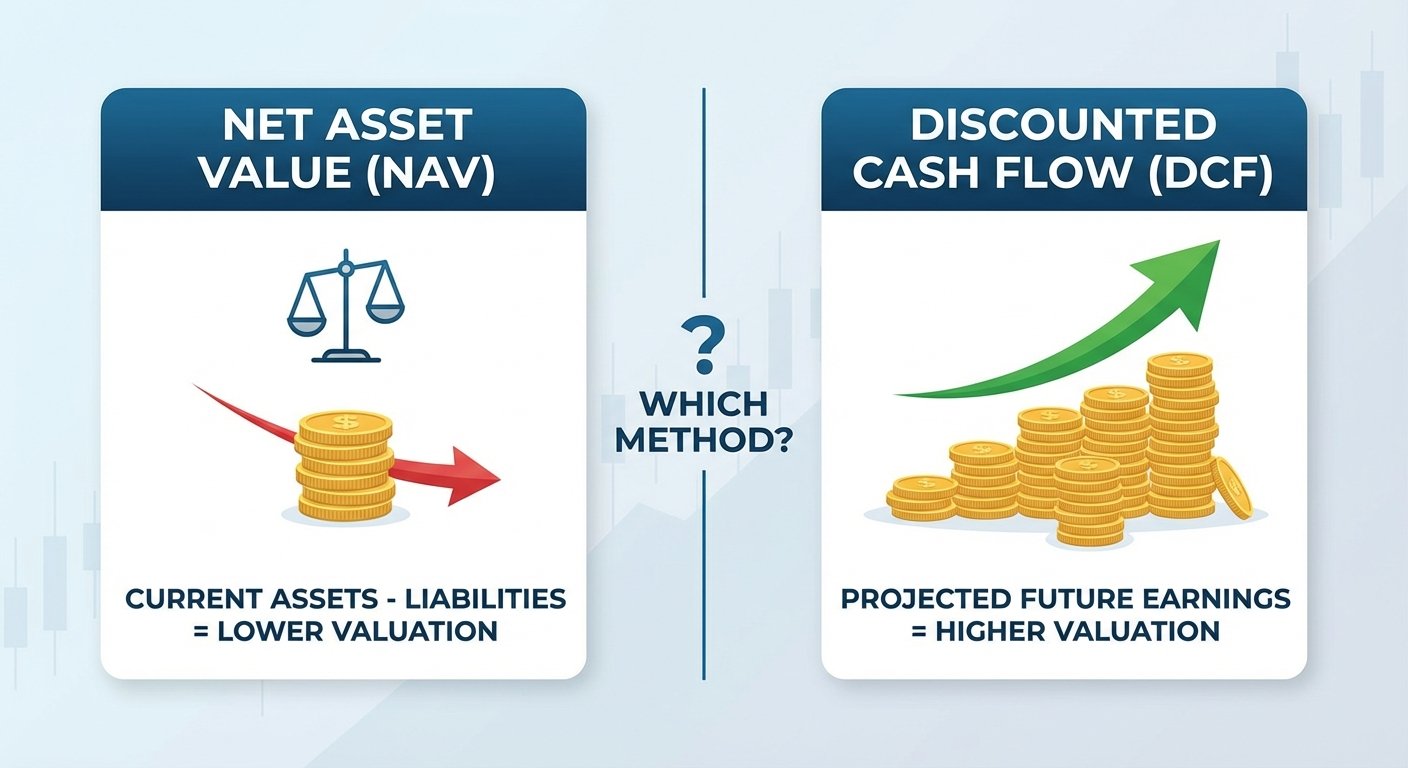
The problem? High-growth startups always issue shares at a premium. You aren’t selling shares based on the desk and chairs you own today (Net Asset Value); you’re selling shares based on the millions in revenue you plan to make five years from now (Discounted Cash Flow).
The Equation That Gets You in Trouble
The tax is calculated simply:
Taxable Income = (Issue Price – Fair Market Value) × Number of Shares
If you issue shares at $100, but the tax officer decides the Fair Market Value (FMV) is only $60, you owe tax on that $40 difference. If you raised $1 million, that could mean paying taxes on $400,000 immediately. That is capital meant for hiring and R&D, gone overnight.
The Two Valuation Methods: NAV vs. DCF
This is where the battle is won or lost. Under Rule 11UA of the Income Tax Rules, you generally have two options to calculate FMV. Choosing the wrong one is the most common mistake I see founders make.
| Feature | Net Asset Value (NAV) | Discounted Cash Flow (DCF) |
|---|---|---|
| Basis | Tangible assets minus liabilities (Book Value). | Future projected cash flows discounted to present value. |
| Resulting Valuation | Usually very low for tech startups. | Usually high, reflecting growth potential. |
| Who Certifies? | Chartered Accountant (CA). | Merchant Banker (Mandatory). |
| Risk Level | Low scrutiny, but likely leads to tax if issue price is high. | High scrutiny on projections. |
Why You Almost Always Need DCF
If you are a tech startup, your NAV might be near zero. You own laptops and some code. But investors are valuing you at $5 million. If you use the NAV method, the gap between your issue price ($5M valuation) and your NAV ($50k) is massive, and you will be taxed on almost the entire investment.
Therefore, you must use the DCF method to justify the premium. And here is the kicker: Only a SEBI-registered Merchant Banker can sign off on a DCF valuation report. A report from your friendly neighborhood CA is not valid for DCF under Rule 11UA and will be rejected instantly by the tax officer.
The New Threat: Foreign Investors Are No Longer Safe
For years, the startup valuation tax only applied to investments from residents (Indian investors). Founders would often breathe a sigh of relief if they were raising funds from a foreign VC or an angel in Singapore.
That changed with the Finance Act 2023. The government expanded the scope of Section 56(2)(viiib) to include non-resident investors as well.
This is a seismic shift. Now, if you raise money from a US-based VC, you still have to justify the valuation to the Indian tax authorities. This creates a complex conflict because foreign investments are also governed by FEMA (Foreign Exchange Management Act) regulations.
- FEMA Rule: You cannot issue shares to foreigners below FMV (pricing floor).
- Tax Rule: You cannot issue shares above FMV (pricing ceiling).
This leaves you with a very narrow window—essentially, the transaction often needs to happen exactly at FMV to satisfy both laws. If your valuation report is sloppy, you might satisfy FEMA but trigger a tax liability, or vice versa.
5 Strategic Steps to Immunize Your Startup
I’ve seen founders panic when they get a notice, but the best defense is preparation. If you follow these five steps, you make it incredibly difficult for the taxman to challenge you.
1. The DPIIT Exemption (The Golden Ticket)
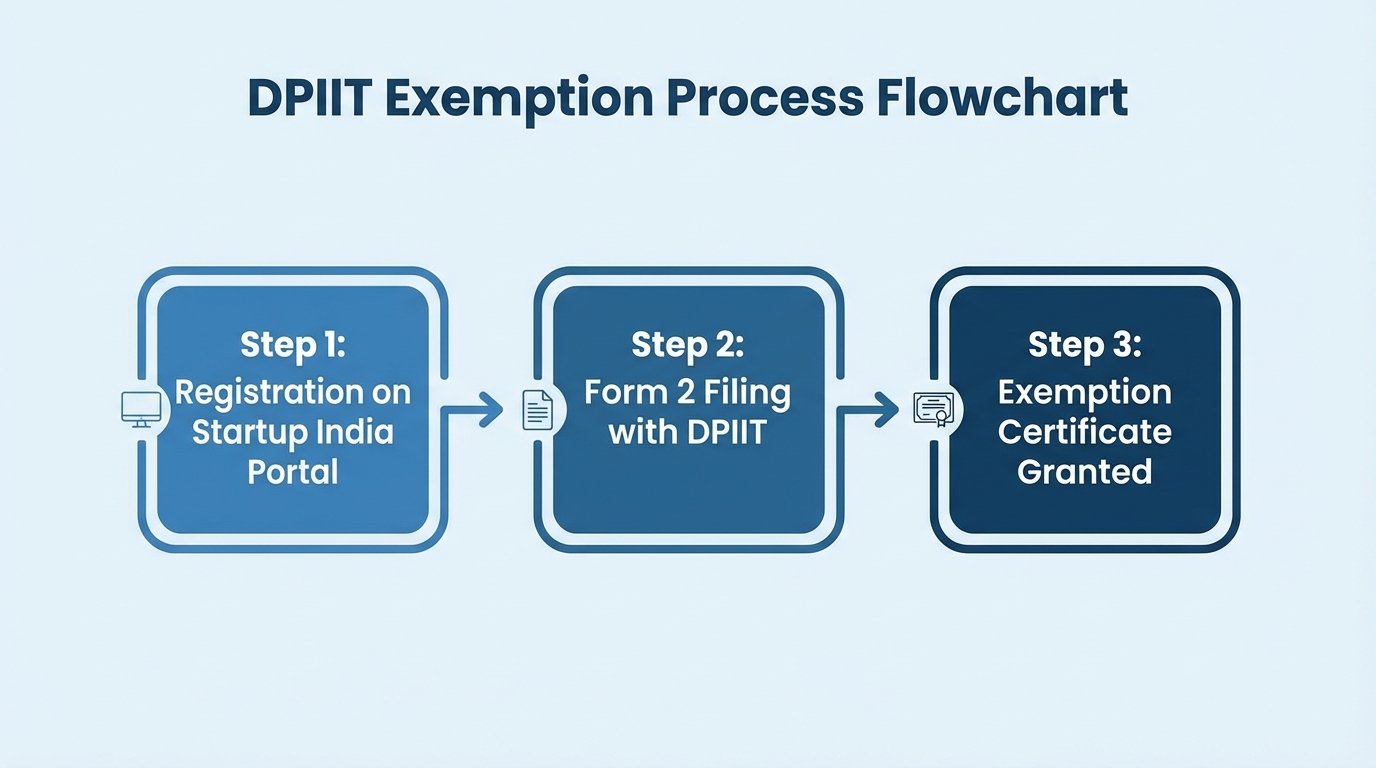
The government realizes this tax hurts innovation, so they created an exemption path. Startups registered with the DPIIT (Department for Promotion of Industry and Internal Trade) can be 100% exempt from startup valuation tax if they file Form 2.
Conditions for Exemption:
- The startup must be recognized by DPIIT.
- Aggregate paid-up share capital + share premium (after the proposed issue) must not exceed ₹25 Crores (approx $3M). Note: Capital from VCs and Non-Residents is excluded from this limit, which is a huge relief.
- The startup must not invest in specific assets like land, jewelry, or vehicles costing more than ₹10 Lakhs for 7 years.
If you qualify, filing Form 2 is a no-brainer. It’s essentially a "Do Not Disturb" sign for the tax department.
2. The "Safe Harbor" Provision
Valuation is an art, not a science. The government acknowledges this by offering a tolerance band. If the issue price is within 10% of the valuation determined by the Merchant Banker, it is accepted.
For example, if the Merchant Banker values your share at $100, you can issue it at up to $110 without triggering the tax. This 10% buffer is vital during negotiations when investors want to round off numbers.
3. Back Your Projections with Data
When a tax officer challenges a DCF valuation, they attack the projections. They will ask: "You projected 500% growth in Year 2 to get this valuation, but you only grew 20%. Why shouldn’t I treat the valuation as fake?"
You need a defense file ready before you issue shares. This should include:
- Market Research Reports: Show that the TAM (Total Addressable Market) supports your growth.
- Letters of Intent (LOIs): Proof of future revenue pipeline.
- Competitor Benchmarking: Show that other companies in your space have similar growth curves.
If you can prove your projections were based on sound logic at the time they were made, courts have generally ruled in favor of the taxpayer, even if actual targets were missed later.
4. Align Your Compliance Hygiene
Tax officers look for low-hanging fruit. If your basic compliance is messy, they assume your valuation is messy too. Ensure you have your MSME Udyam certificate if applicable, and that your product categorization and GST codes are accurate. These small details build a picture of a legitimate, well-governed business.
5. Check the "Angel Fund" Status
Investments from SEBI-registered Category I and II Alternative Investment Funds (AIFs) represent a special class. They are generally exempt from the startup valuation tax provisions. If you have a choice between taking money from an unstructured syndicate of individuals vs. a registered Angel Fund, the Fund route is far safer from a tax perspective.
Real-World Scenario: The Cost of Getting It Wrong
Let’s look at a hypothetical scenario to drive this home.
Startup A raises $500,000. They use an internal Excel sheet to justify the price. Two years later, they get a tax notice. The officer rejects the internal valuation and uses the NAV method (Book Value), which is near zero. The officer demands 30% tax on the full $500,000 ($150,000) plus a 200% penalty on the evaded tax. Startup A is now liable for $450,000 in taxes and penalties on a $500,000 investment. They are effectively insolvent.
Startup B raises the same amount. They hire a Merchant Banker for $2,000 to draft a DCF report. They also file Form 2 with DPIIT. When the scrutiny notice comes (and it often does, automatically), they upload the Form 2 exemption and the Merchant Banker report. The case is closed in weeks with zero liability.
The difference wasn’t the business model; it was the paperwork.
Recent Budget Updates You Can’t Ignore
Staying updated is crucial. For instance, keeping an eye on budget highlights and comprehensive guides helps you anticipate policy shifts. The government is actively tweaking these rules to balance ease of doing business with anti-evasion measures.
Recently, the Central Board of Direct Taxes (CBDT) notified five new valuation methods for non-resident investors, including Comparable Company Multiple and Probability Weighted Expected Return Method. This gives startups more flexibility when dealing with foreign VCs, moving beyond just DCF and NAV. This flexibility is a game-changer for startups in complex industries like biotech or deep tech where traditional DCF might not capture full value.
Final Thoughts: Don’t Let Tax Kill Your Momentum
Raising capital is hard enough without worrying about giving a third of it back to the government. The startup valuation tax is a hurdle, yes, but it is a clear one. We know where it is, and we know how to jump over it.
My advice? Treat your valuation report with the same seriousness as your product roadmap. Don’t cheap out on the Merchant Banker. Don’t ignore the DPIIT registration. And absolutely do not issue shares until you are 100% sure your tax position is defensible.
If you are currently negotiating a term sheet, pause. Ask your CA about Section 56(2)(viiib). It might be the most profitable question you ask all year.
For more technical details on fair value measurement, you can always refer to the Income Tax Department of India or the global standards at the IFRS Foundation.
FAQs on Startup Valuation Tax
They are effectively the same thing. "Angel Tax" is the colloquial term used in India for the tax levied under Section 56(2)(viiib) of the Income Tax Act, which taxes the share premium received by a startup in excess of its Fair Market Value.
No. Under Rule 11UA, if you are using the Discounted Cash Flow (DCF) method to determine Fair Market Value, the report MUST be issued by a SEBI-registered Merchant Banker. A CA can only certify valuations based on the Net Asset Value (NAV) method.
The safe harbor provision allows for a variation of up to 10% between the issue price and the determined Fair Market Value. If your issue price does not exceed the valuation report’s FMV by more than 10%, the tax department will likely accept the price and not levy the tax.
Not anymore. Following the Finance Act 2023 amendments, the provisions of Section 56(2)(viiib) now apply to non-resident investors as well. Startups must ensure their valuation reports cover foreign investments to avoid tax liability.
To claim exemption, you need to be a DPIIT-recognized startup. You must file ‘Form 2’ (Self-declaration) on the startup India portal. You will need your annual accounts, net worth details, and a confirmation that you haven’t invested in prohibited assets (like luxury cars or residential real estate).
Read Also:
- Your CIN Certificate in 2024: 7 Key Facts Every Business Owner Must Know – Visual Story
- Proprietorship Firm Registration in 2026: A 5-Minute Guide
- FSSAI Food Licence Renewal 2026: Your Guide to Avoiding Penalties
- Inside India’s Corporate Giants 2026
- Income Tax Audit Report Due Date 2026: Your Guide to Sec 44AB