
Look, starting a business used to be a paperwork nightmare. But in 2026? It’s never been more accessible. If you’re a freelancer, a consultant, or a local trader looking to legitimize your hustle, establishing a proprietorship firm is almost certainly your best first move.
Here’s the reality: You don’t always need a fancy board of directors or a complex corporate structure to make money. In fact, for 80% of first-time entrepreneurs, those things are just expensive distractions.
I’ve worked with hundreds of small business owners over the last decade, and I’ve seen the same pattern play out. The ones who start lean—usually as a sole proprietorship—often scale faster because they aren’t bogged down by compliance heavy-lifting. A proprietorship firm is the simplest, most cost-effective business entity in existence. It revolves entirely around you.
In this guide, we aren’t just going to define what it is. We’re going to walk through the exact 7-step framework to get registered, open your bank account, and handle your taxes like a pro in the current 2026 regulatory environment.
🎯 Key Takeaway
A proprietorship firm is the fastest way to start a business in 2026, offering total control and minimal compliance. However, it comes with unlimited liability, meaning your personal assets are at risk if the business fails.
What Is a Proprietorship Firm? (The No-Nonsense Definition)
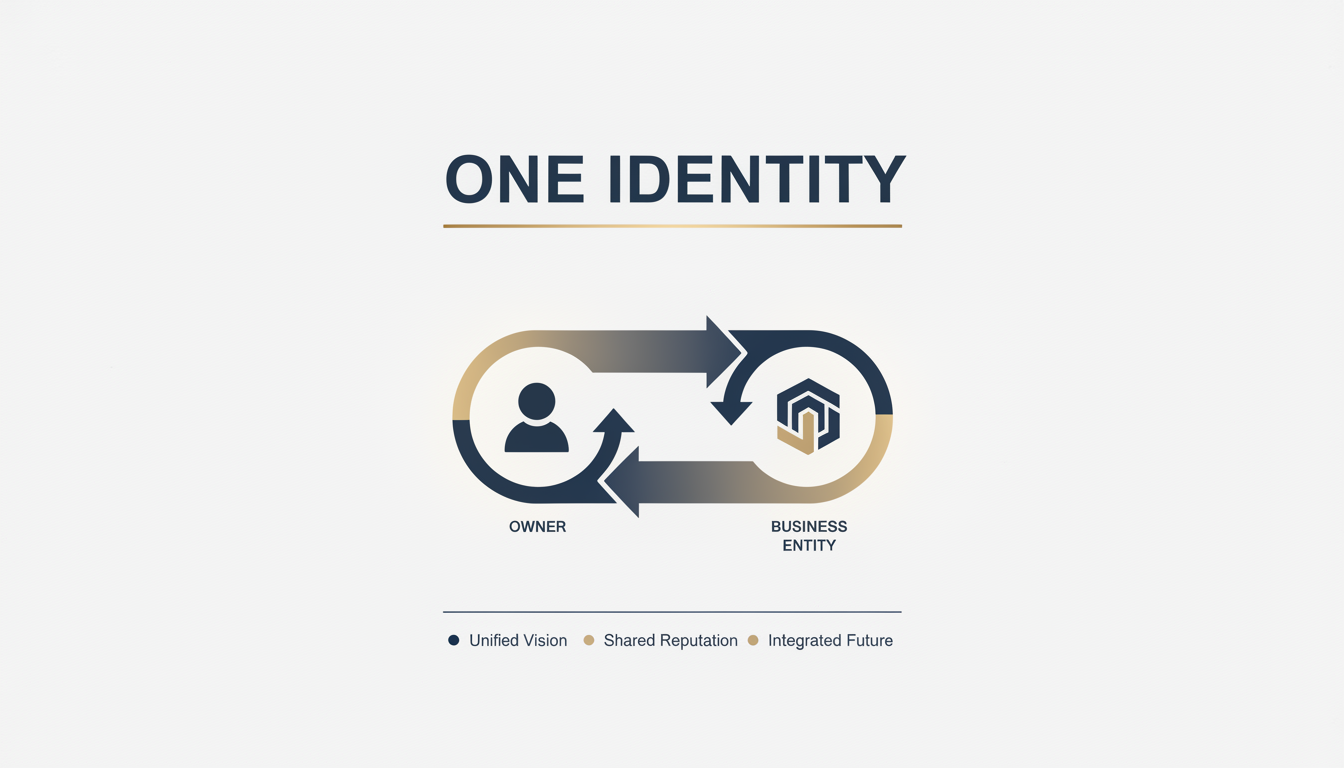
Strip away the legal jargon, and here is what it means: You are the business.
A proprietorship firm (or sole proprietorship) is a business entity owned, managed, and controlled by a single person. In the eyes of the law and the tax department, there is absolutely no distinction between the owner (proprietor) and the firm.
If the business makes a profit, that’s your income. If the business takes a loss, that’s your personal loss. If the business owes money, you owe money.
This structure is the backbone of the unorganized sector and the gig economy. Whether you are running a local bakery, a digital marketing agency from your bedroom, or a trading unit, this is likely where you’ll start.
The Good, The Bad, and The Ugly: A Candid Comparison
Before you dive in, you need to weigh the pros and cons. I always tell clients that while the barrier to entry is low, the risk profile is high. Here is how the proprietorship firm stacks up in 2026.
| Feature | The Advantage (Pros) | The Risk (Cons) |
|---|---|---|
| Control | You are the sole boss. No board meetings, no partner disputes. You pivot when you want. | Decision fatigue. The entire burden of success rests on your shoulders alone. |
| Liability | N/A (This is purely a disadvantage). | Unlimited Liability. If the business goes bankrupt, creditors can seize your car, house, and personal savings. |
| Taxes | Taxed at individual slab rates. If you earn less, you pay less (or zero). | No corporate tax deductions or flat rates that high-revenue companies enjoy. |
| Compliance | Minimal. No annual MCA filings or statutory audits for smaller turnovers. | Harder to scale. Investors (VCs) rarely fund proprietorships due to lack of structure. |
⚠️ Watch Out
The Liability Trap: Never treat the “Unlimited Liability” clause lightly. If you are entering a high-risk industry (like construction or manufacturing) where lawsuits or massive debts are possible, a proprietorship might be too risky. In those cases, look at an LLP or Private Limited company instead.
7 Steps to Start Your Proprietorship Firm in 2026
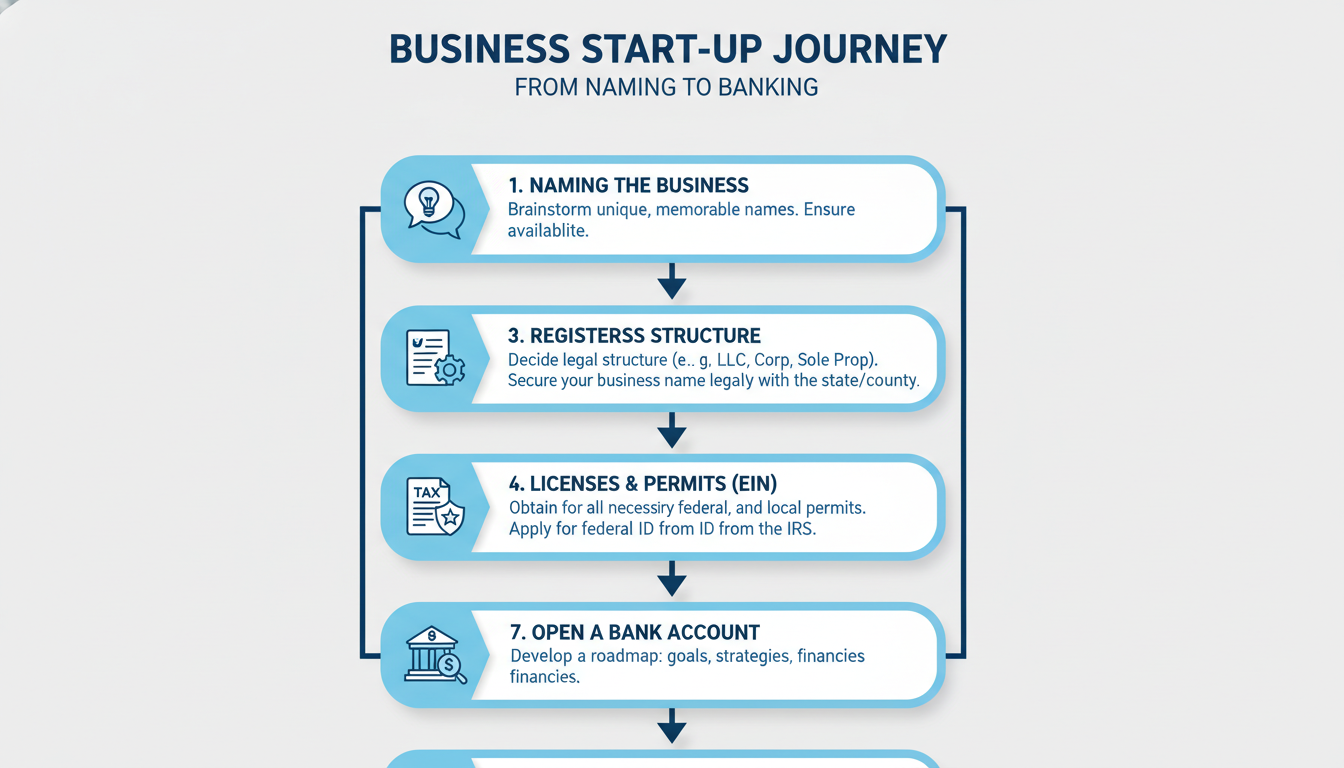
Technically, there is no single “Proprietorship Certificate.” You don’t go to a government office and ask to “register a proprietorship.” Instead, the existence of your firm is established through a cluster of other registrations.
Follow this workflow to get set up legally and quickly.
Step 1: Choose a Unique Trade Name
Pick a name that reflects your brand. Since there is no central registry for proprietorship names, you can technically choose any name as long as it doesn’t infringe on a registered Trademark.
Example: If your name is Rahul, you can call your business “Rahul Enterprises” or “Skyline Digital Solutions.”
Step 2: Gather Your KYC Documents
Since the entity is tied to you, your personal documents are the business documents. You will need:
- PAN Card: Mandatory for income tax.
- Aadhaar Card: Linked to your mobile number (crucial for OTP verification).
- Passport Photo: For various forms.
Step 3: Apply for MSME (Udyam) Registration
This is your golden ticket. The Udyam Registration is a government recognition of your business as a Micro, Small, or Medium Enterprise. It’s free, paperless, and instant.
Why do it? It serves as a valid proof of business for opening bank accounts and unlocks government subsidies.
Step 4: Get Your GST Registration
Do you need GST? It depends. In 2026, GST registration is mandatory if:
- Your annual turnover exceeds ₹20 lakhs (₹10 lakhs in some states) for services.
- Your annual turnover exceeds ₹40 lakhs for goods.
- You sell goods online (e-commerce) or interstate.
If you are a freelancer earning ₹15 lakhs a year from local clients, GST is optional (though often recommended for credibility).
Step 5: Shop & Establishment Act License
This is a state-level license. Whether you work from a commercial office or your living room, most states require you to register under the Shop & Establishment Act. It regulates work conditions and is often asked for by banks. Understanding the GST Threshold Limit Rules: A Comprehensive Guide for Businesses
Step 6: Open a Current Bank Account
Do not skip this. You might be tempted to use your personal savings account, but that is a rookie mistake. Mixing personal and business finances is an accounting nightmare. The Comprehensive ROC Annual Filing Checklist: Mastering AOC-4, MGT-7, and Due Dates
Take your Udyam certificate and GST certificate to the bank and open a Current Account in the name of your proprietorship firm. Budget 2026: Analyzing the Critical Budget Impact on MSME Sector Growth and Stability
💡 Pro Tip
The “Two-Document” Rule: Most banks in 2026 adhere to strict KYC norms. They usually demand two separate proofs of business entity to open a current account. Typically, your MSME (Udyam) registration and your GST certificate (or Shop Act license) form this perfect pair.
Step 7: File for Trademarks (Optional)
If you are building a brand you care about, protect the name. Remember, a proprietorship doesn’t give you legal ownership of the business name—only a Trademark does.
Banking, Taxes, and Compliance: The Boring (But Vital) Stuff
Once you are up and running, the game changes from “starting” to “managing.”
Taxation: The 44AD Advantage
Here is a secret weapon for proprietors: Presumptive Taxation (Section 44AD).
If your turnover is under the prescribed limit (check the latest Income Tax Department guidelines), you don’t need to maintain detailed books of accounts or get audited. You can simply declare a flat percentage of your turnover as profit and pay tax on that. It saves massive amounts of time and accounting fees.
Annual Compliance Checklist
Unlike a Private Limited Company, your compliance calendar is light:
- Income Tax Return (ITR): File ITR-3 or ITR-4 annually.
- GST Returns: Monthly or quarterly filings (GSTR-1 and GSTR-3B) if you are registered.
- TDS Deductions: If you have employees or pay contractors, you may need to deduct and file TDS.
Proprietorship vs. The Rest: Making the Right Choice
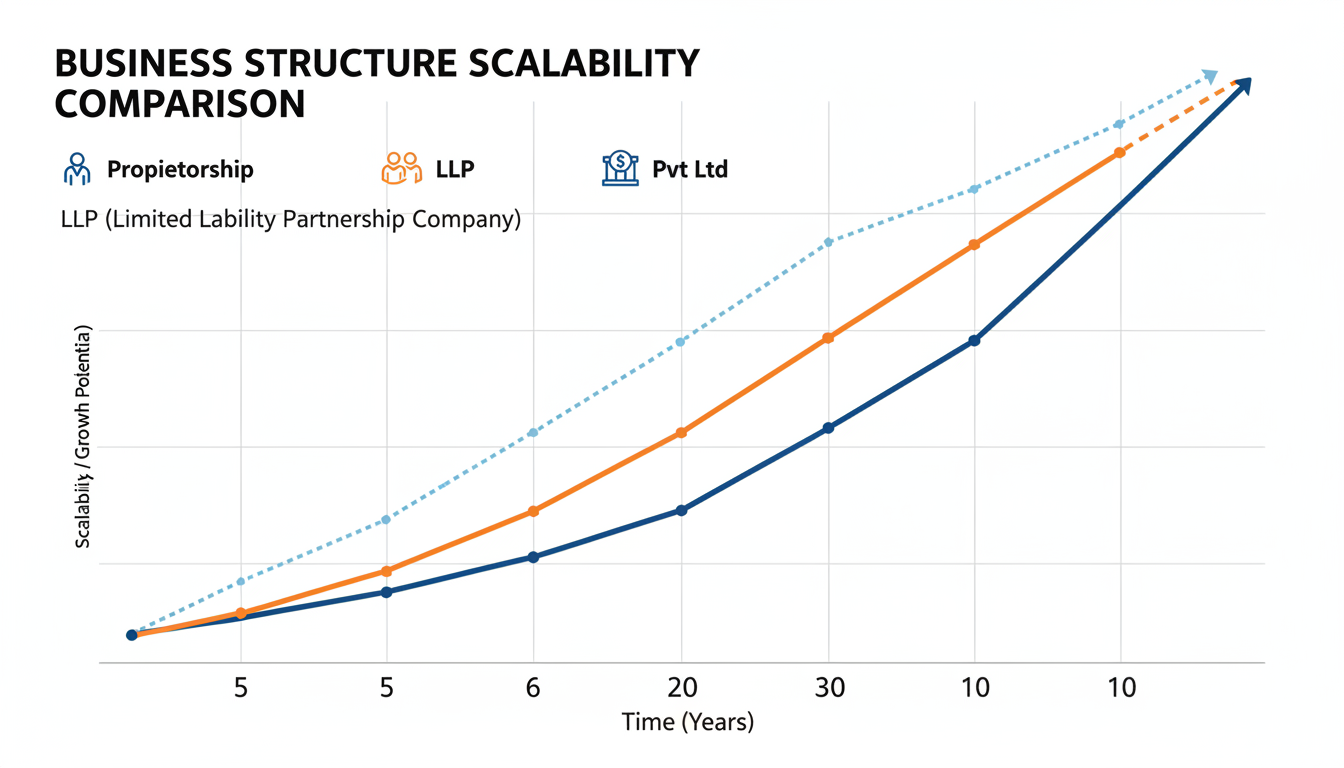
Is a proprietorship firm really right for you? Or should you look at an LLP or a Private Limited Company? Let’s look at the data.
| Parameter | Proprietorship | LLP (Limited Liability Partnership) | Private Limited Company |
|---|---|---|---|
| Ownership | Single Person | Partners (Min 2) | Shareholders (Min 2) |
| Liability | Unlimited (High Risk) | Limited to Contribution | Limited to Share Capital |
| Registration Cost | Very Low (< ₹2,000) | Moderate | High |
| Investor Funding | Impossible | Difficult | Preferred |
| Compliance Load | Low | Medium | High |
For a deeper understanding of corporate structures, the Ministry of Corporate Affairs provides detailed definitions and requirements.
When Should You Convert?
I’ve seen many entrepreneurs start as a proprietorship and then hit a ceiling. You should consider converting to a Private Limited Company if:
- You need funding: VCs will not write a check to “Rahul Enterprises.” They invest in equity, which requires a company structure.
- Revenue is exploding: Once your profit crosses a certain threshold, the corporate tax rate might actually be lower than the individual tax slab (which can go up to 30% or more).
- Liability is increasing: If you start taking big loans or signing high-stakes contracts, protect your personal assets by incorporating.
Conclusion
Starting a proprietorship firm in 2026 is the ultimate act of betting on yourself. It offers the freedom to experiment without the suffocating weight of corporate compliance. It’s the sandbox where future empires are often born.
But remember, it’s a stepping stone. Start here to validate your idea, build your customer base, and generate cash flow. But keep your eyes on the horizon. As you grow, be ready to evolve your business structure to match your ambition.
Ready to start? Go apply for your Udyam registration today—it takes ten minutes, and it’s the first real step toward calling yourself a business owner.
❓ Frequently Asked Questions
Can a proprietorship firm apply for Startup India recognition?
No. The Startup India scheme and its tax holidays are strictly for Private Limited Companies, LLPs, and Registered Partnerships. A proprietorship is not considered a separate legal entity eligible for these benefits.
Do I need a separate PAN card for my firm?
No. This is a common misconception. In a proprietorship, your PAN is the firm’s PAN. You do not get a separate tax identity card for the business.
Can I transfer my proprietorship to someone else?
Not directly. You cannot “sell” the entity because the entity is you. To transfer the business, you would essentially sell the assets (inventory, client list, brand) to the buyer, and they would have to set up a fresh proprietorship (or company) under their own name.
What happens to the firm if the owner passes away?
Since the business and the owner are the same legal entity, the proprietorship ceases to exist upon the death of the owner. The assets can be passed to legal heirs, but the “firm” itself dissolves legally.
Can a salaried employee start a proprietorship?
Legally, yes. There is no law stopping you. However, you must check your employment contract. Many companies have “moonlighting” or conflict of interest clauses that prohibit dual employment. Always read the fine print of your job offer first.