Picture this: two entrepreneurs, Priya and Rohan, launch similar private limited companies. Priya spends her nights buried in dense compliance paperwork, stressing about board meeting quotas and complex financial statements. Rohan, on the other hand, seems to breeze through his legal duties, dedicating that saved time and money to product development and marketing.
What’s Rohan’s secret? It’s not a magic wand. It’s a deep understanding of one of the most powerful strategic advantages in Indian corporate law: the small company definition.
This isn’t just boring legal jargon. It’s a golden ticket. Qualifying as a ‘small company’ under the Companies Act, 2013, can drastically cut your compliance burden, save you money on penalties, and free up your most valuable resource—your time. But here’s the catch: the rules have changed, and many businesses are leaving these benefits on the table simply because they don’t know they qualify.
In this in-depth guide, we’ll break down everything you need to know for 2026. You’ll learn:
- The exact, up-to-date financial thresholds you must meet.
- The game-changing benefits that come with small company status.
- The critical exceptions that could disqualify you.
- A step-by-step process to verify your company’s status today.
- How this differs from MSME and Startup classifications (and how to potentially triple-dip the benefits!).
Let’s unlock this advantage for your business.
What is a Small Company in India? The Official Definition
At its core, the small company definition is a special status granted to certain private companies, allowing them a more relaxed regulatory environment. The legal basis for this is Section 2(85) of the Companies Act, 2013. Think of it as the government’s way of acknowledging that a one-size-fits-all compliance model stifles growth for smaller players.
To qualify, a company must be a private limited company. That’s the first gate. Public companies, no matter how small their revenue, can never get this status.
Once you’ve cleared that, your company’s financials are put to the test against two specific pillars:
- Paid-up Share Capital: The total amount of money the company has received from shareholders for its shares.
- Annual Turnover: The total revenue from operations during the previous financial year, as shown in your Profit & Loss statement.
Here’s the critical part: you must satisfy both conditions. Breaching even one of these thresholds means you lose the ‘small company’ status. It’s an all-or-nothing deal.
The Golden Criteria: 2026 Thresholds You Must Know
The Ministry of Corporate Affairs (MCA) has been actively promoting the Ease of Doing Business in India. As part of this initiative, they’ve progressively increased the financial limits for the small company definition. The latest major revision, effective from September 15, 2022, significantly expanded the scope.
Here are the numbers that matter in 2026:
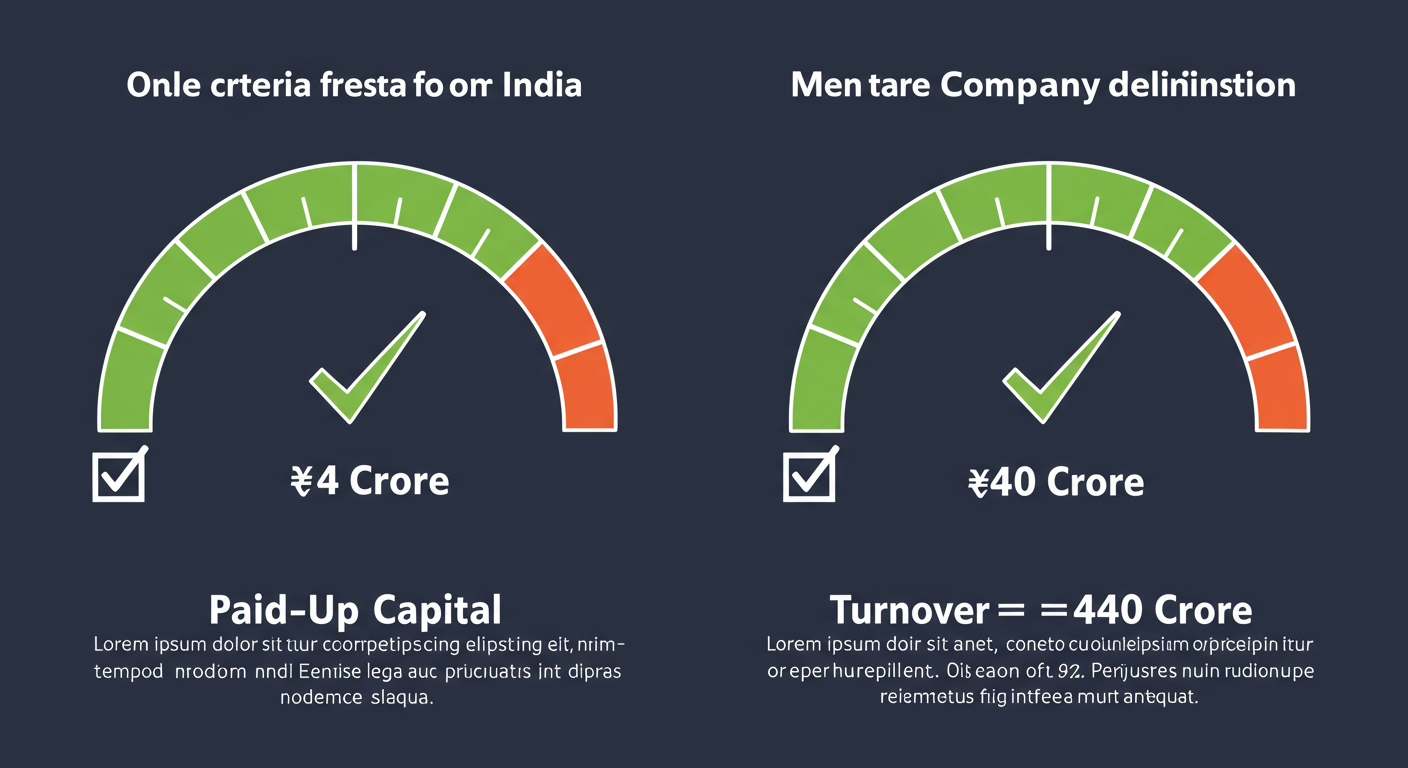
- Paid-Up Share Capital: Must not exceed ₹4 Crore.
- Turnover: Must not exceed ₹40 Crore (based on the P&L of the immediately preceding financial year).
Let’s see this in action. Imagine ‘InnovateNext Solutions Pvt. Ltd.’ has the following financials for the year ending March 31, 2025:
- Paid-up Share Capital: ₹3 Crore
- Annual Turnover: ₹35 Crore
Since InnovateNext is a private company and its capital (below ₹4 Cr) and turnover (below ₹40 Cr) are both within the limits, it qualifies as a small company for the financial year 2025-2026.
To truly appreciate how business-friendly these new limits are, look at how they’ve evolved:
| Time Period | Paid-Up Capital Limit | Turnover Limit |
|---|---|---|
| Before Feb 2021 | ≤ ₹50 Lakh | ≤ ₹2 Crore |
| Feb 2021 – Sep 2022 | ≤ ₹2 Crore | ≤ ₹20 Crore |
| Sep 2022 Onwards (Current for 2026) | ≤ ₹4 Crore | ≤ ₹40 Crore |
⚠️ Watch Out
The turnover criterion is based on the immediately preceding financial year. This means your status for FY 2026-27 is determined by your turnover in FY 2025-26. It’s a constant evaluation, not a one-time check.
The Dealbreakers: Who Can NEVER Be a Small Company?
Meeting the financial criteria is essential, but it’s not the whole story. The Companies Act explicitly carves out certain types of companies that are barred from this classification, regardless of their size. It’s crucial to know these exclusions.
Your company is NOT a small company if it is:
- A holding or a subsidiary company: If your company controls another, or is controlled by another, it’s out. This prevents large corporate groups from exploiting the benefits through their smaller entities. From our experience, this is a common trap for startups that receive investment from a corporate venture capital arm.
- A Section 8 Company: These are non-profit organizations formed for charitable objects, promotion of arts, science, etc. They operate under a different regulatory framework.
- A company governed by a Special Act: This includes entities like insurance companies, banking companies, electricity generation companies, and others formed under a specific Act of Parliament. They have their own stringent industry-specific regulations.
💡 Pro Tip
When structuring your company or taking on investment, be mindful of the holding/subsidiary rule. If a single corporate entity acquires more than 50% of your company’s voting power, you will instantly lose your small company status, even if your financials are well within the limits.
The Payoff: 5 Game-Changing Benefits of Being a Small Company
So, you’ve confirmed you qualify. What’s the big reward? It’s all about reducing the compliance burden, which translates directly into cost and time savings. Comprehensive Guide to Income Tax Deductions Section 80C to 80U: Complete List 2026
Here’s a look at the massive operational advantages you unlock: Section 8 Company vs Trust vs Society in 2026: Which is Best?
- Fewer Board Meetings: You only need to hold two board meetings a year (one in each half of the calendar year, with a 90-day gap). Other companies need to hold four. That’s 50% less time spent on meeting prep, minutes, and scheduling.
- No Cash Flow Statement: This is a huge relief for your accounting team. Small companies are exempt from preparing a Cash Flow Statement as part of their annual financial statements. This simplifies accounting and reduces audit complexity.
- Simplified Annual Return: You get to file an abridged annual return (Form MGT-7A) instead of the lengthy Form MGT-7. MGT-7A is significantly shorter and requires less detailed disclosures.
- No Mandatory Auditor Rotation: Larger companies must rotate their auditors every few years to ensure independence. Small companies are exempt, allowing you to build a long-term, cost-effective relationship with an auditor who truly understands your business.
- Lesser Penalties: The Act prescribes lower penalties for small companies for many types of non-compliance. It’s a crucial safety net that acknowledges honest mistakes can happen in smaller setups.
The difference is stark. Let’s compare the compliance load side-by-side.
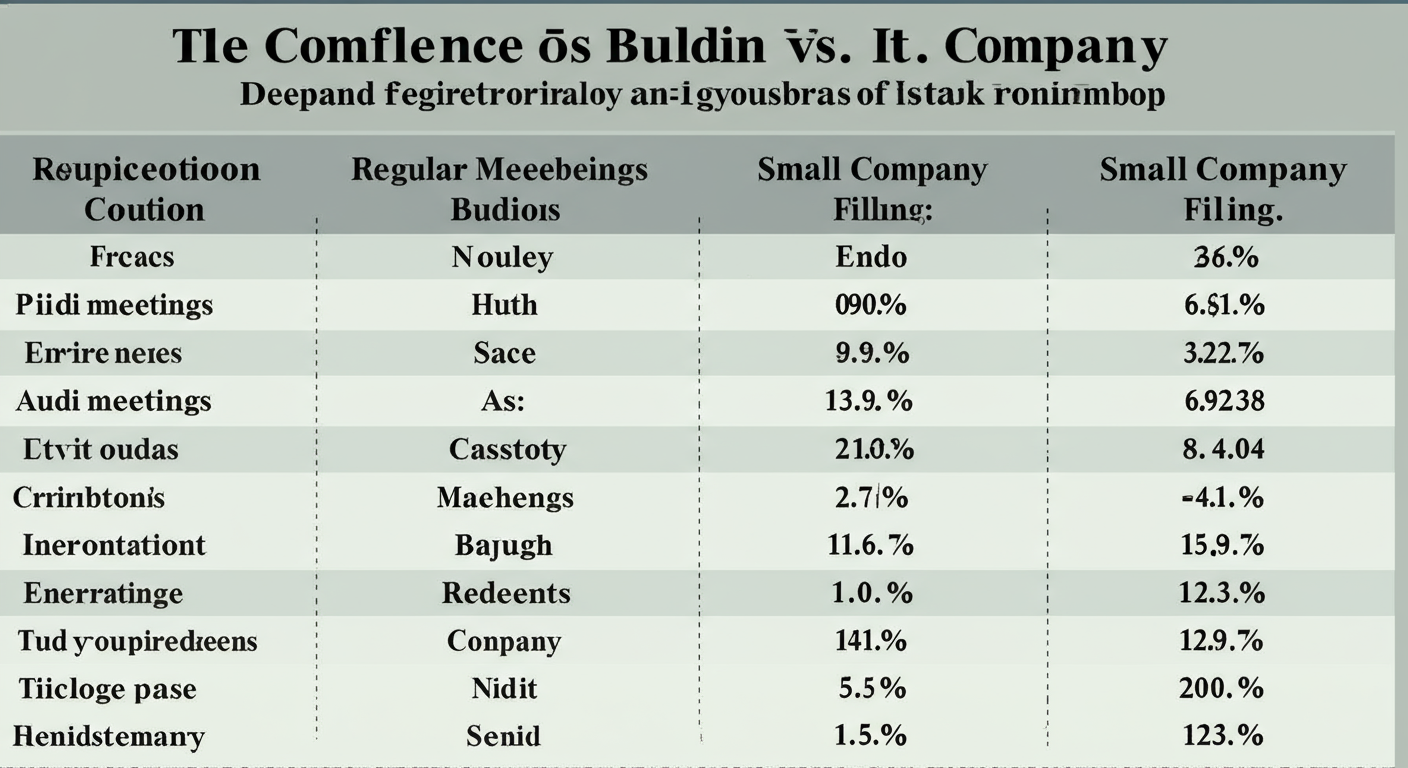
| Compliance Task | Regular Private Ltd. Company | Small Company |
|---|---|---|
| Board Meetings (Minimum per year) | 4 | 2 |
| Annual Return Form | Form MGT-7 (Detailed) | Form MGT-7A (Abridged) |
| Cash Flow Statement | Mandatory | Not Required |
| Auditor Rotation | Mandatory (as per rules) | Not Applicable |
| Penalties for Non-Compliance | Standard Penalties | Reduced Penalties (Max 50% of standard) |
🎯 Key Takeaway
The small company definition isn’t just a label; it’s a strategic tool. By meeting the criteria, you fundamentally change your company’s operational DNA, making it leaner, more agile, and less burdened by administrative overhead.
How to Verify Your Small Company Status: A 3-Step Guide
Feeling hopeful? Good. There’s no application process; your status is determined automatically. Here’s how to check if you qualify right now.
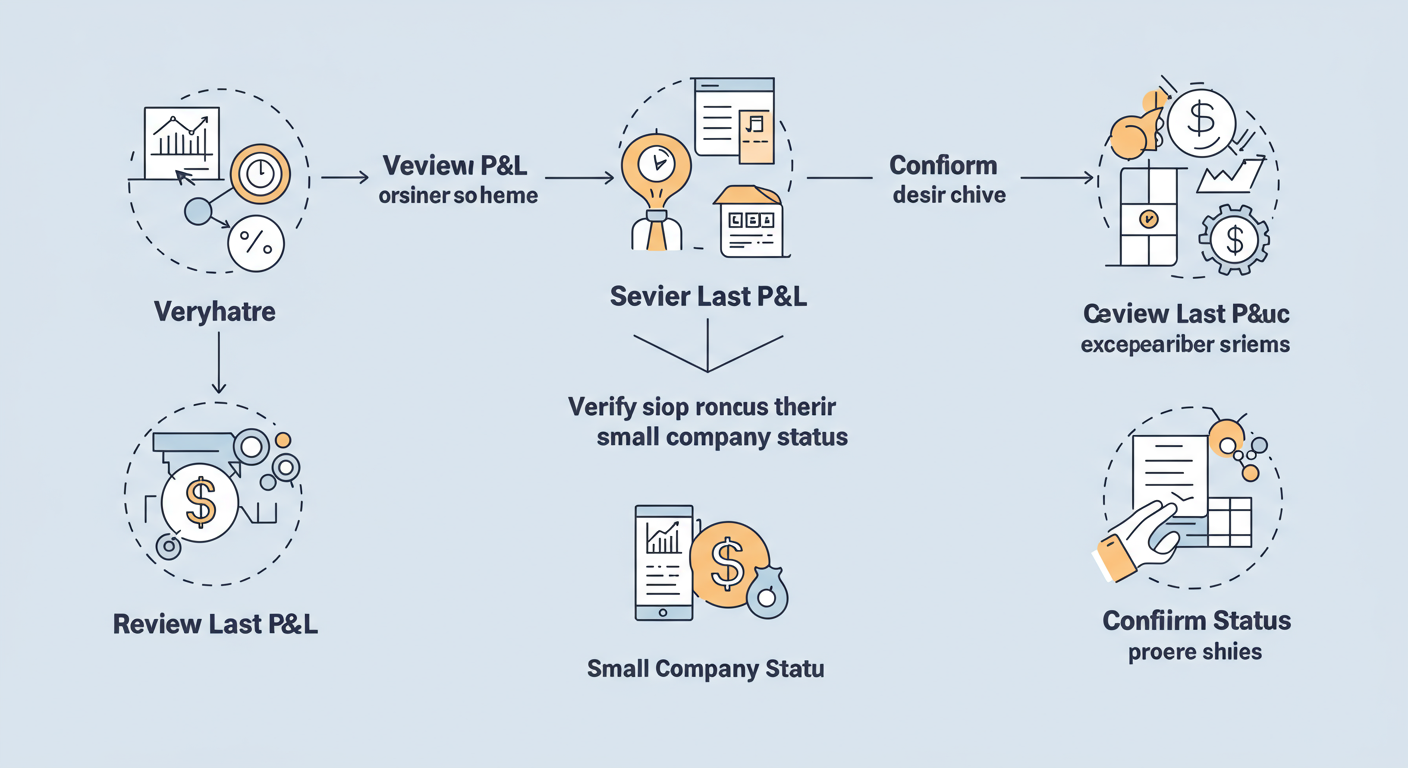
- Step 1: Check Your Last Audited Financials. Pull up your financial statements for the last completed financial year (i.e., for the year ending March 31, 2025, to determine status for FY 2025-26). You need two numbers:
- Your Paid-up Share Capital from the Balance Sheet.
- Your Turnover (Revenue from Operations) from the Profit and Loss Account.
- Step 2: Compare Against the Thresholds. Is your Paid-up Capital ≤ ₹4 Crore? And is your Turnover ≤ ₹40 Crore? You must get a ‘yes’ for both.
- Step 3: Review the Exclusion List. Finally, confirm you are not a holding company, a subsidiary, a Section 8 company, or governed by a Special Act.
If you passed all three steps, congratulations! You are a small company and can immediately start leveraging the benefits.
⚠️ Watch Out
Misclassifying your company can lead to serious trouble. If you claim small company benefits when you don’t qualify, you’ll face penalties for non-compliance on all the rules you failed to follow. When in doubt, always consult with a Chartered Accountant or Company Secretary.
Small Company vs. MSME vs. Startup: Clearing the Confusion
Entrepreneurs often use these terms interchangeably. Big mistake. They are three distinct classifications under three different laws, offering three different sets of benefits. A single business can be all three, but it’s crucial to understand the difference.
“Think of it this way: ‘Small Company’ status eases your corporate law compliance. ‘MSME’ status gives you economic and financial benefits. ‘Startup’ status provides tax breaks and innovation support.”
- Small Company: Governed by the Companies Act, 2013. Focuses on reducing ROC compliance burden. Criteria are Capital + Turnover.
- MSME (Small Enterprise): Governed by the MSMED Act, 2006. Focuses on economic support, priority lending, and subsidy access. Criteria are Investment in Plant & Machinery (≤ ₹10 Cr) AND Turnover (≤ ₹50 Cr). You register on the Udyam Registration Portal.
- Startup: A recognition by DPIIT. Focuses on fostering innovation. Criteria include age (under 10 years), turnover (under ₹100 Cr), and an innovative business model. Benefits include tax holidays and easier patenting.
💡 Pro Tip
The ultimate strategy is to “stack” these statuses. If your business qualifies, register for Udyam (MSME) and apply for DPIIT recognition (Startup) while also enjoying the default benefits of being a small company. This creates a powerful trifecta of advantages covering compliance, finance, and taxation.
Conclusion: Your Next Move
The small company definition in India is one of the most significant pro-business measures in recent memory. It’s a clear signal that the government wants you to focus on innovation and growth, not on drowning in paperwork.
By understanding the current thresholds for 2026—a paid-up capital of up to ₹4 Crore and a turnover of up to ₹40 Crore—you can accurately assess your status. If you qualify, you’ve just unlocked a suite of powerful benefits: fewer meetings, simpler filings, and lower penalties.
Your action plan is simple:
- Review your latest financials today. Don’t guess, know for sure.
- Confirm you don’t fall into any exclusion categories.
- If you qualify, instruct your compliance team or consultant to adopt the simplified procedures immediately.
Don’t leave this strategic advantage on the table. In the competitive Indian market, every bit of saved time, money, and mental energy is fuel for your growth engine.
❓ Frequently Asked Questions
Can a public company ever be a small company?
Absolutely not. The law is crystal clear. Section 2(85) of the Companies Act begins by stating a small company is ‘a company other than a public company’. This is the very first filter, so public companies are always excluded, no matter their revenue.
What happens if my small company’s turnover crosses ₹40 Crore this year?
If you cross either the ₹40 Crore turnover limit or the ₹4 Crore paid-up capital limit in a financial year, you will lose your ‘small company’ status from the beginning of the next financial year. You’ll then have to adhere to all the compliance requirements applicable to a regular private limited company.
Is ‘small company’ status the same as ‘MSME’?
No, they are completely different. ‘Small company’ is a corporate law status under the Companies Act, 2013, that reduces compliance burdens. ‘MSME’ is an economic classification under the MSMED Act, 2006, that provides access to subsidies, loans, and other government schemes. You can be one, both, or neither.
Do I need to apply or register somewhere to get small company status?
No, and this is a key point. There is no application form or registration portal. Your status is automatically determined by the financial figures you report in your annual filings with the Registrar of Companies (ROC). If you meet the criteria, you are a small company by default.
Can a Limited Liability Partnership (LLP) be a small company?
No. The definition of a ‘small company’ is specific to companies incorporated under the Companies Act, 2013 (i.e., Private Limited or One Person Companies). LLPs are governed by the Limited Liability Partnership Act, 2008, and have their own separate set of rules and classifications.