What if I told you a single line in your company’s financial statement could save you hundreds of hours and lakhs of rupees every year? It sounds too good to be true, but it isn’t. It all hinges on a seemingly boring legal term: the small company definition.
Most entrepreneurs either don’t know about this status or misunderstand it, leaving massive strategic advantages on the table. They grind away, buried under the same mountain of compliance paperwork as a corporate giant. But it doesn’t have to be that way.
This isn’t just another dry legal breakdown. This is your strategic playbook. By the end of this article, you’ll know exactly what a ‘small company’ is under the 2026 rules, how to determine if you qualify, and how to leverage this status to free up your time and capital for what truly matters: growing your business.
What is a Small Company? The Official 2026 Definition
Let’s cut through the noise. The term ‘small company’ is officially defined under Section 2(85) of the Indian Companies Act, 2013. It’s a specific legal status that only applies to private limited companies. A public company, no matter how small its operations, can never qualify. Simple as that.
The government periodically updates the financial thresholds to keep pace with the economy. The goal is to help more deserving businesses thrive with less red tape. To qualify as a small company in 2026, your private limited company must satisfy both of the following conditions:
- Paid-up Share Capital: The total amount of money the company has received from shareholders for its shares.
- Turnover: The net revenue from operations as per your last Profit and Loss (P&L) statement.
If you cross even one of these lines, you lose the status. It’s a strict, binary classification. Here are the current numbers you need to know.
| Financial Metric | Threshold for Small Company Status (2026) |
|---|---|
| Paid-up Share Capital | Should not exceed ₹4 Crore |
| Turnover | Should not exceed ₹40 Crore |
⚠️ Watch Out
This is the most common mistake we see: a company’s turnover is well below ₹40 crore, but its paid-up capital is ₹4.1 crore. They mistakenly assume they’re a small company. Remember, you must be under both thresholds. No exceptions.
The Automatic Disqualifiers: Who Can NEVER Be a Small Company?
Even if your numbers are well within the limits, the Companies Act explicitly bars certain types of entities from ever getting the ‘small company’ tag. It’s crucial to know these exclusions to avoid misclassification.
- A holding or subsidiary company: If your company owns a majority stake in another (holding) or is owned by another company (subsidiary), it’s out. The corporate structure itself is the disqualifier.
- A Section 8 Company: These are non-profit organizations established for charitable purposes. They operate under a completely different regulatory framework.
- A company governed by a Special Act: This includes entities like insurance firms (regulated by IRDA), banking companies (under the Banking Regulation Act), and electricity producers. Their specific industry laws take precedence.
Why This Status is Your Secret Weapon: 4 Game-Changing Benefits
Qualifying as a small company isn’t about a fancy title. It’s about unlocking real, tangible benefits that directly impact your bottom line and operational freedom. Based on our experience helping hundreds of startups navigate this, these are the advantages that matter most.
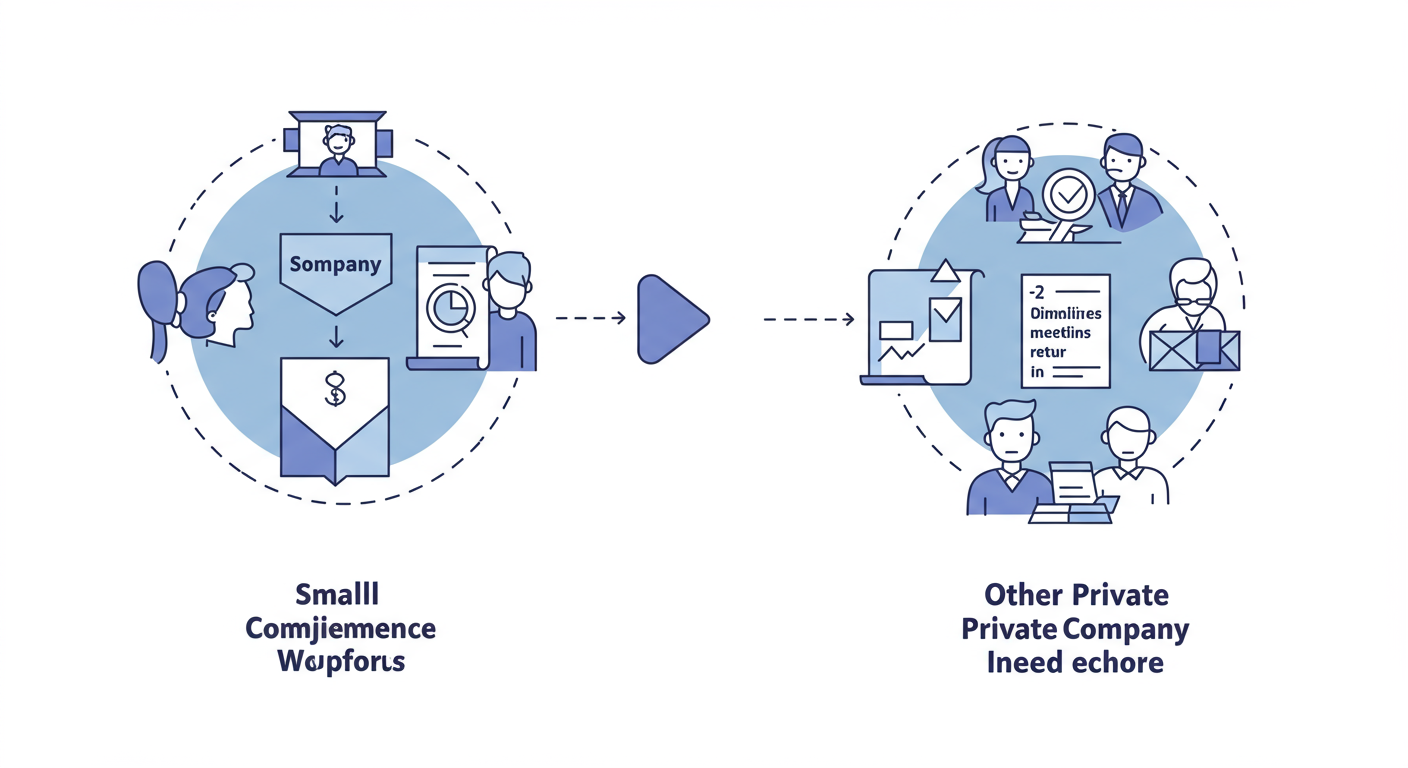
1. Slashed Compliance Burden (More Time for Business)
This is the big one. Imagine cutting your mandatory board meetings in half. That’s the reality for small companies. Instead of four board meetings a year, you only need to hold two (one in each half of the calendar year, with a gap of at least 90 days).
Furthermore, the annual return (Form MGT-7) can be signed by a single director if you don’t have a company secretary. This simplifies paperwork and reduces dependency. Less time on compliance means more time talking to customers and building products.
2. Simplified Financial Reporting (Lower Costs)
Preparing annual financial statements can be a costly and time-consuming affair. Small companies get a significant break here. You are not required to prepare a Cash Flow Statement. This directly reduces the complexity and cost of your year-end accounting and audit.
Speaking of audits, the auditor’s report (under CARO) has fewer reporting requirements for small companies. A less complex audit means a faster process and, typically, lower audit fees. It’s a direct cost saving.
💡 Pro Tip
Use the savings from reduced compliance and audit fees to invest in growth. We’ve seen clients reallocate these funds directly into their marketing budget or for hiring a key employee, creating a powerful growth loop.
3. A Powerful Financial Safety Net (Lesser Penalties)
Mistakes happen. A filing is missed, a deadline is overlooked. For regular companies, the penalties can be crippling. But for small companies, Section 446B of the Companies Act acts as a crucial buffer.
It states that if a small company defaults, the penalty shall be no more than one-half of the penalty specified for other companies. There are also maximum caps on these reduced penalties. This isn’t a license to be careless, but it’s a vital safety net that recognizes smaller businesses have fewer resources for dedicated compliance teams.
4. Stability in Key Relationships (No Mandatory Auditor Rotation)
Larger companies must rotate their auditors every few years to ensure objectivity. This rule doesn’t apply to small companies. This allows you to build a long-term, stable relationship with your auditor. An auditor who understands your business history, challenges, and growth trajectory is an invaluable strategic advisor, not just a compliance checker.
Small Company vs. MSME: Stop Confusing Them (It’s Costing You)
Here’s where the real confusion begins for most entrepreneurs. “Small Company” and “MSME” (Micro, Small, and Medium Enterprise) are often used interchangeably. They are not the same. Confusing them means you could be missing out on benefits from one or both. GST Registration Online Application Process Guide
Think of it like this:
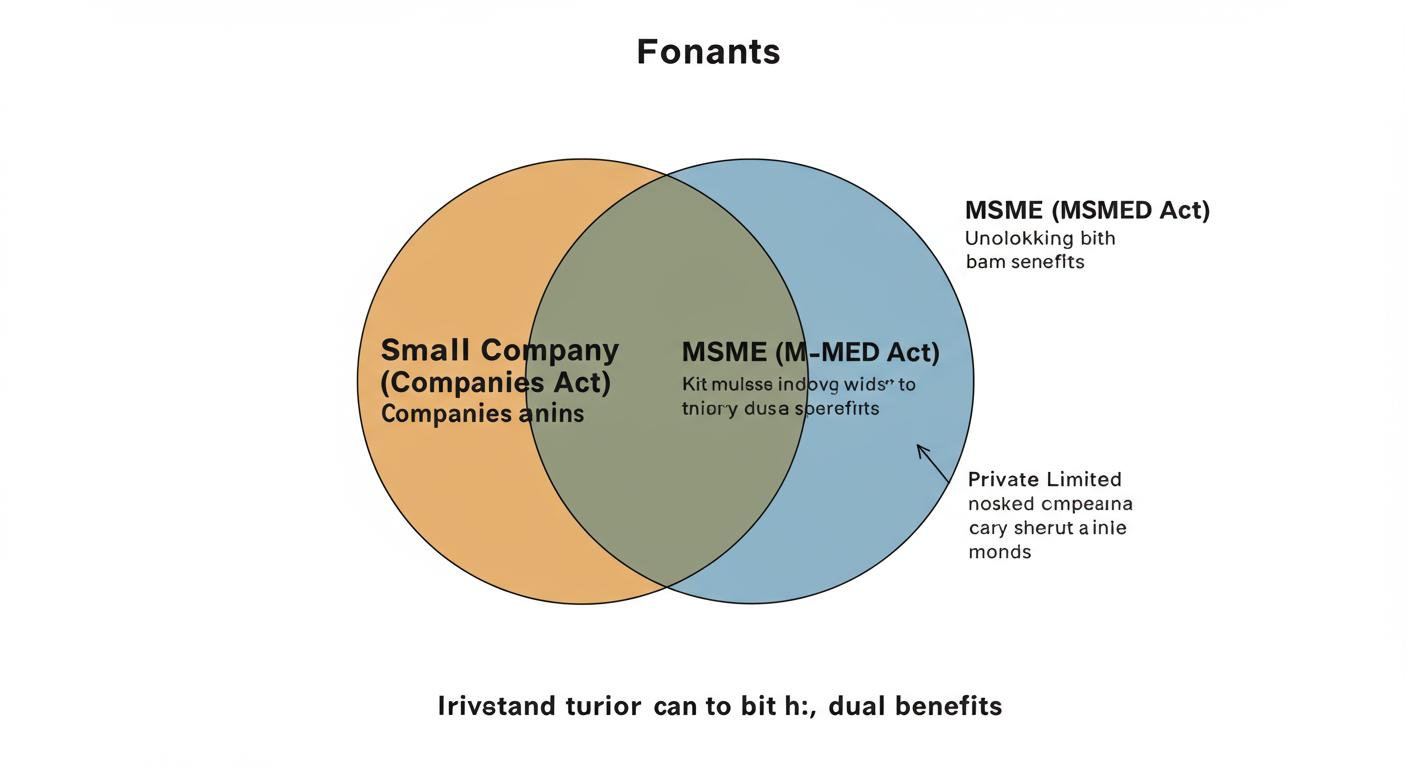
- Small Company Status: A corporate law concept under the Companies Act. Its goal is to reduce compliance burden. It only applies to Private Limited Companies.
- MSME Status: An economic development concept under the MSMED Act, 2006. Its goal is to provide economic support (subsidies, priority loans, etc.). It applies to a wide range of business structures, including proprietorships, partnerships, and LLPs.
Section 194Q Explained (2026): A Buyer's Guide to TDS
The criteria are also completely different. MSME classification, managed via the Udyam Registration portal, is based on a composite of investment and turnover. You can find the official criteria on the Ministry of MSME’s website.
Here’s a clear breakdown:
| Aspect | Small Company | Small Enterprise (under MSME) |
|---|---|---|
| Governing Law | Companies Act, 2013 | MSMED Act, 2006 |
| Purpose | Reduce compliance burden | Provide economic benefits & subsidies |
| Applicability | Private Limited Companies only | Proprietorships, Partnerships, LLPs, Pvt Ltd, etc. |
| Turnover Limit | ≤ ₹40 Crore | ≤ ₹50 Crore |
| Other Criteria | Paid-up Capital ≤ ₹4 Crore | Investment in Plant & Machinery ≤ ₹10 Crore |
| Key Benefit | Fewer board meetings, no cash flow statement | Access to priority sector lending, subsidies |
🎯 Key Takeaway
The ‘Small Company’ definition is a legal status under corporate law that simplifies compliance. MSME is an economic status that unlocks government support schemes. Your private limited company can—and often should—qualify for both to maximize its strategic advantages.
How to Check Your Status: A 3-Step Guide for 2026
Feeling empowered? Good. Now let’s make it actionable. Here’s how to determine your company’s status right now.
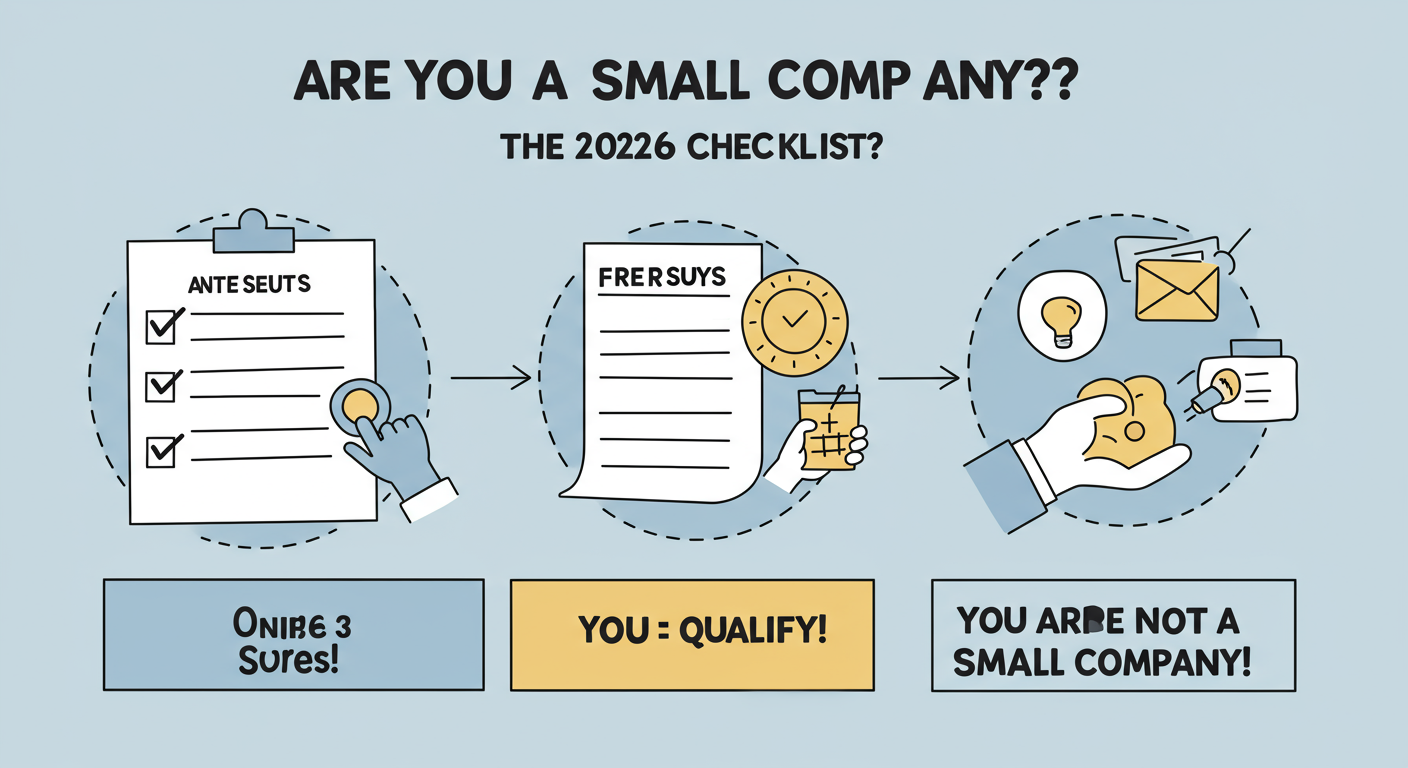
- Pull Your Latest Financials: You need two documents: your latest audited Balance Sheet and your Profit and Loss (P&L) Statement for the last financial year.
- Check the Two Magic Numbers:
- On your Balance Sheet, find the “Paid-up Share Capital” line. Is it ₹4 crore or less?
- On your P&L Statement, find your “Revenue from Operations” (Turnover). Is it ₹40 crore or less?
- Verify the Exclusion List: Confirm you are not a holding company, a subsidiary, a Section 8 company, or governed by a Special Act. If you pass all three checks, congratulations! Your business qualifies as a small company for the current financial year.
💡 Pro Tip
Don’t just check your status, manage it. If you’re approaching one of the thresholds, plan for it. You can strategically time capital infusions or revenue recognition (where legally permissible) to retain your small company status for another year if the benefits outweigh the need to grow past the limit immediately.
⚠️ Watch Out
Relying on old information is dangerous. The government has increased these limits multiple times. A blog post from 2023 or 2024 is already outdated. Always refer to the latest notifications from the Ministry of Corporate Affairs (MCA) or a trusted advisor for the current year’s rules.
Conclusion: From Legal Jargon to Strategic Advantage
The small company definition is not just a box to tick. It’s a powerful strategic lever designed by the government to help you, the entrepreneur, succeed. It’s a recognition that a 5-person startup shouldn’t face the same regulatory hurdles as a 5,000-person corporation.
By understanding the clear thresholds—paid-up capital under ₹4 crore and turnover under ₹40 crore—you can unlock a world of benefits: less paperwork, lower costs, and a crucial financial safety net. You can pour that saved time, money, and energy back into innovation and growth.
Your next step is simple. Take 15 minutes this week to go through the 3-step guide above. Pull your financials, check your numbers, and confirm your status. Knowing where you stand is the first step to leveraging every advantage you’re entitled to. Don’t leave money and time on the table.
❓ Frequently Asked Questions
Can a public company be a small company?
Absolutely not. The definition in Section 2(85) of the Companies Act, 2013, is exclusively for private companies. A public limited company, regardless of its size or revenue, can never be classified as a ‘small company’.
What happens if my company crosses the turnover limit mid-year?
The status is determined based on the audited financials of the previous financial year. So, if you cross the ₹40 crore turnover mark in October 2026, you will continue to be a small company for the rest of the 2026-27 financial year. However, you will lose the status from the beginning of the next financial year (April 1, 2027) and must comply with the full set of regulations.
Is a One Person Company (OPC) automatically a small company?
Not automatically, but most are. An OPC must still meet the paid-up capital and turnover criteria. However, OPCs already enjoy many of the same compliance relaxations (like fewer board meetings), so the distinction is less critical for them compared to a multi-director private limited company.
Do I need to apply for ‘small company’ status?
No, there is no application process. It’s a self-assessed status. If your company meets the criteria, it is considered a small company by law. You and your auditors simply apply the relevant relaxations in your compliance and reporting for that financial year.
How does this compare to international definitions?
It’s quite different. The EU, for example, focuses on employee count (<50) and turnover/balance sheet. The UK uses a flexible 'two-out-of-three' rule (turnover, balance sheet, employees). India's definition is stricter, based purely on two financial metrics, which makes it simpler to calculate but less flexible. This is a common approach in many developing economies, as noted in various World Bank reports on SME finance.