
What if you could build a business that’s legally bound to do good? A company where every rupee of profit fuels a social mission, not a shareholder’s pocket. For years, social entrepreneurs in India felt stuck between two worlds: the heartfelt mission of a traditional NGO and the scalable structure of a for-profit company. It felt like a compromise was inevitable.
But it’s not. There’s a third, more powerful path.
Enter the Section 8 Company. This isn’t just another legal structure; it’s a purpose-built vehicle for social impact, combining the credibility of a corporate entity with the soul of a non-profit. In our experience helping hundreds of visionaries launch their ventures, this is the framework that consistently unlocks scale, trust, and sustainable change.
This guide cuts through the legal jargon. We’ll give you the battle-tested, step-by-step playbook for your Section 8 company registration in 2026. You’ll learn the strategic advantages, the pitfalls to avoid, and the exact compliance tasks you can’t afford to ignore. Let’s turn your vision into a legal, impactful reality.
What is a Section 8 Company, Really? The Non-Profit with a Corporate Engine
At its core, a Section 8 company, registered under India’s Companies Act, 2013, is a licensed non-profit organization (NPO) with a corporate structure. Think of it as having the operational chassis of a private limited company but with a non-profit engine. Its sole purpose is to promote charitable objectives—things like art, science, education, environmental protection, social welfare, or sports.
The golden rule? All profits must be reinvested back into the mission.
No dividends. No payouts to members. Every bit of surplus income is used to further the company’s objectives. This single, powerful constraint is what makes it so trustworthy. It’s regulated by the Ministry of Corporate Affairs (MCA), which means it’s held to a higher standard of transparency and governance than many other NPO structures. This isn’t just a feel-good choice; it’s a strategic one.
The Strategic Edge: Why a Section 8 Company is a Smart Move in 2026
Choosing this structure isn’t just about compliance; it’s about positioning your social venture for long-term success. Based on real-world campaigns we’ve managed, the benefits are tangible and profound.
- Ironclad Credibility: Being governed by the MCA and subject to company audits gives you instant credibility. Corporate donors, government agencies, and international funders often prefer this structure because of its transparent and rigorous reporting standards. Trust me, this matters immensely when you’re fundraising.
- Limited Liability Protection: This is huge. The company is a separate legal entity. If the company incurs debt or faces legal challenges, your personal assets as a director or member are protected. It creates a vital firewall between your mission and your personal life.
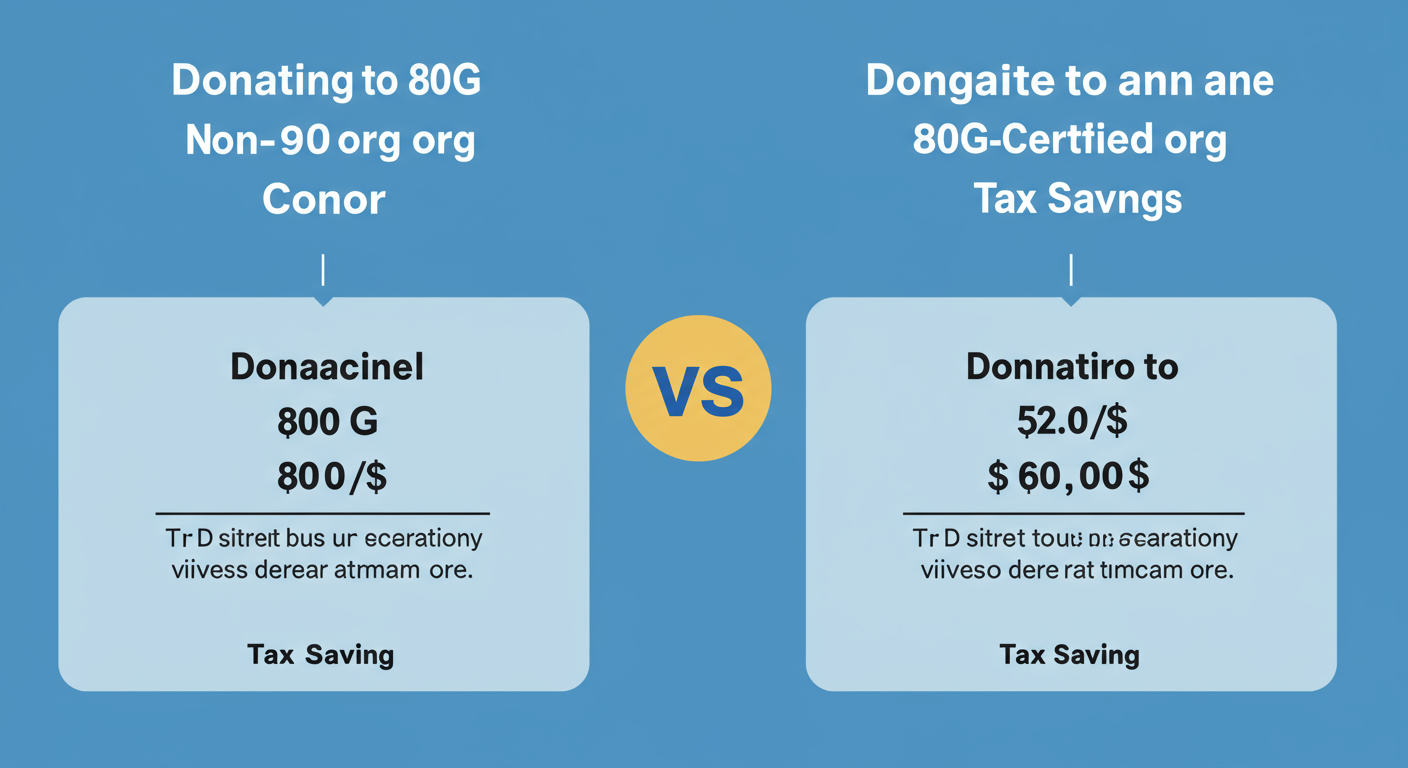
- Major Tax Benefits: Once incorporated, a Section 8 company can apply for 12A and 80G registration. Section 12A registration exempts the company’s income from tax. An 80G certificate is even more powerful—it allows your donors to claim a tax deduction on their contributions, making it far easier to attract donations.
- No Minimum Capital: You don’t need a massive bankroll to get started. There’s no minimum paid-up capital requirement, which lowers the barrier to entry for passionate founders with a great idea but limited initial funds.
- Exemption from Stamp Duty: The government provides a full exemption on the stamp duty payable on the Memorandum of Association (MOA) and Articles of Association (AOA), reducing your initial setup costs.
💡 Pro Tip
When choosing your company name, think beyond just being unique. Your name must end with a suffix like Foundation, Forum, Association, Federation, Council, or Chambers. Choose a name that clearly communicates your mission. A name like “Clean Water India Foundation” is far more effective for fundraising than something vague like “CWI Initiatives.”
Section 8 vs. Trust vs. Society: Choosing Your Legal Structure
This is the first major decision you’ll make, and it has long-term consequences. While all three can be used for non-profit work, they operate under different laws and offer different levels of flexibility and credibility. After advising countless organizations, we’ve found the Section 8 company often provides the best balance for ambitious social enterprises.
Here’s a direct comparison to help you decide:
| Feature | Section 8 Company | Trust | Society |
|---|---|---|---|
| Governing Law | Companies Act, 2013 (Central Law) | Indian Trusts Act, 1882 (State variations) | Societies Registration Act, 1860 (State variations) |
| Registration Authority | Ministry of Corporate Affairs (MCA) – Central | Sub-Registrar of the local district | Registrar of Societies of the state |
| Credibility & Trust | Very High. Preferred by corporate and foreign donors due to strict compliance. | Moderate. Can be private or public; governance can be less transparent. | Moderate. Governance can be complex with a larger managing committee. |
| Operational Area | All over India, with a single registration. | Typically limited to the state of registration. | Typically limited to the state of registration. |
| Ease of Modification | MOA/AOA changes are possible but require a formal process with MCA approval. | Amending the Trust Deed is very difficult, often requiring court intervention. | Amending bylaws is possible but can be a cumbersome process. |
| Annual Compliance | Mandatory (Annual returns, financial statements, audits). | Varies by state; generally less stringent than a Section 8 Co. | Mandatory (Annual list of managing body, etc.), but varies by state. |
🎯 Key Takeaway
If your goal is to build a scalable, highly credible organization that can attract corporate funding and operate nationwide, the Section 8 Company is almost always the superior choice. For smaller, localized community initiatives, a Trust or Society might suffice, but they lack the corporate structure and universal recognition of a Section 8 entity.
⚠️ Watch Out
The objectives you define in your Memorandum of Association (MOA) are legally binding. You can’t just pivot your mission on a whim. Be thoughtful and comprehensive when drafting your objectives, as changing them later is a formal, time-consuming legal process. Don’t box yourself in.
Your Step-by-Step Guide to Section 8 Company Registration
The process is now entirely digital via the MCA portal, which is a huge improvement. But you need to be meticulous. One small error can send you back to square one. Here’s the proven 7-step process we follow.
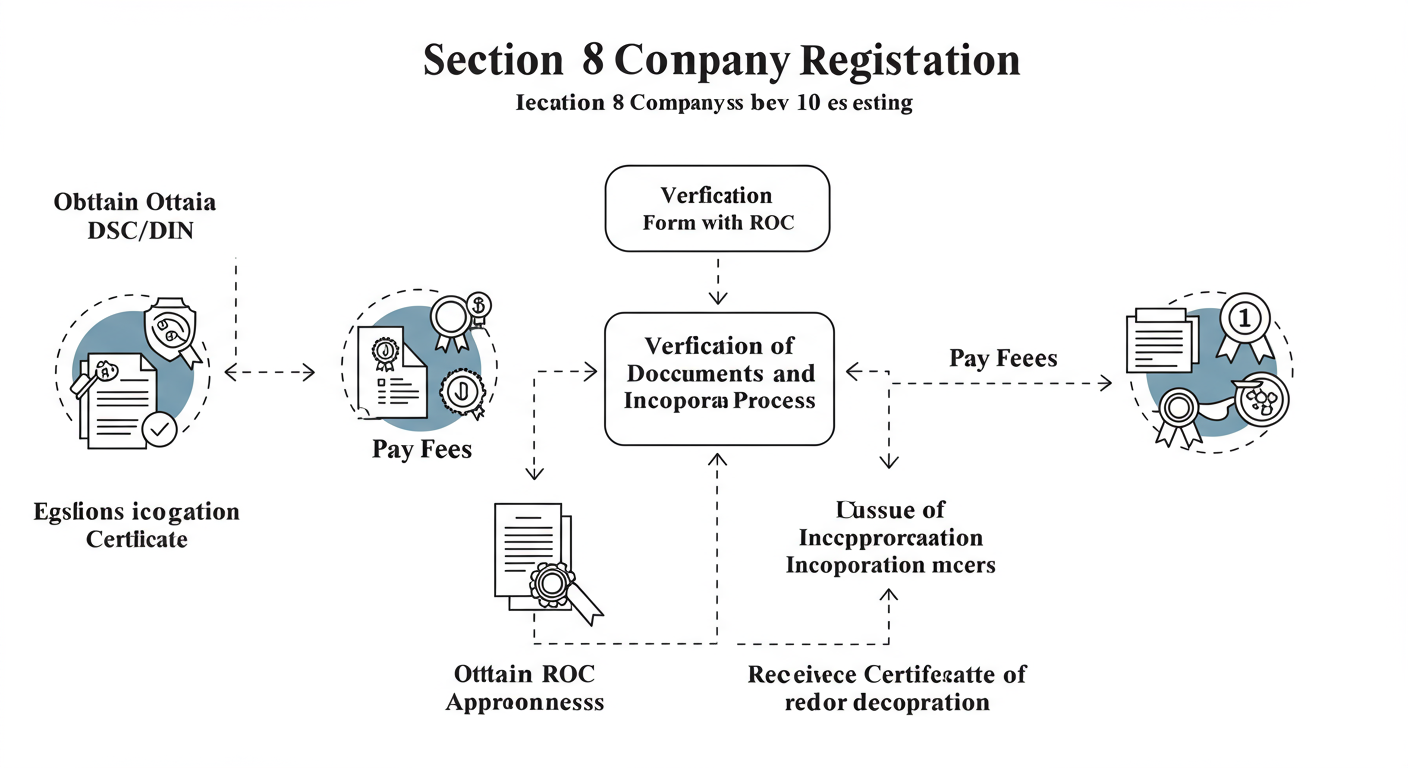
- Step 1: Obtain DSC and DIN for All Directors
Before you can file anything online, all proposed directors need a Digital Signature Certificate (DSC) and a Director Identification Number (DIN). The DSC is your electronic signature, and the DIN is a unique lifetime ID issued by the MCA. You’ll need a minimum of two directors. - Step 2: Reserve Your Company Name (SPICe+ Part A)
This is a critical step. You’ll use the SPICe+ Part A web form to apply for your chosen name. You can submit two names for approval. The name must be unique and not resemble any existing company or trademark. Remember the mandatory suffix (Foundation, Forum, etc.). - Step 3: Draft the Charter Documents (MOA & AOA)
The Memorandum of Association (Form INC-13) defines your company’s objectives—the “what” and “why.” The Articles of Association (AOA) define the internal rules of governance—the “how.” These must be drafted with extreme care, as they are the legal foundation of your organization. - Step 4: File the Main Incorporation Form (SPICe+ Part B)
This is the master form. The SPICe+ (Simplified Proforma for Incorporating Company Electronically) Part B form combines applications for incorporation, DIN allotment, PAN, TAN, GSTIN, and even bank account opening. It’s efficient, but it has to be perfect. - Step 5: Compile and Attach All Supporting Documents
You’ll need to upload a series of scanned documents along with the SPICe+ form. This is where most delays happen. A clear, organized document set is key. See the checklist below. - Step 6: Scrutiny and License Issuance (Form INC-16)
The Central Registration Centre (CRC) will review your entire application. If everything is in order, they will issue the Section 8 license in Form INC-16. This is the official green light from the government, confirming your non-profit status. - Step 7: Receive the Certificate of Incorporation (COI)
Once the license is granted, the Registrar of Companies (ROC) issues the final Certificate of Incorporation. This document contains your Corporate Identification Number (CIN) and is the ultimate proof of your company’s existence. Congratulations, you’re officially incorporated!
Documents Checklist: What You’ll Need to Get Started
Being prepared is half the battle. From our hands-on testing of the process, having these documents scanned and ready will save you days of back-and-forth.
| Document Category | Specific Documents Required |
|---|---|
| For Directors & Members |
|
| For the Registered Office |
|
Beyond Registration: Mastering Post-Incorporation Compliance
Getting registered is the starting line, not the finish line. Maintaining your status and tax exemptions depends entirely on your commitment to ongoing compliance. Neglecting this is the fastest way to incur heavy penalties or even lose your license. Auditor Appointment in India 2026: The Definitive Guide
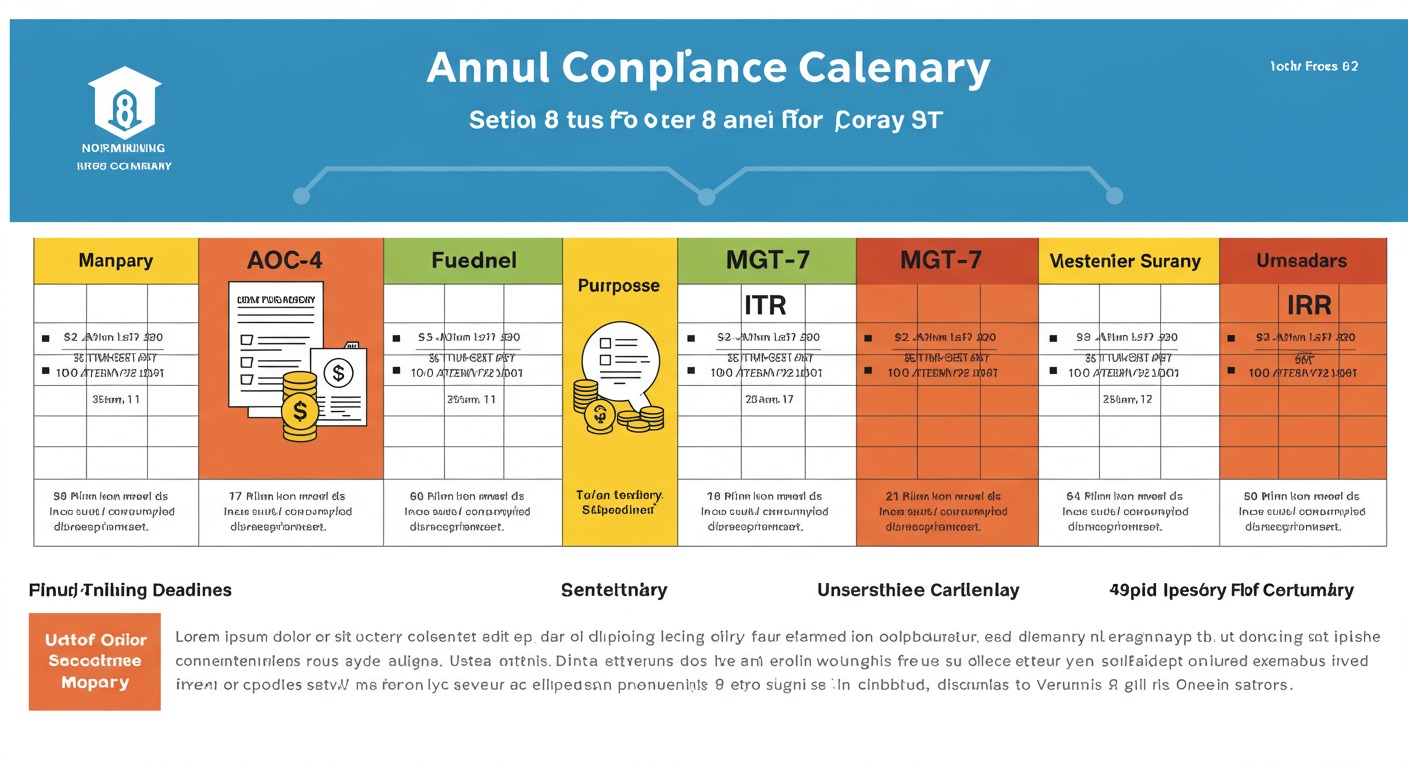
Here’s what you absolutely must do: GST HSN Code Guide: How to Find the Right Code for Your Products
- Conduct Board Meetings: You must hold at least one board meeting every six calendar months. Proper minutes must be recorded and maintained.
- Appoint an Auditor: You must appoint a statutory auditor within 30 days of incorporation to audit your financial accounts annually.
- Maintain Statutory Registers: This includes registers of members, directors, charges, and other records as mandated by the Companies Act. This is non-negotiable.
- Annual ROC Filings: Every year, you must file your audited financial statements (Form AOC-4) and an Annual Return (Form MGT-7) with the Registrar of Companies.
- Annual Income Tax Filing: You must file an annual income tax return (ITR), even if your income is fully exempt and you have zero tax liability.
💡 Pro Tip
Don’t try to manage compliance on a spreadsheet. It’s a recipe for disaster. Use a professional compliance management service or dedicated software from day one. The small investment will save you from massive penalties and legal headaches down the road. It also signals good governance to your donors. AOC 4 Due Date 2026: The Definitive Guide to On-Time Filing
⚠️ Watch Out
The penalties for non-compliance are severe. The MCA can levy fines that run into lakhs of rupees. In extreme cases of default or if the company acts against its mission, the Central Government has the power to revoke your license and forcibly merge your organization with another Section 8 company.
Unlocking Funding: A Deep Dive into Tax Exemptions (12A & 80G)
Your Section 8 registration is just the first step. The real magic for fundraising happens when you secure 12A and 80G registrations under the Income Tax Act.
“Obtaining 80G is not just a compliance task; it’s your most powerful fundraising tool. It transforms a donation from a simple gift into a smart financial decision for the donor.”
- Section 12A Registration: This is an application you make to the Income Tax Department. Once granted, it exempts your organization’s income from income tax. Without it, your surplus would be taxed like any other company, defeating the purpose.
- Section 80G Registration: This is the holy grail for fundraising. When you have an 80G certificate, donors who contribute to your organization can claim a 50% deduction on the donated amount from their taxable income. This is a massive incentive that can dramatically increase your donation flow.
To receive foreign funding, you’ll also need a separate registration under the Foreign Contribution (Regulation) Act, 2010 (FCRA). This is a rigorous process managed by the Ministry of Home Affairs and is essential if you plan to accept international grants.
❓ Frequently Asked Questions
Can a Section 8 company generate profit?
Absolutely. It can and should aim to be profitable to ensure sustainability. The critical rule is that any profit or surplus income cannot be distributed to members as dividends. It must be reinvested to promote the company’s stated charitable objectives.
What are the minimum director and member requirements?
For a private limited Section 8 company, you need a minimum of two directors and two members. For a public limited Section 8 company, it’s three directors and seven members. The directors and members can be the same individuals.
How long does the Section 8 company registration process take in 2026?
With the streamlined SPICe+ process, if all your documents are in order and there are no objections from the MCA, the entire process can be completed in 15-20 working days. However, based on our experience, it’s wise to budget for 25-30 days to account for any potential queries or clarifications.
Can I convert my existing Trust or Society into a Section 8 Company?
Yes, it is possible to convert an existing Trust or Society into a Section 8 Company. The process is complex and involves meeting several conditions, including having a minimum number of members/trustees and passing a special resolution. It’s a significant undertaking that requires professional guidance.
Can a foreign national be a director in a Section 8 Company?
Yes, a foreign national can be a director in a Section 8 Company, provided they have a valid DIN. At least one director on the board must be a resident of India (meaning they have stayed in India for at least 182 days in the previous calendar year).
Conclusion: Build a Legacy, Not Just a Business
A Section 8 company is more than just a legal filing; it’s a declaration of intent. It’s a commitment to building a sustainable, transparent, and impactful organization that can stand the test of time. It provides the perfect framework to blend your passion for social change with the strategic discipline of a well-run corporation.
Yes, the process requires diligence. The compliance demands attention to detail. But the rewards—credibility, liability protection, tax benefits, and scalability—are immense. By choosing this path, you’re not just starting a non-profit; you’re building an engine for good that can attract serious funding and create a lasting legacy.
Your vision for a better world deserves the strongest possible foundation. The Section 8 structure provides exactly that. Your next step? Gather your founding team, refine your mission, and begin the documentation process. The journey is worth it.