
Here’s the hard truth about social entrepreneurship in India: Passion isn’t enough. You might have a vision to educate millions or save the environment, but without the right legal structure, your impact will hit a ceiling. I’ve seen countless changemakers struggle to raise funds simply because they chose the wrong vehicle for their non-profit.
In 2026, if you are serious about credibility and Corporate Social Responsibility (CSR) funding, Section 8 of Companies Act 2013 is the gold standard. It’s not just a legal status; it’s a signal to the world that you mean business.
Unlike the older Trust or Society structures, a Section 8 company operates with the transparency of a corporate entity but the heart of a charity. Whether you are looking to promote art, science, commerce, or social welfare, this structure offers a robust framework that donors trust.
In this guide, we’re going to strip away the legal jargon. We’ll walk you through exactly what Section 8 is, why it’s the preferred choice for modern NGOs, and the step-by-step roadmap to getting registered in 2026.
🎯 Key Takeaway
Section 8 companies are the most credible non-profit structure in India, offering limited liability and higher eligibility for government grants and CSR funding. While the compliance burden is higher than a Trust, the ability to scale and attract corporate donors makes it the superior choice for serious social entrepreneurs.
What is Section 8 of Companies Act 2013?
Let’s keep this simple. A Section 8 company is a non-profit organization (NPO) registered under the Ministry of Corporate Affairs (MCA). It’s a company, yes, but with a twist.
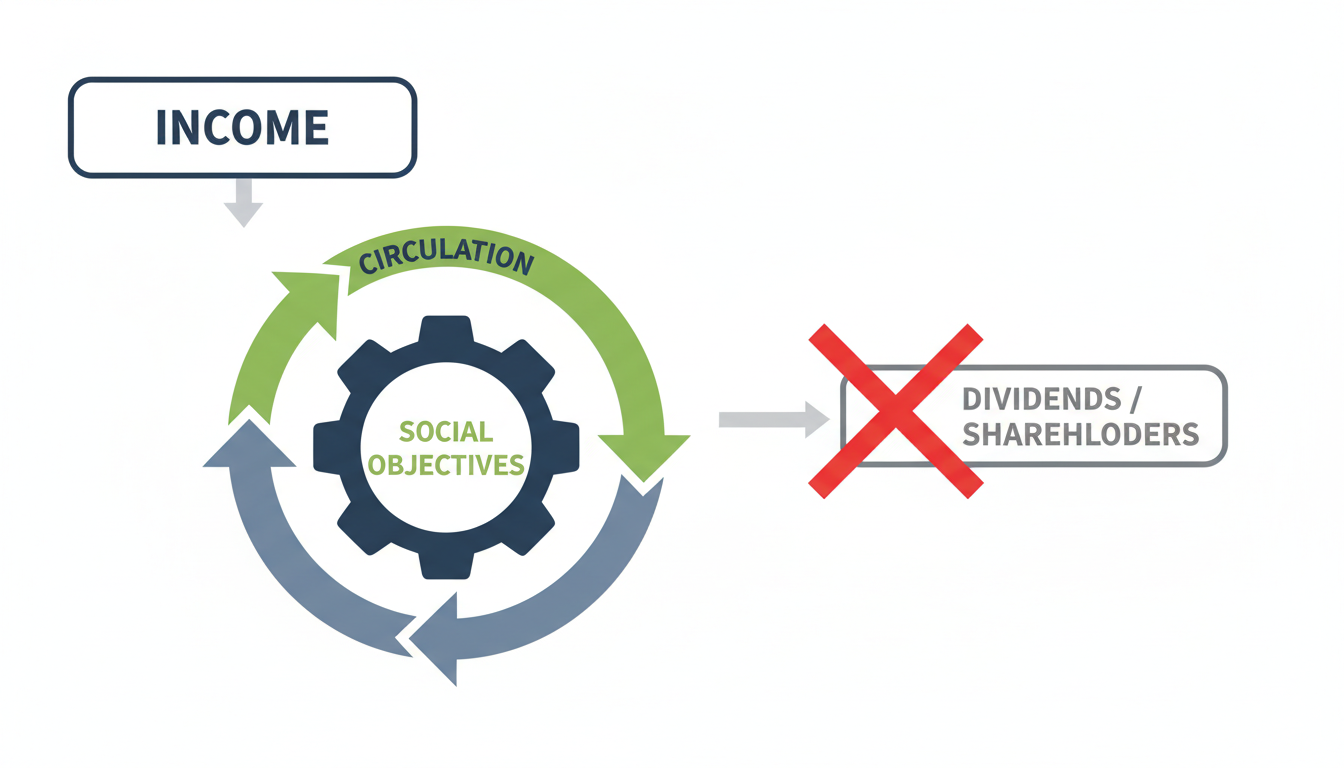
The government grants you a special license that essentially says: “You can operate like a company, but you cannot pocket the profits.”
Any income or profit generated must be strictly reinvested into the company’s objectives—be it charity, education, or environmental protection. You cannot buy a yacht with the surplus, and you certainly cannot pay dividends to your members. In the past, under the 1956 Act, these were known as “Section 25 Companies.” Today, under Section 8 of Companies Act 2013, they are the backbone of India’s organized social sector.
Section 8 vs. Trust vs. Society: The 2026 Comparison
This is the most common question we get: “Why shouldn’t I just register a Trust? It’s cheaper.”
True, a Trust is easier to start. But if you plan to approach Tata, Reliance, or international grants for funding, a Trust often falls short on the “transparency” scale. Section 8 companies are regulated by the Central Government (MCA), whereas Trusts and Societies are regulated by state authorities, leading to varying standards.
Here is a breakdown of how they stack up in the current regulatory environment:
| Feature | Section 8 Company | Public Trust | Society |
|---|---|---|---|
| Governing Act | Companies Act, 2013 | Indian Trusts Act, 1882 | Societies Registration Act, 1860 |
| Authority | Ministry of Corporate Affairs (Central) | Charity Commissioner (State) | Registrar of Societies (State) |
| Credibility | High (Strict compliance) | Moderate | Moderate |
| CSR Funding | Highly Preferred | Less Preferred | Less Preferred |
| Time to Register | 15-25 Days | 10-20 Days | 20-30 Days |
| Transparency | High (Documents available online) | Low | Low |
Why Choose Section 8? (The Real Benefits)
Beyond the legal definition, why are founders flocking to this structure in 2026? It comes down to sustainability.
1. The “CSR Magnet” Effect
Corporate Social Responsibility (CSR) is massive in India. Big corporations are mandated to spend a portion of their profits on social causes. However, they are risk-averse. They want to give money to organizations that have audited balance sheets and clear governance. Because Section 8 of Companies Act 2013 mandates strict financial reporting, these companies naturally become the preferred partners for corporate donors.
2. Limited Liability Protection
In a Trust, trustees can sometimes be held personally liable. In a Section 8 company, your liability is limited. If the organization faces debt or legal trouble, your personal assets (house, car, savings) are generally safe. This protection is crucial if you plan to take on large projects or loans.
3. Perpetual Succession
This is a fancy legal term that means the company lives forever. Members may come and go, directors may pass away, but the company continues to exist until it is legally wound up. This ensures your mission outlives you.
💡 Pro Tip
Don’t let the “Company” tag scare you regarding taxes. While it is a company, Section 8 entities are eligible for 100% tax exemption on their surplus income, provided you register under Section 12A of the Income Tax Act immediately after incorporation.
Eligibility: Who Can Start?
You don’t need to be a millionaire to start. In fact, one of the best features of Section 8 of Companies Act 2013 is that there is no minimum paid-up capital requirement. You can literally start with zero capital, though we recommend having enough to cover the registration fees.
The Basic Requirements:
- People: Minimum 2 Directors (if private limited structure) or 7 members (if public).
- Residency: At least one director must be a resident of India.
- Objective: Must be charitable (Science, Art, Education, Sports, Charity, etc.).
- Profit Rule: You must sign a declaration that no dividends will be paid to members.
Step-by-Step Registration Process (2026 Updated)
Gone are the days of physical files and endless queues. The entire process is now digital via the MCA portal (V3). However, it requires precision. One wrong document can lead to rejection.
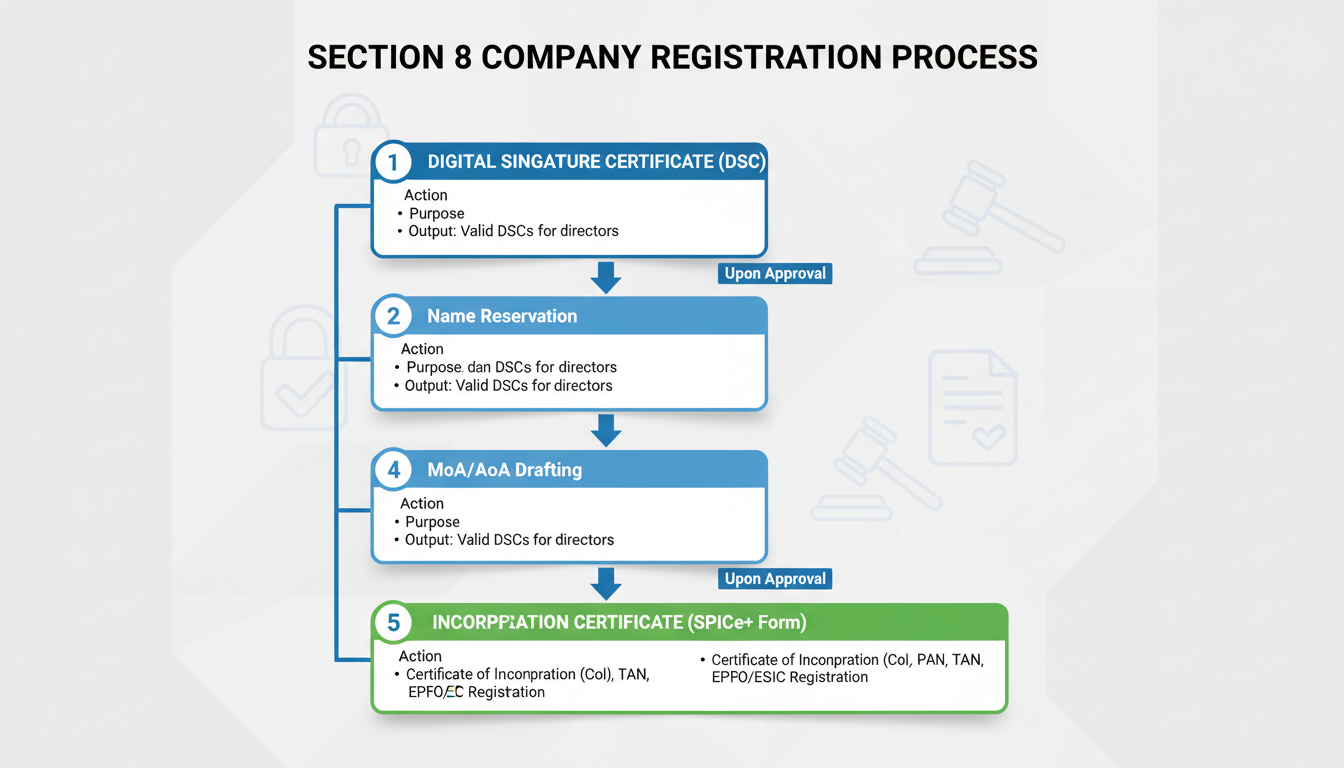
Step 1: Digital Signature Certificate (DSC)
Since the process is 100% online, the first thing you need is a digital signature for all proposed directors. This is your “electronic pen” for signing forms.
Step 2: Name Reservation (SPICe+ Part A)
You need a unique name. But here’s the catch: Section 8 companies cannot use “Pvt Ltd” or “Ltd” in their names. Instead, you must use suffixes like: Audit Trail Reporting for Private Companies: MCA Rules
- Foundation
- Association
- Federation
- Council
- Confederation
You apply for this using the SPICe+ (Part A) form on the MCA website. How to Register for GST Online in India: Step-by-Step Guide 2026
Step 3: The License (Form INC-12)
This is the most critical step. You are asking the Central Government for permission to operate as a non-profit. You will need to submit a draft Memorandum of Association (MoA) and Articles of Association (AoA). You must also submit a projection of your income and expenditure for the next three years. The government wants to see that you have a viable plan.
Step 4: Incorporation (SPICe+ Part B)
Once your license is approved, you file the final incorporation form. This single form (SPICe+ Part B) does multiple things at once:
- Registers the company.
- Applies for Director Identification Numbers (DIN).
- Applies for PAN and TAN.
- Registers for GST (optional).
⚠️ Watch Out
The “Object Clause” Trap: When drafting your MoA, be very specific about your objectives. If you write “Social Work” broadly, the Registrar might reject it. Be specific: “Providing vocational training to underprivileged youth in rural Karnataka.” Clarity speeds up approval.
Documents Checklist
Before you log into the MCA portal, ensure you have these scanned and ready. Missing documents are the #1 cause of delays.
- Identity Proof: PAN Card (Mandatory for Indians) and Aadhaar/Voter ID/Passport.
- Address Proof (Directors): Bank Statement or Mobile Bill (Not older than 2 months).
- Registered Office Proof: Utility Bill (Electricity/Gas) + Rent Agreement + NOC from the landlord.
- Director’s Photos: Passport size.
Post-Registration: The Compliance Reality
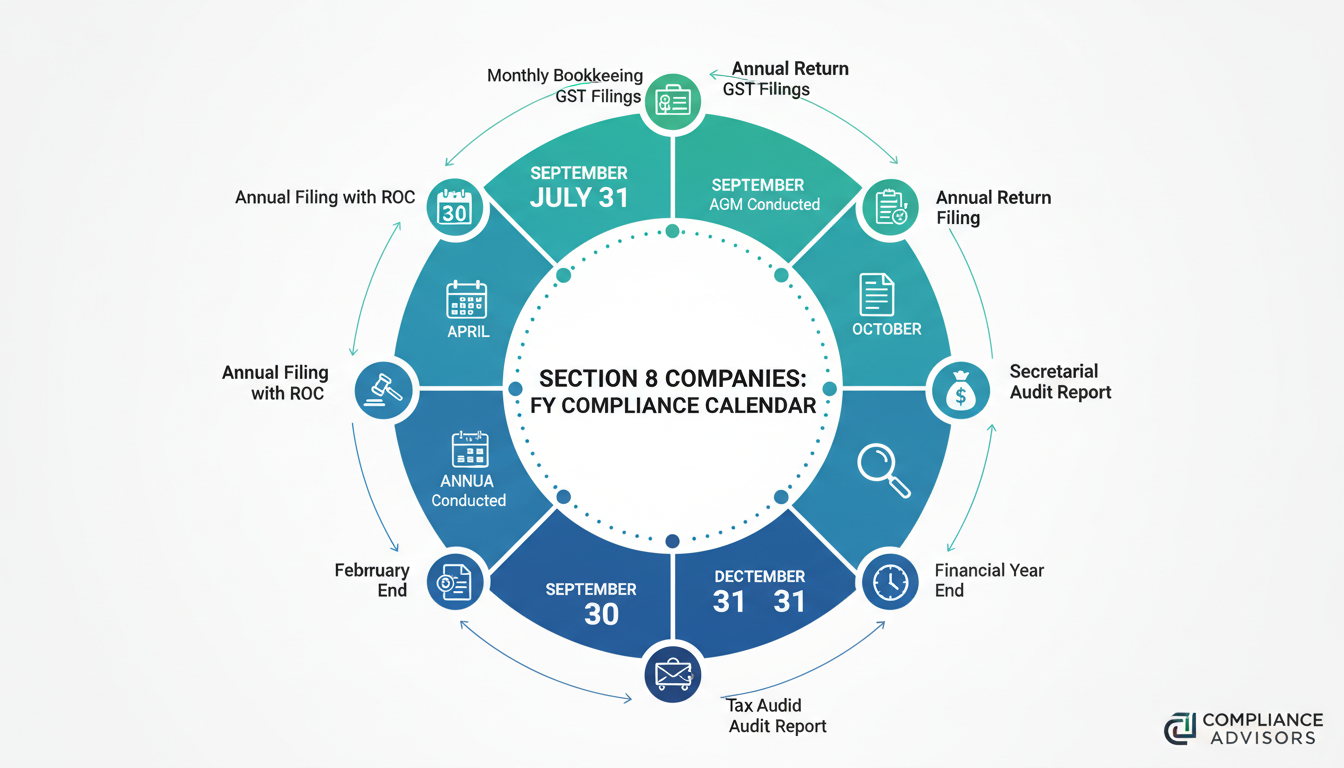
Congratulations, you’re registered! But the work isn’t over. In fact, it’s just starting. The credibility of a Section 8 company comes from its strict compliance. If you fail to file your returns, you face heavy penalties, and your directors can be disqualified.
Here is what your annual calendar looks like:
| Compliance | Form Name | Due Date |
|---|---|---|
| Auditor Appointment | ADT-1 | Within 30 days of Incorporation |
| Financial Statements | AOC-4 | Within 30 days of AGM |
| Annual Return | MGT-7 | Within 60 days of AGM |
| Income Tax Return | ITR-7 | By October 31st (usually) |
Unlocking Tax Benefits: 12A and 80G
I cannot stress this enough: Registration under Section 8 of Companies Act 2013 does not automatically give you tax exemption.
You are a company. By default, you are liable to pay tax. To become a “tax-exempt” entity, you must apply for two additional registrations with the Income Tax Department:
- Section 12A: This exempts your company’s surplus income from income tax. Without this, any money left over at the end of the year is taxed at a flat 30%.
- Section 80G: This is for your donors. If you have 80G registration, any donor (individual or company) who gives you money can claim a 50% deduction on their own taxes.
For more details on these exemptions, you can verify the latest rules on the official Income Tax Department portal.
⚠️ Watch Out
The “Provisional” Rule: As of recent amendments, new NGOs are initially granted provisional 12A and 80G registration for 3 years. You must apply for permanent registration at least 6 months before the provisional period expires or within 6 months of starting activities, whichever is earlier.
Conclusion
Registering under Section 8 of Companies Act 2013 is a commitment. It requires more paperwork than a Trust and stricter compliance than a Society. But that effort pays dividends in the form of trust. In the eyes of the law, donors, and the government, a Section 8 company is a serious entity dedicated to social change.
If your vision is long-term and you aim to build an organization that outlasts you, this is the structure you need. Don’t let the paperwork daunt you—get the structure right today, so you can focus on the impact tomorrow.
For official forms and regulatory updates, always refer to the Ministry of Corporate Affairs website. Additionally, for broader understanding of non-profit structures globally, Wikipedia’s entry on Non-profits offers excellent context.
❓ Frequently Asked Questions
Can a Section 8 company pay salaries to directors?
Yes, reasonable remuneration or reimbursement of expenses is allowed for directors if it is mentioned in the Articles of Association. However, they cannot receive a share of the profits (dividends).
How much does it cost to register a Section 8 company in 2026?
Government fees are generally low (often waived for small capital), but professional fees for a CA or CS to draft the MoA, AoA, and handle the filing typically range from ₹15,000 to ₹30,000 depending on complexity.
Can I convert my existing Private Limited Company into a Section 8 Company?
Yes. If an existing company wants to dedicate itself to charitable objectives and stop profit distribution, it can apply for conversion under the Act by following specific procedures.
Is a physical office mandatory?
You don’t need a commercial office space. You can register the company at a residential address, provided you have a utility bill in the owner’s name and a No Objection Certificate (NOC) from them.