Imagine this: You’re about to sign a million-dollar deal with a promising new supplier. Everything looks perfect. The website is slick, the reps are sharp. But something feels… off. A quick five-minute check reveals the truth: the company hasn’t filed financial statements in three years and is flagged as ‘non-compliant’. You just dodged a massive bullet.
This isn’t fiction. It’s the power of ROC master data, and it’s a superpower available to anyone. For free.
The Registrar of Companies (ROC) holds the official public record for every registered company in India. Think of it as a corporate background check that lays everything bare. In this article, we’re not just going to tell you what it is. We’re going to show you how to become a corporate detective. You’ll learn to access, decode, and analyze this information to protect your investments, validate partners, and make smarter career moves. Let’s pull back the curtain.
What Exactly is ROC Master Data? More Than Just a Name and Address
Forget the dry, technical definitions. At its core, ROC master data is a company’s official biography, written by the government. It’s the centralized, authoritative file held by the Ministry of Corporate Affairs (MCA) that contains the fundamental truths about a business entity. It’s not marketing fluff; it’s the hard facts.
This data provides a snapshot of a company’s:
- Identity: Its legal name, unique Company Identification Number (CIN), and registered address.
- Structure: Whether it’s a public or private company, its authorized and paid-up capital, and who the directors are.
- Compliance Health: Its current status (is it ‘Active’ or a ‘Non-compliant’ red flag?), and a history of its financial and annual filings.
In our experience, analyzing this data is the single most effective first step in any due diligence process. It’s the difference between operating on trust and operating on truth.
🎯 Key Takeaway
ROC master data is your free, government-backed tool for instant corporate transparency. It allows you to verify a company’s legal status, financial standing, and compliance health in minutes, cutting through marketing noise to get to the facts.
Why Analyzing ROC Data is a Non-Negotiable in 2026
In a business world filled with ghost companies and exaggerated claims, skipping this check is like driving with your eyes closed. It’s not just for lawyers or big-shot investors. Accessing ROC master data is a critical risk-management tool for almost everyone. Trust me on this one.
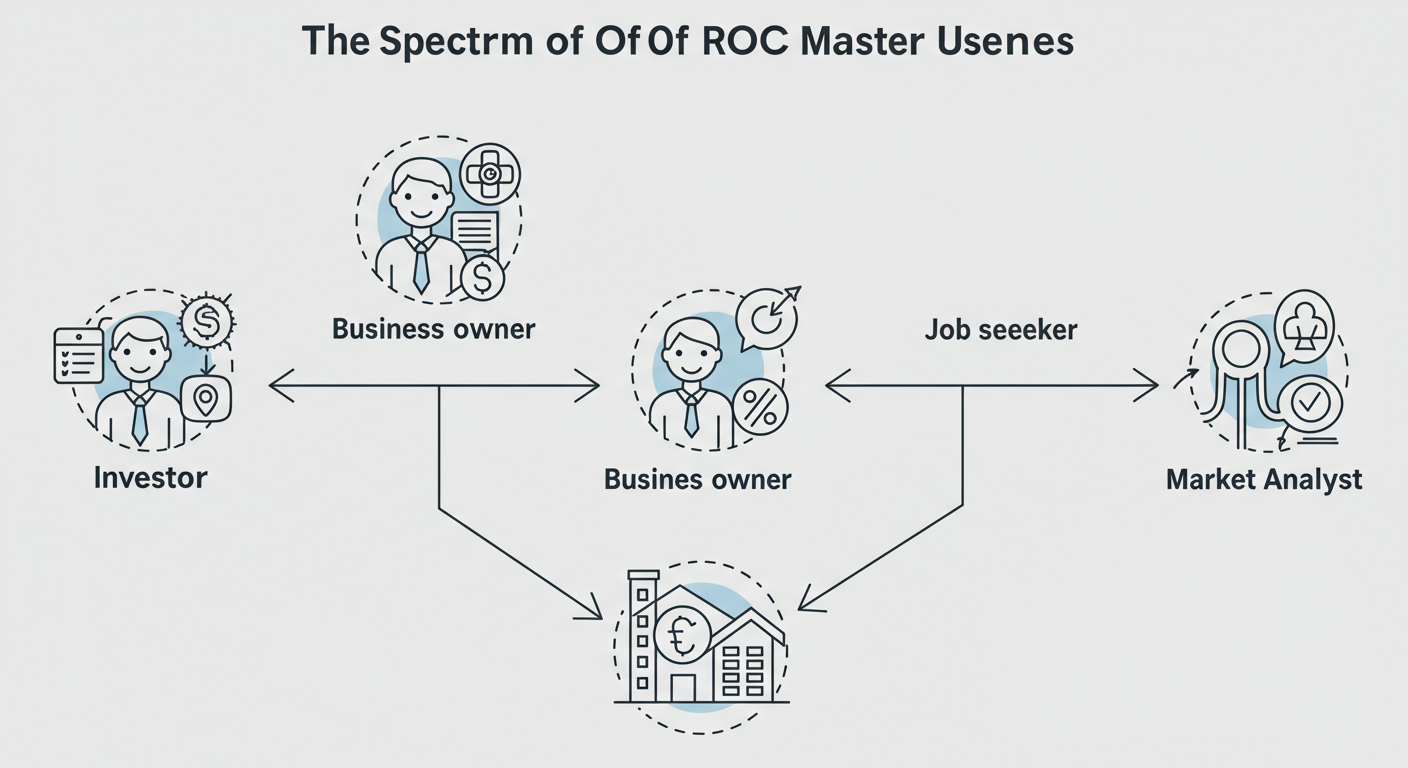
Here’s who benefits and why it’s so crucial:
| Stakeholder | Primary Use Case & Why It Matters |
|---|---|
| Investors & Lenders | Verify the company’s existence, check for high debt levels (via registered charges), and confirm its compliance status. An ‘Active (Non-compliant)’ status is a major red flag that could signal internal chaos or financial distress. |
| Businesses (Vendor/Partner Onboarding) | Confirm you’re dealing with a legitimate, active entity, not a shell company. It reduces the risk of fraud, payment defaults, and supply chain disruptions. I’ve seen businesses lose fortunes by paying an invoice to a company that legally ceased to exist months prior. |
| Job Seekers | Is that startup offer too good to be true? Check their incorporation date (are they brand new?), paid-up capital (do they have skin in the game?), and compliance status. It provides peace of mind that you’re joining a stable, legally sound organization. |
| Competitor Analysts | Gain intel on your rivals’ scale (paid-up capital), management team (director details), and longevity. This is invaluable, publicly available data for strategic planning. |
How to Access ROC Master Data: A 5-Step Walkthrough
The MCA has made this process surprisingly straightforward. You don’t need a special account or any payment. Just a web browser and a few minutes.
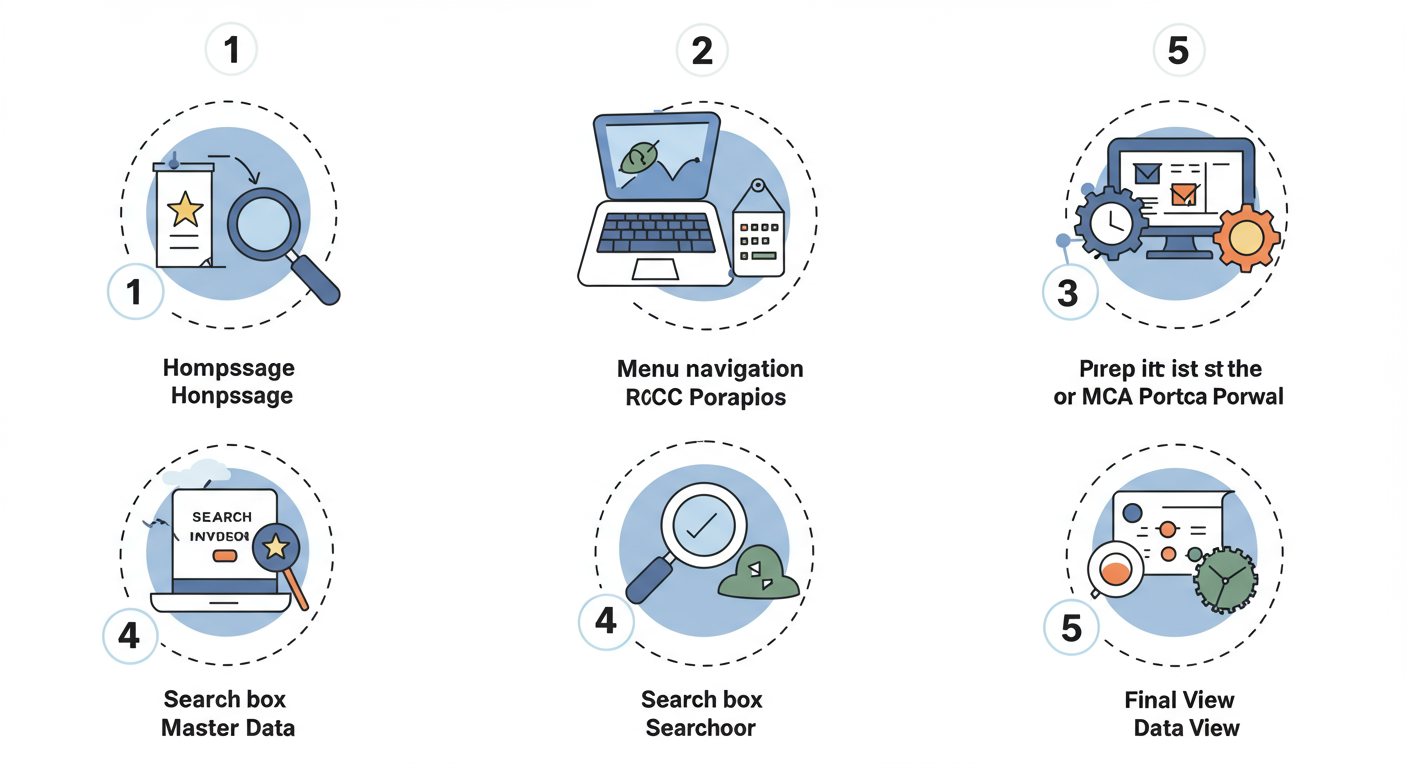
Here’s how to do it, step-by-step:
- Go to the Source: Open your browser and navigate directly to the official Ministry of Corporate Affairs portal. The only address you should use is www.mca.gov.in. Bookmark it. This is the single source of truth.
- Locate the Service: On the homepage menu, find and hover over ‘MCA Services’. A large dropdown menu will appear. In the ‘Master Data’ column, click on ‘View Company or LLP Master Data’.
- Enter the Company Identifier: You’ll land on a search page. The best way to search is by using the company’s 21-digit Company Identification Number (CIN). If you don’t have it, click the small search icon next to the CIN field to look up the company by its name.
- Prove You’re Human: You’ll see a CAPTCHA box. Enter the characters from the image to proceed. It’s a standard security check on most government websites.
- Analyze the Results: Click ‘Submit’. The complete ROC master data report will appear instantly. You can now review everything. For your records, use your browser’s print function (Ctrl+P or Cmd+P) and choose ‘Save as PDF’.
💡 Pro Tip
Always try to find the CIN before you search. Searching by name can sometimes bring up multiple similar-sounding companies, leading to confusion. The CIN is a unique identifier and guarantees you’re looking at the right entity. You can often find it on a company’s official website footer, invoices, or other legal documents.
Decoding the Data: What to Look For (The Corporate Detective’s Checklist)
Okay, you have the report in front of you. It looks like a wall of text. What actually matters? Let’s break it down into three critical areas.
1. Identity and Compliance Status
This is your first checkpoint. Is the company who it says it is, and is it in good standing?
- Company Status: This is huge. ‘Active’ is what you want to see. It means the company exists and is presumed to be compliant.
- Status for e-Filing: This provides more detail. If the main status is ‘Active’ but this field says ‘Active (Non-compliant)’, it’s a massive red flag. It means the company has failed to file its mandatory annual returns or financial statements. It’s technically alive, but it’s ignoring its legal duties.
⚠️ Watch Out
The ‘Active (Non-compliant)’ status is a serious warning sign. It can indicate anything from simple administrative sloppiness to severe financial distress. From real-world campaigns we’ve analyzed, companies in this state are at a much higher risk of default and operational failure. Proceed with extreme caution. 7 Critical GST Return Due Dates Every Business Owner Must Know (2025 Guide)
2. Financial Snapshot & Scale
This section tells you about the company’s financial foundation. Don’t get confused by the two capital figures. GST Council 54th Meeting 09.09.2024 Highlights
- Authorised Capital: This is the maximum amount of capital the company is legally allowed to raise. It’s more of a ceiling or a statement of ambition.
- Paid-up Capital: This is the actual money the company has received from shareholders for its shares. This is the real number. It shows how much skin the owners have in the game and is a much better indicator of the company’s size and financial commitment.
- Date of Last AGM & Date of Balance Sheet: Are these dates recent? According to the Companies Act, 2013, companies must hold an Annual General Meeting and file financials yearly. If these dates are years old, it confirms the ‘Non-compliant’ status and signals poor governance.
3. Leadership and Debt Load
Who is running the show, and how much do they owe? This is crucial for understanding risk.
- Director Details: This section lists the current directors with their name, Director Identification Number (DIN), and appointment date. You can verify if the person you’re dealing with is actually on the board.
- Charges Registered: This is a list of loans and mortgages the company has taken out against its assets (like property, inventory, or receivables). Each entry shows the amount and the “charge holder” (the bank or lender). A long list of open charges can indicate a high debt level. Look for a ‘Date of Satisfaction’—this means a loan has been paid off, which is a positive signal.
⚠️ Watch Out
A high number of registered charges isn’t automatically bad; growing companies often take on debt to fuel expansion. The red flag is a combination of high debt and a ‘Non-compliant’ status or very old filing dates. This suggests the company may be struggling to service its debt and meet its basic legal obligations.
From Red to Green: Fixing a ‘Non-Compliant’ Status
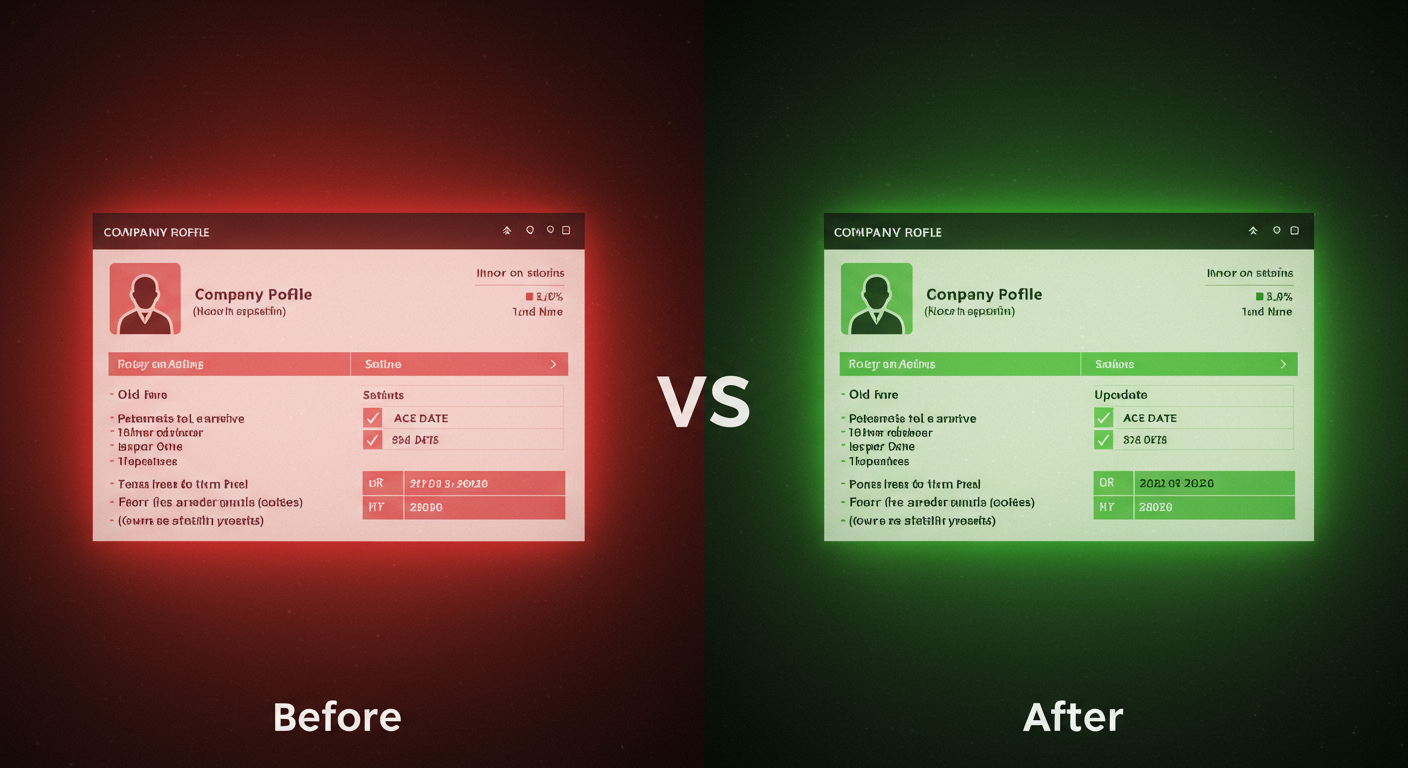
What if you check your own company and find that dreaded ‘Active (Non-compliant)’ status? Don’t panic. It’s fixable, but it requires immediate action. Here’s a simplified look at the “before and after” of correcting common data issues.
| Issue (Before) | Data Point on ROC Portal | Corrective Action (The Fix) | Result (After) |
|---|---|---|---|
| Company hasn’t filed annual returns for 2 years. | Status: ‘Active (Non-compliant)’ Date of Last AGM: 2023 |
File all pending Annual Returns (Form MGT-7/7A) and Financial Statements (Form AOC-4) with late fees. | Status: ‘Active’ Date of Last AGM: 2025 |
| Company moved its office last year but never updated ROC. | Registered Address: [Old Address] | File Form INC-22 with proof of the new address (e.g., utility bill, rental agreement). | Registered Address: [New Address] |
| A director resigned 6 months ago but is still listed. | Director Details: [Old Director’s Name] | File Form DIR-12 to report the cessation of the director. | Director Details: List is updated. |
💡 Pro Tip
Regularly audit your own company’s ROC master data—at least quarterly. It’s a simple act of corporate hygiene. Based on hands-on testing, we’ve found that outdated information (especially an old address) can lead to missed legal notices from the ROC, which can snowball into much bigger compliance problems.
Conclusion: Your New Strategic Advantage
Look, the corporate world can be opaque. But it doesn’t have to be. By learning to wield ROC master data, you’ve just gained a powerful lens to see through the fog. You’re no longer just taking someone’s word for it; you’re verifying it against the official record.
You now have the skills to:
- Vet any potential partner, client, or employer with confidence.
- Spot critical red flags like non-compliance or high debt before they become your problem.
- Perform basic due diligence in minutes, saving you time and potentially millions.
- Ensure your own company’s public record is accurate and healthy.
Your next step is simple. Don’t just let this be theoretical. Go to the MCA portal right now and look up a company you know. It could be your own, your biggest competitor, or a supplier you work with. Practice reading the data. See what story it tells. This is a skill that, once learned, will serve you for your entire professional life.
❓ Frequently Asked Questions
Is ROC master data really free to access?
Yes, absolutely. Viewing company or LLP master data on the MCA portal is a public service and is completely free. You don’t need to log in, create an account, or pay any fees to view the core data.
What’s the difference between a CIN and a DIN?
A CIN (Company Identification Number) is a unique 21-digit code assigned to a company upon its incorporation. A DIN (Director Identification Number) is a unique 8-digit code assigned to an individual who is or intends to be a director of a company. A single person will have one DIN but can be a director in multiple companies (each with its own CIN).
What should I do if my company’s ROC data is wrong?
You must proactively file the correct e-forms with the ROC to update the information. For an address change, file Form INC-22. For changes in directors, file Form DIR-12. To increase authorized capital, file Form SH-7. Acting quickly is key to maintaining compliance.
How often is the ROC master data updated?
The data is updated in near real-time. As soon as a company files a form (like an annual return or a change of address) and it is approved by the ROC, the master data view on the MCA portal reflects that change. The lag is typically very short.
Can I rely solely on ROC master data for a major investment?
No. While it’s an essential first step in due diligence, it’s not the complete picture. It shows compliance and structural data but doesn’t detail profitability, cash flow, or operational efficiency. For major decisions, ROC data should be used alongside audited financial statements, market analysis, and other forms of deeper investigation.