
Imagine this: Your startup is finally gaining traction. You’re closing deals, hiring talent, and dreaming big. Then, a letter arrives. It’s from the Registrar of Companies (ROC), and it’s not good news. A simple oversight in your annual paperwork has snowballed into a six-figure penalty, levied at ₹100 per day, per form. Your company is now red-flagged, and that crucial investor meeting next week? It’s in jeopardy.
This isn’t a scare tactic. It’s a reality for thousands of Indian businesses every year. But it doesn’t have to be yours.
Look, ROC filing isn’t just bureaucratic red tape—it’s the fundamental health check-up for your company. It’s how you prove your business is legitimate, transparent, and a safe bet for investors, lenders, and even customers. Getting it right is non-negotiable. Getting it wrong can be catastrophic.
In this deep dive, we’ll move beyond the jargon and give you a battle-tested playbook. You’re about to learn the exact steps to navigate your annual compliance flawlessly, understand the critical forms that matter, and sidestep the devastating penalties that cripple unprepared companies.
What is ROC Filing, Really? (Beyond the Jargon)
Every company registered in India, from a two-person startup to a massive conglomerate, operates under the Companies Act, 2013. The Registrar of Companies (ROC), which operates under the Ministry of Corporate Affairs (MCA), is the official keeper of records for all these entities.
Think of ROC filing as your company’s mandatory annual report card to the government. It’s a formal declaration of your activities over the past financial year. This isn’t just about numbers; it’s about painting a complete, transparent picture of your business for the public record. Based on our experience helping hundreds of companies, this process is the single biggest indicator of good corporate governance.
These filings, submitted electronically via the MCA portal, update your company’s public profile with crucial information, including:
- Financial Vitality: Audited financial statements (Balance Sheet, Profit & Loss Account) that show if you’re making money, losing money, or holding steady.
- Corporate Structure: Who owns the company (shareholders), who runs it (directors), and any changes made during the year.
- Operational Integrity: Confirmation that you’ve held the required Board Meetings and the Annual General Meeting (AGM), proving the company is actively managed.
Ultimately, this process ensures accountability. It allows investors, banks, and even potential clients to perform due diligence and trust that you are who you say you are.
⚠️ Watch Out
Don’t mistake “no business activity” for “no compliance.” Even if your company was dormant or didn’t make a single sale all year, you are still legally required to complete your annual ROC filing. The penalties for non-filing apply equally, a hard lesson many new founders learn.
The Core Annual Filings Decoded: AOC-4 vs. MGT-7A
While there are various event-based filings (like changing your registered address), your annual compliance boils down to two primary forms. These are filed after your company’s Annual General Meeting (AGM).
Here’s a breakdown of what they are and why they matter.
| Aspect | Form AOC-4 (Financial Statements) | Form MGT-7 / MGT-7A (Annual Return) |
|---|---|---|
| Primary Purpose | To file the company’s audited financial statements for the financial year. | To file a snapshot of the company’s non-financial information as of the AGM date. |
| What’s Inside? | Balance Sheet, Profit & Loss Account, Cash Flow Statement, Auditor’s Report, Director’s Report. | Details of shareholders, directors, share capital, debentures, registered office, and key management changes. |
| Who Files Which Version? | All companies file Form AOC-4 (or a consolidated version if applicable). | MGT-7 for most private/public companies. MGT-7A is a simplified version for One Person Companies (OPCs) and Small Companies. |
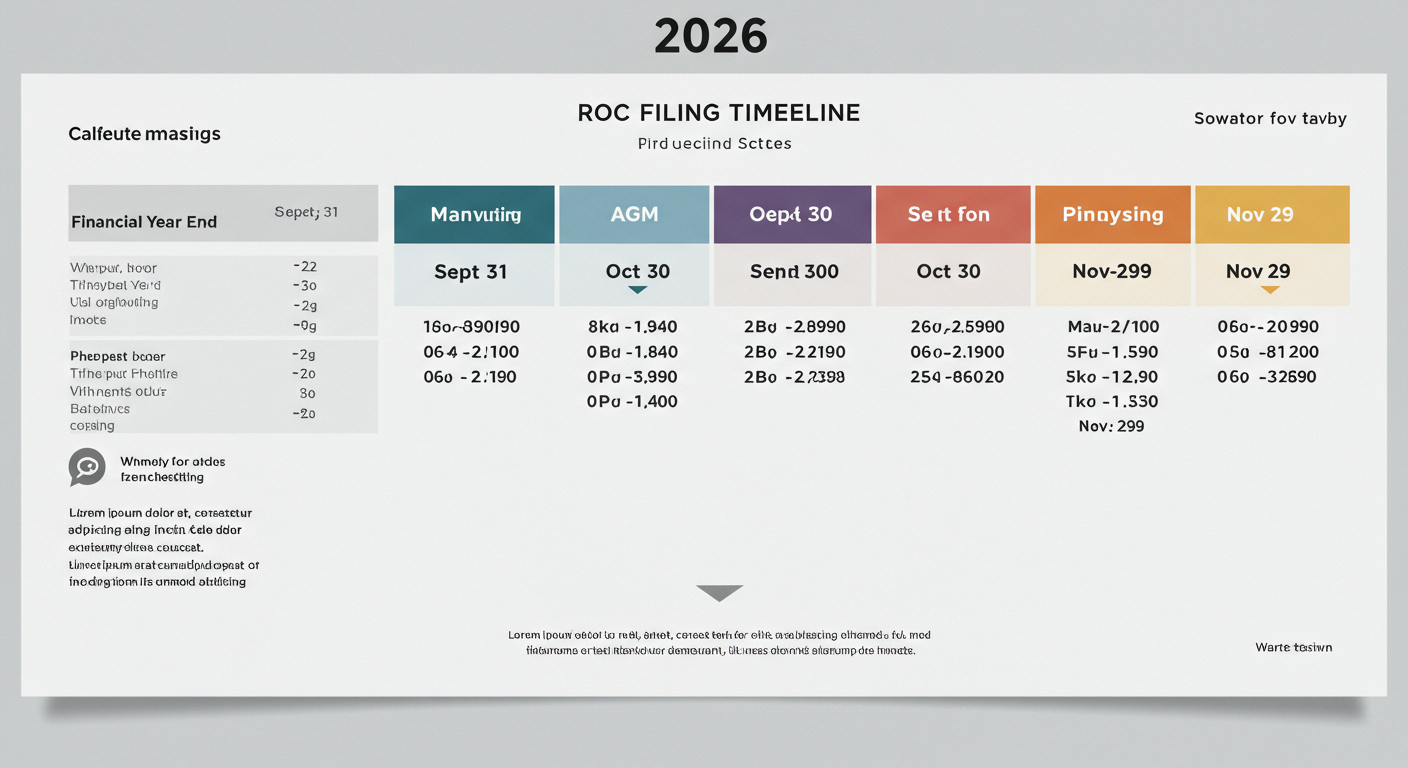
| Filing Deadline | Within 30 days of the AGM. | Within 60 days of the AGM. |
The distinction between MGT-7 and MGT-7A is crucial. A “Small Company” (as of the latest rules) is a private company with a paid-up share capital of up to ₹4 crore AND a turnover of up to ₹40 crore. If you meet both criteria, you can file the simpler MGT-7A, saving time and effort. If you exceed even one of these thresholds, you must file the more detailed MGT-7.
💡 Pro Tip
Don’t wait for the AGM to start gathering documents. We advise our clients to create a “compliance folder” at the beginning of the financial year. As you conduct board meetings, pass resolutions, or make changes, save the signed documents in this folder. This turns the year-end scramble into a simple assembly job.
Your 7-Step ROC Filing Playbook for 2026
Feeling overwhelmed? Don’t be. If you follow a structured process, ROC filing becomes a manageable, predictable part of your business rhythm. Here is the exact step-by-step playbook we use to ensure flawless compliance.
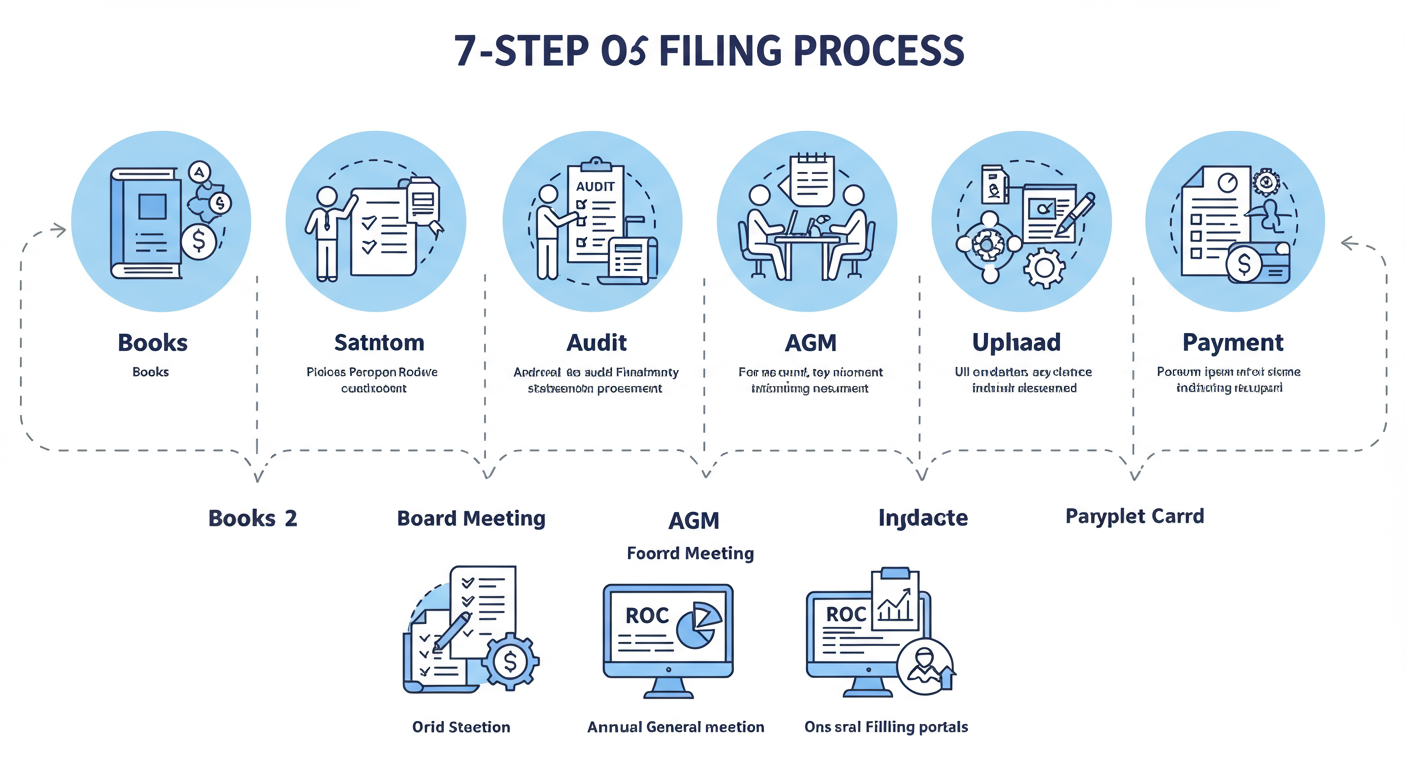
- Finalize Your Books & Prepare Statements: As soon as the financial year ends on March 31st, your first job is to close your books of accounts. Work with your accountant to prepare the draft Balance Sheet and Profit & Loss Account. This is the foundation for everything that follows.
- Conduct the Statutory Audit: A statutory audit by an independent Chartered Accountant (CA) is mandatory for all private limited companies. The CA will scrutinize your financial records and issue an Audit Report, which is a required attachment for Form AOC-4. Trust me on this one, a good auditor is worth their weight in gold.
- Hold a Board Meeting to Approve Financials: Once the audit is complete, convene a formal Board of Directors meeting. In this meeting, the directors will officially approve the audited financial statements, the Director’s Report, and set the date, time, and agenda for the Annual General Meeting (AGM).
- Convene the Annual General Meeting (AGM): The AGM is where the company’s shareholders (members) formally adopt the financial statements. This meeting must be held within six months from the financial year’s end (i.e., by September 30th, 2026). Proper notice must be sent to all shareholders at least 21 clear days before the meeting.
- Draft and Certify the E-Forms: Now it’s time to prepare the main e-forms: AOC-4 and MGT-7/7A. This data is pulled from your audited financials and company records. The forms must be digitally signed with the Director’s Digital Signature Certificate (DSC). Depending on your company’s size, they may also need to be certified by a practicing professional (CA, CS, or CWA).
- File on the MCA Portal: The signed e-forms are uploaded to the Ministry of Corporate Affairs (MCA) e-filing portal. This is the official submission step. Ensure you’re using the latest version of the forms available on the portal.
- Pay Fees & Save the SRN: After uploading, you’ll be directed to pay the statutory fees online. Once payment is successful, a Service Request Number (SRN) is generated. This SRN is your proof of filing. Save it immediately. Your filing is only complete once the fee is paid and the SRN is generated.
🎯 Key Takeaway
ROC filing isn’t a single event; it’s a process that starts the day your financial year ends. The key to stress-free compliance is holding your AGM well before the September 30th deadline, giving you a comfortable buffer to file Forms AOC-4 and MGT-7 without rushing.
The Penalty Trap: How Late Filing Cripples Businesses
The government has lost its patience with non-compliant companies. The old system of small, fixed penalties is gone. The current penalty regime under the Companies Act, 2013 is designed to be painful.
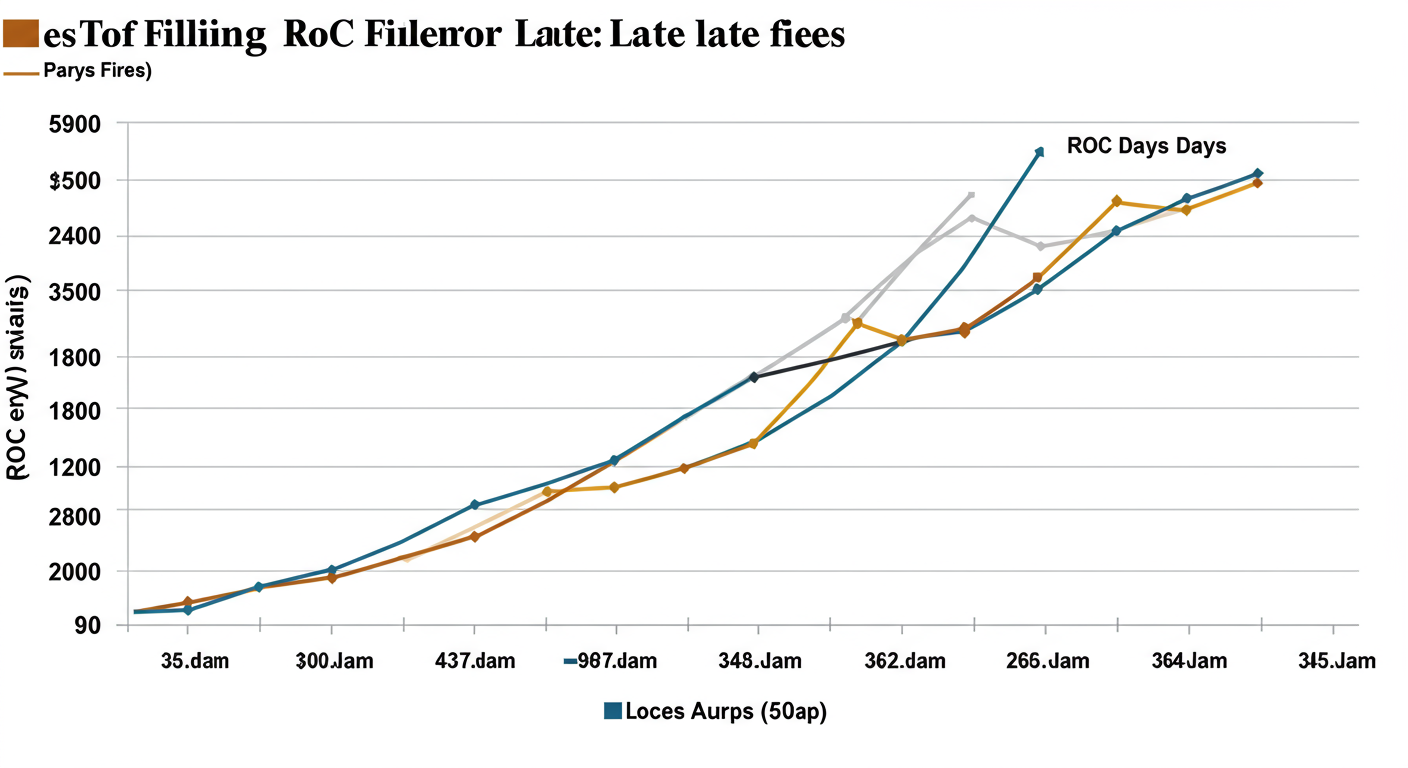
If you fail to file Form AOC-4 or MGT-7 on time, a relentless penalty of ₹100 per day, per form kicks in. There is no cap. The meter just keeps running until you file. Unlocking Competitive Edge: Comprehensive Voluntary GST Registration Benefits for Small Businesses
Let’s see how this plays out in a real-world scenario. 7 Startup India Tax Benefits for Founders (2025 Guide)
| Scenario | Delay | Penalty for AOC-4 | Penalty for MGT-7 | Total Late Fee (Excluding Normal Fees) |
|---|---|---|---|---|
| Minor Delay | 30 Days | ₹3,000 (30 days x ₹100) | ₹3,000 (30 days x ₹100) | ₹6,000 |
| Significant Delay | 180 Days (6 months) | ₹18,000 (180 days x ₹100) | ₹18,000 (180 days x ₹100) | ₹36,000 |
| Critical Delay | 365 Days (1 year) | ₹36,500 (365 days x ₹100) | ₹36,500 (365 days x ₹100) | ₹73,000 |
As you can see, a seemingly small delay can quickly spiral into a massive, unnecessary expense. But the financial hit is just the beginning. Master AOC 4 Filing: The Ultimate 7-Step Guide (2026 Edition)
⚠️ Watch Out
The most severe consequence isn’t the fine; it’s Director Disqualification. If a company fails to file its annual returns or financial statements for three consecutive years, all its directors can be disqualified for five years. This bars them from being a director in any company, effectively killing their corporate career.
Furthermore, a non-compliant status makes it nearly impossible to:
- Secure bank loans or credit facilities.
- Raise funding from VCs or angel investors.
- Participate in government tenders.
- Easily sell or close the company.
The ROC can also strike the company’s name from the register, meaning it legally ceases to exist. Reviving a “struck-off” company is an expensive, time-consuming, and legally complex affair involving the National Company Law Tribunal (NCLT).
💡 Pro Tip
When hiring a professional (CA or CS) for your filings, don’t just shop for the lowest price. Ask about their experience, the tools they use, and their process for tracking deadlines. A slightly higher fee for a proactive, organized professional is an investment that can save you tens of thousands in penalties down the line. We’ve seen cheap services lead to costly mistakes too many times.
Conclusion: From Chore to Strategic Advantage
Let’s be clear: ROC filing is not an administrative chore you can delegate and forget. It’s a strategic function that directly impacts your company’s credibility, financial health, and very existence. In 2026, compliance is the bedrock of a sustainable business.
By treating it with the seriousness it deserves—by following the 7-step playbook, understanding the critical forms, and respecting the deadlines—you transform compliance from a source of anxiety into a powerful asset. A clean filing history is a badge of honor. It tells the world you’re a serious, well-run organization ready for growth.
So, what’s your next step? Don’t wait until September. Pull out your calendar right now and block out time for your key compliance milestones. Your future self—and your company’s bank account—will thank you.
❓ Frequently Asked Questions
What is the absolute last date for holding an AGM for the financial year 2025-26?
For the financial year ending March 31, 2026, the Annual General Meeting (AGM) must be held within six months of the financial year’s end. Therefore, the absolute deadline is September 30, 2026.
Is ROC filing required for a Section 8 Company (NPO)?
Yes, absolutely. Section 8 companies, despite being non-profits, are still registered under the Companies Act, 2013, and must comply with all annual filing requirements, including submitting Forms AOC-4 and MGT-7 to the ROC.
What is a DSC and why is it mandatory?
A DSC is a Digital Signature Certificate. It’s the electronic equivalent of a physical signature and is used to verify the identity of the person signing a digital document. According to the Information Technology Act, 2000, all forms filed with the MCA must be signed with a valid Class 3 DSC to ensure authenticity and prevent fraud.
Can I get an extension for filing my annual returns?
Generally, no. The deadlines for filing AOC-4 (30 days from AGM) and MGT-7 (60 days from AGM) are statutory and cannot be extended on a case-by-case basis. The only “extension” happens if the government, due to widespread issues (like a pandemic), issues a general circular extending deadlines for all companies. You should never plan on this happening.
My company was incorporated in January 2026. Do I need to file for the 2025-26 financial year?
No. If your company was incorporated between January 1, 2026, and March 31, 2026, you are not required to hold an AGM or file annual returns for the financial year ending March 31, 2026. Your first annual filing requirement will be for the financial year ending March 31, 2027, and your first AGM must be held within 9 months from the close of that financial year.