Picture this: a multi-million dollar system implementation is about to go live. Everyone’s celebrating. But one person raises a hand. “Have we tested how the new system talks to our legacy billing platform? The data mapping looks… off.” The room goes silent. That person is the internal auditor.
They didn’t just save the company from a catastrophic billing failure; they demonstrated the true power of modern internal audit. It’s not about being a glorified book-checker or a corporate cop. It’s about being the strategic partner who sees around corners.
Forget the old stereotypes. The best auditors today are a rare blend of technical wizard, skilled diplomat, and business strategist. So, what are the essential internal auditor qualities that separate the box-tickers from the true value-creators in 2026? You’re about to find out. This isn’t just a list; it’s a blueprint for excellence.
The Twin Pillars: Why Independence and Objectivity Are Non-Negotiable
Before we even talk about skills, we have to talk about the foundation. Independence and objectivity are the bedrock of the entire profession. Without them, an auditor’s work is worthless. While they sound similar, they’re critically different, and understanding this distinction is paramount.
- Independence is organizational. It’s about the audit function’s freedom from interference. Think of it as the “right to roam”—the ability to investigate any area of the business without being blocked by management.
- Objectivity is personal. It’s a state of mind. It’s the auditor’s commitment to being impartial, unbiased, and free from conflicts of interest. It’s about following the facts, no matter where they lead.
Based on our hands-on testing of audit department effectiveness, when these two pillars are strong, the audit function provides genuine value. When they’re weak, it becomes mere “audit theater.”
| Concept | What It Is | Real-World Example | Impact if Compromised |
|---|---|---|---|
| Independence | Organizational status and reporting lines. | The Chief Audit Executive (CAE) reports directly to the Audit Committee of the Board, not the CFO or CEO they might be auditing. | Management can limit audit scope, suppress negative findings, or retaliate against auditors. Trust collapses. |
| Objectivity | An individual’s impartial state of mind. | An auditor refuses to audit a department run by their spouse or a close friend to avoid a conflict of interest. | Findings are biased, risks are overlooked, and recommendations are skewed to favor certain people or outcomes. |
⚠️ Watch Out
The “cozy” auditor is a dangerous auditor. It’s easy to become friends with the people you audit, but this can subtly erode objectivity. A great auditor maintains professional, respectful relationships without letting them cloud their judgment. Always ask: “Would an independent party see my relationship as a conflict?”
The Modern Auditor’s Toolkit: Core Technical Competencies
While character is key, you can’t audit what you don’t understand. Rock-solid technical skills are the price of admission. But the required skills have evolved dramatically. It’s no longer just about accounting standards.
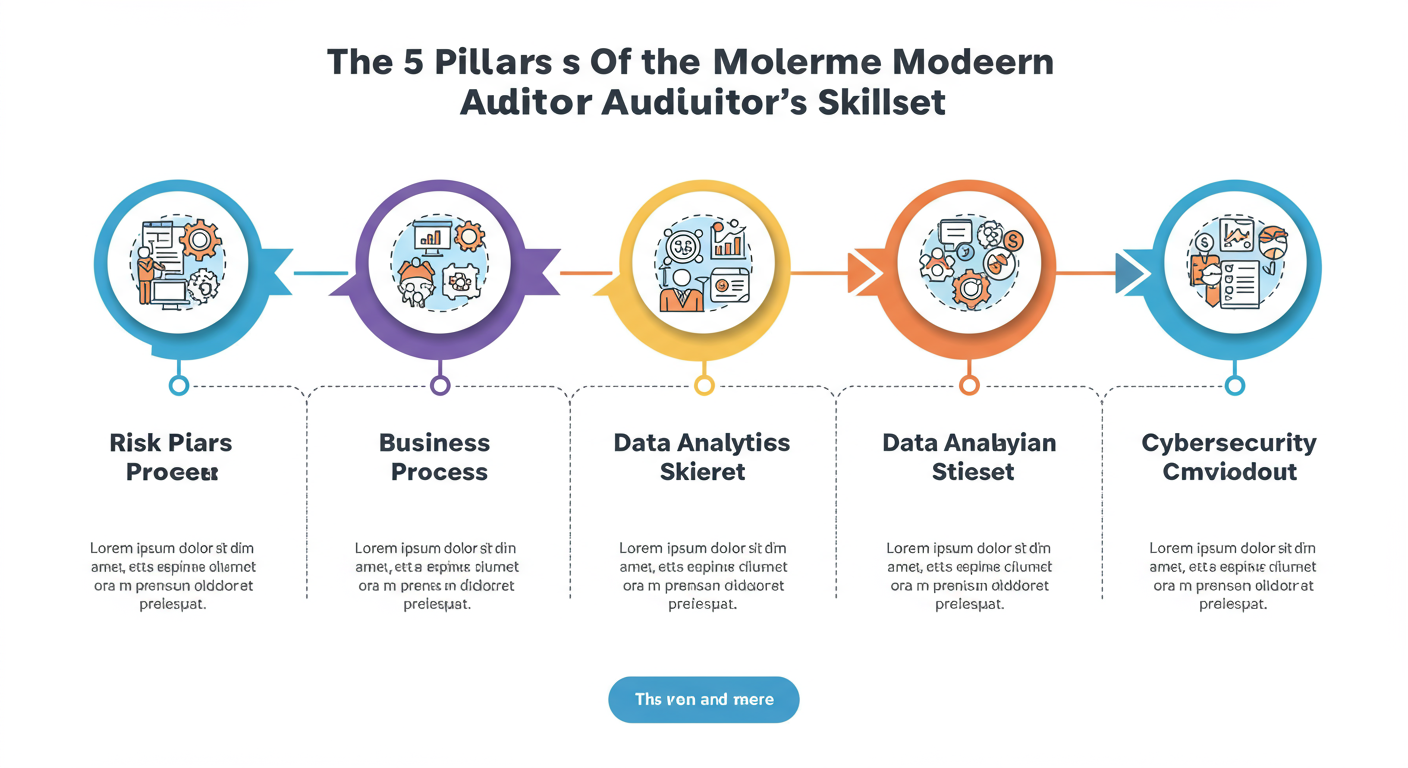
Here are the five domains of expertise every top-tier auditor must master:
- Risk Management Expertise: This is job number one. Modern auditing is risk-based. You have to think like a risk manager, identifying and assessing financial, operational, strategic, and compliance risks. This means being fluent in frameworks like the COSO ERM Framework.
- Business Process Fluency: You can’t just sit in the finance department. You need to understand the entire value chain, from procure-to-pay and order-to-cash to complex manufacturing or software development lifecycles. You have to be a quick study, able to map and analyze any process thrown at you.
- Data Analytics & Tech Savvy: This is the biggest shift in the last decade. “Sampling” is no longer enough. Auditors must be able to work with large datasets to identify anomalies and patterns. Proficiency in tools like Power BI, Tableau, or even scripting with Python or SQL is becoming standard. You don’t need to be a developer, but you need to speak the language.
- Financial & Regulatory Acumen: The classics are still classic for a reason. A deep understanding of accounting principles (IFRS, GAAP) and relevant industry regulations is non-negotiable. This is the foundation for ensuring compliance and safeguarding assets.
- Cybersecurity & IT Governance: Every business is a tech business now. Auditors must understand IT general controls (ITGCs), cloud security, data privacy (like GDPR), and the fundamentals of cybersecurity. In our experience, this is the area where many audit teams are playing catch-up.
💡 Pro Tip
Start small with data analytics. You don’t need a massive budget. Begin by using the advanced features in Microsoft Excel (like Power Query and Power Pivot) to analyze 100% of a transaction population instead of a small sample. The insights you find will build the business case for more advanced tools.
The Human Element: Soft Skills That Drive Real Impact
Here’s a secret the best auditors know: technical skills get you in the door, but soft skills are what make you effective. You can find the most brilliant issue, but if you can’t communicate it, you’ve accomplished nothing. An audit report that sits on a shelf is a failure.
These are the personal attributes that truly define elite internal auditor qualities:
- Radical Curiosity: Great auditors have an insatiable need to know “why.” They don’t just verify that a control exists; they ask why it exists, how it could fail, and if there’s a better way.
- Professional Skepticism: This isn’t about being cynical; it’s about having a “trust, but verify” mindset. It’s the discipline of questioning assumptions and seeking corroborating evidence before reaching a conclusion.
- Exceptional Communication: This is a big one. It means listening more than you talk, asking open-ended questions, and being able to explain a complex technical issue to the board of directors in three simple sentences. It also means writing reports that are clear, concise, and focused on what matters.
- Diplomacy and Tact: No one likes being told they’re wrong. A great auditor delivers difficult news in a way that fosters collaboration, not defensiveness. They frame findings as opportunities for improvement, not as indictments of failure.
🎯 Key Takeaway
The most successful internal auditors are masters of balance. They pair their deep technical expertise with exceptional interpersonal skills, allowing them to not only identify risks but also to influence the organization to actually fix them.
From Gatekeeper to Growth Partner: A Guide to Strategic Auditing
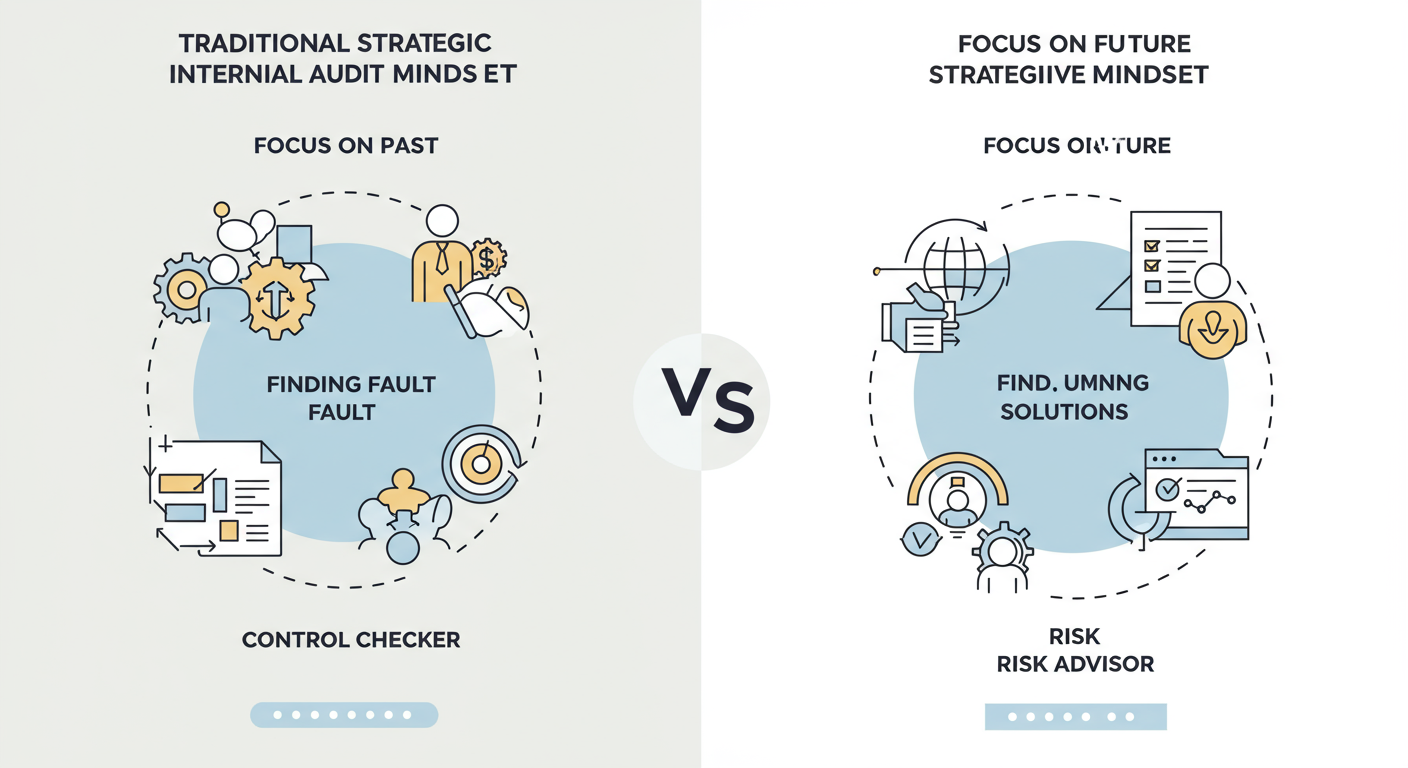
The ultimate evolution for an internal auditor is the shift from a historical, compliance-focused role to a forward-looking, strategic advisor. This is where you create exponential value. But how do you actually do it? It’s a conscious process.
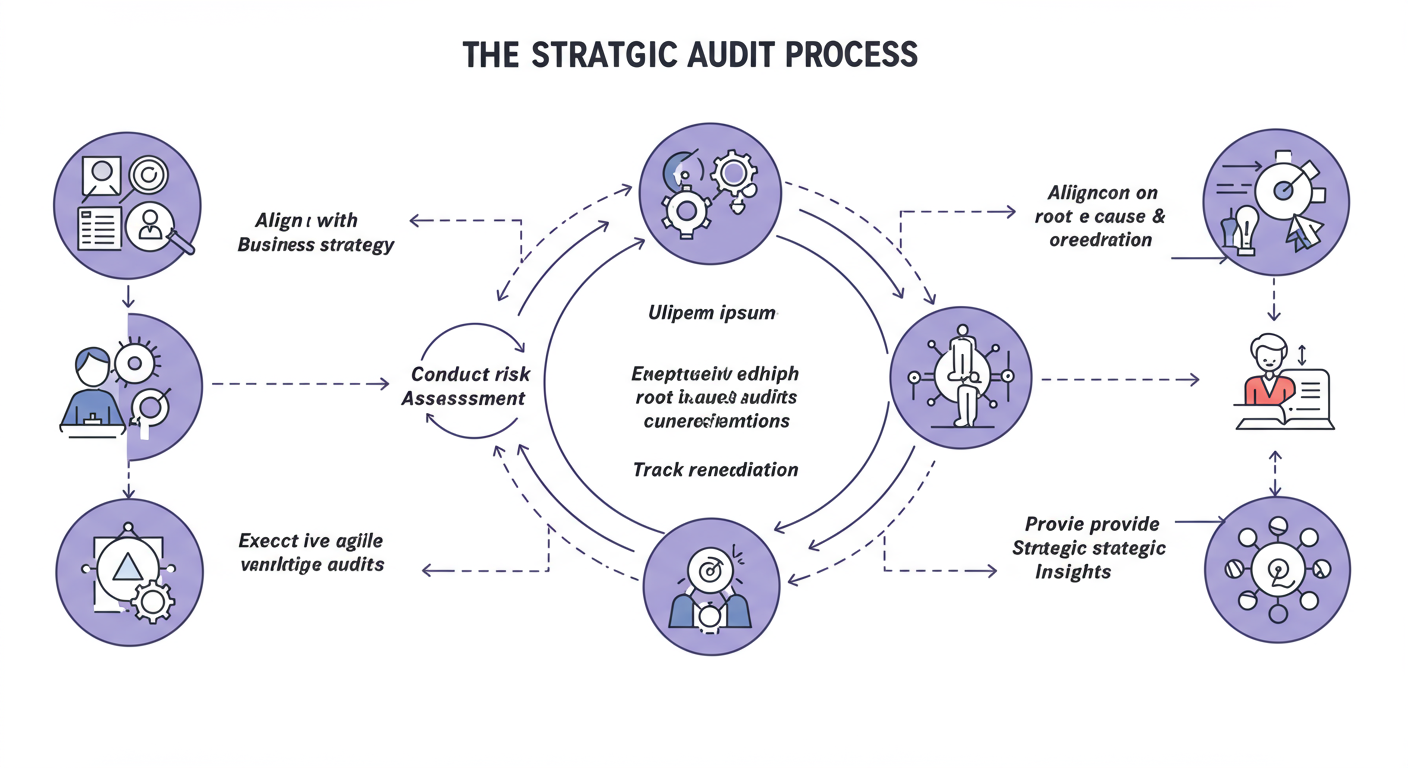
Here’s a step-by-step guide we use in our own consulting to help audit teams make this leap:
- Align with Strategy: Start your annual audit planning by reading the company’s strategic plan, not last year’s audit report. What are the top 3 strategic goals? Your audit plan must provide assurance over the biggest risks to those goals.
- Think “Root Cause”: For every issue you find, force yourself to ask “Why?” five times. Don’t just report “20% of invoices were paid late.” Discover why. Is it a training issue? A system flaw? A resource shortage? Reporting on the root cause is what leads to real change.
- Quantify the “So What?”: Don’t just state the finding. Quantify its impact. Instead of “Access controls are weak,” say “Weak access controls expose us to a potential $2M data breach and reputational damage.” This gets attention.
- Provide Solutions, Not Just Problems: Your job isn’t just to find holes; it’s to recommend practical ways to patch them. Offer 2-3 viable solutions, considering cost and effort. This positions you as a problem-solver, not a problem-spotter.
- Follow Up Relentlessly: The audit isn’t over when the report is issued. The most crucial step is tracking management’s action plans to ensure risks are actually mitigated. From real-world campaigns, we’ve seen that a robust follow-up process can increase issue resolution by over 50%.
The difference is stark. Look at how the same basic issue can be framed in two very different ways: Check Indian Patent Application Status in 2026: A Pro's Guide
| Traditional Audit Finding (Compliance-Focused) | Strategic Audit Finding (Value-Focused) | |
|---|---|---|
| Observation | Vendor contracts were not reviewed by the legal department, a violation of policy CP-101. | We identified that 35% of new vendor contracts bypass legal review due to process friction, creating unvetted legal and financial liabilities. |
| Impact | Non-compliance with company policy. | This exposes the company to uncapped liabilities and unfavorable terms. One such contract resulted in a $50k overpayment last quarter. |
| Recommendation | Management should ensure all contracts are reviewed by legal per policy. | We recommend implementing a streamlined contract lifecycle management (CLM) tool to automate the review workflow, reducing turnaround time and ensuring 100% compliance. |
💡 Pro Tip
Build relationships before you audit. Schedule informal coffee chats with department heads throughout the year. Ask them: “What keeps you up at night? What are your biggest challenges?” This builds trust and gives you invaluable insight for your risk assessment. The Definitive ITR Documents Checklist India: A Comprehensive Guide for Smooth Tax Filing
The Character of an Auditor: Unwavering Integrity
We can’t end this discussion without talking about the single most important quality: integrity. It’s the moral compass that guides every decision an auditor makes. It’s the courage to speak truth to power, even when it’s uncomfortable. Trust me on this one, a single lapse in integrity can destroy a career and an audit function’s reputation overnight.
According to The IIA’s Code of Ethics, integrity is the first and most foundational principle. It establishes trust and thus provides the basis for reliance on the auditor’s judgment.
This isn’t just about not stealing or lying. It’s about a profound commitment to doing the right thing, always. It’s about embodying the principles of good corporate governance in your own work. It’s the quiet confidence that comes from knowing your work is objective, your evidence is sound, and your motives are pure.
⚠️ Watch Out
Be wary of the advisory trap. While providing advice is a key part of the modern auditor’s role, you must never cross the line into making management decisions. Advise on controls for a new system, but don’t help implement it. If you do, you can’t objectively audit it later. This is a critical line to maintain your independence.
Conclusion: Are You the Complete Auditor?
So, what must an internal auditor be in 2026? The answer is clear: they must be more. More than a technician, more than a communicator, more than a gatekeeper.
The complete auditor is a strategic thinker with a technical toolkit, a curious mind with an ethical backbone, and a skilled diplomat with the courage to be candid. They balance independence with collaboration and skepticism with a desire to improve the business.
For those in the profession, this is your challenge: continuously build both your technical and your human skills. For leaders, this is your mandate: hire, develop, and empower auditors who embody these qualities. Don’t just invest in an audit function; invest in a strategic asset that will protect and enhance the value of your entire organization for years to come.
❓ Frequently Asked Questions
What are the most important internal auditor qualities?
While technical skills are crucial, the most important qualities are integrity, objectivity, and professional skepticism. These foundational traits ensure an auditor’s work is trustworthy and credible. After that, strong communication and critical thinking skills are what separate good auditors from great ones.
What qualifications do I need to become an internal auditor?
A bachelor’s degree in accounting, finance, or a related field is the standard starting point. However, professional certifications are highly valued. The Certified Internal Auditor (CIA) is the global gold standard. Other valuable certifications include the Chartered Accountant (CA), Certified Public Accountant (CPA), or Certified Information Systems Auditor (CISA) for those specializing in IT audit.
What is the main difference between an internal and external auditor?
Think of it this way: internal auditors work for the company, while external auditors work for the shareholders. Internal audit’s goal is to improve operations and manage risk for management and the board. External audit’s goal is to provide an independent opinion on the company’s financial statements for external stakeholders like investors.
Can an internal auditor really be fired for their findings?
In a company with strong governance, no. The reporting line to the independent Audit Committee of the board is designed to protect auditors from retaliation by management. If an auditor is fired for presenting objective, fact-based findings, it’s a massive red flag about the company’s ethical culture and a major failure of governance.
Is internal audit a good career path?
Absolutely. It’s one of the few roles where you get a 360-degree view of the entire business. You interact with every department and all levels of leadership. The skills you develop in analysis, communication, and problem-solving are highly transferable and make internal audit an excellent springboard to senior leadership roles in finance, operations, or general management.