You have the million-dollar idea. The late-night coffee has been brewed, the business plan is sketched out on a dozen napkins, and the fire in your belly is undeniable. But then you hit the first real wall: legal structure. Suddenly, you’re drowning in a sea of acronyms—LLP, OPC, Proprietorship. It’s confusing. It’s intimidating. And making the wrong choice can cripple your startup before it even takes its first step.
Here’s the truth: for most ambitious founders in India, the Private Limited (Pvt Ltd) company is the undisputed champion. It’s the structure that VCs look for, the one that protects your personal assets, and the one that lets you scale like a pro.
This isn’t just another dry checklist. This is your 2026 founder’s playbook. We’re going to walk you through the why, the how, and the crucial what’s next of Pvt Ltd company registration. By the end of this, you’ll have the clarity and confidence to build your empire on a rock-solid legal foundation.
Why a Pvt Ltd is Your Startup’s Secret Weapon
Choosing a business structure isn’t just a box to tick; it’s a strategic decision that defines your company’s future. While a sole proprietorship might seem easier, it leaves you personally exposed and makes raising capital nearly impossible. A Pvt Ltd company, governed by the Companies Act, 2013, is a distinct legal entity. Think of it as a separate person. This separation is where the magic happens.
Let’s break down why this structure is the go-to for serious entrepreneurs:
- Ironclad Liability Protection: This is the big one. If the business incurs debt or faces a lawsuit, your personal assets—your home, your car, your savings—are safe. Your liability is limited to the value of the shares you hold. It’s a financial firewall that lets you take calculated risks without betting the farm.
- The Magnet for Funding: Picture this: you’re pitching to an angel investor. The first thing they’ll ask is about your legal structure. A Pvt Ltd company signals professionalism and makes it easy to issue shares (equity) in exchange for capital. Venture capitalists, angel investors, and even banks overwhelmingly prefer this structure because it’s transparent and secure.
- Unmatched Credibility: A “Pvt. Ltd.” suffix on your company name instantly boosts your brand’s credibility. It tells clients, suppliers, and partners that you’re a serious, registered entity with public records on the Ministry of Corporate Affairs (MCA) portal. It builds trust from day one.
- Built to Last (Perpetual Succession): The company exists independently of its owners. If a shareholder leaves, passes away, or transfers their shares, the company keeps running. This stability is crucial for long-term vision and building a legacy.
- The Ultimate Talent Magnet (ESOPs): In a competitive market, you need to attract and retain A-players. A Pvt Ltd structure allows you to offer Employee Stock Option Plans (ESOPs). Giving your key team members a piece of the pie is one of the most powerful ways to align their ambitions with the company’s success.
Business Structure Showdown: Pvt Ltd vs. The Alternatives
Still not convinced? Let’s put it in black and white. Based on our experience advising hundreds of startups, here’s how the Pvt Ltd structure stacks up against other common options.
| Feature | Sole Proprietorship | Partnership Firm | Limited Liability Partnership (LLP) | Private Limited Company (Pvt Ltd) |
|---|---|---|---|---|
| Liability | Unlimited (Personal assets at risk) | Unlimited (Partners are liable) | Limited to partner’s contribution | Limited to share capital |
| Investor Friendliness | Very Low | Low | Moderate | Very High |
| Scalability | Low | Moderate | High | Very High |
| Compliance Burden | Very Low | Low | Moderate | High |
| Best For | Individual freelancers, small local shops | Small businesses with multiple owners | Professional services (CAs, lawyers) | Startups seeking funding, scalable businesses |
🎯 Key Takeaway
Choosing a Pvt Ltd structure isn’t just about compliance; it’s a strategic move that unlocks funding, protects your personal wealth, and builds a credible brand from the very beginning. It’s the framework for a business built to scale and last.
The 2026 Registration Blueprint: Your Step-by-Step Guide
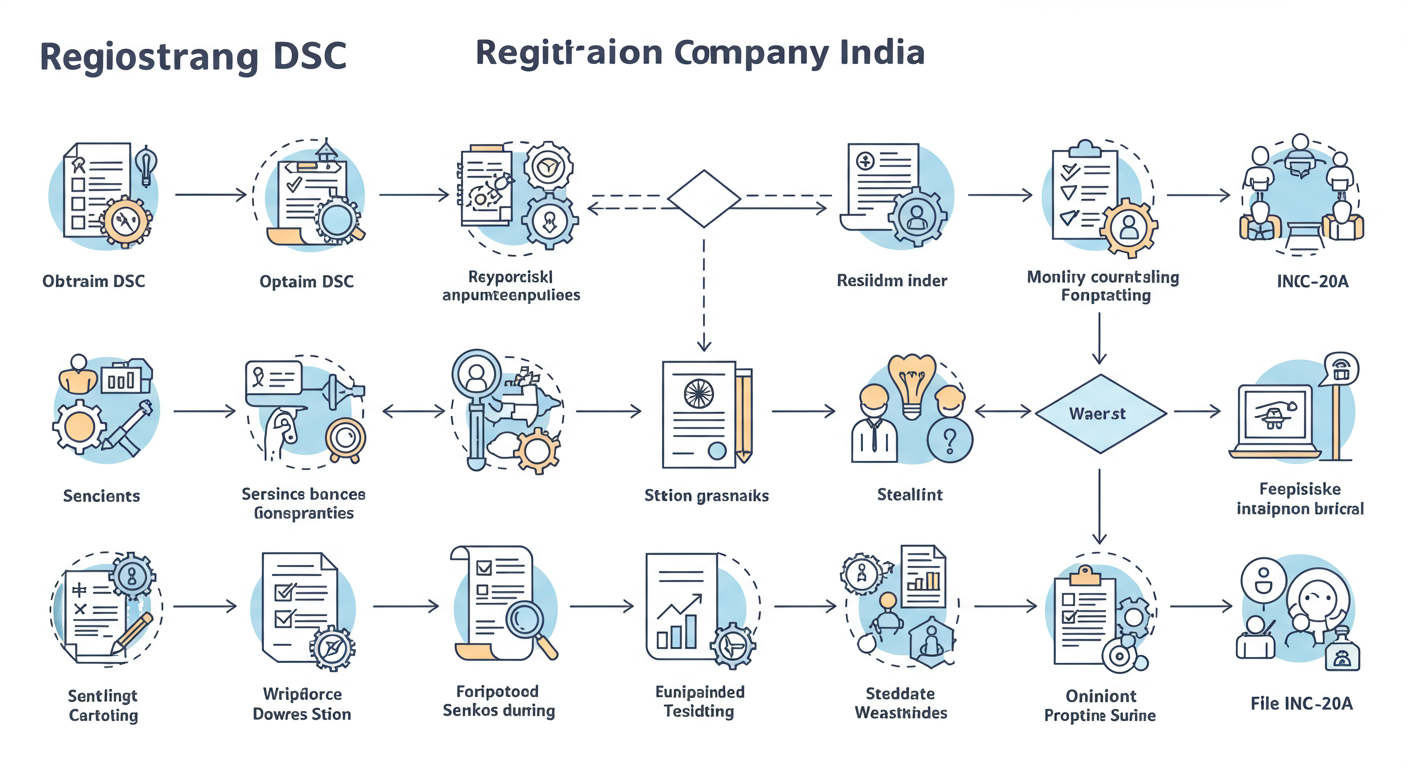
The Indian government has made huge strides in simplifying company registration through the integrated SPICe+ (Simplified Proforma for Incorporating Company Electronically Plus) web form. It looks complex, but it’s a logical process. Let’s walk through it, step by step.
-
Step 1: Obtain Digital Signature Certificate (DSC)
Before you do anything else, all proposed directors need a Class 3 DSC. This is your electronic signature, required to sign all the digital forms you’ll submit to the MCA. Think of it as the key that starts the engine. You can get this from various certified agencies.
-
Step 2: Apply for Director Identification Number (DIN)
Every director needs a unique DIN. The good news? For new directors, this is now integrated directly into the SPICe+ form. If a director already has a DIN from a previous company, you can use that one. No need to re-apply.
-
Step 3: Reserve Your Company Name (SPICe+ Part A)
This is a critical branding step. Your name must be unique and not infringe on any existing trademarks. You’ll use the SPICe+ Part A form to propose one or two names. The system does a basic check, but final approval comes from the MCA. Your name must end with “Private Limited”.
💡 Pro Tip
Don’t get your heart set on just one name. We recommend brainstorming at least 3-4 unique names. Check the MCA portal for existing company names and the public search for trademarks to avoid instant rejection. A unique, non-generic name has a much higher chance of approval on the first try.
-
Step 4: Draft the MoA and AoA
These are the constitutional documents of your company.
- Memorandum of Association (MoA): Defines your company’s objectives, business activities, authorized capital, and state of registration. Be specific but also broad enough to allow for future pivots.
- Articles of Association (AoA): These are the internal bylaws. They govern how the company operates, including director powers, meeting protocols, and share transfer rules.
The MCA now provides standard templates (e-MoA and e-AoA) which you can adopt, making this step much easier for most startups.
-
Step 5: File the Main Incorporation Form (SPICe+ Part B)
This is the core of your application. This single, integrated form handles everything:
- Company incorporation
- DIN allotment
- PAN and TAN application
- GSTIN, EPFO, and ESIC registration (now mandatory)
- Professional Tax registration (for certain states)
- Opening a company bank account
-
Step 6: Upload Linked Forms & Pay Fees
Along with SPICe+ Part B, you’ll submit the e-MoA (INC-33), e-AoA (INC-34), and AGILE-PRO-S (INC-35) forms. Once everything is filled out and digitally signed, you upload it to the MCA portal and pay the required government fees and stamp duty online.
⚠️ Watch Out
The most common reason for rejection is a mismatch in details. The name and address on your PAN, Aadhaar, and bank statements must match exactly. Even a small difference like a missing initial can lead to the application being sent for resubmission, causing delays. Double-check every single detail before uploading.
-
Step 7: Scrutiny by the Registrar of Companies (RoC)
An RoC officer will review your application. If it’s perfect, they’ll approve it. If there are errors, they’ll mark it for resubmission, and you’ll have to correct and re-upload the forms. This is where professional help can save you a lot of time and frustration.
-
Step 8: Receive Your Certificate of Incorporation (COI)
Success! Upon approval, you’ll receive an email with your Certificate of Incorporation. This document is legal proof of your company’s existence. It will contain your Corporate Identity Number (CIN), PAN, and TAN. Congratulations, your company is officially born! 7 Startup India Tax Benefits for Founders (2025 Guide)
-
Step 9: Fulfill Immediate Post-Incorporation Tasks
You’re not done yet. You must deposit the initial subscribed share capital into the company’s new bank account. For example, if you and your co-founder subscribed to 10,000 shares of ₹10 each, you need to deposit ₹1,00,000 into the account. Digital Signature Certificate for Company India: The 2025 Class 3 Guide
-
Step 10: File for Commencement of Business
Within 180 days of incorporation, you must file Form INC-20A (Declaration for Commencement of Business) with the RoC. This form, accompanied by a bank statement showing the share capital deposit, confirms that you are ready to start operations. You cannot legally conduct any business until this is filed.
Your Document Checklist: What You’ll Need to Get Started
Being organized is half the battle. Gather these documents beforehand to ensure a smooth process. All documents for directors must be self-attested.
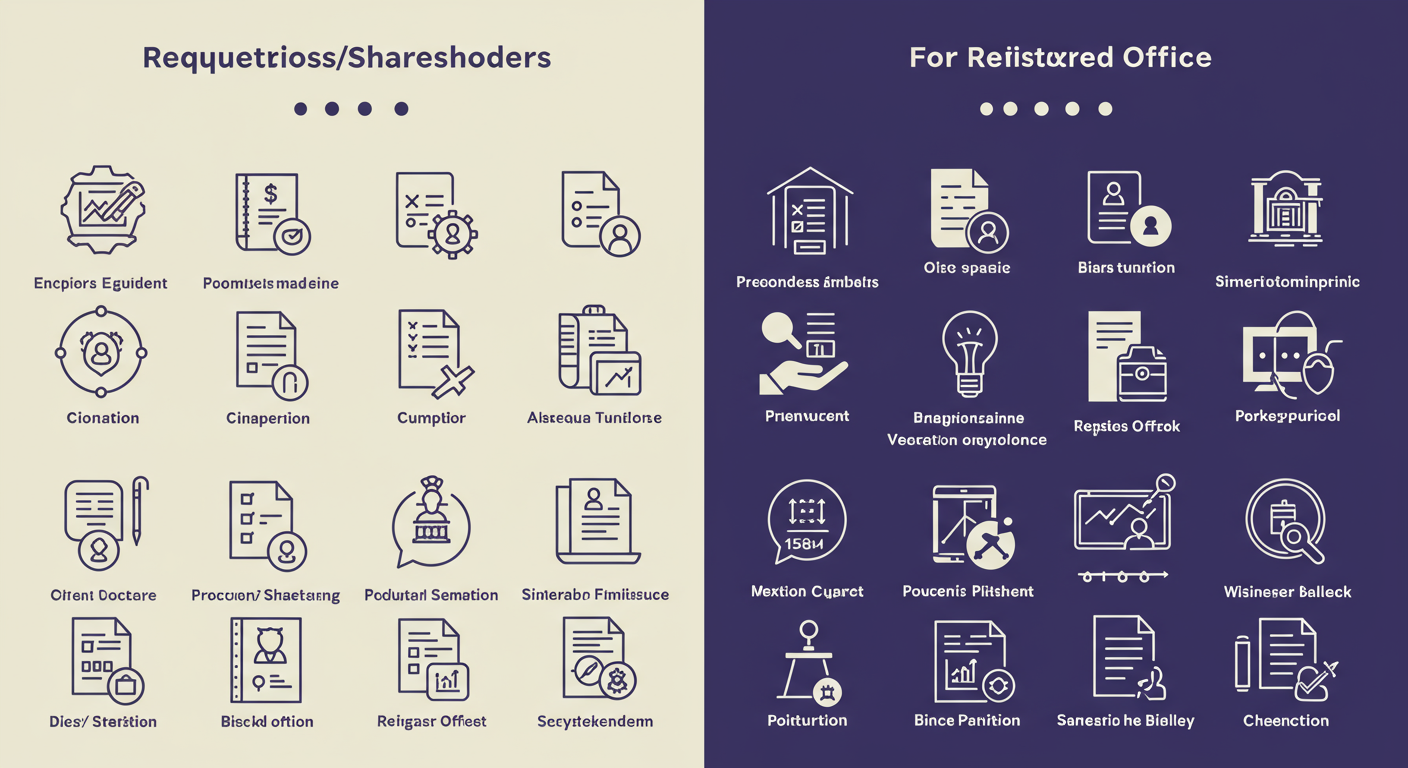
For All Directors & Shareholders (Indian Nationals):
- PAN Card: This is non-negotiable.
- Identity Proof: Aadhaar Card, Voter’s ID, or Driving License.
- Address Proof: A recent bank statement, mobile bill, or utility bill (must be less than 2 months old).
- Photograph: A recent passport-sized photo.
For the Registered Office Address:
- Proof of Address: A recent utility bill (electricity, gas, etc.) for the premises (less than 2 months old). This must be in the property owner’s name.
- No Objection Certificate (NOC): A simple letter from the property owner stating they have no objection to you using their address as a registered office.
- Rental Agreement (if applicable): If the property is rented, a notarized rental agreement is required.
Beyond Incorporation: Mastering Your Annual Compliances
Registering your company is like the kickoff in a football match; the game has just begun. To stay in the good graces of the MCA and avoid hefty penalties, you must adhere to a strict calendar of annual compliances. Trust me on this one, ignoring these can lead to director disqualification and fines that can sink a young startup.
💡 Pro Tip
Appoint your first statutory auditor (a practicing Chartered Accountant) within 30 days of incorporation by passing a board resolution. This is your first and most time-sensitive compliance task. A good auditor will not only handle your filings but also provide valuable financial advice.
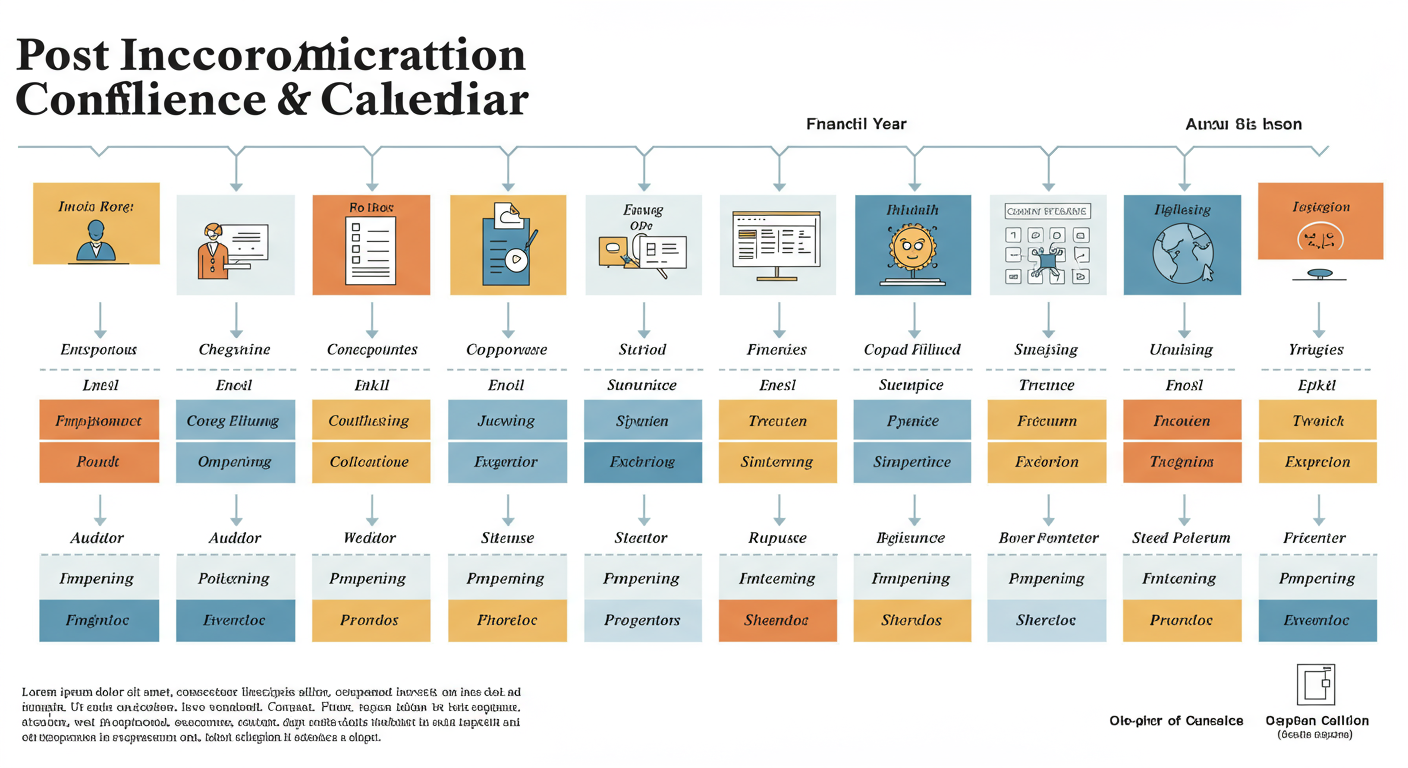
Here’s a snapshot of your key annual responsibilities.
| Compliance Task | Relevant Form | Timeline / Due Date |
|---|---|---|
| Board Meetings | N/A (Minutes must be maintained) | Minimum of 4 per year, with a gap of no more than 120 days between two meetings. |
| Filing of Financial Statements | Form AOC-4 | Within 30 days of the Annual General Meeting (AGM). |
| Filing of Annual Return | Form MGT-7 | Within 60 days of the Annual General Meeting (AGM). |
| Annual General Meeting (AGM) | N/A (Notice & Minutes required) | Must be held within 6 months from the end of the financial year. |
| Income Tax Return Filing | Form ITR-6 | Typically October 31st of the assessment year (subject to extensions). |
⚠️ Watch Out
Failure to file annual returns (AOC-4 and MGT-7) for consecutive years can lead to your company being struck off the register and the directors being disqualified for 5 years. The penalties for late filing are also steep. Automate reminders or hire a professional to manage this for you; the peace of mind is worth it.
Your First Real Step as a Founder
Navigating the Pvt Ltd company registration process is your first major test as a founder. It’s a journey that moves from a simple idea to a formal, legal entity ready to take on the world. Yes, it requires attention to detail, but the rewards are immense: the safety of limited liability, the power to attract investment, and the credibility to build a lasting brand.
You’ve seen the blueprint. You know the pitfalls to avoid and the strategic advantages to gain. The path is clear. Your next step is to start organizing your documents and, if you feel the need, consult with a professional who can handle the heavy lifting.
Welcome to the world of corporate enterprise. Now go build something amazing.
❓ Frequently Asked Questions
How much does it cost to register a Pvt Ltd company in India in 2026?
The total cost varies by state (due to different stamp duty rates) and professional fees. Generally, you can expect government fees to be minimal for companies with an authorized capital up to ₹15 Lakh. Including professional fees, the total cost typically ranges from ₹7,000 to ₹20,000. Be wary of services that quote extremely low prices, as they may have hidden charges.
How long does the Pvt Ltd registration process take?
If all your documents are in order and your proposed name is unique, the entire process can be completed in 7-12 working days. Name approval takes 1-2 days, and the form processing by the RoC usually takes 3-5 days. Delays are almost always caused by incorrect documents or non-unique name choices.
Can a single person start a Pvt Ltd company?
No. A Pvt Ltd company requires a minimum of two directors and two shareholders (the directors can also be the shareholders). If you are a solo founder, the ideal structure for you is a One Person Company (OPC), which offers similar benefits like limited liability but is designed for a single owner.
What is the minimum capital requirement for a Pvt Ltd company?
There is no longer a minimum paid-up capital requirement. You can technically start a company with as little as ₹10,000 or even less. However, we recommend starting with an authorized capital of at least ₹1,00,000, as it projects a better image to stakeholders and the government fees are the same.
Can foreign nationals be directors in an Indian Pvt Ltd company?
Yes, absolutely. A foreign national can be a director in an Indian Pvt Ltd company. However, the company must have at least one director who is a resident of India (meaning they have stayed in India for at least 182 days in the previous calendar year). Foreign directors will need to provide a passport copy and address proof, which must be notarized and apostilled in their home country.
Can I use my home address as the registered office?
Yes, you can use a residential address as your company’s registered office. This is a huge advantage for early-stage startups. All you need is a No Objection Certificate (NOC) from the property owner and a proof of address like an electricity bill. According to the World Bank’s research, such measures significantly improve the ease of starting a business.