
Living abroad is an adventure. You get global exposure, financial growth, and a lifestyle upgrade. But for the millions of Indians I’ve spoken to over the years who are residing overseas, there’s always that one nagging worry back home: NRI taxation India. Let’s face it, tax laws are a headache even when you live in the country. Throw in international borders, and it feels like navigating a maze blindfolded.
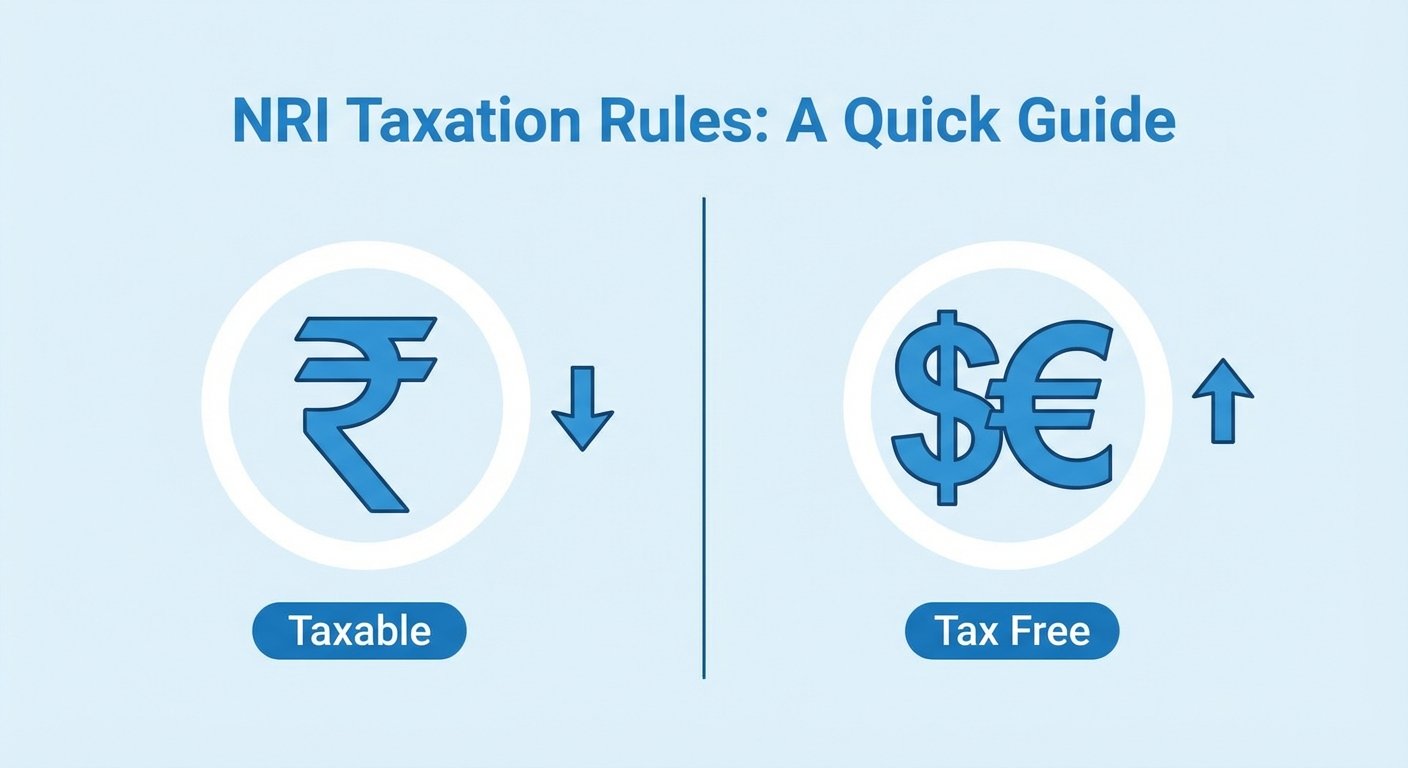
Whether you’re managing a rental flat in Mumbai or trading Indian stocks from your apartment in New York, you need to know the rules. I’ve seen too many people get hit with surprise penalties because they assumed their tax liability vanished the moment their flight took off.
It didn’t. In this guide, I’m going to walk you through the reality of NRI taxation India in plain English. We’ll look at residency rules, how to save money with the Double Taxation Avoidance Agreement (DTAA), and how to keep the taxman happy without losing your mind.
1. Determining Your Status: Are You Actually an NRI?
Everything about NRI taxation India starts with one question: Where were you this year? Your citizenship doesn’t matter here; your physical presence does. The financial year runs from April 1 to March 31, and your status can flip-flop from year to year.
Under the Income Tax Act, you are a Resident if:
- You are in India for 182 days or more during the financial year.
- You are in India for 60 days or more this year AND have been in India for 365 days or more in the last 4 years.
If you don’t fit these boxes, congratulations—you are a Non-Resident Indian (NRI) for tax purposes. This distinction is huge because it decides exactly how much of your hard-earned money India can touch.
Resident Indian
Global Income Taxable: If you fall into this category, India taxes everything—money earned in Delhi, dollars earned in Dubai, all of it.
Non-Resident (NRI)
India-Sourced Income Only: This is the sweet spot. India only taxes what you earn, accrue, or receive within its borders. Your foreign salary is usually safe.
2. What Income is Taxable Under NRI Taxation India Rules?
Once you know you’re an NRI, the next step is identifying what the Indian government can tax. The general rule of thumb for NRI taxation India is simple: If the money originated in India, it’s taxable in India.
Income from Salary
If you are paid for a job you did in India, it’s taxable here. It doesn’t matter if the money was deposited directly into your American or British bank account. However, if you are an NRI working abroad for an Indian company, that income is generally tax-free in India because the services were rendered outside.
Income from House Property
This is where most NRIs get tangled up. If you have a property in India and rent it out, that rent is taxable income. The good news? You get the same benefits as a resident. You can claim a standard deduction of 30% on the rent, plus deductions for property taxes and home loan interest.
Income from Other Sources
Interest is the silent tax accumulator. Interest on savings accounts and fixed deposits in India is taxable. However, this depends on the type of account you hold (more on that in section 7).
3. Deductions: Yes, NRIs Can Save Tax Too
A lot of folks think that leaving India means leaving tax breaks behind. Not true. The NRI taxation India framework allows you to claim several deductions under Section 80, just like your cousins back home.
- Section 80C: You can lower your taxable income by up to ₹1.5 Lakh. Investments in Life Insurance premiums, ELSS mutual funds, and principal repayment on home loans all count.
- Section 80D: Paying for health insurance for your aging parents in India? That premium is deductible.
- Section 80E: If you’re paying interest on an education loan for higher studies, claim it.
- Section 54 & 54EC: Sold a property? You can save on Capital Gains tax if you reinvest that money into another property or specific bonds within the deadline.
Timing is everything here. To ensure you don’t miss the dates for these investments, check out our Tax Compliance Calendar India.
4. Double Taxation Avoidance Agreement (DTAA): Your Best Friend
Here is the biggest fear: paying tax on the same income twice—once in India and again in your country of residence. This is where the DTAA comes in to save the day.
India has signed these agreements with over 90 countries (USA, UK, Canada, Singapore, etc.). Under NRI taxation India rules, DTAA allows you to avoid this double whammy. Usually, you can either get the income exempted in one country or claim a tax credit for the tax paid in India against your foreign tax liability.
How to Claim DTAA Benefits
It’s not automatic; you have to ask for it. You’ll typically need to submit:
- Tax Residency Certificate (TRC): Proof you live elsewhere.
- Form 10F: A self-declaration form.
- PAN Card: Your Indian tax ID.
5. The Sting of TDS in NRI Taxation India
If you think TDS (Tax Deducted at Source) is annoying for residents, it’s brutal for NRIs. The government wants to ensure they get their share before the money leaves the country, so TDS rates are significantly higher.
Interest on NRO Account
Banks will deduct TDS at roughly 30% (plus surcharge/cess) on interest earned in NRO accounts. It adds up fast.
Rental Income
If you rent out your Indian home, your tenant is legally required to deduct TDS at 31.2%. Yes, even if the rent is low.
Property Sale
Selling property? The buyer must deduct TDS at 20% (plus surcharge) on Long Term Capital Gains. Often, this is more than the actual tax you owe, meaning you have to file a return to get your money back.
6. Filing Returns: Is it Mandatory?
I get asked this constantly: “Do I really need to file an ITR?”
The short answer: You must file if your gross Indian income exceeds the basic exemption limit (₹2.5 Lakh). But honestly? You should probably file anyway. If a bank deducted 30% TDS on your interest but your total income was low, filing an ITR is the only way to get that refund.
Don’t miss the deadline. Late filing means penalties and losing the chance to carry forward losses. For the exact dates this year, bookmark our Income Tax Filing Due Date Guide.
Which Form to Use?
Forget ITR-1; that’s for residents. NRIs usually need:
- ITR-2: For capital gains, foreign assets, or multiple properties.
- ITR-3: If you have business income in India.
7. NRE vs. NRO vs. FCNR: Choosing the Right Account
Your bank account choice directly impacts your NRI taxation India liability. Here is the cheat sheet:
- NRE (Non-Resident External):Maintained in Rupees. Principal and interest are fully repatriable. Tax Impact: Interest is 100% tax-free in India.
- NRO (Non-Resident Ordinary): For income earned in India (like rent). Tax Impact: Interest is taxable.
- FCNR (Foreign Currency Non-Resident): Kept in foreign currency (USD, GBP, etc.) to avoid exchange loss. Tax Impact: Interest is tax-free.
8. Recent Updates You Can’t Ignore
The rules are always shifting. Recently, the government introduced the “Deemed Resident” clause. Basically, if you are an Indian citizen with over ₹15 Lakh income from Indian sources and you aren’t liable to pay tax in any other country (hello, UAE tax-free living), India might claim you as a resident for tax purposes.
Also, keep your PAN operative. While NRIs are exempt from mandatory Aadhaar-PAN linking if they don’t have an Aadhaar, you must ensure your residential status is correctly updated in the tax portal to avoid your PAN becoming inoperative.
Final Thoughts
Managing NRI taxation India doesn’t have to be a nightmare. It just requires a bit of proactive planning. The rules might seem strict, but between DTAA benefits, Section 80 deductions, and tax-free NRE accounts, there are plenty of ways to optimize your liability.
My advice? Don’t ignore your Indian financial roots. File your returns on time, choose the right bank accounts, and when in doubt, consult a professional. Peace of mind is worth more than the few rupees you might save by cutting corners.
Frequently Asked Questions (FAQs)
No. Generally, income earned and received outside India is not taxable in India for NRIs. The Indian taxman is only interested in money that accrues or is received within India.
It is mandatory if your taxable Indian income exceeds the basic exemption limit (₹2.5 Lakh). However, I highly recommend filing if any TDS was deducted from your income, so you can claim a refund.
Zero. Interest earned on Non-Resident External (NRE) and FCNR accounts is completely tax-free in India.
Absolutely. NRIs can claim up to ₹1.5 Lakh in deductions under Section 80C for eligible investments like life insurance premiums and principal repayment on home loans.
Use the Double Taxation Avoidance Agreement (DTAA). By submitting a Tax Residency Certificate and Form 10F, you can claim tax credits or exemptions in your country of residence for taxes paid in India.