Imagine this: You’re about to sign a million-rupee deal with a promising new supplier. Everything looks perfect. The website is slick, the sales pitch was flawless. But something feels… off. You take five minutes, pull up their company details on the MCA portal, and your jaw drops. The company status? “Struck Off.” The directors? Changed three times in the last six months. You just dodged a massive bullet.
This isn’t fiction. It’s a daily reality in the world of Indian business, and the tool that provides this critical insight is the MCA 21 Master Data. It’s the single most powerful, publicly available resource for corporate due diligence in India.
Forget guesswork and blind trust. In this article, you’re not just going to learn what MCA Master Data is. You’ll learn how to wield it like a seasoned professional to vet partners, analyze competitors, assess investments, and protect yourself from fraud. It’s time to look under the hood of any registered company in India.
What Exactly is MCA 21 Master Data? (And Why It’s Your Secret Weapon)
Think of the MCA 21 portal, run by India’s Ministry of Corporate Affairs, as the official ledger for every registered company and Limited Liability Partnership (LLP) in the country. The Master Data is the public-facing summary page from that ledger. It’s a real-time, digital snapshot of a company’s most vital statistics.
It’s not just a database; it’s the foundation of corporate transparency in India. It answers critical questions instantly:
- Is this company even real and legally registered?
- Is it actively compliant with government regulations?
- Who are the actual people running the show?
- How much debt is secured against its assets?
In our experience analyzing thousands of company profiles, this data is the first line of defense in any business interaction. It’s the difference between a smart decision and a costly mistake.
🎯 Key Takeaway
MCA 21 Master Data is not just administrative information; it’s a strategic intelligence tool. It provides a free, instant, and official background check on any company in India, revealing its legal status, financial structure, and compliance health.
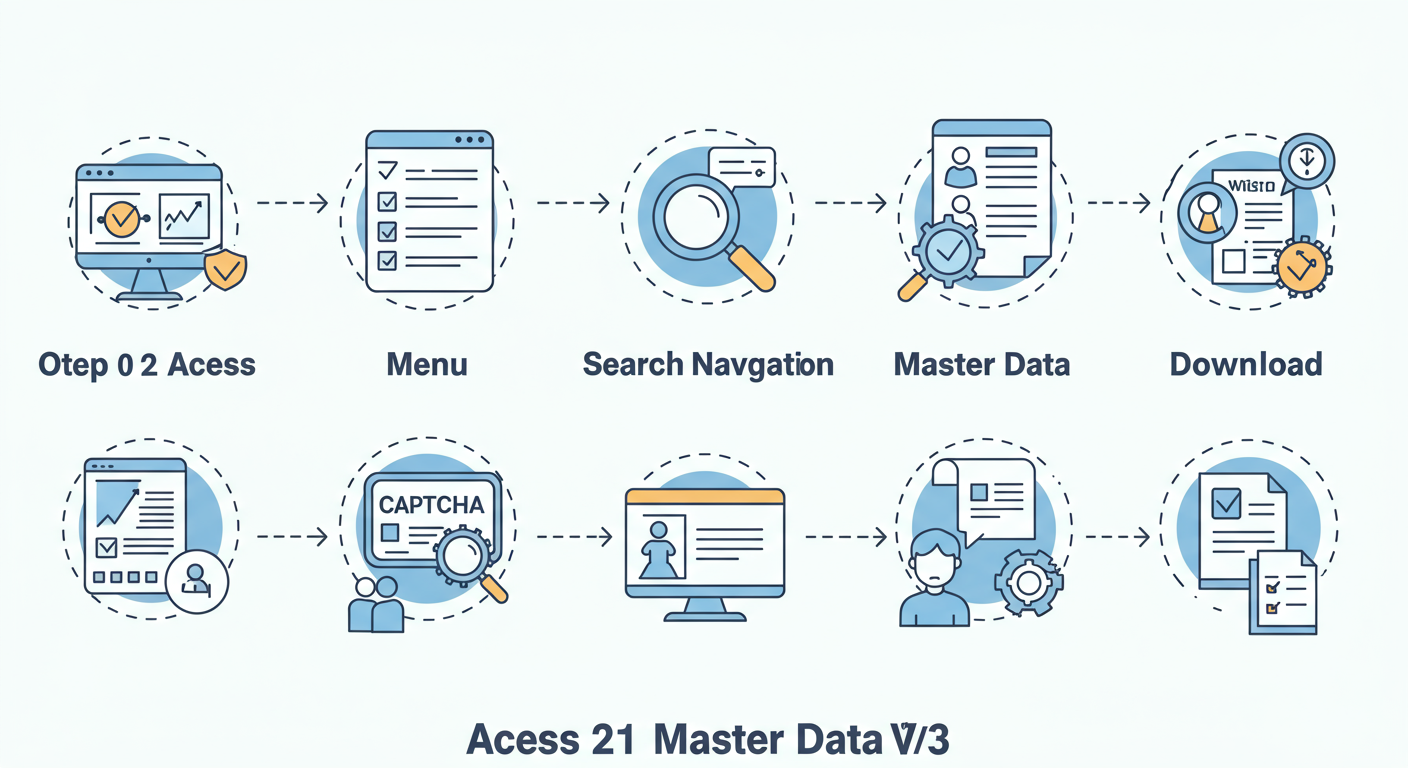
How to View MCA 21 Master Data in 5 Simple Steps (2026 V3 Portal)
Accessing this information is surprisingly easy and, importantly, completely free. The government wants you to use it. Here’s the updated process for the MCA V3 portal:
- Go to the Source: Open your browser and head directly to the official MCA website: www.mca.gov.in. Bookmark this site.
- Find MCA Services: In the main header menu, hover over ‘MCA Services’. A large mega-menu will appear.
- Navigate to Master Data: Look for the ‘Company Services’ column. In that list, click on ‘View Company/LLP Master Data’.
- Search for the Company: You’ll land on a search page. The best way to find a company is by using its Corporate Identification Number (CIN). If you don’t know it, click the search icon (a small magnifying glass) next to the input field. A pop-up will let you search by the company name. Pro tip: use partial names if you’re unsure of the exact legal name (e.g., “Reliance Indust” instead of the full name).
- Submit and Analyze: Once you’ve entered the CIN and the captcha, hit ‘Submit’. The complete Master Data report will load instantly on your screen. You can print it or save it as a PDF (use your browser’s print-to-PDF function) for your records.
Decoding the Master Data Report: What to Look For
Okay, you have the report. Now what? It’s a wall of text and numbers. Let’s break down the most critical sections and what they really mean.
Section 1: The Corporate ID Card
This first block is the company’s basic identity. Pay close attention to these fields:
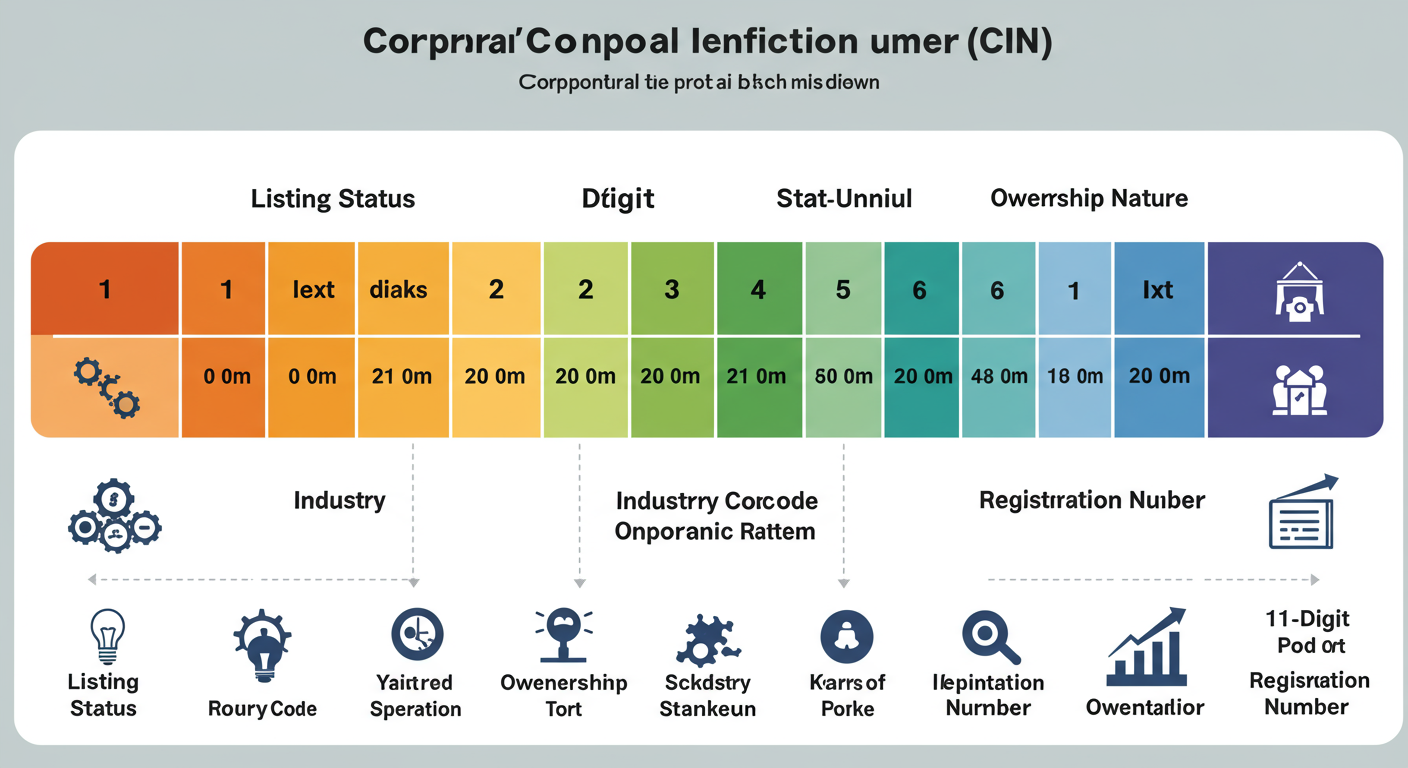
- CIN (Corporate Identification Number): This 21-digit code is a story in itself. It tells you if the company is Listed/Unlisted, the industry, state, incorporation year, and ownership type. It’s the single most important identifier.
- Company Name: The official, registered name. Make sure it matches the name on invoices and contracts. Any discrepancy is a red flag.
- RoC Code: Shows which Registrar of Companies office has jurisdiction (e.g., ‘RoC-Mumbai’).
- Company Status (for eFiling): This is the most critical field. It tells you if the company is alive and well.
The ‘Company Status’ isn’t just a label; it’s a direct reflection of a company’s operational and legal health. Here’s how to interpret the most common statuses:
| Status | What It Really Means | Your Action |
|---|---|---|
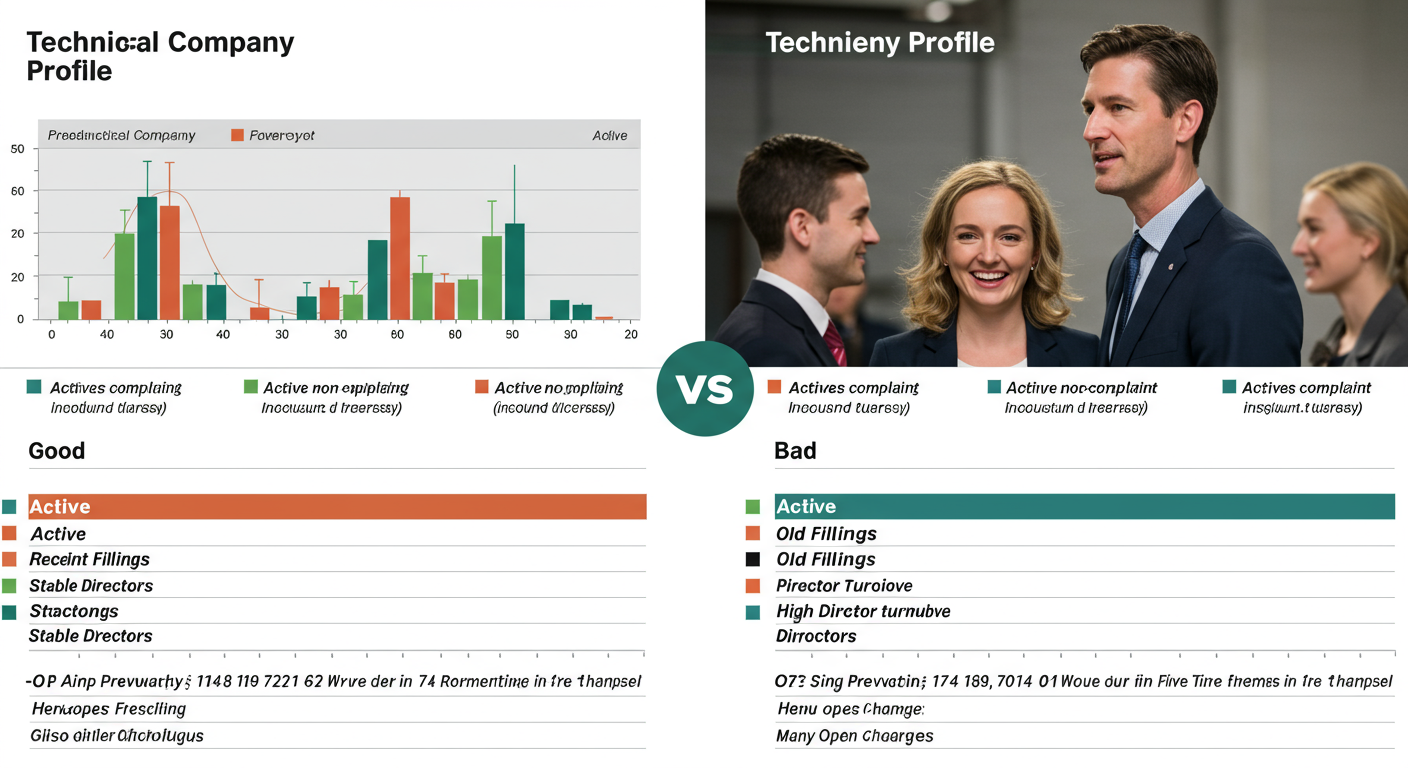
| Active | The company is legally operational. It has filed its annual returns and financial statements, signaling good governance. | Proceed with caution, but this is a positive sign. Continue your due diligence. |
| Active (non-compliant) | The company exists but has failed to file mandatory documents (like annual returns). It’s a sign of poor management or financial distress. | High risk. Question why they are non-compliant. Avoid large transactions until resolved. |
| Struck Off | The company has been removed from the official register by the RoC. It legally ceases to exist and cannot operate. | Do not engage. Any contract or invoice from a “Struck Off” company is invalid. |
| Under Liquidation | The company is in the process of being wound up to pay off its debts. It is not conducting normal business. | Avoid. The company’s assets are being sold off by a liquidator. |
⚠️ Watch Out
A company showing as ‘Active’ doesn’t automatically mean it’s trustworthy or financially sound. It just means they’ve met the bare minimum filing requirements. Your due diligence must go deeper.
Section 2: Financial & Compliance Snapshot
This section provides a glimpse into the company’s financial architecture and discipline.
- Authorized Capital & Paid-up Capital: Authorized capital is the maximum shares a company can issue. Paid-up capital is what it has issued and received money for. A huge gap between the two isn’t necessarily bad, but it can indicate a company has big plans it hasn’t funded yet.
- Date of Last AGM & Date of Balance Sheet: These dates are crucial. According to the Companies Act, 2013, companies must hold an Annual General Meeting (AGM) and file financials annually. If these dates are more than 18 months old, the company is likely non-compliant, even if its status is still ‘Active’.
💡 Pro Tip
When analyzing Paid-up Capital, compare it to the company’s scale of operations. A company claiming to do crores in business with a paid-up capital of just ₹1,00,000 might be a shell company or poorly structured. It warrants a closer look at their balance sheet.
Section 3: The People Behind the Company
Here you’ll find a list of all current directors with their DIN (Director Identification Number), name, and date of appointment. An ‘End Date’ signifies a past director.
“A company is known by the people it keeps.” This section of the MCA data brings that saying to life. High director turnover is a major warning sign of instability or internal conflict.
From real-world campaigns we’ve analyzed, we’ve seen shell companies use the same set of “dummy” directors across dozens of entities. You can cross-reference a director’s DIN on the MCA portal to see all other companies they are associated with. It’s a powerful way to uncover hidden connections.
The Most Important Section: Decoding the ‘Index of Charges’
For investors, lenders, and anyone extending credit, this is the holy grail. A ‘charge’ is simply a formal notice that the company has taken a loan and pledged some of its assets as security (like a mortgage on a house). Key Features of Limited Liability Partnerships
Here’s what you’ll see and what it means:
| Field | What It Tells You | Why It Matters |
|---|---|---|
| Charge ID | A unique number for the specific loan/charge. | Used for tracking and official records. |
| Date of Creation | The date the loan was taken. | Shows how recently the company has been taking on debt. |
| Charge Amount | The total amount of the loan secured. | This is the company’s debt burden. A high amount relative to its size is a risk. |
| Charge Holder | The bank or financial institution that gave the loan. | Shows who the company’s financial partners are. |
| Status | ‘Open’ means the loan is still active. ‘Closed’ means it has been fully paid off. | A long list of ‘Open’ charges is a clear indicator of high leverage. |
Look, a company with zero charges isn’t necessarily better than one with several. Debt fuels growth. The key is context. Is the debt from a reputable bank? Is the amount reasonable for their industry and size? A sudden spike in charges from obscure lenders? That’s a five-alarm fire.
⚠️ Watch Out
The Index of Charges only reflects filed charges. Unscrupulous companies might delay filing or take unsecured loans that won’t appear here. While the MCA data is a powerful tool, it’s not a complete financial audit. Trustworthiness is key, and industry research shows that timely filings correlate with better governance.
What Master Data *Doesn’t* Tell You (The Limitations)
To use this tool effectively, you must also understand its limits. Being an expert means knowing what you don’t know. The Master Data will NOT show you:
- Profitability or Revenue: It only shows the date of the last filed balance sheet, not the numbers within it. For that, you need to download the specific financial documents (which is a paid service).
- Day-to-Day Operational Health: A company can be ‘Active’ but on the verge of bankruptcy.
- Internal Disputes: Shareholder fights or management conflicts don’t appear here unless they result in a formal filing.
- Market Reputation: It’s a legal record, not a collection of customer reviews.
Always supplement your MCA data check with other forms of due diligence. A quick search on a platform like Zauba Corp can sometimes provide additional context, and a simple Google News search can reveal recent problems.
💡 Pro Tip
Use the MCA Master Data as your first filter. If a company fails the basic checks here (e.g., non-compliant status, high director turnover, alarming charges), you can disqualify them immediately and save yourself the time and expense of deeper investigation.
Conclusion: Make Due Diligence Your Default Setting
The era of operating on blind faith is over. The MCA 21 Master Data has democratized corporate information, putting the power of transparency directly into your hands. It’s no longer a tool just for CAs and lawyers; it’s an essential skill for any modern professional in India.
We’ve covered how to access it, what each section means, and how to spot the red flags that others miss. You now understand that a company’s status, its filing history, and its list of charges tell a compelling story about its health and integrity.
So, what’s your next step? Don’t just file this information away. Practice. Pick a company you know—your own, a competitor, a supplier—and look it up on the MCA portal right now. Get familiar with the layout. Make checking the MCA Master Data a non-negotiable habit before you sign any contract, hire any vendor, or make any investment. It’s the smartest five minutes you’ll ever spend.
❓ Frequently Asked Questions
Is it free to view MCA 21 Master Data?
Absolutely. Viewing the Company or LLP Master Data on the MCA portal is 100% free for everyone. You only pay if you want to download certified copies of specific documents, like the full balance sheet or articles of association.
What’s the difference between CIN and DIN?
It’s simple: CIN is for the company, DIN is for the director. The CIN (Corporate Identification Number) is a 21-digit unique ID for the business entity itself. The DIN (Director Identification Number) is an 8-digit unique ID for an individual, allowing them to serve as a director on any company’s board in India.
How often is the MCA Master Data updated?
The data is updated in near real-time. When a company files a new form (e.g., to change its address or appoint a director), the Master Data reflects that change as soon as the Registrar of Companies (RoC) approves the filing. This means you’re almost always looking at the most current official data.
Can I correct wrong information in my company’s master data?
You can’t edit the data directly. To make a correction or an update, your company must file the appropriate e-form with the MCA. For example, Form DIR-12 is used for director changes, and Form SH-7 is for changes in capital. Once the form is approved, the master data updates automatically.
What does it mean if a director’s ‘End Date’ is blank?
A blank ‘End Date’ means the director is currently active on the company’s board. An end date will only appear in this field after the company has filed the necessary form (Form DIR-12) to report the director’s resignation or removal, and that form has been approved.
Is the MCA data reliable?
Yes, it is the single source of truth for official corporate records in India. The data is a direct reflection of the documents filed by the company and approved by the RoC. However, its accuracy depends on the company’s diligence in filing updates promptly. As the World Bank notes in its governance reports, transparency frameworks like this are vital for a healthy economy.