Picture this: two founders, fueled by coffee and a world-changing idea, are about to register their new venture. One argues for the simplicity and low cost of a Limited Liability Partnership (LLP). The other insists a Private Limited Company (Pvt Ltd) is the only way to attract investors. They’re stuck.
This isn’t just a hypothetical scenario; it’s the first critical decision every Indian entrepreneur faces. And getting it wrong can cost you dearly in lost opportunities, compliance nightmares, and tax inefficiencies. It’s a foundational choice that dictates your company’s entire trajectory.
Forget the dense legal jargon. This guide cuts through the noise. We’ll dissect the LLP vs Pvt Ltd debate with real-world insights, showing you exactly which structure aligns with your ambition, your budget, and your five-year plan. By the end, you’ll know not just what to choose, but why.
LLP vs Pvt Ltd: The 30-Second Decision Guide
Don’t have time for a deep dive? I get it. Here’s the entire debate distilled into one simple table. Based on our experience with hundreds of startups, your answer is likely right here.
| Consideration | Choose an LLP If… | Choose a Pvt Ltd If… |
|---|---|---|
| Primary Goal | You’re running a professional service, a small agency, or a lifestyle business. | You’re building a scalable product or service with high-growth ambitions. |
| Funding Plan | You’re bootstrapping, using personal funds, or taking on debt. No equity investors. | You plan to raise funds from Angel Investors, VCs, or Private Equity. (Non-negotiable) |
| Compliance Tolerance | You want minimal paperwork, lower costs, and operational flexibility. | You’re prepared for a formal corporate structure, including mandatory audits and board meetings. |
| Exit Strategy | Ownership transfer is complex and not a primary concern. | You want the ability to easily sell shares, offer ESOPs, or plan for an acquisition. |
What is an LLP? The Flexible Maverick
A Limited Liability Partnership (LLP), governed by the LLP Act of 2008, is a brilliant hybrid. It combines the operational flexibility of a traditional partnership with the crucial benefit of limited liability, which is a hallmark of a company.
Think of it as the agile, modern choice for businesses where the owners are also the primary operators. In an LLP, the partners’ personal assets are shielded from the business’s debts. If the business fails, your personal savings, car, and house are safe. This is a massive step up from a sole proprietorship or partnership firm.
Its real magic lies in its low compliance overhead. No mandatory board meetings. No compulsory annual audit unless you hit a certain scale. It’s designed for professionals—consultants, lawyers, architects, and small creative agencies—who need a legitimate business entity without the corporate straightjacket. It’s simple, cost-effective, and gets the job done.
💡 Pro Tip
If you’re starting a service-based business with 2-3 partners and have absolutely no plans for equity funding in the next 2-3 years, an LLP is almost always the smarter, more cost-effective choice. You can always convert to a Pvt Ltd later if your ambitions change.
What is a Pvt Ltd? The Scalable Powerhouse
A Private Limited Company (Pvt Ltd) is the gold standard for startups with serious growth ambitions. Governed by the much more rigorous Companies Act, 2013, this structure is built for scale, credibility, and, most importantly, investment.
Here, ownership is defined by shares. You have shareholders (the owners) and a Board of Directors (the managers). This clear separation of ownership and management is what investors and banks love to see. It signals strong corporate governance and a professional setup.
Why is it the default for tech startups? Three letters: V-C-s. Venture capitalists and angel investors simply do not invest in LLPs. They need to be able to take an equity stake (shares) in your company in exchange for their capital. A Pvt Ltd structure allows for this seamlessly. It also lets you create Employee Stock Ownership Plans (ESOPs) to attract top-tier talent.
The trade-off? Higher compliance. You’re signing up for mandatory board meetings, a statutory audit every year (regardless of turnover), and a lot more paperwork with the Registrar of Companies (ROC). But for a high-growth trajectory, this is the price of admission.
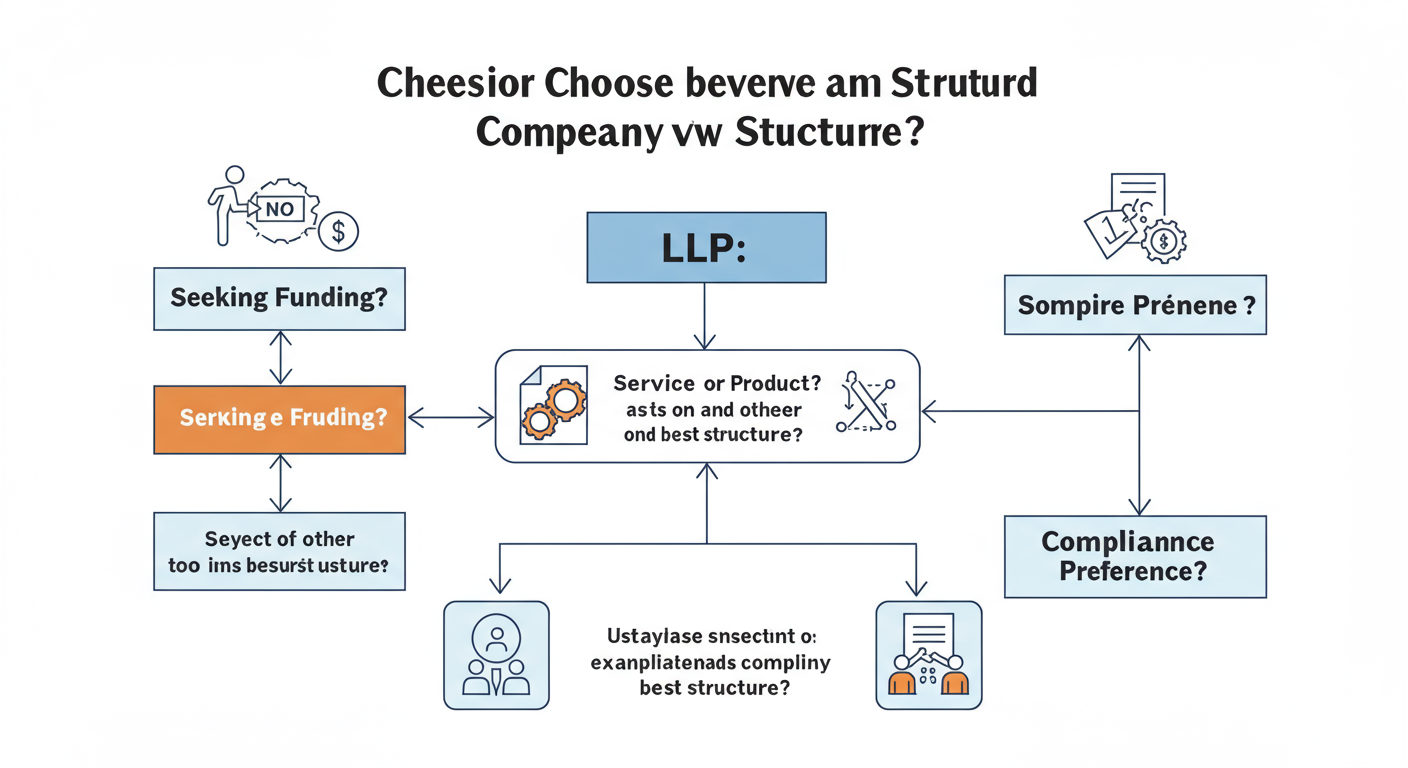
The Core Showdown: 7 Critical Differences in 2026
Let’s break down the factors that truly matter. This isn’t just a list; it’s a strategic framework for your decision.
1. Compliance & Cost (The #1 Deciding Factor)
This is where the rubber meets the road for most new businesses. A Pvt Ltd is significantly more expensive to maintain.
- Meetings: A Pvt Ltd must hold at least four board meetings a year and one Annual General Meeting (AGM). An LLP has no such requirement.
- Audits: A statutory audit is mandatory for every Pvt Ltd, even if it has zero revenue. An LLP only needs an audit if its turnover crosses ₹40 lakhs or its capital contribution exceeds ₹25 lakhs. This alone can save an early-stage LLP ₹15,000-₹25,000 annually.
- Filings: Both file annual returns, but the complexity and volume of forms for a Pvt Ltd (AOC-4, MGT-7, etc.) are far greater than for an LLP (Form 8, Form 11).
From our experience, the annual compliance cost for a Pvt Ltd can be 2-3 times higher than for an LLP. Don’t underestimate this cash drain in your first year.
2. Fundraising Potential (The VC Litmus Test)
This is the simplest, most black-and-white difference. If you plan to raise money from equity investors, you must be a Private Limited Company. Period.
Investors need shares. LLPs don’t have share capital; they have partner contributions. You can’t give a VC a “percentage of partner’s contribution.” It doesn’t work with their legal and financial models. A Pvt Ltd can issue different classes of shares (equity, preference), which is essential for structuring funding rounds.
⚠️ Watch Out
Don’t register as an LLP thinking you’ll just “figure out” funding later. We’ve seen founders waste months trying to convince investors, only to be told to convert to a Pvt Ltd first. This delays funding and makes you look unprepared.
3. Ownership & Control
In an LLP, the partners own and manage the business directly. Everything is governed by the LLP Agreement, a highly flexible internal document. This is great for small, tight-knit teams. However, transferring ownership is a pain—it requires amending the agreement and often needs the consent of all partners.
In a Pvt Ltd, ownership is fluid. It’s represented by shares. Want to bring in a new co-founder? Issue them shares. An early employee leaving? They can sell their shares (subject to the Articles of Association). This liquidity is a huge advantage for a dynamic business. The Ultimate GSTR-2A Reconciliation Checklist: Maximizing ITC and Ensuring GST Compliance
4. Taxation (Where Your Money Really Goes)
The tax rules have shifted over the years, and the choice has consequences. व्हीलचेयर टेनिस पैरालंपिक्स: खेल का उत्सव
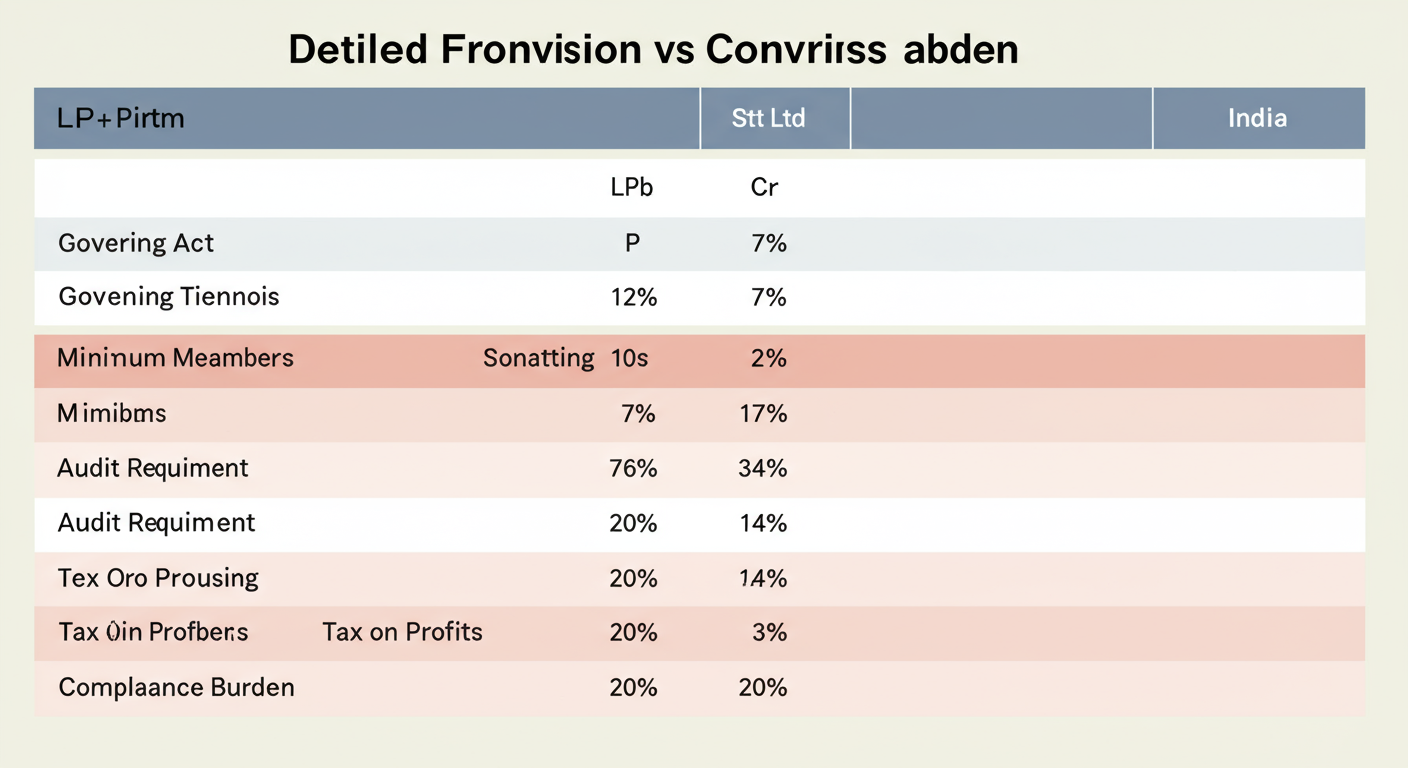
| Tax Aspect | Limited Liability Partnership (LLP) | Private Limited Company (Pvt Ltd) |
|---|---|---|
| Corporate Tax | Flat 30% (+ surcharge & cess) on net profits. | Generally 25% or 15% for new manufacturing units (subject to conditions). |
| Tax on Profit Distribution | Profits distributed to partners are tax-free in their hands. No Dividend Distribution Tax (DDT). | Dividends paid to shareholders are taxed again in the hands of the shareholder at their slab rate. |
| Overall Structure | Simpler, single layer of taxation on profits. | Potential for double taxation (tax on company profit, then tax on dividends). |
At first glance, the LLP’s 30% tax rate seems higher. But because there’s no second layer of tax on distributions, it can often be more tax-efficient, especially for businesses that plan to distribute most of their profits to the owners each year.
5. Credibility & Perception
While an LLP is a perfectly valid and respected legal structure, a Private Limited Company often carries more weight in the business world. The “Pvt Ltd” suffix signals a more formal, structured, and serious enterprise to potential clients, suppliers, and especially large corporate customers. For government tenders or contracts with MNCs, being a Pvt Ltd can sometimes be an explicit or implicit requirement.
6. Exit Strategy & Ownership Transfer
How do you plan to exit the business one day? If your dream is an acquisition by a larger company, a Pvt Ltd is the way to go. Acquiring a company by purchasing its shares is a standard, straightforward process. Acquiring an LLP is far more complex and less common.
7. Member/Owner Limits
An LLP needs a minimum of 2 partners and has no upper limit. A Pvt Ltd needs a minimum of 2 shareholders and is capped at a maximum of 200. This is rarely a deciding factor for early-stage startups but is a key structural difference.
🎯 Key Takeaway
The LLP vs Pvt Ltd choice boils down to a simple trade-off: an LLP prioritizes operational simplicity and low cost, while a Pvt Ltd prioritizes scalability and access to equity funding. Your long-term ambition, not your current situation, should be the primary guide for this decision.
The Conversion Path: Can You Switch from LLP to Pvt Ltd?
Yes, and it’s a very common strategy. You can start with the simplicity of an LLP and, once you achieve product-market fit and are ready to seek investment, convert into a Pvt Ltd. The Companies Act, 2013, provides a clear procedure for this.
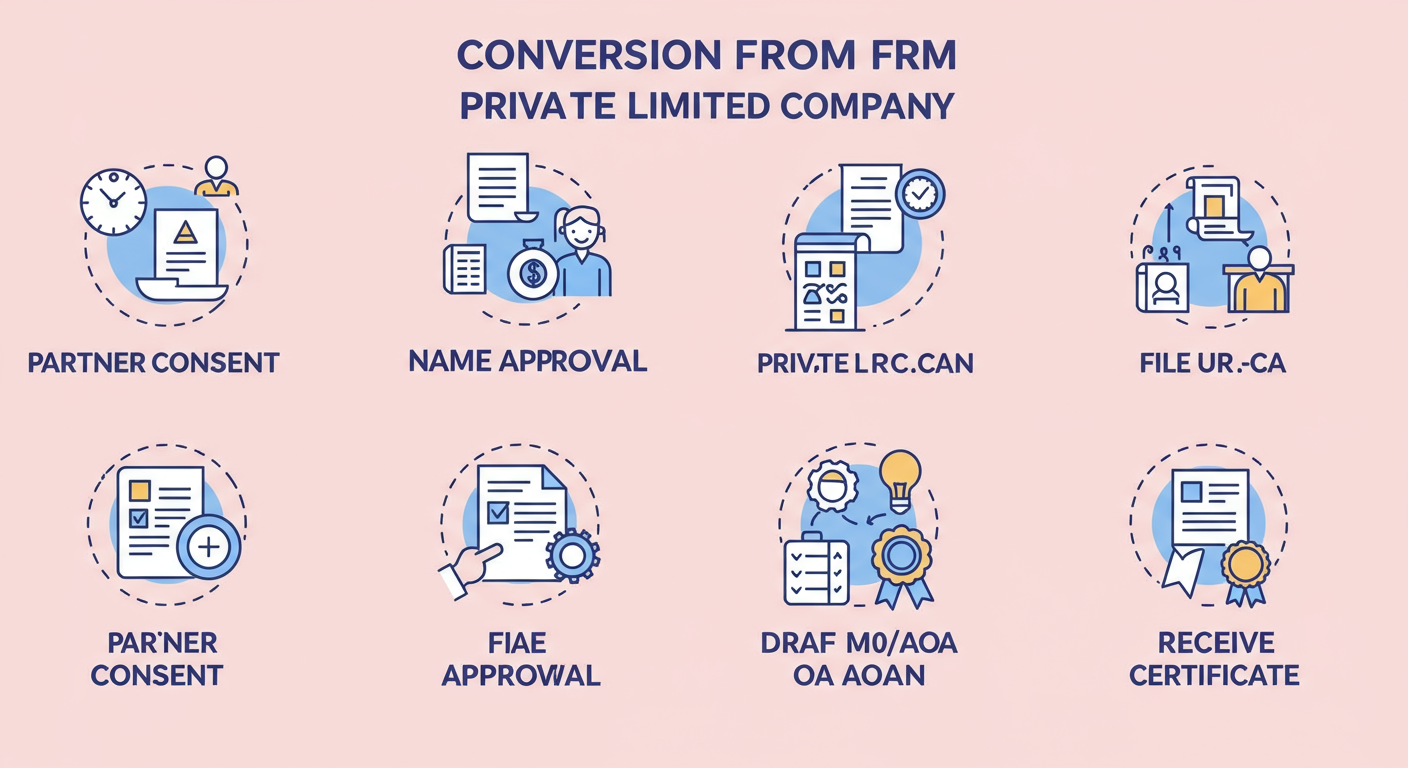
Here’s a simplified step-by-step look at the process:
- Meet the Pre-requisites: Ensure all your LLP filings are up to date and you have the consent of the majority of your partners.
- Obtain Name Approval: Apply for the company name using the SPICe+ Part A form on the Ministry of Corporate Affairs (MCA) portal. The name will typically include your LLP name with “Private Limited” added.
- File the Conversion Form: The main form for conversion is URC-1, which must be filed along with the SPICe+ Part B form. This includes details of the LLP, partners, and other required documents.
- Draft Key Documents: You’ll need to draft a Memorandum of Association (MOA) and Articles of Association (AOA), which are the constitutional documents of the new company.
- Receive Certificate of Incorporation: Once the ROC is satisfied with all the documents, they will issue a new Certificate of Incorporation, and your business will officially be a Private Limited Company.
💡 Pro Tip
Initiate the conversion process 2-3 months before you start actively pitching to VCs. Having the Pvt Ltd structure already in place shows foresight and professionalism. It removes a major administrative hurdle from your fundraising timeline.
⚠️ Watch Out
Conversion isn’t just paperwork; it has tax implications. For instance, there could be capital gains considerations. It is crucial to consult with a Chartered Accountant or a Company Secretary to navigate the process smoothly and ensure full compliance with both the Companies Act and the Income Tax Act.
❓ Frequently Asked Questions
Which structure is better for a small family business in 2026?
For most small family businesses, an LLP is often the superior choice. It offers the protection of limited liability with much lower compliance costs and operational headaches. However, if the long-term plan involves bringing in outside investors or a formal sale of the company, a Pvt Ltd might be more strategic from day one.
Can an NRI or foreigner be a director or partner in India?
Yes, absolutely. Subject to FDI policy and FEMA regulations, an NRI or foreign national can be a director and shareholder in a Pvt Ltd or a designated partner in an LLP. This is a common practice, but it does involve some additional compliance steps, like obtaining a Director Identification Number (DIN).
Is it true that a Pvt Ltd audit is always mandatory?
Yes, this is a critical point of difference. Every Private Limited Company, regardless of its turnover or profitability, must have its accounts audited by a practicing Chartered Accountant annually. This is a non-negotiable requirement under the Companies Act, 2013.
What are ESOPs and why do they matter for a Pvt Ltd?
ESOPs (Employee Stock Ownership Plans) are a way to grant employees ownership in the company through stock options. It’s a powerful tool for attracting and retaining top talent, as it aligns their financial success with the company’s growth. Only companies with share capital, like a Pvt Ltd, can offer ESOPs, making it a key advantage for competitive startups.
What’s the biggest mistake founders make when choosing?
Based on hands-on testing and observation, the biggest mistake is choosing a structure based on today’s needs instead of tomorrow’s ambitions. A founder who wants to build the next unicorn but starts with an LLP to save a few thousand rupees is being penny-wise and pound-foolish. Always align your legal structure with your ultimate vision.
Your Final Answer: A Simple Litmus Test
The LLP vs Pvt Ltd decision feels complex, but it doesn’t have to be. Let’s end with a simple, actionable test.
Ask yourself one question: “Is there any realistic chance I will seek equity funding from outside investors within the next three years?”
- If the answer is “Yes” or even “Maybe,” choose a Private Limited Company. The structural requirements for funding are non-negotiable. Set yourself up for success from the start.
- If the answer is a firm “No,” then choose a Limited Liability Partnership. Enjoy the lower costs, flexibility, and simpler compliance while you build your profitable business.
This single question cuts through 90% of the confusion. You’re not just choosing a legal entity; you’re choosing a path. Choose the one that leads to your destination.