That official-looking envelope from the Income Tax Department just landed on your desk. Your heart does a little jump. Your mind races. “Am I in trouble? What did I do wrong?”
Take a deep breath. It’s most likely a notice for an income tax scrutiny assessment. And while that sounds terrifying, it’s usually not an accusation. It’s a request for clarification.
Think of it this way: the tax department is simply asking you to “show your work.” They’ve seen your answer (your tax return), and now they want to see the calculations behind it. In my years as a tax strategy consultant, I’ve seen that the most prepared taxpayers navigate this process with minimal stress. The key isn’t to be perfect; it’s to be transparent and organized.
This article isn’t just another dry explanation. We’re going to give you the insider’s playbook for handling a scrutiny assessment in 2026. You’ll learn why you were chosen, what to expect step-by-step, and exactly how to respond to protect your interests and resolve the matter efficiently.
What is an Income Tax Scrutiny Assessment (Really)?
Let’s cut through the jargon. An income tax scrutiny assessment, primarily governed by Section 143(3) of the Income Tax Act, 1961, is a detailed audit of your Income Tax Return (ITR). It’s the tax equivalent of a professor double-checking your exam paper.
This is fundamentally different from the initial, automated check your return gets (a summary assessment under Section 143(1)), which just looks for obvious math errors. Scrutiny is a manual, human-led deep dive. An Assessing Officer (AO) meticulously reviews your ITR and the evidence behind it to confirm three things:
- You haven’t under-reported your income.
- You haven’t over-reported your losses or expenses.
- Your claims for deductions and exemptions are legitimate and backed by proof.
The system’s goal is to ensure fairness and compliance. It’s a verification process, not a persecution. From our experience with hundreds of cases, approaching it with this mindset changes everything.
Why You? Unpacking the Scrutiny Selection Process
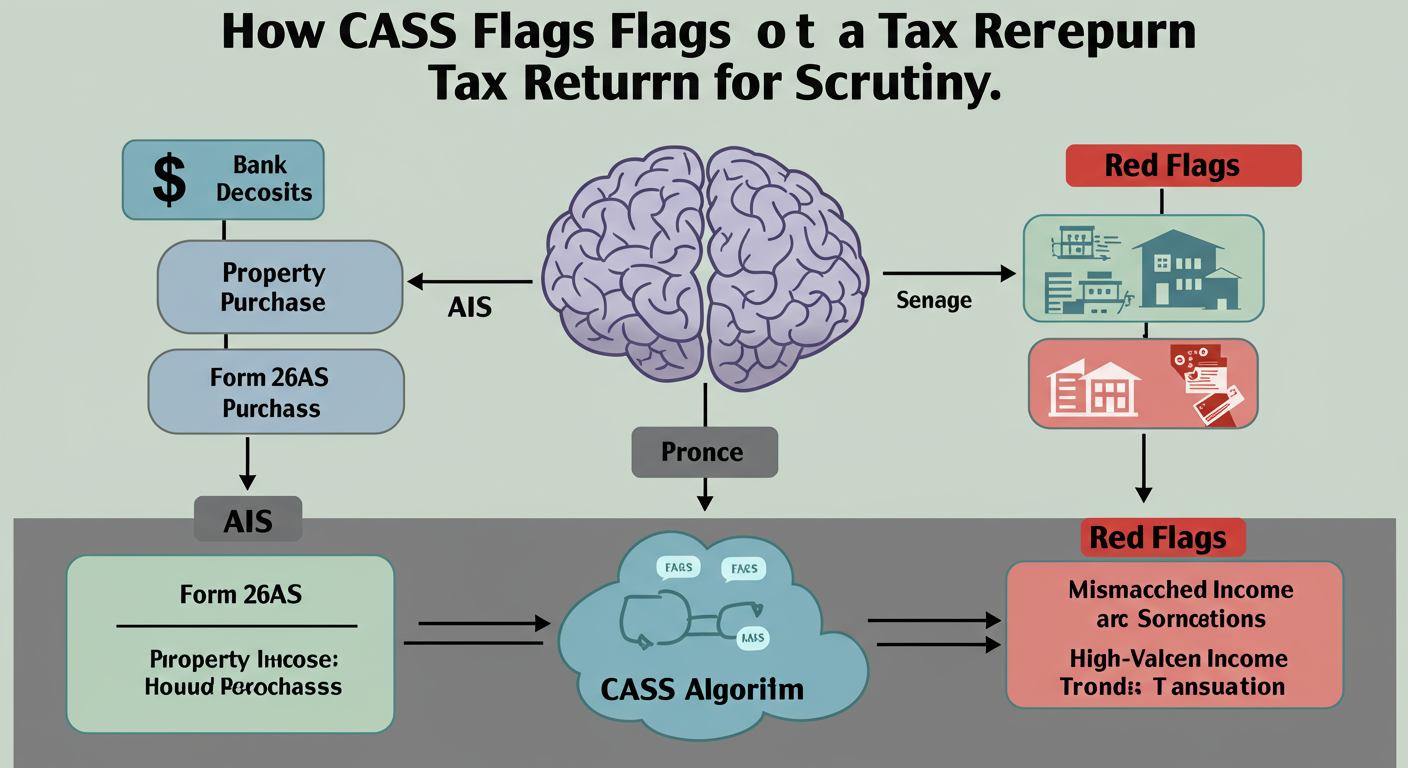
Getting picked for scrutiny isn’t just bad luck. The Income Tax Department uses a powerful algorithm-driven system called Computer Assisted Scrutiny Selection (CASS). It’s a sophisticated data-matching engine that cross-references your ITR with financial data collected from dozens of sources.
Think of it as a digital detective. It compares your declared income to your bank deposits, credit card spending, property purchases, and stock market transactions. When it finds a significant mismatch, it raises a red flag. Here are the most common triggers we see in 2026.
| Scrutiny Trigger | What It Means | Risk Level |
|---|---|---|
| High-Value Transactions | Large cash deposits, property deals, or credit card payments that don’t align with your declared income. This data comes from the Statement of Financial Transactions (SFT). | High |
| Mismatch with Form 26AS/AIS | Your ITR income doesn’t match the income reported in your Form 26AS (Tax Credit Statement) or Annual Information Statement (AIS). This is the most common trigger. | High |
| Drastic Income Changes | A sudden, unexplained spike or drop in income, or claiming a huge business loss for the first time. | Medium |
| Claiming Questionable Deductions | Claiming unusually high deductions (e.g., large donations, high HRA) without a clear history or justification. | Medium |
| Non-Filing in Previous Years | You had taxable income in past years but didn’t file a return. The system flags you when you eventually do file. | High |
| Manual Selection | Rare, but can happen if the department receives specific, credible information about potential tax evasion. Requires senior-level approval. | Very High |
💡 Pro Tip
Before filing your ITR each year, always download and review your Annual Information Statement (AIS) and Taxpayer Information Summary (TIS) from the income tax portal. This is the exact data the department uses to check your return. Reconciling your ITR with your AIS is the single best way to avoid scrutiny.
Types of Scrutiny: Know Your Battlefield
Not all scrutiny notices are created equal. The notice you receive under Section 143(2) will tell you the scope of the audit. Understanding which type you’re facing is critical for your response strategy.
| Assessment Type | Scope of Inquiry | What to Expect |
|---|---|---|
| Limited Scrutiny | The most common type. The inquiry is restricted to 1-3 specific points mentioned in the notice (e.g., “Verification of foreign travel expenses” or “Justification for housing loan interest claimed”). | You only need to provide documents and explanations for the specific queries raised. The AO cannot go beyond these points without converting it to a Complete Scrutiny. |
| Complete Scrutiny | A full-blown audit. The AO has the authority to examine every single item in your ITR, from income sources to every deduction and expense claimed. | Be prepared for a comprehensive review. The AO can ask for any document related to your finances for that year. This is more time-consuming and requires meticulous preparation. |
| Best Judgment Assessment (u/s 144) | This isn’t a scrutiny type, but a consequence of non-cooperation. If you ignore notices or fail to provide documents, the AO makes an assessment based on the information they have. | This almost always results in a high tax demand and penalties, as the AO will make assumptions that are not in your favor. This is the outcome you must avoid at all costs. |
⚠️ Watch Out
Never ignore a tax notice, no matter how minor it seems. Failure to respond to a notice under Section 143(2) is a green light for the Assessing Officer to initiate a Best Judgment Assessment. This moves the process from a verification exercise to a punitive one, and you lose the opportunity to present your side of the story.
The Scrutiny Gauntlet: Your Step-by-Step Survival Guide for 2026
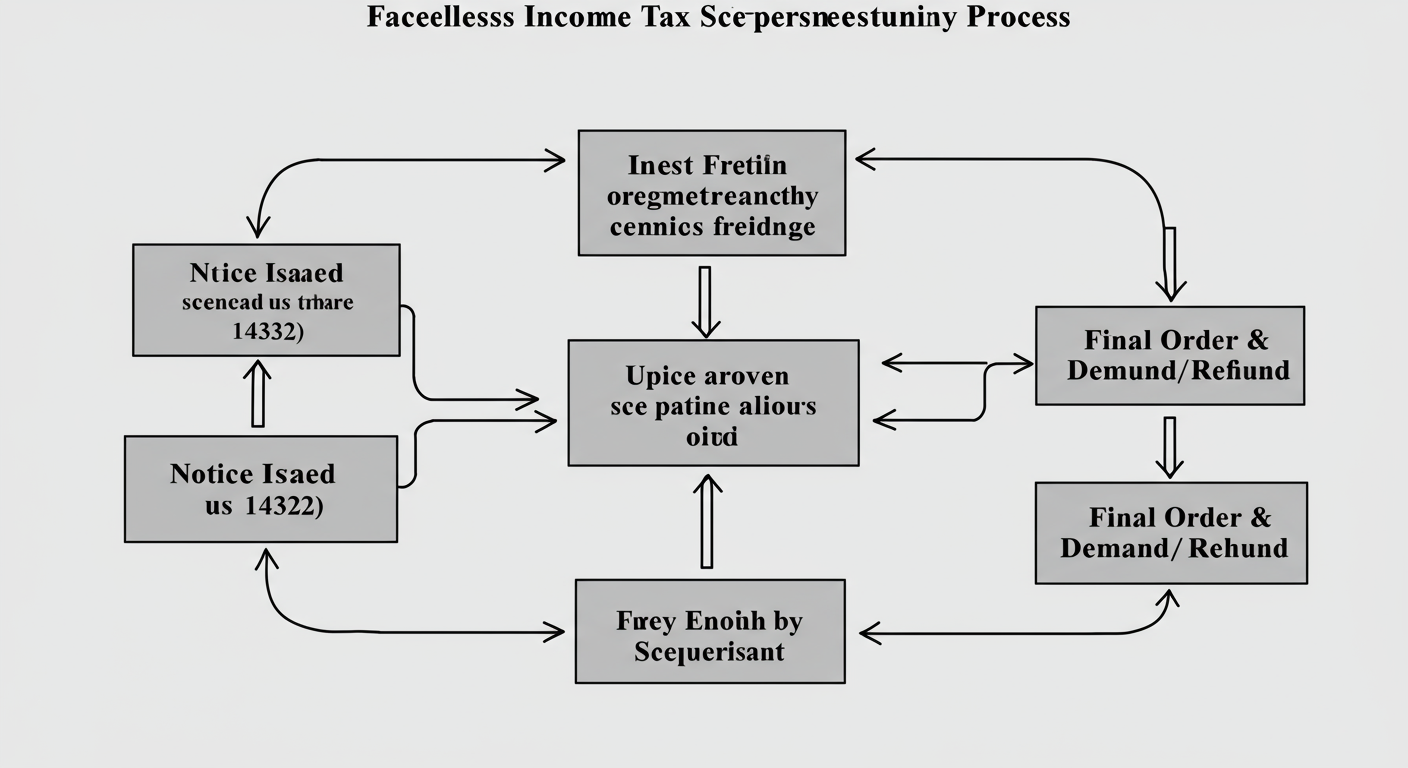
The entire scrutiny process is now conducted under the Faceless Assessment Scheme. This means all communication happens electronically via the official Income Tax e-filing portal. It’s designed for transparency and efficiency. Here’s how it unfolds.
- The Notice Arrives (u/s 143(2)): The process officially starts. You’ll receive a notice on your e-filing portal account. This must be issued within three months from the end of the financial year in which you filed the return. For an ITR filed in July 2025 (for FY 2024-25), the notice can come anytime up to June 30, 2026.
- Decode and Strategize: Read the notice carefully. Is it Limited or Complete Scrutiny? What are the specific queries? Check the Document Identification Number (DIN) on the portal to verify its authenticity. Note the deadline for your response. This is the moment to decide if you can handle this yourself or if you need to hire a tax professional.
- Gather Your Arsenal (Documents): This is where your record-keeping pays off. Start compiling digital copies of all relevant documents: bank statements, salary slips, investment proofs (like 80C), loan statements, capital gains calculations, rent receipts, etc. Organize them into a folder for easy access.
- Craft Your Response: Log in to the e-filing portal and navigate to the ‘e-Proceedings’ section. Draft a clear, point-by-point reply to each query. Be factual and concise. Attach the supporting documents you gathered in the previous step. Your goal is to make the AO’s job easy.
- The Digital Hearing: The AO will review your submission. If they are satisfied, the case may be closed. If they need more information, they will issue another notice or questionnaire through the portal. You must respond promptly. In complex cases, they may schedule a video conference hearing.
- The Final Order (u/s 143(3)): After the examination is complete, the AO passes a final assessment order. This order will state one of two things:
- Income Accepted: Your filed return is accepted as is. No change in tax liability.
- Additions/Disallowances Made: The AO has made changes, resulting in a higher taxable income. The order will detail every reason for the changes.
- Post-Assessment Reality: If there are additions, a demand notice will be issued for the extra tax, interest, and potential penalties. If the assessment results in a refund, it will be processed.
🎯 Key Takeaway
An income tax scrutiny assessment is a marathon, not a sprint. Success hinges on two things: meticulous record-keeping before you file, and a calm, organized, and timely response after you receive a notice. Proactive preparation is your best defense.
How to Respond Like a Pro (Even If You’re Panicking)
Okay, you understand the process. But how do you actually write the response? It’s less about legal genius and more about clear communication.
First, Acknowledge Promptly
Don’t wait until the last day. Log in and acknowledge the notice. If you need more time to gather documents, you can file a request for an adjournment through the portal. Providing a valid reason (e.g., “awaiting bank statement,” “traveling for work”) is usually accepted once.
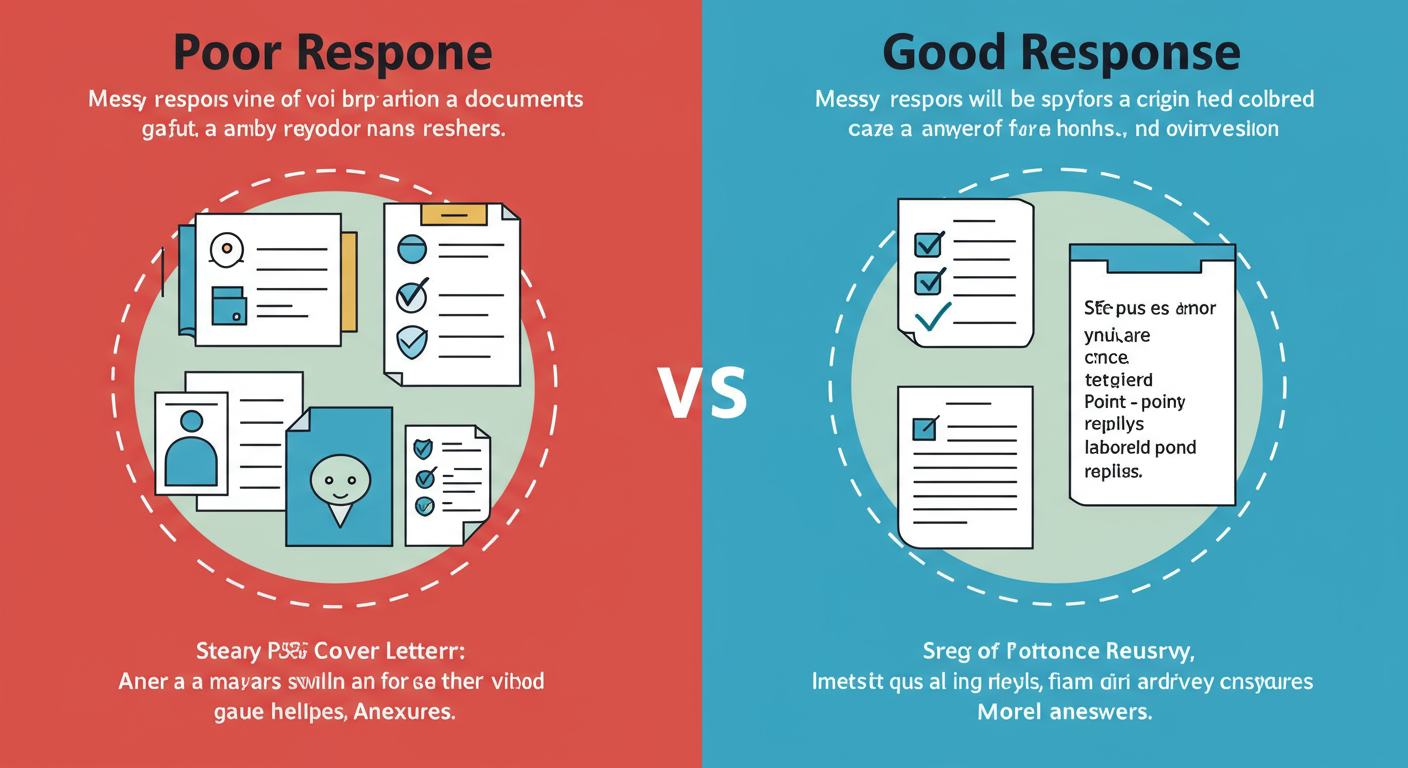
Structure Your Reply Logically
Create a single PDF document for your response. Start with a cover letter that lists the queries from the notice. Then, address each query one by one, providing your explanation and referencing the attached evidence. Understanding the TDS Late Filing Penalty: Section 234E Fees and Section 271H Consequences
Example:
Query 1: Mismatch in interest income reported.
Our Response: The interest income of Rs. 50,000 has been correctly reported. The mismatch may be due to… Please find attached the bank statements and Form 16A as Annexure A.
10 Impactful Income Tax Reforms in the 2025 Indian Union Budget
Be Honest and Factual
Never lie or forge documents. It’s a criminal offense. If you made a genuine mistake, admit it. For instance, “The discrepancy in interest income was an oversight. I accept the addition of the differential amount of Rs. 5,000 to my taxable income.” Honesty is often treated with more leniency than deceit.
💡 Pro Tip
When should you hire a professional (like a Chartered Accountant)? If the notice is for a Complete Scrutiny, involves complex business income, capital gains on property, or if the potential tax demand is significant, it’s wise to get expert help. Their experience in drafting technical replies and representing cases can be invaluable.
⚠️ Watch Out
A common mistake is “volunteering” information. Only answer the specific questions asked in the notice. Providing extra documents or explanations on topics not under scrutiny can inadvertently open up new lines of inquiry for the Assessing Officer. Stick to the script.
Your Document Fortress: The Ultimate Checklist
Being organized is your superpower. According to tax law, you should keep records for at least 6 years after the end of the relevant assessment year. Here’s what your digital “scrutiny folder” should contain:
- Proof of Income: Form 16/16A, salary slips, business profit & loss statements, all bank account statements (savings, current, NRO).
- Investment Proofs (Chapter VI-A): E-receipts for PPF, ELSS, life/health insurance premiums, children’s tuition fees, and donation receipts (80G).
- Capital Gains: For property sales, keep the purchase deed, sale deed, and proof of improvement costs. For stocks/mutual funds, keep broker contract notes and summary statements.
- Loan Documents: Annual interest statements for home loans (for Section 24 and 80C claims) and education loans (for 80E claims).
- HRA Claims: Rent receipts or rental agreement. If the annual rent exceeds Rs. 1 lakh, you also need the landlord’s PAN.
Trust me on this one: spending a few hours organizing these documents each year will save you dozens of hours of stress if a scrutiny notice ever arrives.
Conclusion: From Panic to Control
An income tax scrutiny assessment doesn’t have to be a nightmare. It’s a structured, logical process that you can manage effectively. By understanding why you were selected, knowing the steps involved, and responding with organized, honest information, you shift from a position of fear to one of control.
Remember the core principles: file your taxes accurately by reconciling with your AIS, keep meticulous digital records, and never ignore a notice. Treat the process as a request for verification, and you’ll navigate it successfully.
Your next step? Don’t wait for a notice. Start today by organizing your financial documents for the last two years into clear, labeled digital folders. This single act of preparation is the most powerful move you can make for your financial peace of mind.
❓ Frequently Asked Questions
What’s the time limit for the tax department to issue a scrutiny notice?
A notice for scrutiny assessment under Section 143(2) must be served within three months from the end of the financial year in which the return was filed. For example, for an ITR filed for FY 2024-25 (AY 2025-26) by July 31, 2025, the notice can be issued up to June 30, 2026.
Can I revise my ITR after getting a scrutiny notice?
No. Once a scrutiny notice under Section 143(2) is issued, you cannot file a revised return for that assessment year. The assessment will proceed based on the original return you filed. Any corrections or explanations must be submitted during the assessment proceedings themselves.
What happens if I ignore a scrutiny notice?
Ignoring a notice is the worst thing you can do. The AO will complete the assessment ex-parte, known as a “Best Judgment Assessment” under Section 144. They will determine your tax liability based on all adverse information available to them, likely resulting in a high tax demand, interest, and a penalty for non-compliance under Section 272A.
Is a tax scrutiny the same as a tax raid?
Absolutely not. They are very different. A scrutiny is a remote, digital examination of your tax filings. A tax survey (u/s 133A) involves tax officials visiting your business premises to inspect books. A tax raid or search (u/s 132) is a far more serious and intrusive action based on solid intelligence of large-scale tax evasion, involving searches of multiple premises. For a deep dive into these powers, you can refer to the official Income Tax Act, 1961.
How long does a scrutiny assessment usually take to complete?
The time limit for completing a scrutiny assessment is set by law. According to guidelines from the Central Board of Direct Taxes (CBDT), the assessment order must typically be passed within 12 months from the end of the assessment year in which the income was first assessable. For example, for AY 2025-26, the order should be passed by March 31, 2027. However, based on our experience, most faceless assessments are concluded much faster, often within 6-9 months from the first notice.
Is it possible to have zero additions after a scrutiny?
Yes, absolutely. If your ITR is accurate and you provide clear, satisfactory explanations and documents for all the queries raised by the AO, the case will be closed with “Nil” additions. The AO will pass an order accepting the income as returned by you. This is a very common outcome for well-prepared taxpayers.