
It’s late August. You’re a successful business owner, but a knot is tightening in your stomach. The thought of tax deadlines looms, and one, in particular, feels like a ticking time bomb: the tax audit report.
Did you cross the turnover threshold? Are your books in order? What if you miss the deadline?
This isn’t just administrative paperwork. Missing the income tax audit report due date can trigger staggering penalties and put your business under a microscope. But it doesn’t have to be this way. After guiding hundreds of businesses through this exact process, I can tell you that compliance is all about proactive preparation, not last-minute panic.
This article isn’t another dry summary of tax law. It’s your strategic playbook. You’ll learn exactly who needs an audit in 2026, the critical deadlines you can’t afford to miss, and the step-by-step process to make your next tax audit completely stress-free.
What is a Tax Audit, Really? (Beyond the Textbook Definition)
Let’s get one thing straight. A tax audit, mandated by Section 44AB of the Income Tax Act, 1961, isn’t an accusation. It’s a verification process. Think of it as a financial health check-up performed by an independent Chartered Accountant (CA).
The CA’s job is to examine your books of accounts and certify that your financial records are accurate and that you’ve followed the provisions of the Income Tax Act. The findings are submitted in a formal tax audit report.
Why does the government insist on this? Trust. An audited account gives the Income Tax Department confidence in your filed return, which often leads to a smoother, faster assessment process. It’s a seal of credibility on your financial reporting.
In essence, a tax audit acts as a bridge of trust between you and the tax authorities, ensuring transparency and accuracy in your financial declarations.
Do You Need a Tax Audit? The 2026 Litmus Test Under Section 44AB
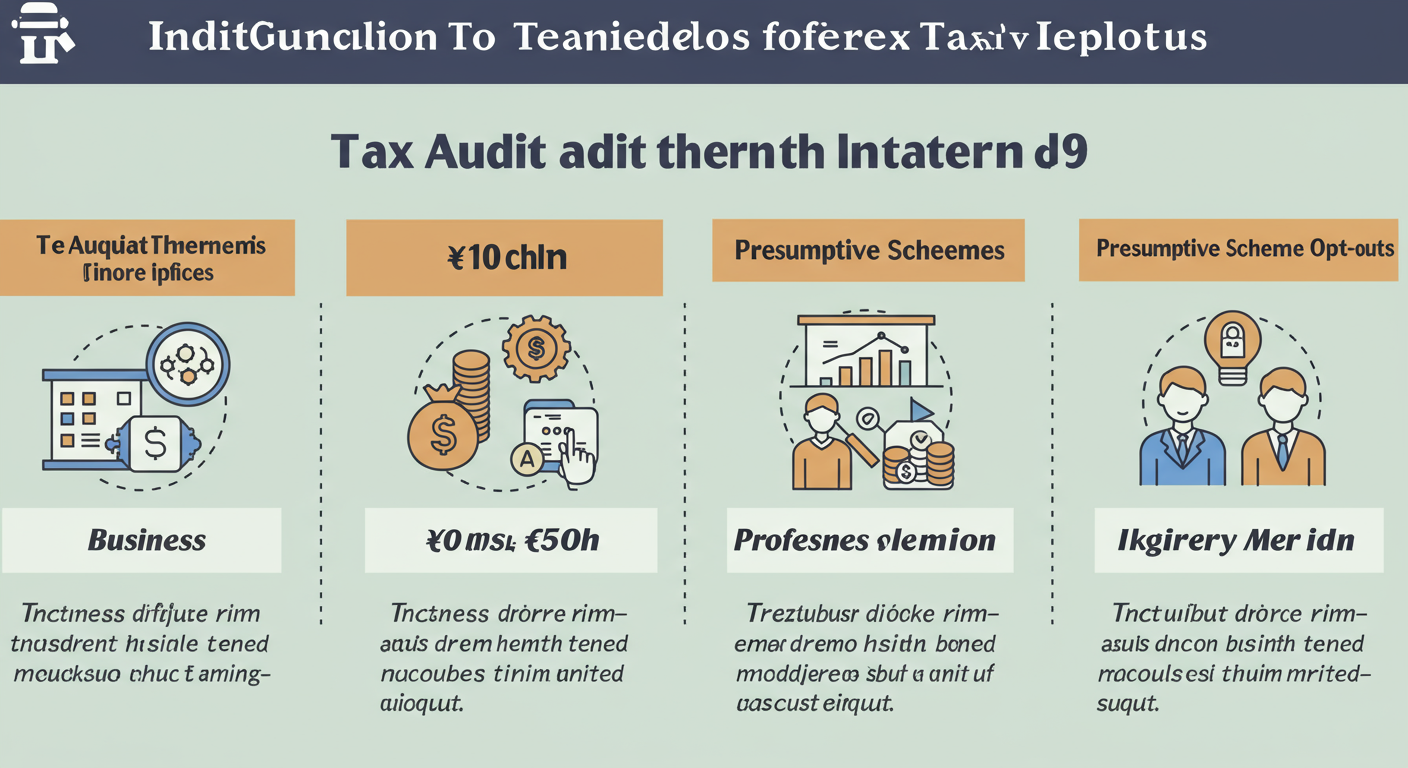
This is the million-rupee question. Not everyone needs an audit. The requirement hinges on your turnover (for businesses) or gross receipts (for professionals) in the Financial Year 2025-26 (which corresponds to the Assessment Year 2026-27).
Let’s break down the thresholds. It’s simpler than you think.
| Taxpayer Category | Turnover / Gross Receipts Threshold for FY 2025-26 | Key Conditions & Exceptions |
|---|---|---|
| Business | Exceeds ₹1 crore | The threshold increases to ₹10 crore IF cash receipts AND cash payments are 5% or less of total receipts/payments. This is a major incentive for digital transactions. |
| Profession | Exceeds ₹50 lakh | Applies to specified professions like legal, medical, engineering, accountancy, architecture, etc. |
| Business (Presumptive Scheme) | Claims profits are lower than the presumed rate (6% or 8% under Sec 44AD) | Audit is mandatory only if you opt out of the presumptive scheme, claim lower profits, AND your total income exceeds the basic exemption limit. |
| Profession (Presumptive Scheme) | Claims profits are lower than the presumed 50% under Sec 44ADA | Similar to the business scheme, an audit is required if you claim lower profits AND your total income is above the basic exemption limit. |
⚠️ Watch Out
The ₹10 crore threshold for businesses is a common point of confusion. Both conditions must be met: cash receipts must be ≤ 5% of total receipts, and cash payments must be ≤ 5% of total payments. If even one of these conditions is breached, the lower ₹1 crore limit applies. We’ve seen businesses miscalculate this and face unexpected audit requirements.
The All-Important Deadlines for AY 2026-27: Mark Your Calendar
Okay, you’ve determined you need an audit. Now, let’s talk dates. There are two separate deadlines you must know: one for the audit report and one for your Income Tax Return (ITR).
For the Assessment Year 2026-27, the key dates are:
- Income Tax Audit Report Due Date: 30th September 2026
- Income Tax Return (ITR) Filing Due Date: 31st October 2026
Notice the gap? You must file your audit report first. The ITR filing portal won’t even let you submit your return as an “audited” case without the audit report’s acknowledgement number. They are sequential. Don’t mix them up.
💡 Pro Tip
While the official deadline for the ITR is October 31st, best practice is to file it within a day or two of your CA uploading the audit report. This prevents any last-minute portal glitches or unforeseen issues from causing you to miss the ITR deadline, which carries its own set of penalties.
Here’s how the deadlines stack up for different taxpayers:
| Taxpayer Category | Tax Audit Report Due Date (AY 2026-27) | ITR Filing Due Date (AY 2026-27) |
|---|---|---|
| Individuals & Businesses (Not requiring an audit) | Not Applicable | 31st July 2026 |
| Businesses & Professionals (Requiring an audit under Sec 44AB) | 30th September 2026 | 31st October 2026 |
| Taxpayers with Transfer Pricing Audit (Sec 92E) | 30th November 2026 | 30th November 2026 |
A quick note on extensions: Yes, the Central Board of Direct Taxes (CBDT) sometimes extends these dates. However, relying on an extension is a terrible business strategy. Plan for the statutory deadlines. Any extension should be treated as a bonus, not a plan. Always verify extension news on the official Income Tax Department portal.
Anatomy of the Audit Report: Decoding Forms 3CA, 3CB, and 3CD
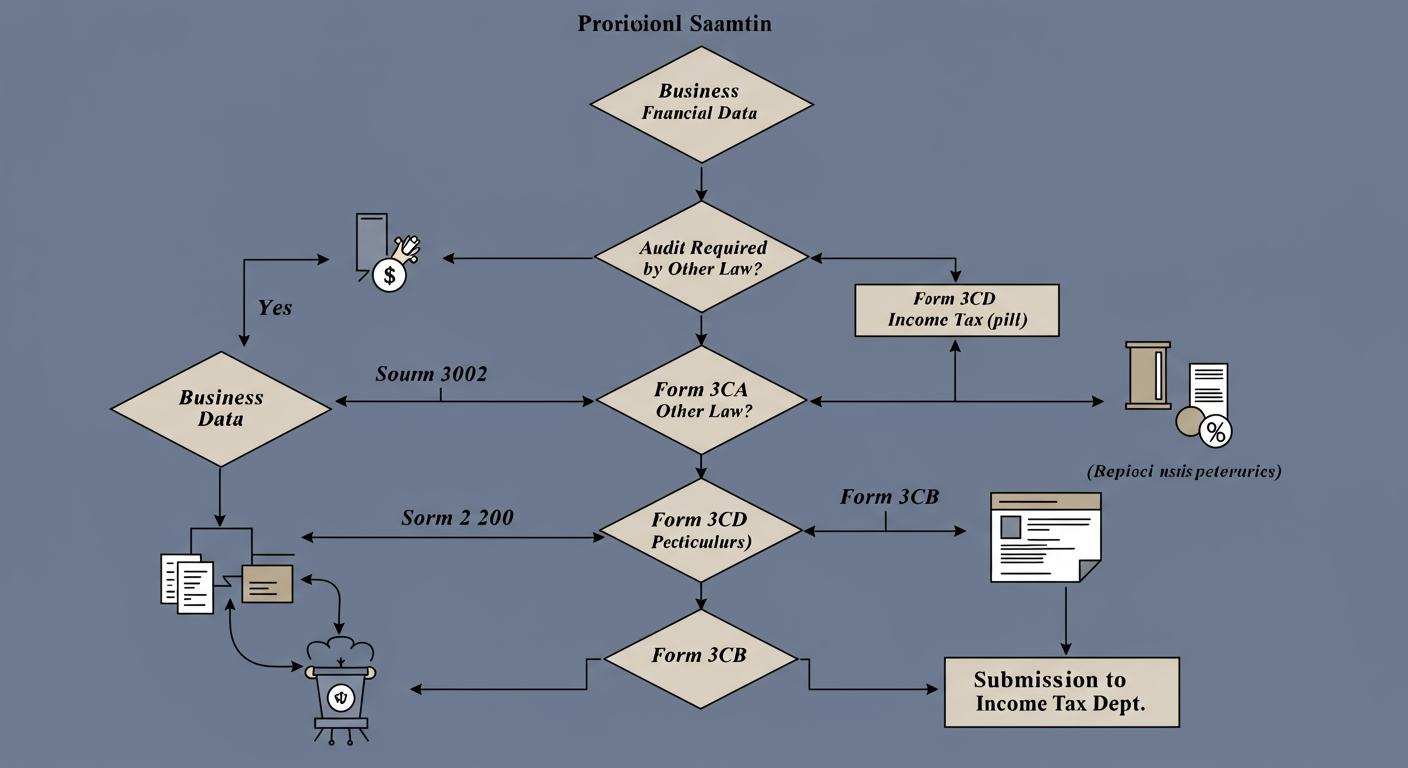
The “tax audit report” isn’t one single document. It’s a package. The main components are:
- Form 3CA or 3CB: This is the auditor’s summary statement.
- Form 3CA: Used if your business is already required to be audited under another law (e.g., a company under the Companies Act, 2013).
- Form 3CB: Used if your audit is required only under the Income Tax Act (e.g., for a proprietorship or partnership firm).
- Form 3CD: This is the heart of the audit. It’s a detailed statement with 44 clauses where the auditor provides specific information about your finances and compliance.
Honestly, Form 3CD is what matters most. It’s a comprehensive checklist for the tax department, covering everything from depreciation claims and loans to TDS compliance and GST details. A clean, well-documented Form 3CD is your ticket to a smooth assessment. The Ultimate LLP Annual Compliance Checklist for Indian Businesses 2024-2025
The High Cost of Delay: Penalties Under Section 271B
What happens if you miss the September 30th deadline? The consequences are direct and painful, as laid out in Section 271B. Master GST Liability Calculation: 7-Step Guide (2025)
The penalty for failing to get your accounts audited or failing to furnish the report on time is the lower of:
- 0.5% of your total sales, turnover, or gross receipts.
- A fixed sum of ₹1,50,000.
Let’s run a scenario. Your business turnover for FY 2025-26 was ₹2.5 crore. You missed the audit deadline.
- Calculation 1: 0.5% of ₹2.5 crore = ₹1,25,000
- Calculation 2: The fixed cap is ₹1,50,000
The penalty would be ₹1,25,000. That’s a significant hit to your bottom line for what is essentially a process failure. It’s a completely avoidable expense.
⚠️ Watch Out
Taxpayers often hope to be saved by the “reasonable cause” provision (Section 273B). Trust me on this one: the bar for ‘reasonable cause’ is extremely high. Resignation of your accountant, being too busy, or portal glitches on the last day are almost never accepted. It usually requires something catastrophic and well-documented, like a fire destroying records or the sudden death of the key person responsible.
🎯 Key Takeaway
The income tax audit is a critical compliance step with strict deadlines. The penalty for missing the September 30, 2026, deadline is severe but 100% avoidable through proactive planning and year-round financial discipline.
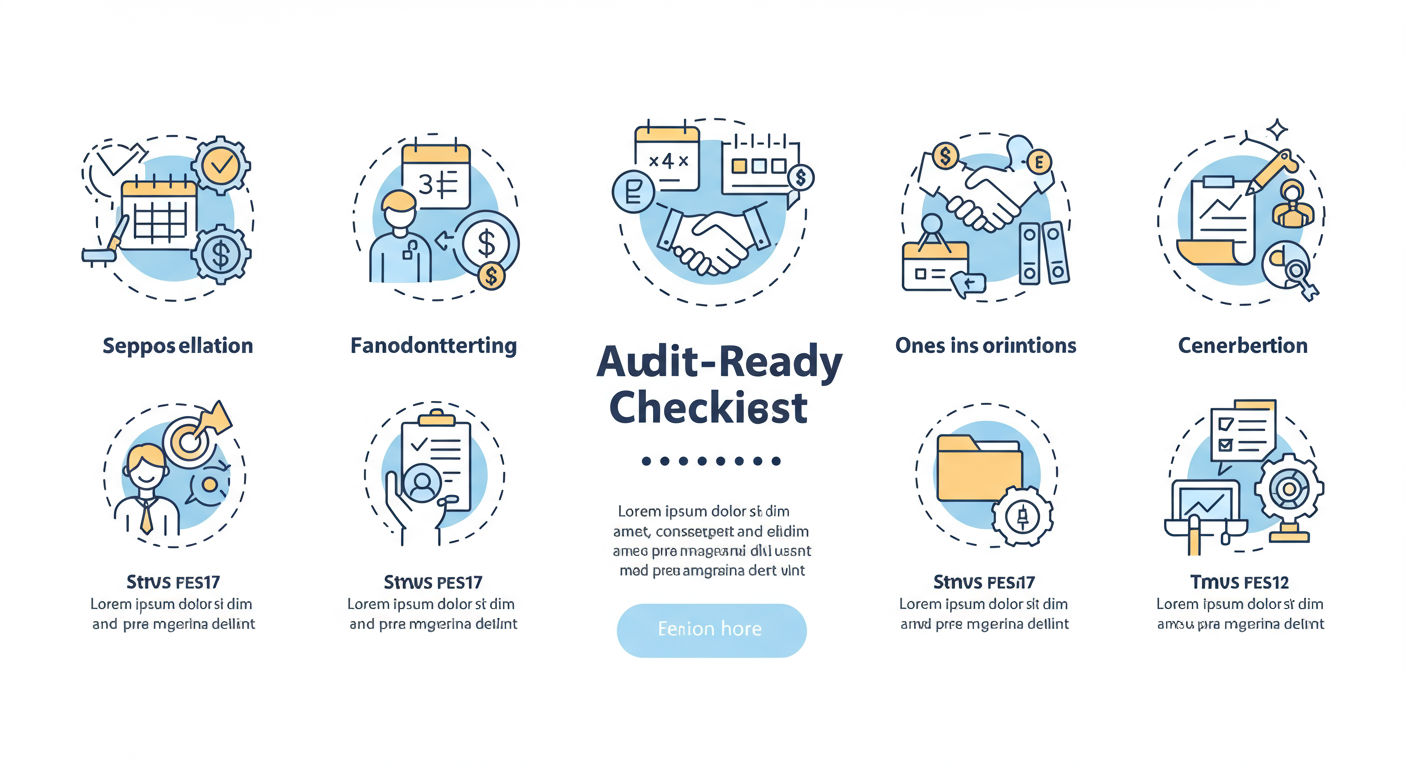
Your Proactive 7-Step Audit-Ready Checklist
Meeting the deadline isn’t a September activity; it’s a year-long discipline. Based on real-world campaigns and client experiences, here is a battle-tested checklist to ensure you’re always prepared.
- Maintain Impeccable Records Daily. This is non-negotiable. Use modern accounting software. Record every invoice, expense, and bank transaction as it happens. Don’t let it pile up.
- Reconcile Everything, Monthly. At the end of each month, reconcile your bank statements, credit card statements, and your GST returns (GSTR-1 and 3B) against your books. Catching a discrepancy in May is easy; finding it in September is a nightmare.
- Engage Your CA by June. Seriously. Don’t be the person calling a CA on September 1st. Appoint your auditor well in advance. This gives them time to understand your business, ask intelligent questions, and conduct a thorough audit without rushing.
- Create a “Digital Due Diligence” Folder. Throughout the year, save copies of all major contracts, loan agreements, asset purchase invoices, and legal documents into a single, organized cloud folder. Share this with your auditor to save dozens of back-and-forth emails.
- Conduct a Pre-Audit Review. In July, sit with your accountant and review the year’s financials. Look for unusual spikes in expenses, large cash transactions, or unreconciled items. It’s better for you to find them before your auditor does.
- Be Radically Transparent. Your CA is on your team. If there’s a gray area or a transaction you’re unsure about, bring it to their attention. Hiding information is the fastest way to create problems and delays.
- Schedule the Final Review. Once the auditor has a draft report, schedule a call to walk through it. Understand their observations and ensure all the information in Form 3CD is correct before they upload it.
💡 Pro Tip
Leverage your accounting software. Create specific tags or categories like “Auditor_Query” or “Fixed_Asset_Purchase”. When you record a transaction that you know will be scrutinized (like a large capital purchase or an unusual expense), tag it. At year-end, you can generate a report of all tagged items for your CA, saving immense time.
❓ Frequently Asked Questions
What is the income tax audit report due date for AY 2026-27?
For most taxpayers requiring an audit under Section 44AB, the due date to furnish the tax audit report for the Assessment Year 2026-27 is 30th September 2026.
Is the tax audit due date the same as the ITR filing due date?
No. For taxpayers subject to an audit, the audit report is due by September 30, 2026. The corresponding Income Tax Return (ITR) is due one month later, by 31st October 2026. You must file the audit report first.
What if my cash transactions are just over the 5% limit?
The 5% rule for the ₹10 crore turnover threshold is a strict cliff. If your cash receipts are 5.1% of total receipts, the higher threshold does not apply, and you fall back to the standard ₹1 crore limit for a business audit. It’s critical to monitor this ratio throughout the year. For more on tax law nuances, the history and structure of the Income Tax Act provides useful context.
What happens if I file the audit report on time but miss the ITR deadline?
You won’t face the penalty for a late audit report (u/s 271B). However, you will face all the consequences of late ITR filing, including a late filing fee (u/s 234F) and, more importantly, the inability to carry forward most business losses to future years.
Who can perform a tax audit?
Only a practicing Chartered Accountant who holds a valid Certificate of Practice from the Institute of Chartered Accountants of India (ICAI) is authorized to conduct a tax audit under Section 44AB and sign the report.
Conclusion: From Deadline Dread to Confident Compliance
The income tax audit report due date isn’t a finish line you sprint towards in a panic. It’s a milestone in a year-long journey of good financial governance.
We’ve covered the critical ground: identifying if you need an audit, understanding the non-negotiable 2026 deadlines, and the steep cost of getting it wrong. More importantly, you now have a strategic, step-by-step checklist to transform this annual obligation from a source of stress into a simple, streamlined process.
Stop thinking about tax compliance as a burden. Start seeing it as a reflection of a well-run, organized, and successful business.
Your next step? Don’t just bookmark this page. Open your calendar, check your turnover for the last financial year, and if you’re even close to the thresholds, schedule a meeting with your CA. Do it this week. Your future self in September will thank you.