Navigating the Digital Marketplace: GST Registration for Ecommerce Sellers India
The digital revolution in India has transformed how we shop, sell, and conduct business. As we move into 2026, the e-commerce landscape continues to flourish, offering unprecedented opportunities for small and medium enterprises. However, with these opportunities comes a robust regulatory framework. Obtaining GST registration for ecommerce sellers India is no longer just a legal formality; it is a strategic necessity for anyone looking to scale their business across platforms like Amazon, Flipkart, or their own Shopify stores. In this comprehensive guide, we will explore the nuances of registration, the impact of Tax Collected at Source (TCS), and the latest compliance requirements for the upcoming year.
For most entrepreneurs, the journey begins with understanding that the rules for online selling differ significantly from traditional brick-and-mortar stores. While a local shop might enjoy a threshold exemption of up to ₹40 lakhs, the digital realm operates under stricter mandates, especially when interstate transactions are involved. Ensuring your E-commerce GST compliance is up to date is the first step toward building a sustainable brand in 2026.
Why You Need GST Registration for Ecommerce Sellers India in 2026
The primary driver behind the mandatory nature of GST for online sellers is the concept of ‘Interstate Supply.’ Under the GST Act, any person making an interstate taxable supply must register, regardless of their annual turnover. Since most e-commerce platforms facilitate sales across state borders, the threshold exemption of ₹20 lakhs or ₹40 lakhs usually does not apply to online vendors.
Furthermore, the government has integrated various systems to track digital footprints. By 2026, the synchronization between the GST portal and e-commerce marketplace data will be even more seamless. Failing to have a valid GST registration for ecommerce sellers India can lead to the immediate suspension of your seller accounts on major marketplaces. It also prevents you from claiming Input Tax Credit (ITC), which is essential for maintaining healthy profit margins.
Mandatory Registration
Required for all sellers making interstate supplies, regardless of turnover, ensuring legal entry into the national market.
Input Tax Credit
Registered sellers can claim credit for taxes paid on purchases, effectively reducing their overall tax liability and costs.
Marketplace Access
Top-tier platforms require a GSTIN to list products, manage inventory, and process payments for sellers.
Mandatory vs Threshold-based GST Registration for Ecommerce Sellers India
It is a common misconception that every small seller needs GST from day one. In recent years, the GST council 54th meeting highlights have touched upon simplifying norms for small taxpayers. However, the rule remains: if you sell within your own state (intrastate) and your turnover is below the specified limit, you might be exempt. But the moment a customer from another state clicks ‘buy,’ you fall under the mandatory registration category. For most sellers aiming for growth, securing GST registration for ecommerce sellers India early is the safest path to avoid legal hurdles.
Step-by-Step Process for GST Registration for Ecommerce Sellers India
The registration process has become increasingly digitized and user-friendly. By 2026, the use of AI-driven verification and Aadhaar-based authentication has further streamlined the timeline. Here is how you can navigate the process:
- Documentation Preparation: Gather your PAN card, Aadhaar card, proof of business address (like a rental agreement or utility bill), and bank account details.
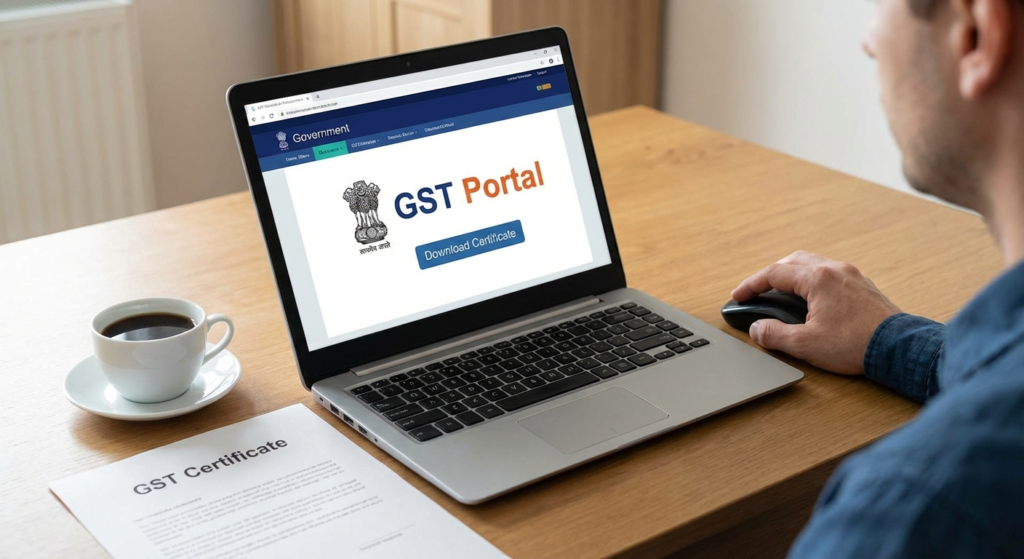
- TRN Generation: Visit the official GST Portal and generate a Temporary Reference Number (TRN) using your mobile and email.
- Application Submission: Log in with your TRN and fill out the detailed application, including business details, goods/services categories, and authorized signatory info.
- Verification: Complete the Aadhaar authentication. This is a critical step that often determines how quickly your GSTIN is approved.
- Approval: Once the GST officer verifies the documents, you will receive your GST Identification Number (GSTIN) and Registration Certificate.
It is important to note that the address used for registration must be a ‘Place of Business.’ Many e-commerce sellers use a Virtual Office or a shared warehouse space, which must be properly documented to avoid rejection during the GST registration for ecommerce sellers India process.
Understanding TCS: Tax Collected at Source in E-commerce
One of the unique aspects of the e-commerce tax regime is Section 52 of the CGST Act, which deals with Tax Collected at Source (TCS). Marketplace operators (like Amazon or Flipkart) are required to collect 1% tax (0.5% CGST + 0.5% SGST or 1% IGST) on the net value of taxable supplies made through their platform.
This mechanism ensures that the government tracks every transaction. As a seller, the TCS collected by the marketplace is not a cost but a credit. Once the marketplace operator files their returns, this amount reflects in your electronic cash ledger, which you can use to pay your monthly GST liability. This interconnectedness makes GST registration for ecommerce sellers India vital for cash flow management.
The Role of GSTR-8 in E-commerce Transactions
While sellers file GSTR-1 and GSTR-3B, the marketplace operator is responsible for filing GSTR-8. This return contains details of all supplies made through the platform and the amount of TCS collected. For a seller, reconciling your sales data with the GSTR-8 filed by the platform is a monthly ritual. Discrepancies can lead to notices from the tax department, so maintaining accurate records of returns and cancellations is paramount.
Compliance Roadmap: Filing Returns for GST Registration for Ecommerce Sellers India
Once you have obtained your GSTIN, the journey of compliance begins. Regular filing is non-negotiable to maintain a good compliance rating, which can affect your ability to get business loans or participate in government tenders. For e-commerce sellers, the filing cycle usually involves:
- GSTR-1: This is where you report your outward supplies (sales). It must be filed by the 11th of the following month (for monthly filers).
- GSTR-3B: This is a summary return where you calculate your tax liability, claim ITC, and pay the remaining tax. It is usually filed by the 20th of the following month.
- Annual Return (GSTR-9): A consolidated return of all monthly/quarterly filings done during the financial year.
For more details on professional compliance and related taxes, you might want to look into TDS on professional fees if you hire consultants or digital marketers for your e-commerce growth.
Monthly Reconciliation
Always match your sales reports from the marketplace with your GSTR-1 to ensure no transaction is missed.
Manage Returns
E-commerce has high return rates. Ensure credit notes are issued correctly to adjust your tax liability.
State-wise Records
Keep track of which states you are shipping to, as this determines whether you pay CGST/SGST or IGST.
Common Challenges and Best Practices for 2026
As we look toward 2026, the complexity of managing multiple warehouses (Additional Places of Business) and international shipping is increasing. Many sellers struggle with ‘Place of Supply’ rules. For instance, if you are registered in Karnataka but ship from a warehouse in Haryana, the tax implications change. Always ensure that every warehouse you use is added to your GST registration for ecommerce sellers India certificate.
Another challenge is the reconciliation of TCS. Since marketplaces deduct TCS on the net value (Sales minus Returns), your accounting software must be robust enough to handle these subtractions. Experts suggest using automated GST software that integrates directly with marketplace APIs to minimize human error.
According to the Central Board of Indirect Taxes and Customs (CBIC), maintaining transparency in digital transactions is a top priority. Sellers who proactively manage their filings and resolve discrepancies quickly will find it much easier to navigate the regulatory environment of 2026.
Conclusion: Future-Proofing Your E-commerce Business
In conclusion, GST registration for ecommerce sellers India is the cornerstone of a legitimate online business. While the initial setup and monthly filings might seem daunting, they provide a structured framework that protects both the seller and the consumer. By staying compliant, you not only avoid heavy penalties but also unlock the benefits of the Input Tax Credit, making your products more competitive in a crowded market. As the e-commerce sector continues to evolve with new technologies and platforms, being tax-compliant ensures that your business remains resilient and ready for the growth opportunities that 2026 and beyond will bring.
FAQs
Yes, for most categories and especially for interstate sales, marketplaces require a GSTIN to register as a seller. Only certain GST-exempt categories like books might have different rules, but even then, GST is generally recommended for business scaling.
The Tax Collected at Source (TCS) rate is currently 1% of the net taxable value of supplies. This is collected by the marketplace operator and can be claimed as a credit by the seller.
Yes, you can use your residential address as your principal place of business, provided you have the necessary documents like an electricity bill and a No Objection Certificate (NOC) from the owner or a rental agreement.
Late filing attracts interest and late fees. Furthermore, persistent non-compliance can lead to the cancellation of your GSTIN and being blacklisted by e-commerce platforms.
The marketplace files GSTR-8, and the TCS amount reflects in your ‘TCS Cash Ledger’ on the GST portal. You can accept these records and the amount will be credited to your electronic cash ledger, which can be used to pay taxes.
If you maintain inventory (warehouses) in multiple states, you generally need a separate GST registration for each state where you have a physical place of business.
Read Also:
- Filing DPT-3 Form (MCA): Return of Deposits Guide
- One Person Company Registration India Process: A Comprehensive 2026 Guide
- Complete Guide: How to Close a Private Limited Company in India (STK-2 Fast Track)
- Comprehensive Guide to CBDT Changes in Form 3CD for A.Y. 2024-25
- 7 Steps to Master the GST Return Filing Process in India (2024 Guide)