You double-check the GST payment details, hit ‘submit,’ and then your stomach drops. You just paid ₹10,00,000 instead of ₹1,00,000. A simple typo has locked up a huge chunk of your working capital.
Sound familiar? It’s a surprisingly common nightmare for businesses across India. That excess cash isn’t lost forever, but it’s not coming back on its own. It’s stuck in your Electronic Cash Ledger (ECL), and the government has a specific, non-negotiable process for you to claim it back.
Forget confusing jargon and dense legal text. This is your 2026 masterclass on the GST refund claim process for excess payment. We’ll walk you through every step of filing Form RFD-01, share insider tips to avoid rejection, and show you how to get your money back where it belongs: in your bank account.
Why GST Excess Payments Happen (And the Real Cost)
Mistakes happen. In the world of GST, they usually happen late at night, right before a filing deadline. But understanding why an error occurred is the first step to building a bulletproof refund claim. Based on our experience handling hundreds of these cases, the culprits are almost always the same.
It’s not just about the money, either. It’s about cash flow. Every rupee sitting idle in your ECL is a rupee you can’t use for payroll, inventory, or growth. Getting it back quickly is a strategic business move.
Here are the most common scenarios we see play out:
- The “Fat Finger” Error: The classic typo. You intended to pay ₹50,000 but accidentally paid ₹5,00,000. It’s the most straightforward cause but requires clear proof.
- The “Wrong Head” Shuffle: You owed IGST but paid the amount under CGST and SGST by mistake. Now you have a deficit in one ledger and a surplus in another. You can’t just “move” the money; you have to pay the correct tax and then claim a refund of the wrong payment.
- The Double-Tap Glitch: A payment portal timed out, so you tried again. Turns out, both payments went through. Now you’ve paid the same liability twice.
- The Post-Appeal Windfall: You made a mandatory pre-deposit to file a GST appeal. The good news? You won the case! The bad news? That deposit is now an excess balance you need to formally claim.
⚠️ Watch Out
You cannot use the excess balance in one tax head (e.g., CGST) to offset the liability in another (e.g., IGST). The GST portal’s ledgers are strictly segregated. Your only option is to pay the correct liability and then file a refund claim for the amount paid in error.
The Pre-Filing Checklist: Your Foundation for Success
Before you even log in to the GST portal, a little prep work can be the difference between a refund in 30 days and a rejection notice. Don’t skip this. Trust me on this one.
- Confirm the Balance: Log in and check your Electronic Cash Ledger. Does the balance you think is there actually reflect on the portal? Verify the exact amounts under each head (IGST, CGST, SGST, Cess).
- Gather Your Evidence: This is non-negotiable. You need a paper trail.
- The incorrect payment challan (PMT-06).
- Your bank statement showing the debit.
- If you paid the correct tax separately, the challan for that payment.
- A draft of your explanation letter (we’ll cover this later).
- Check the Clock: According to Section 54 of the CGST Act, you have two years from the “relevant date” to file a refund claim. For excess payments, this is simply the date you made the payment. Don’t wait until month 23. Start now.
Filing Form RFD-01: A Step-by-Step Walkthrough
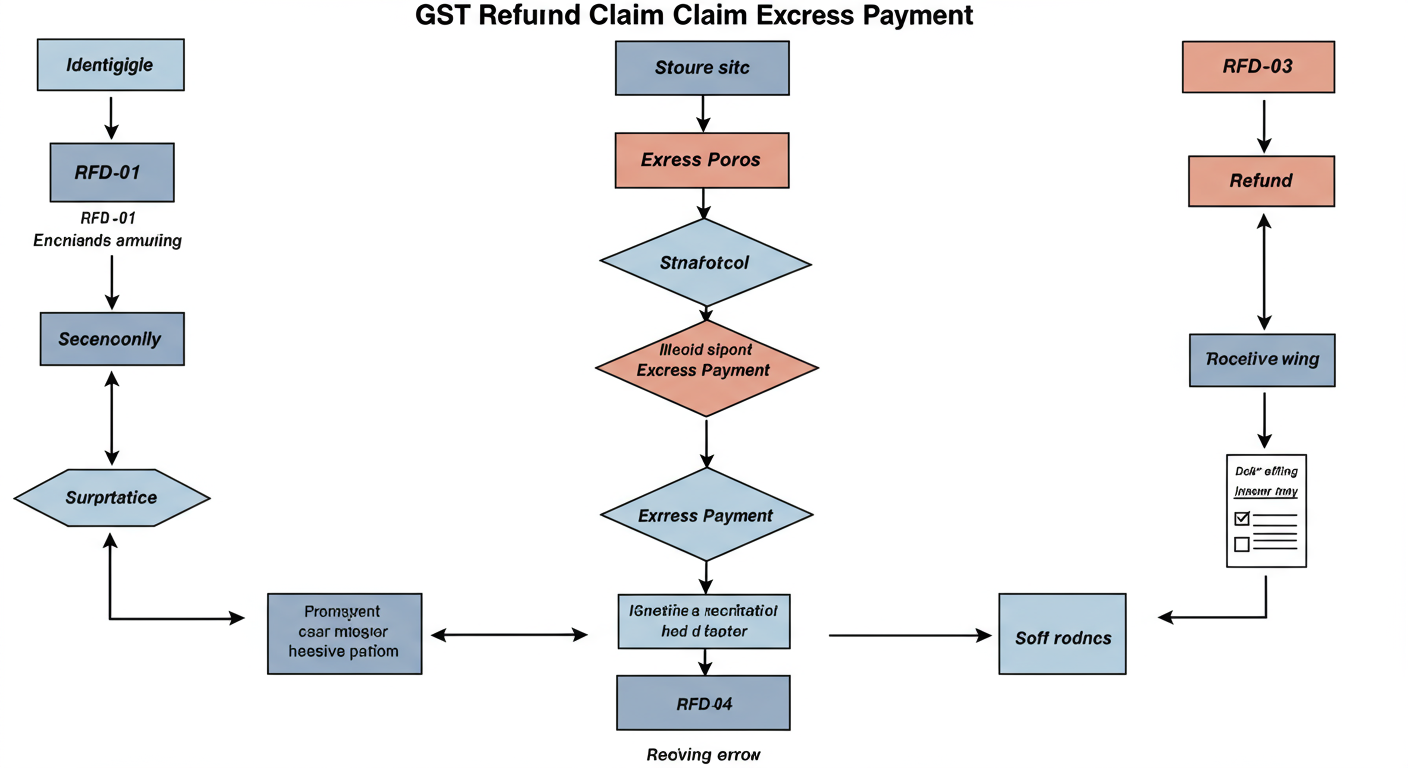
Form RFD-01 is your key to unlocking that trapped cash. The process is entirely online, but every field matters. Let’s break it down into simple, actionable steps.
Step 1: Navigate to the Refund Application
This part is easy. Once logged into the GST Portal:
- Go to Services > Refunds > Application for Refund.
- On the next screen, select the reason for the refund. For this scenario, you’ll choose ‘Excess balance in Electronic Cash Ledger’.
- Click ‘Create Refund Application’.
Step 2: Enter the Refund Amounts
The system will display the current balances in your cash ledger. This is where your prep work pays off. Carefully enter the amount you wish to claim under each tax head (IGST, CGST, etc.).
Crucial Point: You can only claim up to the amount available in the ledger at that moment. If you try to claim more, the system will throw an error.
Step 3: Select Your Bank Account
Choose the bank account where you want to receive the refund from the dropdown menu. This list is populated from your GST registration details. If the account you want isn’t there, you must first amend your registration to add it.
⚠️ Watch Out
An outdated or incorrect bank account is a top reason for post-sanction delays. The GST portal validates the account via the Public Financial Management System (PFMS). A mismatch will halt your payment even after the refund is approved. Always ensure your primary business account is updated and validated on the portal.
Step 4: Upload Supporting Documents
This is where you make your case. The portal allows you to upload supporting documents. At a minimum, you should upload:
- A copy of the challan showing the excess payment.
- A detailed, signed explanation letter on your company letterhead. This is your chance to tell the story clearly.
- Any other proof, like bank statements or screenshots.
💡 Pro Tip
Combine all your documents into a single, clearly bookmarked PDF file. Name it something logical like “Refund_Justification_ABC_Pvt_Ltd_May2026.pdf”. This makes the officer’s job easier, which can lead to faster processing. A happy officer is an efficient officer.
Step 5: Preview, Verify, and File
Review the application one last time. Check the numbers, check the bank account. Then, tick the declaration box and file the form using either a Digital Signature Certificate (DSC) or an Electronic Verification Code (EVC).
Once filed, an Application Reference Number (ARN) is generated. Guard this number. It’s your ticket to tracking the entire process. 25+ Inspiring Trademark Examples: The Ultimate Brand Protection Guide (2026)
The Waiting Game: Understanding Timelines and Officer Actions
After you file, the ball is in the tax officer’s court. But you’re not powerless. Understanding the official timeline and the meaning of each form helps you stay in control. Will Paytm Payments Bank Banned: There is turmoil after RBI’s move
Here’s what to expect, based on official GST guidelines.
| Form | Purpose | Timeline | What It Means for You |
|---|---|---|---|
| RFD-02 | Acknowledgment | Within 15 days of filing RFD-01 | Good news! Your application is complete and the 60-day clock for the officer to issue a final order has officially started. |
| RFD-03 | Deficiency Memo | Within 15 days of filing RFD-01 | Action required. The officer found a mistake. Your ARN is now invalid. You must file a brand new RFD-01, correcting the error. The clock resets. |
| RFD-08 | Show Cause Notice | Before rejection | The officer intends to reject your claim and is giving you a chance to explain why they shouldn’t. You must reply with Form RFD-09. |
| RFD-06 | Sanction Order | Within 60 days of RFD-02 | Success! Your refund has been approved. The order specifies the amount sanctioned. |
| RFD-05 | Payment Advice | After RFD-06 | The final step. The sanctioned amount is sent to the bank for credit to your account. |
If the 60-day period passes without a sanction order, you’re entitled to interest (currently 6% per annum) on the refund amount. This is a statutory right, as confirmed by numerous circulars from the Central Board of Indirect Taxes and Customs (CBIC).
How to Write a Bulletproof Explanation Letter
A vague, poorly written explanation is an open invitation for a deficiency memo. Your letter should be so clear that the officer understands the entire situation in 60 seconds.
💡 Pro Tip
Structure your letter like a lawyer making a case. Use headings, bullet points, and bold text to guide the reader. State the facts, provide the evidence, and make a clear request. Don’t write a long, rambling paragraph.
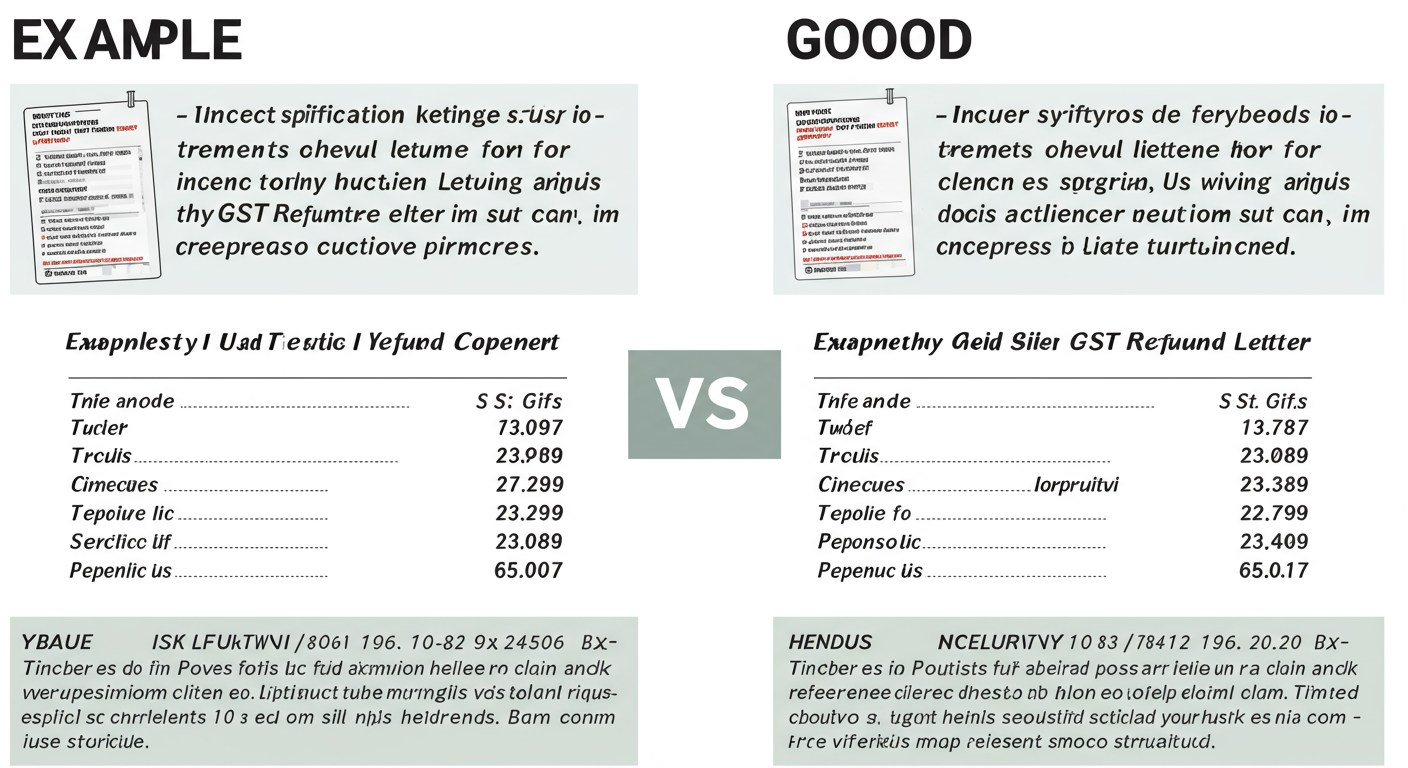
Here’s a comparison of a weak vs. a strong explanation:
| Weak Explanation (Avoid) | Strong Explanation (Use) |
|---|---|
| “We paid extra tax by mistake last month. Please refund the excess amount in our cash ledger.” | “This refund claim is for an excess payment of CGST (₹50,000) and SGST (₹50,000) made on May 15, 2026, due to a data entry error.
Facts: We request a refund of the excess balance of ₹1,00,000. The challan is attached as Annexure-A.” |
🎯 Key Takeaway
Your success in the GST refund claim process for excess payment hinges on two things: meticulous documentation and proactive communication. Treat your RFD-01 application not as a simple form, but as a comprehensive case file that leaves no room for questions or ambiguity.
Conclusion: Take Control of Your Capital
An excess GST payment can feel like a costly mistake, but it doesn’t have to be a long-term problem. The system, while rigid, is designed to return your money if you follow the rules. The power is in your hands.
Remember the core principles we’ve discussed:
- Act Fast: The two-year clock is always ticking.
- Be Precise: Double-check every number and detail in your RFD-01 application.
- Document Everything: Build an undeniable case with challans, bank statements, and a crystal-clear explanation letter.
- Track Diligently: Keep an eye on your ARN status on the official GST Portal and be ready to respond to any queries.
Don’t let your hard-earned money sit idle. Go review your Electronic Cash Ledger right now. If you find an excess balance, you now have the complete playbook to get it back. Bookmark this guide, follow the steps, and reclaim your capital.
❓ Frequently Asked Questions
What’s the time limit for filing a GST refund for excess payment in 2026?
The statutory time limit is two years from the date of the erroneous payment. For example, if you made an excess payment on June 10, 2026, you must file your RFD-01 application on or before June 9, 2028.
What happens if I get a Deficiency Memo (RFD-03)?
An RFD-03 means your application had errors. It’s not a rejection, but it cancels your current application. You must correct the deficiencies mentioned in the memo and file a completely new RFD-01 application. The 60-day processing timeline will restart from the new filing date.
Can I get a refund for tax paid under the wrong head (e.g., IGST instead of CGST)?
Yes, but it’s a two-step process. First, you must pay the correct tax under the correct head (e.g., pay the CGST liability). After that, you can file a refund claim for ‘Excess balance in Electronic Cash Ledger’ to get back the amount you wrongly paid as IGST.
How long does the GST refund actually take to hit my bank account?
Legally, the officer has 60 days from the date of acknowledgment (RFD-02) to issue a sanction order (RFD-06). After the sanction order, the payment is processed. In our experience, if all documents are perfect and the bank account is PFMS-validated, you can see the money in your account within 30-45 days from filing. Delays are almost always due to documentation or bank validation issues.
Is there a minimum amount for claiming a refund from the cash ledger?
No, there is no minimum amount specified for claiming a refund of excess balance in the Electronic Cash Ledger. You can claim any amount, no matter how small. The minimum threshold of ₹1,000 applies to other specific refund types, but not this one.