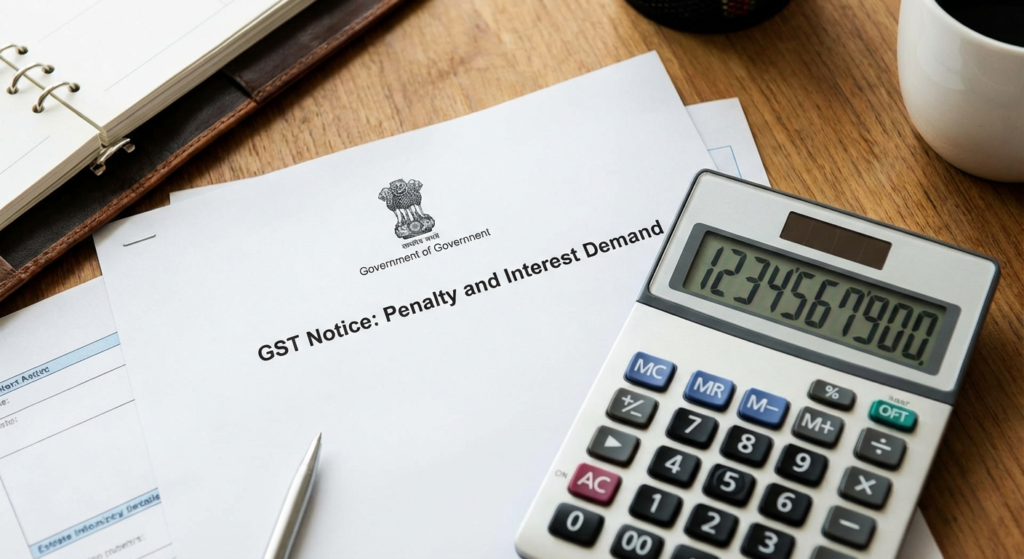
In the dynamic landscape of Indian taxation, staying compliant is not just a legal obligation but a cornerstone of business stability. For business owners and finance professionals, understanding the nuances of gst penalty interest is crucial to maintaining a healthy bottom line. The Goods and Services Tax (GST) regime is designed to be seamless, but it comes with stringent rules regarding timelines and accuracy. Failing to adhere to these can trigger significant financial repercussions in the form of penalties and interest.
Whether you are a startup founder or a seasoned CFO, the phrase "gst penalty interest" often induces anxiety. It refers to the additional amount a taxpayer must pay if they delay their tax payments or claim Input Tax Credit (ITC) wrongfully. This comprehensive guide will dissect the complexities of these charges, helping you navigate Section 50 and Section 122 of the CGST Act with confidence. Let’s dive deep into the mechanics of GST compliance and ensure your business stays on the right side of the law.
Understanding the Basics of GST Penalty Interest
To effectively manage your tax liabilities, you must first understand what triggers a gst penalty interest charge. Under the GST framework, interest and penalties are two distinct concepts, though they often occur simultaneously. Interest is compensatory in nature, levied to compensate the government for the delay in the receipt of tax dues. On the other hand, a penalty is penal in nature, imposed to punish the offender for a breach of law.
Interest is primarily governed by Section 50 of the CGST Act, 2017. This section mandates that if a taxpayer fails to pay the tax within the prescribed period, they are liable to pay interest on the unpaid amount. It is important to note that interest is automatic; it does not require a specific notice from the tax authorities to become payable. If you are late, the meter starts running.
Automatic Liability
Interest under GST is mandatory and automatic. You do not need to wait for a demand notice; it must be self-assessed and paid along with the overdue tax.
Compensatory vs. Penal
Interest compensates the government for time value of money lost. Penalties are punishments for breaking the rules, such as tax evasion or fraud.
Rate Variance
Interest rates vary based on the nature of the default, typically ranging from 18% for late payments to 24% for wrongful ITC claims.
When is GST Penalty Interest Applicable?
The applicability of gst penalty interest covers a broad spectrum of non-compliance scenarios. It is not limited merely to the late filing of GSTR-3B. The scope extends to how you utilize your Input Tax Credit and how accurately you report your outward supplies. Understanding these triggers is the first step toward mitigation.

Generally, interest liability arises in the following situations:
- Delayed Payment of Tax: When a taxpayer files their return but fails to deposit the tax liability within the due date.
- Late Filing of Returns: If you file GSTR-3B after the deadline, the tax payment is considered delayed, attracting interest.
- Wrongful Claim of ITC: Claiming Input Tax Credit in excess of what is eligible, or claiming it for ineligible goods/services.
- Undue Reduction of Output Tax Liability: Manipulating sales figures to show lower tax liability than actual.
Calculating GST Penalty Interest Rates
The calculation of gst penalty interest is strictly defined under the law. There are primarily two rates of interest that taxpayers need to be aware of: 18% and 24%. Knowing which rate applies to your situation can save you from miscalculating your liabilities.
- 18% Per Annum: This rate applies to delayed payment of tax. If you have declared the tax in your return but have not paid it, or if you have not declared the tax at all and are paying it later, interest is charged at 18% per annum. Importantly, following the amendment in Section 50(1), interest is levied only on the Net Cash Liability (tax to be paid in cash) provided the return is filed after the due date but before proceedings are initiated.
- 24% Per Annum: This higher rate is punitive and applies under Section 50(3). It is charged when a taxpayer makes an undue or excess claim of Input Tax Credit (ITC) or undue reduction in output tax liability. If you wrongly avail ITC and utilize it, you will be liable to pay interest at 24% on the amount utilized.
Major Offenses Leading to GST Penalty Interest
While interest is about the time value of money, penalties are about discipline. The gst penalty interest framework includes specific penalties for 21 offenses listed under Section 122 of the CGST Act. These offenses range from minor clerical errors to deliberate attempts at tax evasion.
Some of the most common offenses include:
- Supplying goods or services without issuing an invoice.
- Issuing an invoice without supplying goods or services (fake invoicing).
- Collecting tax but failing to pay it to the government within three months.
- Failing to deduct TDS or collect TCS where applicable.
- Obtaining a refund by fraud.
For genuine errors where there is no intent to evade tax, the penalty is usually 10% of the tax due or ₹10,000, whichever is higher. However, for cases involving fraud or willful misstatement, the penalty can escalate to 100% of the tax due.
Minor Breach
Usually involves unintentional errors or omissions. Penalty: ₹10,000 or 10% of tax involved (whichever is higher).
Major Breach
Involves fraud, willful misstatement, or suppression of facts. Penalty: 100% of the tax evaded (minimum ₹10,000).
The Impact of GST Penalty Interest on Cash Flow
Ignoring gst penalty interest can severely cripple a company’s working capital. Since interest is calculated on a daily basis, a delay of even a few weeks can accumulate a substantial amount. Furthermore, unlike the tax principal, interest and penalties paid under GST are not admissible as business expenses under the Income Tax Act. This means you pay them out of your post-tax profits, hitting your reserves directly.
To avoid these cash flow shocks, businesses must prioritize reconciliation. Ensuring that your purchase data matches the government records is vital. For a detailed guide on how to streamline this process, you might find our GSTR-2A reconciliation checklist guide incredibly useful. Proper reconciliation prevents the wrongful ITC claims that trigger the higher 24% interest rate.
Strategies to Avoid GST Penalty Interest
Prevention is always cheaper than the cure, especially when dealing with tax authorities. Implementing robust internal controls can shield your business from the burden of gst penalty interest. Here are actionable strategies to maintain compliance:

1. Automate Your Filing Process: Manual calculations are prone to error. Use accounting software that integrates directly with the GST portal to ensure accuracy in data entry and tax calculation.
2. Maintain Strict Deadlines: Create a compliance calendar. The due dates for GSTR-1 and GSTR-3B are fixed. Missing these dates triggers late fees immediately and interest subsequently.
3. Verify Vendor Compliance: Your ITC claim depends on your vendors filing their returns. If they default, your ITC could be blocked or reversed with interest. Regular audits of your vendor list are essential.
4. Keep Cash Ledgers Funded: Sometimes returns are delayed simply because the bank transfer to the electronic cash ledger didn’t happen on time. Ensure funds are moved a day prior to the filing deadline.
For businesses looking ahead, staying updated with fiscal policies is key. Understanding future trends can help in better financial planning. You can read more about upcoming fiscal expectations in our Union Budget 2026-27 expectations guide, which discusses potential changes in tax structures.
Recent Updates on GST Penalty Interest Rules
The GST Council frequently updates rules to simplify compliance or plug loopholes. Recent clarifications have brought some relief regarding gst penalty interest. One significant amendment is the retrospective applicability of the rule that interest is to be paid only on the net cash liability (tax liability minus available ITC) for delayed filings. This was a major relief for taxpayers who had accumulated large ITC balances but were penalized on the gross liability.
Additionally, the government has been cracking down on fake invoicing. The penalties for being a beneficiary of such transactions have been tightened. It is essential to refer to official sources like the Central Board of Indirect Taxes and Customs (CBIC) for the latest notifications and circulars.
Conclusion
Navigating the terrain of gst penalty interest requires diligence, accuracy, and a proactive approach to compliance. The costs of non-compliance go beyond just financial loss; they reputational damage and increased scrutiny from tax authorities. By understanding the difference between interest and penalty, knowing the correct rates (18% vs 24%), and implementing strict reconciliation processes, you can safeguard your business against these avoidable costs.
Remember, the GST system is technology-driven. Discrepancies are flagged automatically. Therefore, your best defense is a robust accounting system and a clear understanding of the law. Stay compliant, file on time, and ensure your ITC claims are legitimate to keep your business growing without the anchor of penalties dragging it down. For handling official filings, always utilize the official GST Portal.
FAQs
The standard interest rate for delayed payment of GST is 18% per annum. This is calculated on the net tax liability that is to be paid in cash, provided the return is filed after the due date.
Following the amendment to Section 50(1), interest on delayed filing of returns is calculated on the Net Cash Liability (Gross Liability minus Input Tax Credit available), provided the proceedings have not been initiated by the department.
The 24% interest rate applies specifically when a taxpayer makes an undue or excess claim of Input Tax Credit (ITC) or an undue reduction in output tax liability and utilizes that excess credit.
Generally, interest is mandatory and cannot be waived. However, the government may issue amnesty schemes occasionally to waive or reduce late fees (not usually interest) for specific periods to encourage compliance.
If you fail to file GSTR-3B, a late fee is charged. For Nil returns, it is ₹20 per day (₹10 CGST + ₹10 SGST). For others, it is ₹50 per day (₹25 CGST + ₹25 SGST), subject to a maximum cap based on turnover.