You’ve got a brilliant business idea. The product is ready, the passion is burning, but then you hit a wall. A digital, bureaucratic wall called GST. Suddenly, you’re frantically searching “GST number kaise le?” and drowning in a sea of confusing advice.
Sound familiar? You’re not alone.
But here’s the thing: getting a Goods and Services Tax Identification Number (GSTIN) isn’t the business-killing monster it’s made out to be. In fact, it’s one of the most powerful strategic moves you can make. It’s your ticket to the big leagues.
This isn’t another dry, jargon-filled government manual. This is your battle-tested field guide. We’re going to walk you through the entire process, step-by-step, showing you not just *how* to get your GST number in 2026, but how to do it right the first time. You’ll learn who needs one, the exact documents to have ready, and the common pitfalls that trip up 90% of new applicants. Let’s get this done.
Who Actually Needs a GST Number in 2026?
Before you dive into any paperwork, let’s clear up the most important question: do you even need to register? The answer isn’t always about how much money you make. Certain business activities trigger mandatory registration from day one.
Let’s break it down. The primary trigger is your “aggregate annual turnover”—the total value of all your taxable supplies, exempt supplies, exports, and inter-state stock transfers under the same PAN.
Here’s how the thresholds stack up:
| Type of Business | Turnover Threshold for GST Registration | Applies To |
|---|---|---|
| Supplier of Goods Only | ₹40 Lakhs | Most states in India. |
| Supplier of Services Only | ₹20 Lakhs | All states in India. |
| Supplier of Goods & Services | ₹20 Lakhs | If you supply both, the lower threshold applies. |
| Special Category States | ₹20 Lakhs (Goods) / ₹10 Lakhs (Services) | States like Arunachal Pradesh, Manipur, Meghalaya, Mizoram, Nagaland, Puducherry, Sikkim, Telangana, Tripura, and Uttarakhand. |
But turnover isn’t the whole story. Mandatory registration is required, regardless of turnover, if you:
- Make any inter-state sale of taxable goods (e.g., selling from Delhi to a customer in Mumbai).
- Sell products on an e-commerce platform like Amazon or Flipkart. They won’t let you list without a GSTIN.
- Are an e-commerce aggregator yourself.
- Are a “Casual Taxable Person” (e.g., setting up a temporary stall at a trade fair in another state).
- Are a Non-Resident Taxable Person.
Even if you don’t fit any of these, you can still opt for Voluntary Registration. Why would you do that? We’ll cover the powerful strategic reasons for that in a bit.
⚠️ Watch Out
Don’t confuse turnover with profit! The GST threshold is based on your total revenue (aggregate turnover), not what you take home. In our experience, this is a common and costly misunderstanding for new entrepreneurs.
The Pre-Flight Checklist: Documents You Can’t Forget
I’ve seen countless applications get delayed for weeks over a single missing document. Don’t let that be you. Getting your paperwork in order *before* you start is the single best thing you can do for a smooth process. Scan everything and keep it in a dedicated folder on your computer.
The documents you need depend on your business structure. Here’s a clear breakdown:
| Document | Sole Proprietor | Partnership / LLP | Private Ltd. Company |
|---|---|---|---|
| Owner/Director/Partner Docs | PAN Card, Aadhaar Card, Photo | PAN, Aadhaar, Photo of all partners | PAN, Aadhaar, Photo of all directors |
| Business PAN Card | Not Applicable (Owner’s PAN is used) | Yes, Firm’s/LLP’s PAN | Yes, Company’s PAN |
| Business Registration Proof | Not Applicable | Partnership Deed / LLP Certificate | Certificate of Incorporation (from MCA) |
| Address Proof (Principal Place) | Electricity Bill/Property Tax Receipt + NOC if rented | Electricity Bill/Property Tax Receipt + NOC if rented | Electricity Bill/Property Tax Receipt + NOC if rented |
| Bank Account Proof | Cancelled Cheque / Bank Statement | Cancelled Cheque / Bank Statement (in Firm’s name) | Cancelled Cheque / Bank Statement (in Company’s name) |
| Authorized Signatory Proof | Not Applicable | Letter of Authorization / Board Resolution | Board Resolution for Authorized Signatory |
💡 Pro Tip
For your address proof, if the property is rented or owned by a family member, a No Objection Certificate (NOC) is non-negotiable. It’s a simple letter from the property owner stating they have no objection to you using the premises for business. A missing NOC is a top reason for application rejection.
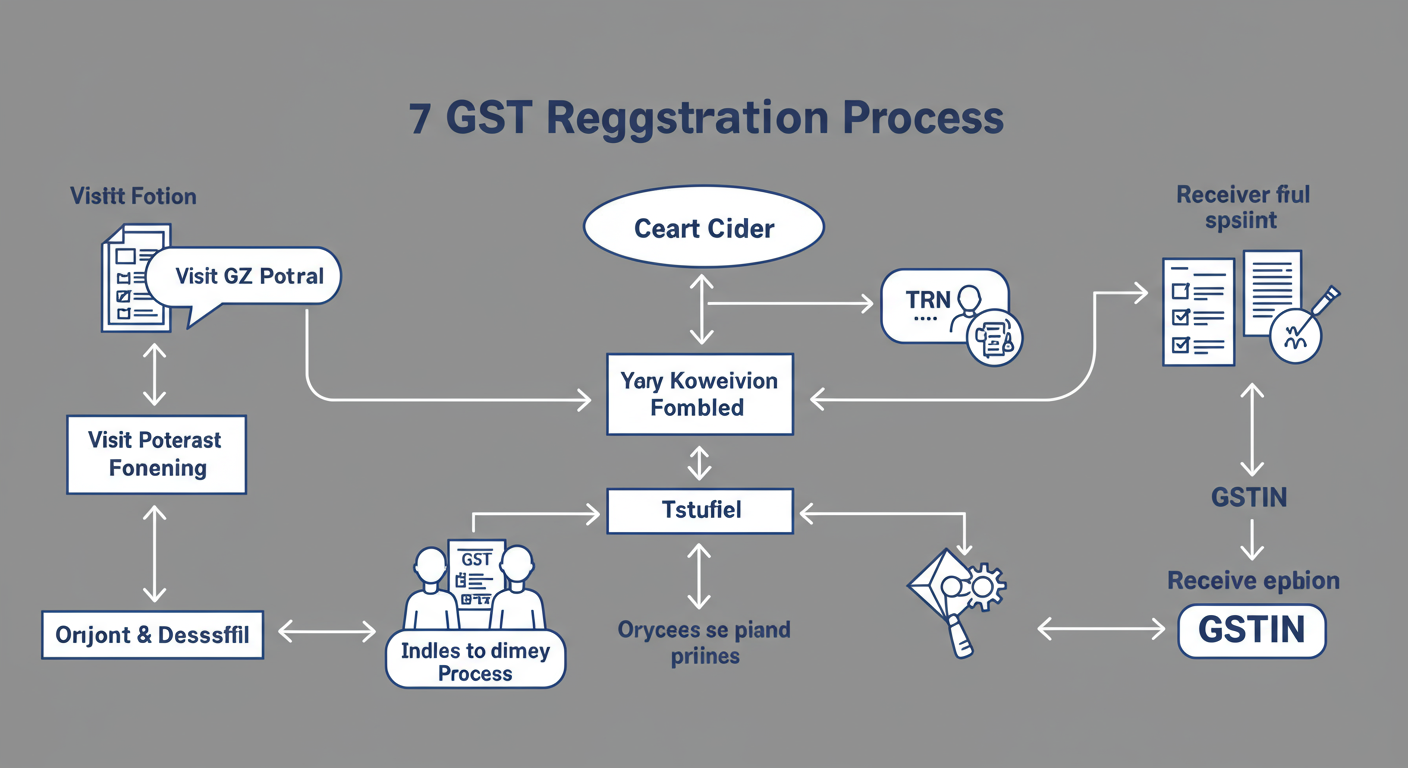
GST Number Kaise Le: The 7-Step Online Application Guide
Alright, you’ve confirmed you need to register and your documents are ready. It’s time to tackle the main event. The entire process happens on the official GST portal. Grab a coffee, open a new tab, and let’s do this together.
-
Step 1: Go to the Official GST Portal & Start
Your journey begins at the one and only official government website: www.gst.gov.in. Be wary of fake sites! On the homepage, navigate to Services > Registration > New Registration.
-
Step 2: Generate Your TRN (Part-A)
This is your entry ticket. In Part-A of the form, you’ll provide your most basic details: select ‘Taxpayer’, your state, and enter the legal name of your business and PAN. Crucially, you’ll enter your primary email and mobile number. Double-check these! You’ll receive One-Time Passwords (OTPs) to verify them. Once verified, a Temporary Reference Number (TRN) is generated and sent to you. Guard this number; it’s valid for 15 days.
-
Step 3: Log In with Your TRN
Head back to the ‘New Registration’ page, but this time, select the ‘Temporary Reference Number (TRN)’ option. Enter your TRN, the captcha, and proceed. Another OTP will land on your mobile/email. Enter it to access the main application, known as Part-B.
-
Step 4: Fill Out the Main Application (Part-B)
This is the detailed part. Take your time and be precise. You’ll navigate through several tabs:
- Business Details: Your trade name, business constitution, and reason for registration.
- Promoter/Partners: Fill in the details for all owners/directors and upload their ID proofs and photos.
- Principal Place of Business: Enter your main business address and upload the proof (e.g., electricity bill and NOC).
- Goods and Services: This is important. You need to list the top 5 goods or services you’ll supply. You’ll need their HSN (for goods) or SAC (for services) codes. A quick online search for “HSN code for [your product]” will help.
- Bank Accounts: Add the details of your business bank account. You can add more later, but at least one is needed to start.
-
Step 5: Verify Your Application
The final step before submission is verification. Based on hands-on testing, the method depends on your business type:
- EVC (Electronic Verification Code): The easiest method. An OTP is sent to the mobile number linked with the authorized signatory’s Aadhaar card. This is available for Proprietorships, Partnerships, etc.
- DSC (Digital Signature Certificate): This is mandatory for all Companies and LLPs. It’s a USB token-based signature that you must have beforehand.
-
Step 6: Success! Your ARN is Generated
Once you verify and submit, the portal will generate an Application Reference Number (ARN). An acknowledgment in Form GST REG-02 will be sent to your email. This ARN is your key to tracking the application status.
-
Step 7: Scrutiny and Approval
A GST officer will now review your application. If all your details and documents are perfect, you’ll receive your GST Registration Certificate (Form GST REG-06) and your 15-digit GSTIN within 3-7 working days. If they find an issue, they’ll issue a notice (Form GST REG-03) asking for clarification. You must respond within 7 working days to avoid rejection. Private vs Public Limited Company: The 2026 Founder's Guide
⚠️ Watch Out
A typo in your name or address that doesn’t match your PAN or Aadhaar card is an instant red flag for the officer. The system cross-verifies this data. Before you hit submit, review every single field. It’s a 5-minute check that can save you a 2-week delay. 3 Modes of Winding Up a Company in India (2026 Expert Guide)
🎯 Key Takeaway
Getting a GST number isn’t just a bureaucratic chore; it’s a strategic key. It unlocks Input Tax Credit (which lowers your costs), enables seamless inter-state sales, and builds immense trust with customers and partners, making your business look professional from day one.
Voluntary vs. Mandatory Registration: The Strategic Choice
So, your turnover is below the threshold. You can just ignore GST, right? You could. But you might be leaving serious money and opportunity on the table.
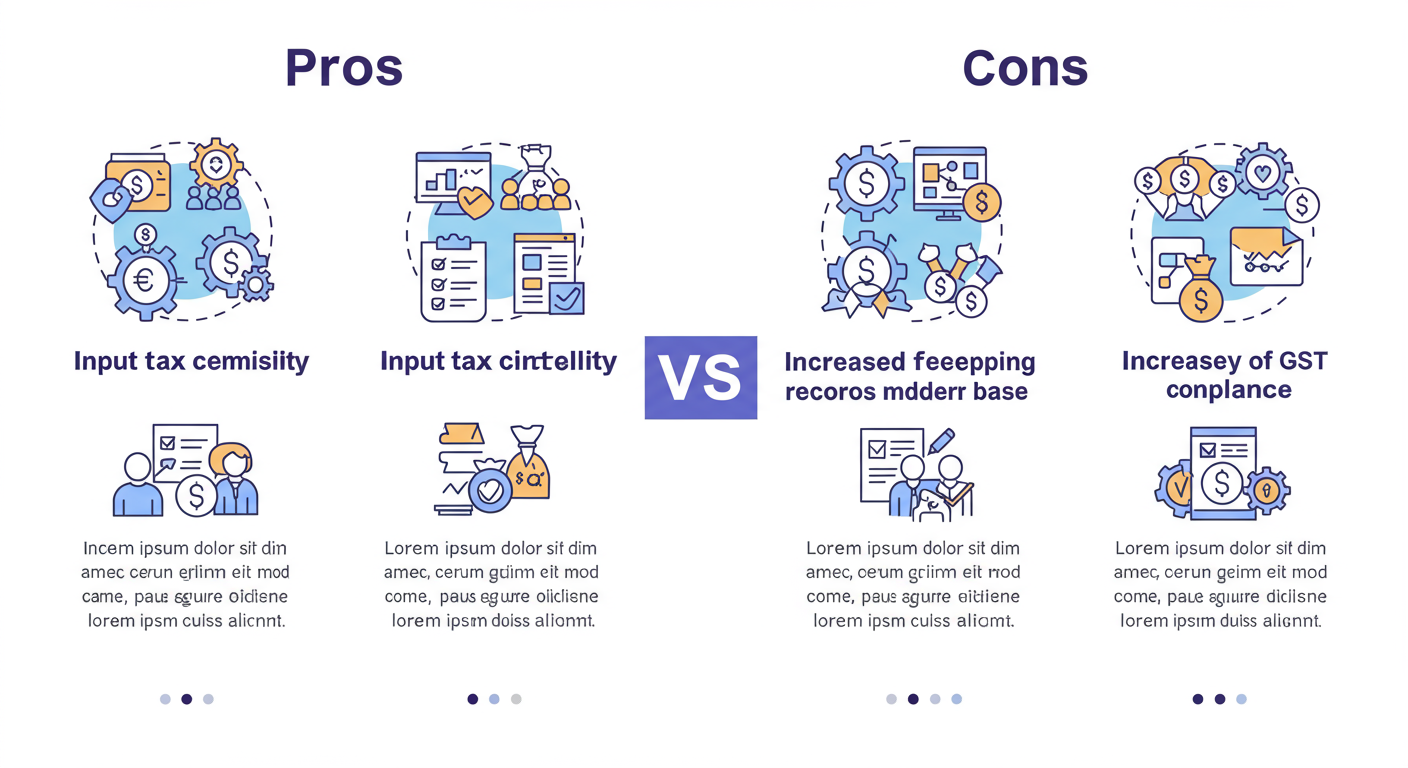
Opting for voluntary registration can be a brilliant strategic move. The biggest advantage? Input Tax Credit (ITC). As a registered business, you can claim back the GST you pay on your business purchases—from raw materials and office supplies to professional fees. This directly reduces your costs and increases your profit margin.
Let’s look at the trade-offs.
“In our experience, businesses that register for GST voluntarily often appear more credible to larger B2B clients, who almost always require a GST invoice to claim their own ITC.” – A common observation from our tax consulting practice.
The decision to register voluntarily boils down to this: will the benefits of ITC and expanded market access outweigh the compliance effort of filing monthly/quarterly returns? For many ambitious businesses, the answer is a resounding yes.
💡 Pro Tip
When choosing your HSN/SAC codes, be specific but not *too* specific. Start with the 4-digit code for your main category. According to CBIC guidelines, most small businesses don’t need to use the full 8-digit code. Using the wrong code can lead to incorrect tax rates, so a little research here pays off big time.
You Have Your GSTIN! Now What?
Congratulations! That 15-digit number in your email is a major milestone. But the work isn’t over. Here are your immediate next steps:
- Display Your Certificate: You must display your GST registration certificate prominently at your principal place of business.
- Issue GST-Compliant Invoices: All your invoices must now include your GSTIN and break down the applicable CGST/SGST or IGST.
- Understand Your Filing Frequency: Based on your turnover, you’ll need to file returns either monthly or quarterly under the QRMP scheme. Mark these dates on your calendar immediately.
- Maintain Meticulous Records: Keep every single purchase and sales invoice. This is the bedrock of claiming ITC and staying compliant.
Non-compliance is not an option. Penalties for late filing are calculated daily, and failure to register when mandatory can result in a penalty of 10% of the tax due or ₹10,000, whichever is higher. It’s simply not worth the risk.
❓ Frequently Asked Questions
How long does it take to get a GST number in 2026?
If your application is complete and all documents are correct, you can expect your GSTIN within 3 to 7 working days. If the officer requests clarification, it can take an additional 7-10 days depending on your response time.
Is there any government fee for GST registration?
No. GST registration on the official government portal is 100% free. You only pay if you hire a Chartered Accountant or tax consultant to handle the process for you.
Can I use my home address for GST registration?
Absolutely. If you’re a freelancer, consultant, or run a home-based business, you can use your residential address. Just make sure you have a valid proof of address (like an electricity bill in the owner’s name) and a No Objection Certificate (NOC) from the property owner.
What is the difference between GSTIN, PAN, and TAN?
GSTIN is your 15-digit Goods and Services Tax ID for all GST-related matters. PAN (Permanent Account Number) is your 10-digit ID for all income tax purposes, issued by the Income Tax Department. TAN (Tax Deduction and Collection Account Number) is required if you are responsible for deducting or collecting tax at source (TDS/TCS).
My business is a Private Limited Company. What is the most common mistake to avoid?
For companies registered with the Ministry of Corporate Affairs, the most common mistake is not having a Digital Signature Certificate (DSC) for the authorized director ready. Verification via DSC is mandatory for companies, and not having one will halt your application completely.
Your First Step to Building a Bigger Business
So, “GST number kaise le?” It’s not a question to fear. It’s a plan to execute.
We’ve walked through the entire process, from figuring out if you need to register to preparing your documents and navigating the online portal. You now know the critical difference between turnover and profit, the power of Input Tax Credit, and the strategic advantage of voluntary registration.
This 15-digit number is more than a tax ID. It’s a declaration that your business is legitimate, professional, and ready for growth. It opens doors to new markets, bigger clients, and a more efficient, cost-effective operation.
Your next step is simple. Don’t just close this tab. Open another one. Gather your documents, head to the GST portal, and take that first, crucial step. Your future business will thank you for it.