
Picture this: a fast-growing startup, flush with early success, suddenly gets a notice from the Registrar of Companies (ROC). The charge? A simple compliance oversight. The penalty? A staggering ₹1 Crore fine and potential jail time for the directors.
This isn’t a scare tactic. It’s a real-world consequence of ignoring one of the most misunderstood yet critical compliance requirements in India: Form DPT-3.
Most founders think, “We haven’t taken any ‘deposits’, so this doesn’t apply to us.” That assumption is a multi-crore mistake waiting to happen. The truth is, this form covers almost any money your company has received that isn’t share capital.
Forget the dense legal jargon. This guide will give you the straight-up, practical knowledge you need. You’ll learn exactly who needs to file, how to classify your funds correctly, and a step-by-step process to get it done right—saving you from sleepless nights and devastating penalties. Let’s get started.
The Litmus Test: Does Your Company Need to File Form DPT-3 in 2026?
Let’s cut through the confusion. The rules are surprisingly broad. You are legally required to complete a Form DPT-3 filing if your company’s balance sheet, as of March 31, 2026, shows any outstanding money received.
Simple as that.
It doesn’t matter if it’s a loan from a director, an advance from a customer, or an inter-corporate loan. If it’s on your books as an outstanding liability, you have a filing obligation. This applies to virtually every type of company:
- Private Limited Companies
- Public Limited Companies
- One Person Companies (OPCs)
- Section 8 Companies
The only major exception is a Government company. For everyone else, the question isn’t if you need to file, but what you need to report.
Based on our experience advising hundreds of businesses, over 90% of active private companies have some form of outstanding receipt that triggers this requirement. The only scenario where you’re exempt is if your company has genuinely received no outside funds (other than share capital) or has paid back every single rupee before March 31st.
| Scenario | Form DPT-3 Filing Required? | Why? |
|---|---|---|
| Your company has an outstanding loan from a director. | Yes | This is a common “exempted deposit” that must be reported. |
| You received an advance payment from a customer for a project starting next year. | Yes | Advances for goods/services are reportable until they are fulfilled. |
| Your company took a loan from another company (inter-corporate loan). | Yes | A classic example of a transaction requiring DPT-3 filing. |
| Your company has only received share capital and has zero loans or advances. | No | With no outstanding receipts of money, there is nothing to report. |
⚠️ Watch Out
The biggest mistake we see is companies assuming “no deposits = no filing.” The form has a specific option for “particulars of transactions not considered as deposit.” If you have any outstanding loans or advances, you must file under this category. Ignoring it is direct non-compliance.
Decoding the Jargon: Deposits vs. Exempted Deposits
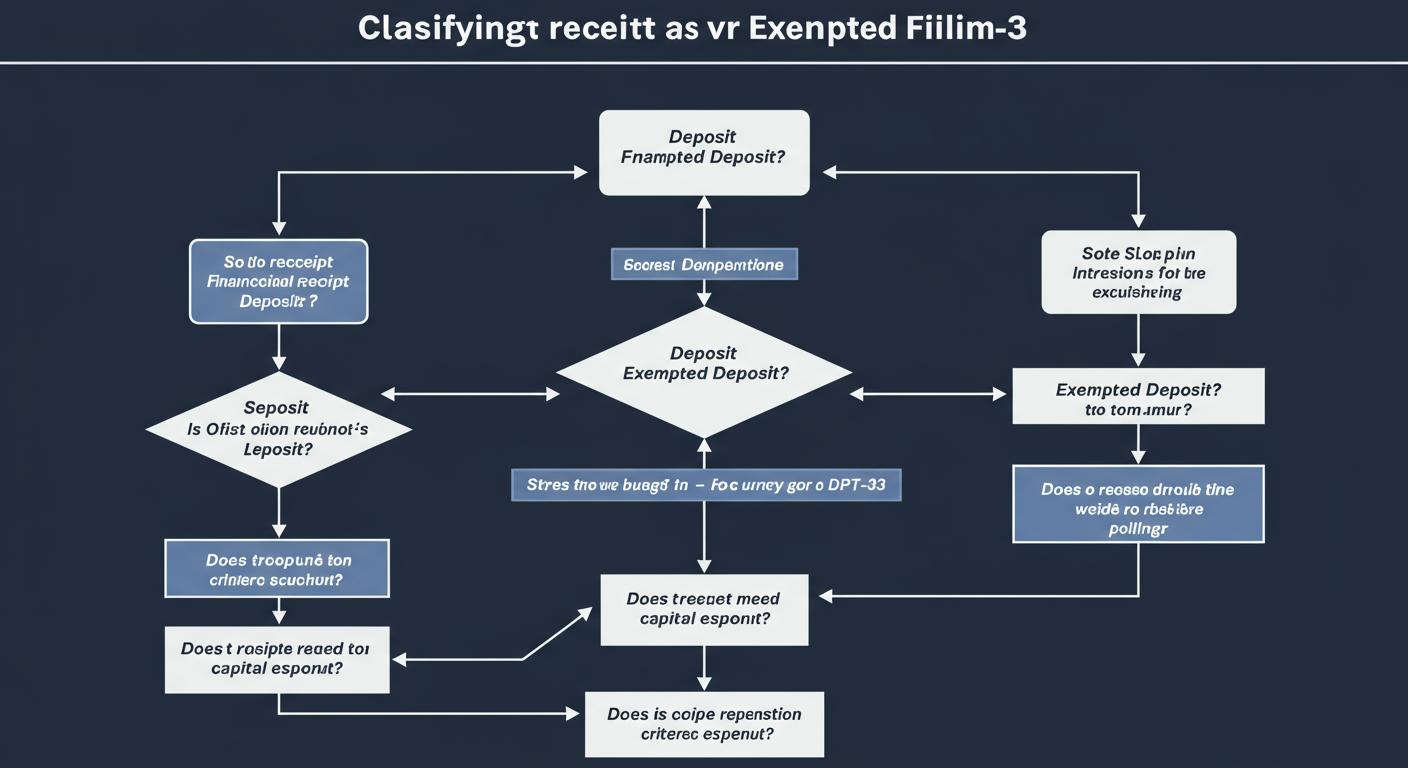
Okay, so you know you need to file. The next critical step is correctly classifying the money you’ve received. This is the heart of an accurate Form DPT-3 filing. The Companies (Acceptance of Deposits) Rules, 2014, provide a specific list of receipts that are not considered deposits. These are called “exempted deposits.”
Anything that doesn’t fall on this exemption list is considered a ‘deposit’, which comes with much stricter compliance rules.
Think of it this way: every rupee of outstanding borrowed funds must be categorized. For most startups and SMEs, nearly all their borrowings will fall under the ‘exempted’ category. But you still have to report them.
Common Types of Exempted Deposits You Must Report
Here’s a practical breakdown of the most common exempted categories. If any of these are on your books as of March 31, 2026, you’re filing DPT-3.
- From Directors: Any amount received from a director of the company. For private companies, this also includes relatives of directors. Crucially, the director must provide a declaration stating the funds are not from borrowed sources.
- From Other Companies: Any amount received from another company (inter-corporate loans).
- From Banks & Financial Institutions: Standard business loans, cash credit facilities, etc., from any banking company or financial institution.
- Business Advances: Money received as an advance for the supply of goods or services. This is exempt as long as the goods/services are supplied within 365 days of receipt.
- Share Application Money: Money received for a future share allotment. This is exempt if the shares are allotted within 60 days. If not, it can become a deposit.
- From Government/Foreign Sources: Any amount received from central or state governments, local authorities, or certain foreign entities.
💡 Pro Tip
For loans from directors, don’t just take the money. Get a signed declaration from the director at the time of receiving the funds. It should clearly state, “The amount given is from my own funds and not from funds acquired by me by borrowing or accepting loans or deposits from others.” Keep this in your records. The ROC can ask for it during an inspection.
Your Step-by-Step Guide to a Flawless DPT-3 Filing
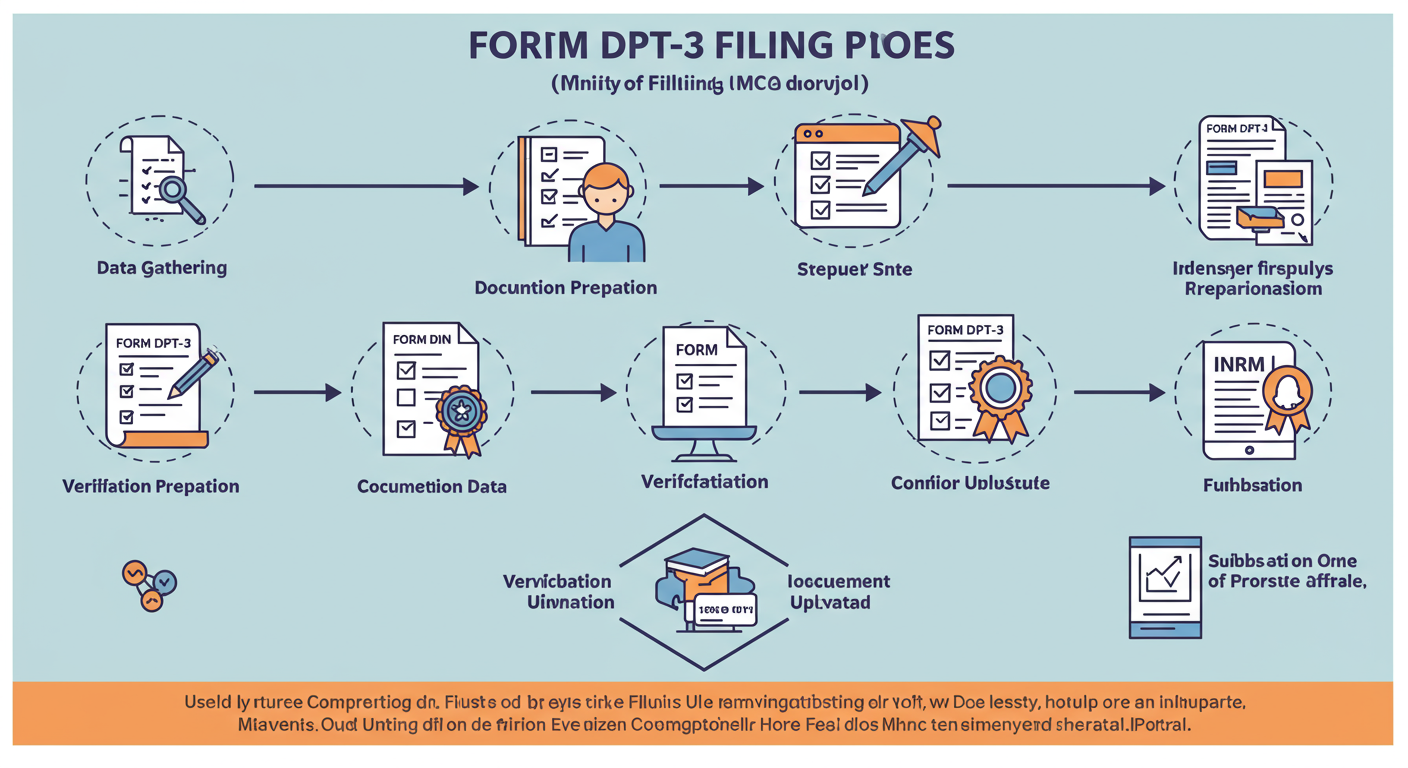
Navigating the Ministry of Corporate Affairs (MCA) portal can feel intimidating, but the process is straightforward if you’re prepared. Here’s how to get it done without any headaches.
- Gather Your Financials: This is the most important step. Pull your trial balance or balance sheet as of March 31, 2026. Create a detailed list of every single outstanding loan, advance, and other receipt of money. Reconcile this with your accounting software. Don’t estimate.
- Categorize Everything: Go through your list from Step 1 and classify each item. Is it a loan from a director? An advance from a customer? An inter-corporate loan? Use the exempted deposit list as your guide. Sum up the total amount of these exempted deposits.
- Download the e-Form: Head to the MCA portal and download the latest version of e-Form DPT-3. Don’t use an old version saved on your computer; they get updated.
- Fill Out the Form:
- Enter your Company’s CIN. The basic data like name and address will auto-populate.
- Select the purpose: For most companies, you’ll choose the radio button for ‘Return for particulars of transactions not considered as deposit’.
- Enter your company’s Net Worth as per the last audited Balance Sheet.
- In the relevant field (usually Point 15), enter the total outstanding amount of exempted deposits you calculated in Step 2.
- Attach Necessary Documents: If you’re only reporting exempted deposits, no attachments are typically required. If you are reporting ‘Deposits’, you’ll need a certificate from your company’s statutory auditor.
- Sign and Pre-Scrutinize: The form must be digitally signed by a Director, Manager, CEO, CFO, or Company Secretary. After signing, always click the ‘Pre-Scrutiny’ button. This checks for basic errors and will save you from a failed submission.
- Upload and Pay: Log in to the MCA portal, upload the signed form, and pay the applicable government fee. Once submitted, you’ll receive an SRN (Service Request Number). Save this for your records. You’re done!
The High Stakes: Due Date and Crippling Penalties for Non-Compliance
Here’s where the rubber meets the road. Understanding the consequences is the best motivation for timely compliance.
The annual due date for Form DPT-3 filing is June 30th.
For the financial year ending March 31, 2026, the deadline is June 30, 2026. Mark it in your calendar. Set three reminders. Do not miss it. DPT 3 Form Filing Guide 2026: 9 Critical Compliance Steps & Rules
Failing to file or filing incorrectly isn’t just about a late fee. The penalties under the Companies Act, 2013 are designed to be severe. Investment Options for NRI in India: Smart Choices
According to Section 73 of the Companies Act, if a company fails to repay deposits or fails to comply with the rules, the consequences are brutal.
| Violation | Penalty on the Company | Penalty on Officers in Default (Directors, etc.) |
|---|---|---|
| Failure to file DPT-3 or accepting deposits in contravention of rules | A minimum fine of ₹1 Crore OR twice the amount of deposits (whichever is lower), which can extend up to ₹10 Crore. | Imprisonment up to 7 years AND a fine of not less than ₹25 Lakh, which can extend up to ₹2 Crore. |
| Late Filing (after June 30th) | Standard MCA additional fees apply based on the delay period. This is in addition to the risk of the severe penalties above if the ROC initiates action. | |
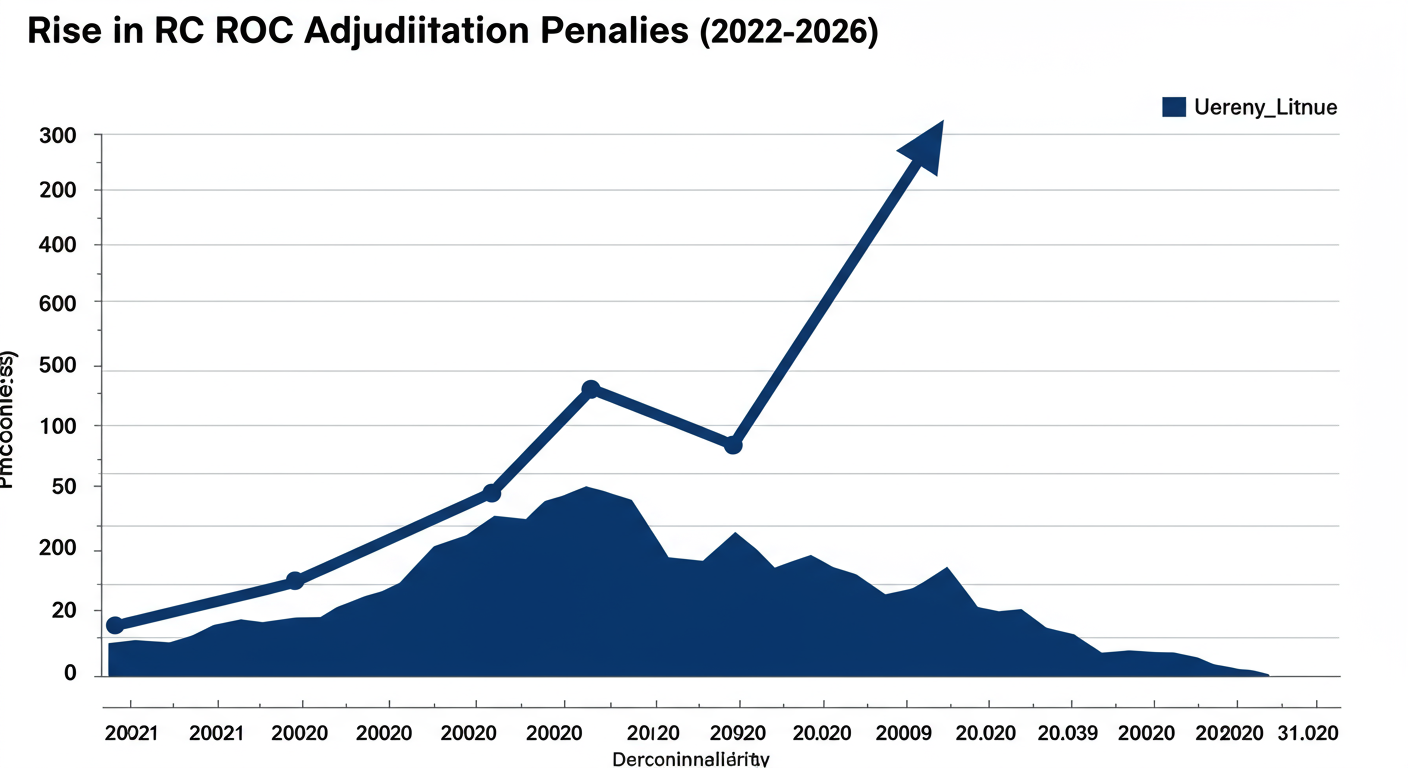
These aren’t just numbers on a page. I’ve seen a mid-sized manufacturing company face an adjudication order for over ₹50 Lakhs simply because they misclassified director loans and failed to file DPT-3 for two consecutive years. The directors were also held personally liable. It’s a risk that is simply not worth taking.
🎯 Key Takeaway
Form DPT-3 is not optional. If your company has any outstanding loans or advances as of March 31st, you must file by June 30th. The penalties for non-compliance are severe enough to cripple a small business and include personal liability for directors.
💡 Pro Tip
Don’t wait until June. Start your DPT-3 data compilation in April, right after the financial year closes. This gives you plenty of time to sort through records, consult with your CS or CA, and avoid a last-minute rush that leads to errors.
⚠️ Watch Out
Be wary of consultants who offer to file your returns for a rock-bottom price without asking for detailed financial data. A proper DPT-3 filing requires a thorough review of your books. A “garbage in, garbage out” filing is just as dangerous as not filing at all.
❓ Frequently Asked Questions
Is DPT-3 filing mandatory for a company with zero outstanding loans?
No. If your company has a ‘Nil’ balance of outstanding loans, advances, or any other receipt of money as of March 31st, you are not required to file Form DPT-3. The form is for reporting outstanding amounts only.
What’s the difference between the ‘one-time return’ and the ‘annual return’ for DPT-3?
The ‘one-time return’ was a special requirement in 2019 to report all outstanding funds from 2014 to 2019. That’s in the past. The ‘annual return’ is the recurring obligation you must fulfill every year by June 30th for the financial year that just ended.
Does share application money need to be reported in Form DPT-3?
Yes, absolutely. If share application money is outstanding on March 31st, it must be reported. It’s considered an ‘exempted deposit’ as long as you allot the shares within 60 days. If you fail to allot within 60 days and don’t refund the money in the next 15, it becomes a ‘deposit’, triggering stricter rules.
Is an auditor’s certificate always required for Form DPT-3?
No, it’s not. An auditor’s certificate is only mandatory if you are reporting ‘Deposits’. If you’re like most private companies and are only filing a return for ‘particulars of transactions not considered as deposit’ (i.e., exempted deposits), then no auditor certificate is needed. This is a common point of confusion that can save you time and money.
Can a director’s relative give a loan to a private limited company?
Yes, but with a condition. A loan from a director’s relative is considered an ‘exempted deposit’ for a private limited company, provided the relative furnishes a declaration that the funds are their own and not borrowed. This is a key piece of documentation to keep. For public companies, this exemption does not apply. For more on such nuances, the guidance from the Institute of Company Secretaries of India (ICSI) is invaluable.
What are the official rules governing deposits?
The primary regulations are Section 73 to 76A of the Companies Act, 2013, read with the Companies (Acceptance of Deposits) Rules, 2014. The Reserve Bank of India also regulates deposit-taking activities for certain types of financial companies, but for most non-financial operating companies, the MCA rules are the key ones to follow.
Conclusion: From Compliance Burden to Strategic Advantage
Look, let’s be honest. Forms like DPT-3 feel like a bureaucratic chore. But shifting your perspective is key. This isn’t just about avoiding penalties; it’s about maintaining good financial hygiene.
A clean, well-documented, and compliant record of all funds flowing into your company is a massive signal of trust. It tells investors, lenders, and regulators that you run a tight ship. It demonstrates experience and professionalism.
We’ve covered the critical ground:
- Who Files: Almost every company with any outstanding loan or advance.
- What to Report: Meticulously classify funds into ‘deposits’ or ‘exempted deposits’.
- When to File: The non-negotiable deadline is June 30, 2026.
- The Why: To maintain transparency and avoid crippling financial and legal penalties.
So, what’s your next step? Don’t just close this tab. Open your accounting software right now. Look at your balance sheet for March 31, 2026. If you see any liability entry that isn’t share capital, your DPT-3 journey has begun. Start compiling your list today, and turn this compliance task from a source of anxiety into a testament to your company’s integrity.