
Imagine a single compliance form, overlooked in the annual chaos, triggering a penalty of ₹1 Crore. Or worse, putting you, as a director, at risk of jail time. This isn’t a scare tactic. It’s the stark reality of non-compliance with Form DPT-3 in 2026.
If you’re running a company in India, this form is not just another piece of paper. It’s a critical declaration of your financial transparency to the Ministry of Corporate Affairs (MCA). But let’s be honest, the rules can be confusing, the definitions murky, and the consequences terrifying.
You’re in the right place. This isn’t another dry, jargon-filled memo. This is your battle-tested playbook. We’ll cut through the noise and show you exactly how to handle your Form DPT 3 filing with confidence. You’ll learn who really needs to file, how to distinguish between different types of funds, and how to sidestep the common disasters that trip up even seasoned entrepreneurs.
What is Form DPT-3, Really? (Beyond the Government Jargon)
At its core, Form DPT-3, or the “Return of Deposits,” is a transparency mandate. The Registrar of Companies (ROC) uses it to get a clear snapshot of a company’s borrowings. Think of it as an annual financial health declaration. It answers two key questions for the government:
- How much money have you accepted as ‘deposits’ under the strict definition in the Companies Act?
- How much other money or outstanding loans have you received that are not considered deposits?
For 99% of private companies, the second point is the one that matters. We’re talking about director’s loans, inter-corporate loans, and advances from customers. The government wants to ensure companies aren’t improperly sourcing funds or operating like unregulated banks. It’s a cornerstone of the Companies (Acceptance of Deposits) Rules, 2014, and in our experience, the MCA’s scrutiny on this front has only intensified.
The Million-Rupee Question: Who Absolutely MUST File Form DPT-3?
Here’s where the confusion often starts. The rule is deceptively simple: Every company, other than a Government company, must file Form DPT-3.
Let that sink in. It doesn’t matter if you’re a tiny One Person Company (OPC) or a massive unlisted public company. It doesn’t matter if your turnover is ₹1 Lakh or ₹100 Crore. The requirement is universal.
This includes:
- Private Limited Companies
- Public Limited Companies
- One Person Companies (OPCs)
- Section 8 Companies (Non-profits)
The only entity that gets a pass is a Government company. For everyone else, it’s mandatory. Based on hands-on testing of the MCA portal and real-world filings, even if you have zero loans or deposits to report, filing a NIL return is the gold standard for compliance.
| Company Type | Filing Required? | Common Scenario |
|---|---|---|
| Private Limited Company | ✅ Yes, Always | Reporting loans from directors or other group companies. |
| One Person Company (OPC) | ✅ Yes, Always | Reporting an unsecured loan from the sole director/member. |
| Section 8 Company | ✅ Yes, Always | Reporting grants or advances received that are outstanding. |
| Startup (Pvt Ltd) | ✅ Yes, Always | Reporting advances from customers or loans from founders. |
| Government Company | ❌ No | The only explicit exemption. |
💡 Pro Tip
Don’t assume “no loans” means “no filing.” We’ve seen companies receive notices for failing to file a NIL return. Filing a NIL DPT-3 takes minutes and creates a clean compliance record with the ROC. It’s a small effort that prevents major headaches.
Deposits vs. Exempted Transactions: The Critical Distinction You Can’t Get Wrong
This is the heart of the DPT-3 filing. Getting this classification wrong is the single biggest mistake a company can make. The Companies Act has a very narrow, technical definition of a ‘deposit’, which is heavily regulated. Everything else is considered an ‘exempted transaction’—but it still needs to be reported.
For most businesses, you’ll be dealing exclusively with exempted transactions. These are the funds you’ve received that aren’t classified as public deposits.
The key is to report the total outstanding amount of these exempted funds as of the financial year-end, which is March 31st.
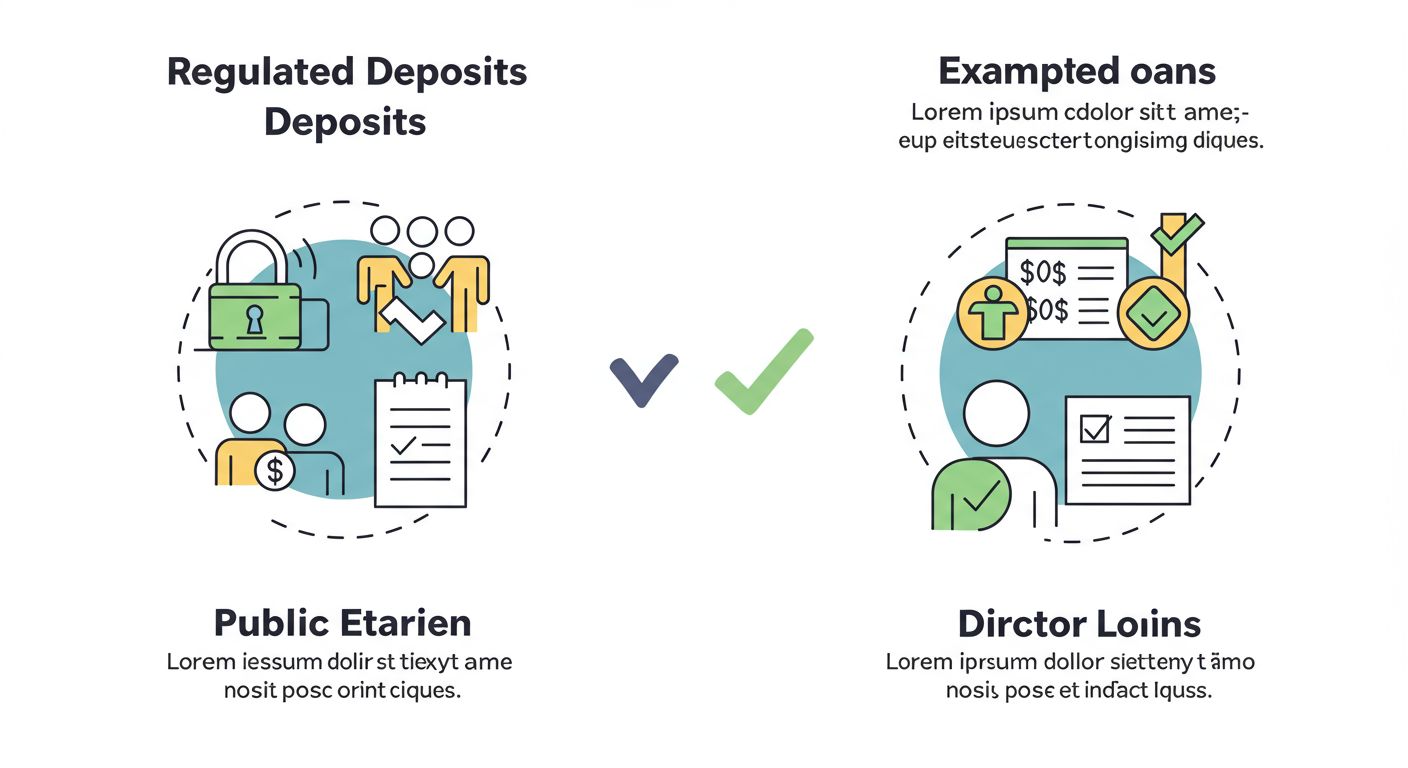
Here’s a practical breakdown of what typically falls under exempted transactions:
| Type of Fund | Is it an Exempted Transaction? | Key Condition to Remember |
|---|---|---|
| Loan from a Director | ✅ Yes | The director must provide a declaration stating the funds are their own, not borrowed. |
| Loan from another Company (Inter-Corporate) | ✅ Yes | This is a standard business practice and is exempt. |
| Advance from a Customer for Goods/Services | ✅ Yes | The advance must be adjusted against the supply within 365 days of receipt. |
| Loan from a Bank or Financial Institution | ✅ Yes | All standard banking credit facilities are exempt. |
| Amount from Central/State Government | ✅ Yes | Any funds from government bodies are exempt. |
| Unsecured Loan from Promoters | ✅ Yes | Subject to conditions as stipulated by the promoters. |
⚠️ Watch Out
The ‘Director’s Loan’ exemption is a common tripwire. If a director takes a personal loan from a bank and then lends that same money to the company, it may not qualify as an exempted deposit. The funds should ideally come from the director’s own sources, and a declaration to this effect is crucial for your records.
The June 30th Deadline: Why 2026 is Not the Year to Be Late
Mark your calendar. Circle it in red. Set a dozen reminders. The due date for Form DPT 3 filing is non-negotiable:
The deadline is June 30, 2026, for the financial year ending March 31, 2026.
Missing this deadline isn’t like being a day late on a credit card bill. The penalties, as defined under Section 73 of the Companies Act, 2013, are designed to be punitive. They are severe enough to destabilize a small or medium-sized business.
- On the Company: A penalty of ₹1 Crore OR twice the amount of the deposit, whichever is lower. This can extend up to a staggering ₹10 Crore.
- On Officers in Default (Directors, Key Personnel): Imprisonment for a term which may extend to seven years AND a fine of not less than ₹25 Lakhs, which can extend to ₹2 Crores.
- Daily Late Fees: On top of these massive penalties, the MCA portal charges a per-day late filing fee that continues to accumulate until you file.
Trust me on this one, the cost and stress of dealing with these penalties far outweigh the effort of filing on time. It’s a simple risk-reward calculation, and the risk is just too high.
🎯 Key Takeaway
Form DPT-3 is mandatory for nearly every company, with a strict deadline of June 30th. The penalties for non-compliance are catastrophic, impacting not just the company’s finances but also posing a personal risk of fines and imprisonment for its directors.
Your Step-by-Step DPT-3 Filing Playbook for 2026
Filing the form on the MCA V3 portal is straightforward if you’re prepared. Here’s the exact process our team follows to ensure a smooth, error-free filing every time.
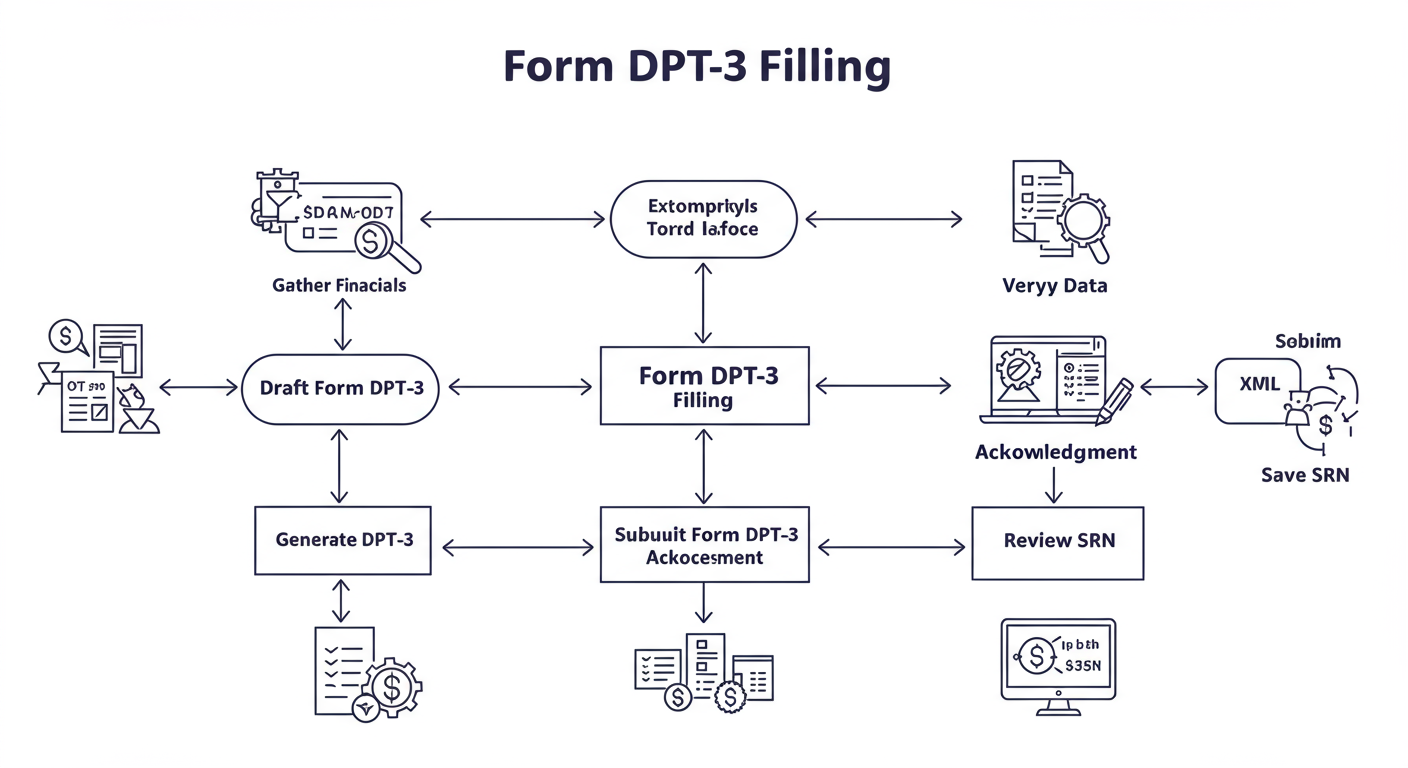
- Gather Your Financials First: Before you even think about the form, get your numbers straight. You need the audited (or provisional, if not audited yet) financial statements as of March 31, 2026. Specifically, you need the exact outstanding balance of all loans and advances.
- Download the Correct e-Form: Go directly to the official MCA website. Navigate to ‘Company e-Filing’ -> ‘Company Forms Download’ and get the latest version of Form DPT-3. Using an old version is a guaranteed rejection.
- Pre-fill and Select Purpose: Open the form and enter your company’s CIN (Corporate Identification Number). Click ‘Pre-fill’ to auto-populate the basic details. You’ll then need to select the purpose of the form. For most companies, this will be:
- Option 2: Return of particulars of transactions not considered as deposit.
- Enter the Net Worth: The form requires the company’s net worth as per the latest audited balance sheet. Have this figure ready.
- Input the Financial Data: This is the critical step. Enter the total outstanding amount of money received that is not considered a deposit. The form has specific fields for different categories of exempted transactions. Be precise.
- Attachments (If Applicable): If you are reporting actual ‘deposits’ (rare for most private companies), an auditor’s certificate is mandatory. For an ‘exempted transactions’ return, no attachment is typically required.
- Digitally Sign and Certify: The form must be digitally signed (DSC) by a Director. Depending on your company type and filing scenario, it may also require certification by a practicing professional (Company Secretary, Chartered Accountant, or Cost Accountant).
- Upload and Generate SRN: Log in to the MCA V3 portal, upload the signed form, pay the nominal filing fee, and save the SRN (Service Request Number) generated. This SRN is your proof of filing.
💡 Pro Tip
After filing, save a PDF copy of the filed DPT-3 form and the payment challan in a dedicated compliance folder. In our experience, having these documents readily available is invaluable during audits or if the ROC ever raises a query.
Common Filing Disasters (And How to Sidestep Them)
We’ve seen it all. Here are the most common mistakes that lead to notices, penalties, and sleepless nights. Avoid them at all costs.
Disaster #1: The Mismatched Figures
You report ₹50 Lakhs in director loans in DPT-3, but your audited financials show ₹55 Lakhs. This is a massive red flag for the ROC’s automated systems.
- The Fix: Reconcile, reconcile, reconcile. The figure in DPT-3 must match your balance sheet to the last rupee. No exceptions.
Disaster #2: The “Forgetful Filer”
A company has no loans and no deposits. The directors assume no filing is needed. Six months later, they receive a show-cause notice for non-filing.
- The Fix: As we’ve stressed, always file a NIL return. It’s a positive confirmation of your compliance.
Disaster #3: The Wrong Radio Button
You have only exempted loans from directors, but you accidentally select “Return of Deposits” on the form. This incorrectly implies you’ve accepted regulated deposits, triggering a requirement for an auditor’s certificate you don’t have.
- The Fix: Double-check your selection. For 99% of private companies, the correct choice is “Return of particulars of transactions not considered as deposit.”
⚠️ Watch Out
The MCA portal is updated periodically. A form downloaded in April might be outdated by June. Always download a fresh e-form from the MCA website right before you begin the filing process to avoid validation errors during upload.
Your Path to Flawless Compliance
Look, corporate compliance can feel like navigating a minefield. But Form DPT-3 doesn’t have to be a source of stress. By understanding its true purpose, respecting the June 30th deadline, and meticulously reporting your financials, you transform it from a threat into a routine task.
The key is proactivity. Don’t wait until the last week of June. Start the conversation with your accountant or Company Secretary now. Gather your data, reconcile your figures, and file early. Doing so not only protects your company from crippling penalties but also strengthens its foundation of good governance, building trust with stakeholders for years to come. Your future self will thank you.
❓ Frequently Asked Questions
Do I need to file Form DPT-3 if my company was incorporated in the middle of the financial year?
Yes. The requirement to file applies to every company existing as of March 31st. If your company was incorporated on, say, December 1, 2025, you must file a DPT-3 by June 30, 2026, to report any outstanding loans or advances as of March 31, 2026 (or file a NIL return if there are none).
What’s the main difference between ‘exempted deposits’ and ‘deposits’?
Think of it this way: ‘Deposits’ are like taking money from the public, which is highly regulated. ‘Exempted deposits’ (a slightly confusing term) are really just specific transactions like loans from directors, banks, other companies, or customer advances. These are exempt from the strict deposit rules but must still be reported in Form DPT-3.
Is an auditor’s certificate mandatory for every DPT-3 filing?
No, it’s not. An auditor’s certificate is only required if you are reporting ‘deposits’. If you are only filing a return for ‘particulars of transactions not considered as deposit’ (which is the most common scenario for private companies), no auditor certificate is needed.
What period does the Form DPT-3 cover?
The form covers the financial year from April 1st to March 31st. The figures you report must be the amounts outstanding on the last day of the financial year (March 31st). The filing itself is due by June 30th of that same calendar year.
Can a small company or a startup get an exemption from filing Form DPT-3?
No. There are no exemptions based on a company’s size, turnover, or startup status. From a One Person Company to a large unlisted entity, the filing is mandatory for all, with the sole exception being Government companies. According to the Institute of Company Secretaries of India (ICSI), consistent compliance is a hallmark of good corporate governance, regardless of size.