What’s in a name? For The Coca-Cola Company, it’s worth tens of billions of dollars. That isn’t the value of their factories, their secret formula, or their global distribution network. It’s the value of their brand identity—an identity fiercely protected by one of the most powerful legal tools in business: the trademark.
You see a simple swoosh on a shoe and you don’t just see a logo; you feel a surge of motivation. You see a bitten apple on a sleek device and you don’t just see a computer; you see innovation and premium design. That’s not an accident. It’s the result of decades of meticulous brand strategy built on the bedrock of intellectual property.
This isn’t just another list of logos. In this deep dive, you’re going to learn the strategic secrets behind the world’s most iconic brands. We’ll dissect what makes their trademarks work, how they use different types of protection to create an impenetrable fortress around their brand, and—most importantly—how you can apply these same principles to your own business, starting today.
What is a Trademark, Really? The DNA of Your Brand’s Reputation
Before we jump into the famous trademark examples, let’s get one thing straight. A trademark is so much more than a logo. Think of it as your brand’s unique fingerprint in a crowded marketplace. Its entire purpose is to be a source-identifier.
According to the U.S. Patent and Trademark Office (USPTO), a trademark is any word, name, symbol, or device used to distinguish your goods from others. It’s the signal that tells a customer, “This is us. This is the quality and experience you can expect.”
It’s the legal shield that stops a competitor from creating “Koka-Kola” or using a slightly different swoosh to sell cheap knockoffs. It protects the trust and reputation you’ve bled for. Without it, your brand is just a suggestion. With it, it’s an asset.
The Different Flavors of Trademarks: A Strategic Overview
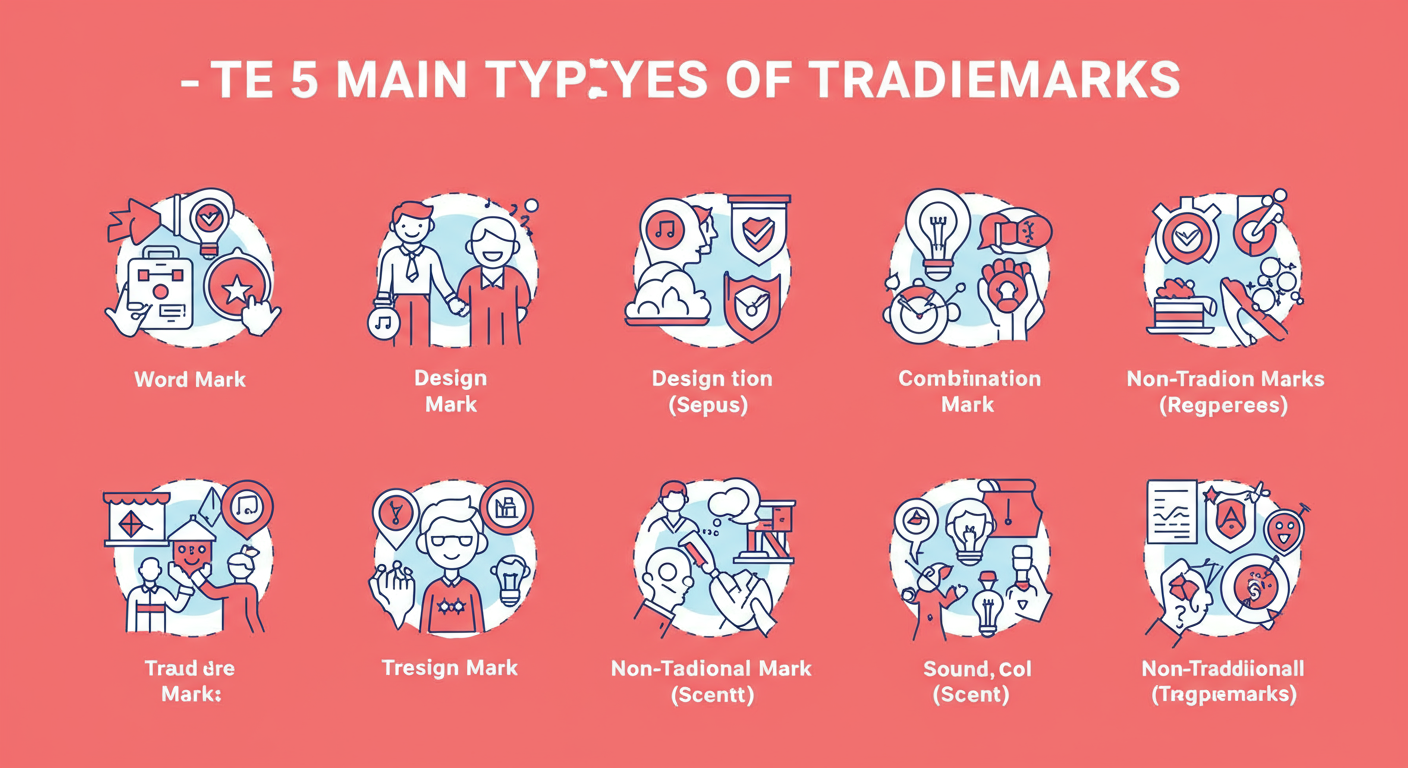
Great brands don’t just rely on one type of trademark; they layer them. Understanding these categories is the first step to building a comprehensive brand protection strategy. While most people think of names and logos, the toolkit is much, much bigger.
| Trademark Type | What It Protects | Classic Example | Modern Example |
|---|---|---|---|
| Word Mark | The text of a name or slogan, regardless of font or style. Provides the broadest protection for the words themselves. | FORD | TESLA |
| Design Mark (Logo) | A specific graphic, symbol, or stylized design. Protects the visual element only. | The Nike “Swoosh” | The Airbnb “Bélo” |
| Combination Mark | A specific combination of words and a design. Protects the logo as a whole unit. | The Burger King “bun” logo | The Amazon logo with the smile/arrow |
| Trade Dress | The overall look and feel of a product or its packaging, including shape and color scheme. | The unique shape of a Coca-Cola bottle | The minimalist layout of an Apple Store |
| Non-Traditional Marks | Unique identifiers like sounds, colors, or even scents that have acquired source-identifying meaning. | NBC’s three-note chime (Sound) | UPS’s “Pullman Brown” color (Color) |
💡 Pro Tip
When starting out, many businesses file for a combination mark (logo + name). However, based on our experience, it’s often strategically smarter to file for the word mark and the design mark separately. This gives you more flexibility to use the logo and the name independently and provides stronger, broader protection against infringers.
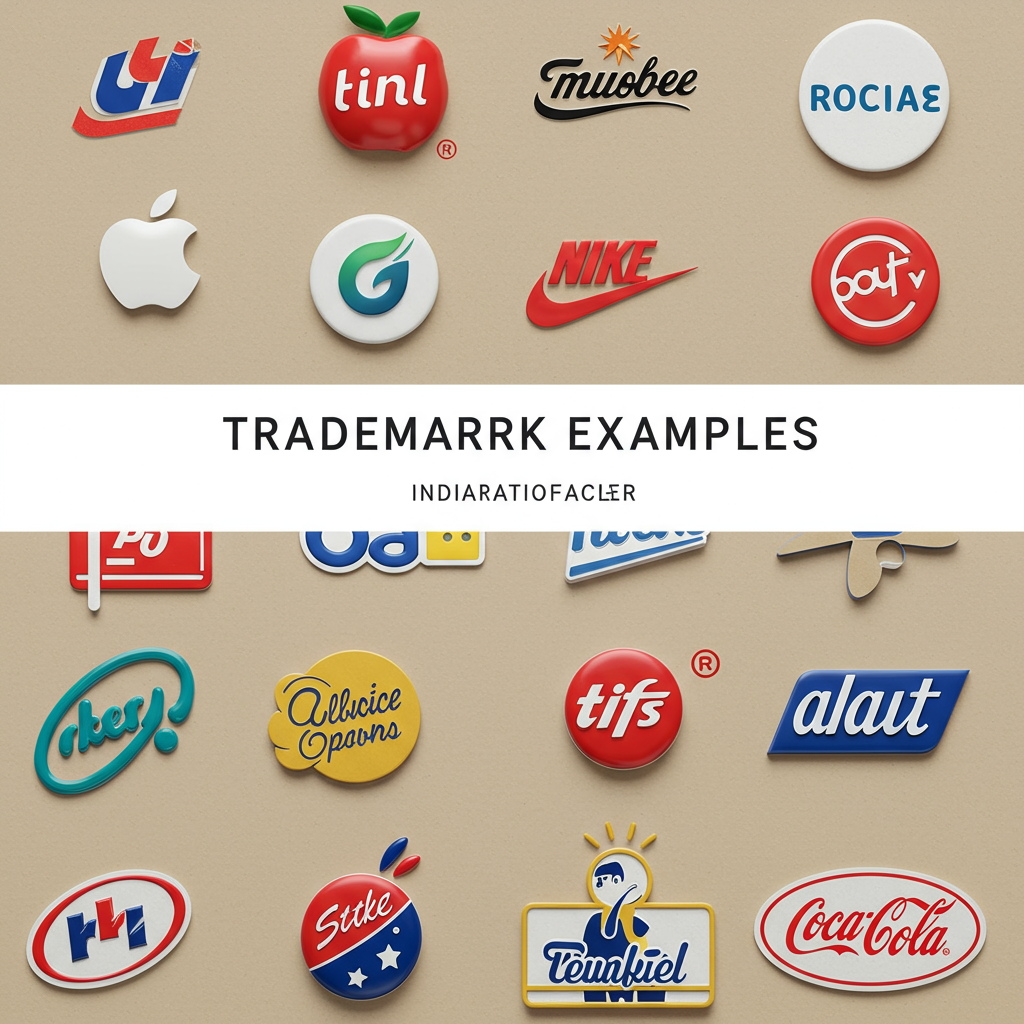
12 Famous Trademark Examples That Built Global Empires
Theory is one thing; seeing it in action is another. These brands are masters of the craft. Let’s break down not just what their trademarks are, but the strategy behind them.
1. Coca-Cola: The Master of Layered Protection
Coke is the undisputed champion. They have the word mark “Coca-Cola,” the iconic combination mark of that name in Spencerian script, and, most brilliantly, trade dress protection on their contoured glass bottle. Even if you found that bottle shattered on a beach, you’d know exactly what it was. That’s brand power.
2. Apple Inc.: The Ecosystem of Simplicity
Apple’s strategy is a masterclass in minimalist branding. The “Apple” word mark is arbitrary (computers have nothing to do with fruit), giving it immense legal strength. The bitten apple design mark is so globally recognized it often stands alone. They’ve also trademarked product names (iPhone, MacBook), software (macOS), and even the “look and feel” of their retail stores as trade dress.
3. Nike: The Power of Emotion and Simplicity
Nike built an empire on two simple, yet profound, assets. The “Swoosh” design mark is a perfect symbol of movement and grace. The “Just Do It.” slogan (also a trademark) is more than an ad line; it’s a cultural mantra. Together, they create an emotional connection that transcends sportswear.
4. McDonald’s: A Multi-Sensory Brand
You know the Golden Arches (a design mark) from a mile away. You know the “I’m Lovin’ It” jingle (a sound mark) the moment you hear it. McDonald’s has built a brand that attacks multiple senses, creating an unmistakable presence from their “Big Mac” word mark to their packaging trade dress.
5. Tiffany & Co.: Owning a Color
Can you own a color? Yes, you can. The iconic robin’s-egg blue of a Tiffany’s box is a registered color mark. The color itself, known as Tiffany Blue, is legally synonymous with the brand’s luxury and quality. This is an incredibly powerful form of trade dress that prevents any other jewelry company from using that specific shade on their packaging.
6. 3M: The Accidental Color Mark
The Canary Yellow color of Post-it® Notes wasn’t a grand strategic decision; it was simply the color of the scrap paper available at the lab. But over time, 3M was able to prove that consumers overwhelmingly associated that specific shade of yellow with their product, allowing them to trademark it as a color mark. It’s a prime example of a mark acquiring “secondary meaning.”
7. Harley-Davidson: The Sound of Rebellion
In 1994, Harley-Davidson attempted something audacious: they tried to trademark the distinctive “potato-potato-potato” chug of their V-twin motorcycle engine as a sound mark. While they eventually dropped the application after legal challenges, the attempt itself shows the strategic thinking of protecting every unique aspect of a brand experience. It cemented the sound in the public’s mind as uniquely “Harley.”
8. Google: From Noun to Verb and Back Again
The word mark “Google” is a fanciful term, giving it top-tier legal protection. It became so ubiquitous that people started using “to google” as a verb. This is a dangerous path that can lead to “genericide” (more on that below). Google’s legal team works tirelessly to remind people to use it as a proper noun referring to their search engine to protect their priceless asset.
9. Amazon: The A-to-Z Combination
Amazon’s logo is a brilliant combination mark. The name itself is an arbitrary mark (a river has little to do with online retail). The swoosh underneath is more than a smile; it’s an arrow pointing from ‘a’ to ‘z’, cleverly suggesting they sell everything you could possibly need. It’s a logo that tells a story.
10. Starbucks: The Evolving Siren
The Starbucks siren is a famous design mark. What’s interesting is how it has evolved. The original logo was a complex brown woodcut. Over the years, they simplified it, eventually dropping the “Starbucks Coffee” text altogether. This shows confidence that their siren alone is enough to identify the brand, a testament to its global recognition.
11. LEGO: The Battle for the Brick
For decades, LEGO fought to protect the shape of its iconic interlocking brick as a form of trade dress. Courts ultimately ruled that the brick’s shape was functional and therefore could not be trademarked indefinitely (it was protected by patents, which expire). This is a critical lesson: trademark law does not protect functional features of a product. LEGO now focuses on protecting its word mark and the iconic red-and-white logo. Guide to Udhyam (MSME) Registration: Easy Steps
12. Disney: The Signature of Magic
The stylized, signature-like script of the “Disney” logo is one of the most beloved combination marks in the world. It’s more than a name; it’s a promise of magic, storytelling, and family entertainment. They protect this mark with extreme vigilance, understanding it’s the gateway to their entire universe of characters and stories. 7 Crucial Facts About GST Penalty Interest Every Business Owner Must Know
🎯 Key Takeaway
The world’s most successful brands don’t just have a trademark; they have a trademark portfolio. They layer different types of marks—word, design, color, sound, and trade dress—to create a multi-faceted legal fortress that is incredibly difficult for competitors to penetrate.
The Trademark Strength Spectrum: Choosing a Defensible Name
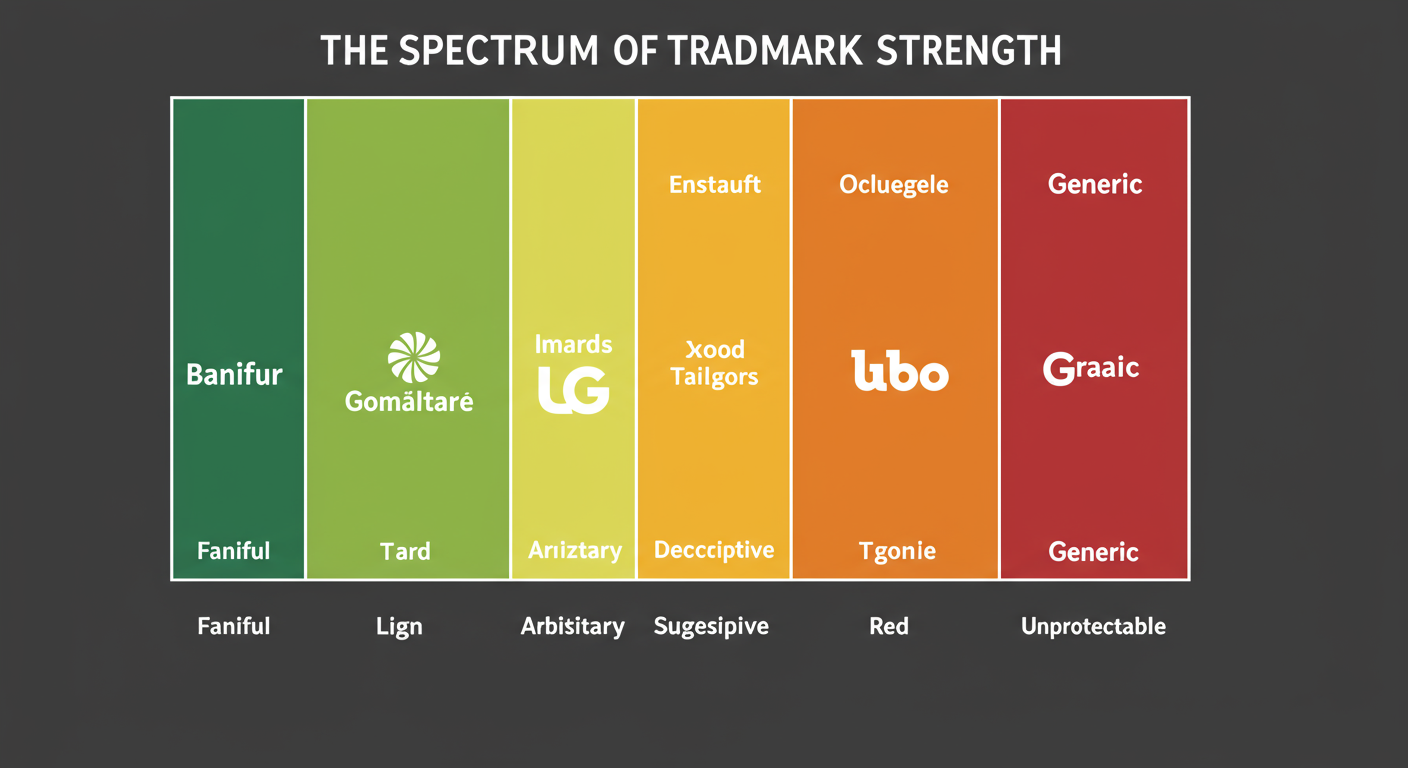
Not all trademarks are created equal. Their legal power—and how easy they are to defend—falls on a distinct spectrum. In our experience, founders who ignore this spectrum are the ones who end up in costly legal battles or forced rebrands. Choosing a name is one of the most critical strategic decisions you’ll make.
Here’s how it breaks down, from strongest to weakest.
| Strength Level | Definition | Example | Legal Defensibility |
|---|---|---|---|
| Fanciful (Strongest) | Invented words with no prior meaning. Inherently distinctive. | Kodak, Pepsi, Exxon | Very High |
| Arbitrary | Real words used in a way that has no connection to the product. Inherently distinctive. | Apple (for computers), Shell (for gas) | High |
| Suggestive | Hints at a product quality or benefit without directly describing it. Requires imagination. | Netflix (suggests internet flix/movies), Microsoft (software for microcomputers) | Medium |
| Descriptive (Weakest Protectable) | Directly describes the product, a feature, or its origin. Only protectable after gaining “secondary meaning.” | International Business Machines (IBM), American Airlines | Low (initially) |
| Generic (Unprotectable) | The common name for the product or service itself. Can never be trademarked. | “Shoe Store” for a shop that sells shoes. | None |
⚠️ Watch Out
The “Genericide” Trap! Brands like Aspirin, Escalator, and Thermos were once powerful trademarks. They became so popular that the public started using the brand name to refer to the entire product category. As a result, they lost their trademark rights. Always use your mark as an adjective (e.g., “a Kleenex® brand tissue”), not a noun or verb, to protect it.
How to Secure Your First Trademark: A 5-Step Guide for 2026
Feeling inspired? Good. Protecting your brand is one of the smartest investments you can make. While we always recommend consulting a qualified attorney, here’s a simplified roadmap of the process.
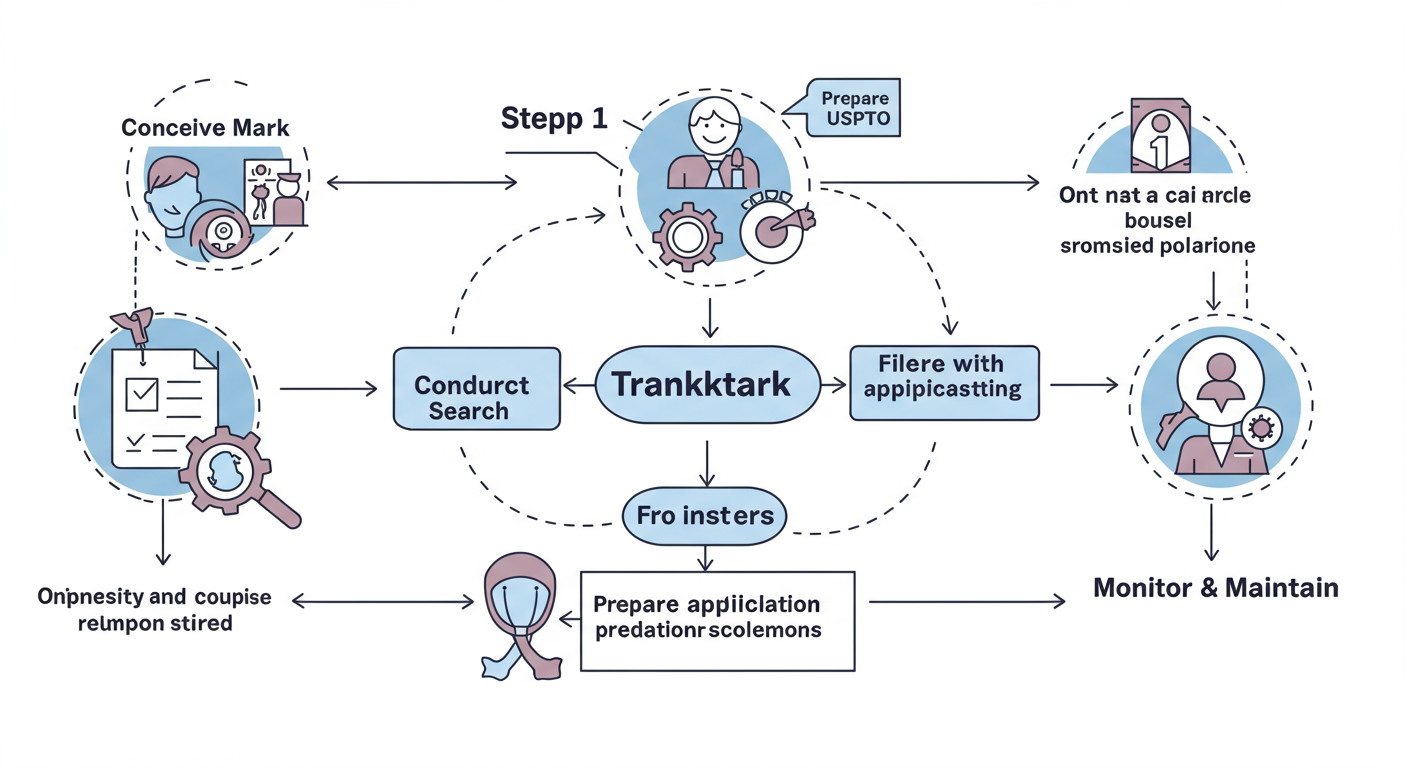
- Step 1: Choose a Strong Mark. Using the spectrum above, aim for a Fanciful or Arbitrary name. It’s tempting to pick a descriptive name for marketing, but it’s a much harder, more expensive path to protection.
- Step 2: Conduct a “Knockout” Search. Before you get attached, do a comprehensive search. At a minimum, search the USPTO’s TESS database and do extensive Google searches for similar names in your industry. This can save you a world of pain.
- Step 3: Identify Your Goods/Services. You don’t just trademark a name in a vacuum. You register it in specific “classes” of goods or services. Be precise about what your brand will represent now and in the near future.
- Step 4: Prepare and File Your Application. This is the formal part. You’ll file an application with your country’s intellectual property office (like the USPTO in the US). The application requires specific details about the mark, the owner, and its use in commerce.
- Step 5: Monitor and Maintain. Getting the registration isn’t the end! You have to actively use the mark, monitor for infringers, and file maintenance documents (in the U.S., between the 5th and 6th years, and every 10 years after) to keep your registration alive.
💡 Pro Tip
Document everything! From the moment you conceive your brand name, keep records of when you first used it in commerce (e.g., on your website, on a sales receipt). This “first use” date can be critical evidence if a dispute ever arises. A simple folder in your cloud drive can be a brand-saver.
⚠️ Watch Out
Don’t use the ® symbol until your mark is officially registered! Using it prematurely is illegal and can jeopardize your application. Until registration is granted, you can use ™ for goods or ℠ for services to put the public on notice that you claim rights to the mark.
Your Brand Is Your Legacy—Protect It
As we’ve seen from these famous trademark examples, a brand is not built by accident. It’s forged through great products, smart marketing, and, crucially, a robust legal foundation. A trademark transforms your brand from a fleeting idea into a durable, defensible, and valuable business asset.
The stories of Coca-Cola, Apple, and Tiffany & Co. aren’t just corporate history; they are strategic playbooks. They teach us to think beyond the logo, to layer our protections, and to choose our brand identifiers with care and foresight. As noted by branding experts in publications like the Harvard Business Review, a strong brand is a key driver of long-term enterprise value.
Your next step? Look at your own brand. Is it built on a strong, protectable foundation? Use the Trademark Strength Spectrum to evaluate your name. Take 30 minutes to run a preliminary search. Taking these small, proactive steps today is the best way to ensure your brand has the chance to become a legacy tomorrow.
❓ Frequently Asked Questions
What’s the difference between a trademark, copyright, and patent?
Think of it this way: Trademarks protect your brand identity (names, logos). Copyrights protect original creative works (books, songs, software code). Patents protect inventions (a new machine, a chemical process). They are three distinct types of intellectual property that protect different things.
How long does a trademark last?
Potentially forever! As long as you continue to use the mark in commerce and file the required maintenance documents with the trademark office (e.g., every 10 years in the U.S. after the first renewal), your trademark registration can be renewed indefinitely. This is unlike patents or copyrights, which have finite terms.
Can I really trademark a color or a sound?
Yes, but it’s a high bar. For these “non-traditional” marks, you must prove that the color or sound has acquired “secondary meaning.” This means you have to show evidence that when consumers see that color or hear that sound in a specific context, they immediately associate it with your specific brand and no one else’s.
Is it expensive to register a trademark?
It’s an investment, but it’s almost always cheaper than the alternative (rebranding or litigation). Government filing fees can range from a few hundred to a couple of thousand dollars, depending on the application and number of classes. Attorney fees are extra but are highly recommended. From real-world campaigns we’ve managed, the ROI on proper registration is immense.
Can I trademark my own name?
Yes, it’s possible, but there are rules. If you’re using your personal name as a brand to sell goods or services (e.g., “Donna Karan” fashion), it can be trademarked. However, if the name is primarily a surname, you’ll likely need to prove it has acquired secondary meaning in the marketplace before it can be registered.
What do the symbols ™, ℠, and ® mean?
The ™ (trademark) symbol is used for unregistered marks identifying goods, and the ℠ (service mark) symbol is for unregistered marks identifying services. They signal that you claim common-law rights to the mark. The ® (registered) symbol is the big one—it can only be used once your mark is officially registered with a national trademark office. Using it before then is a serious no-no.