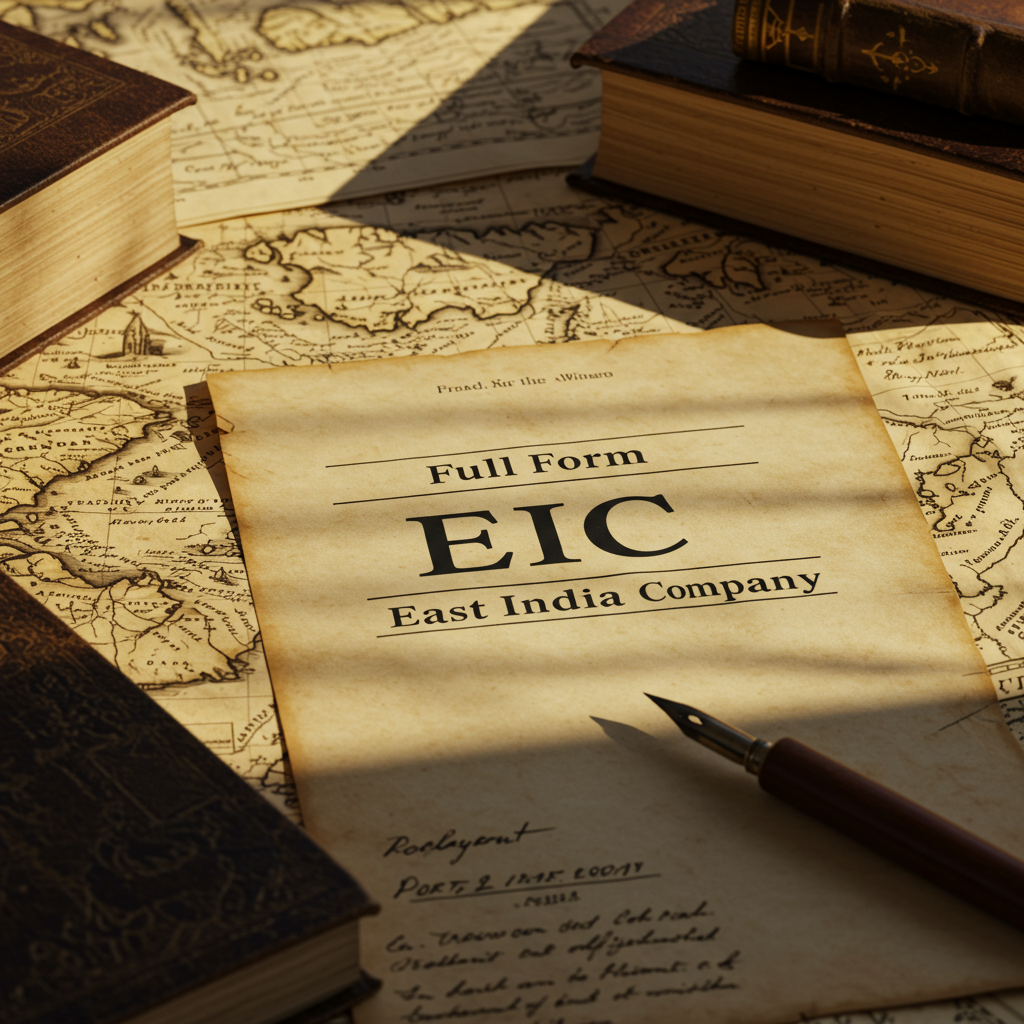
Ever stumble across an acronym and assume you know what it means? The letters “EIC” are a perfect trap.
For many, it conjures images of tall ships, spice-laden trade routes, and the rise of an empire. For others, it’s a critical checkpoint in the complex world of modern international commerce. They’re both right. This single acronym tells two vastly different stories: one of a corporate titan that redrew maps and another of a regulatory body that builds trust in a globalized economy.
So, what is the real EIC full form? The answer isn’t a simple definition. It’s a journey through history and into the heart of today’s trade. In this deep dive, you’ll discover not just what EIC stands for, but the powerful context behind each meaning—and why getting it right is absolutely crucial.
The Historical Behemoth: The East India Company
When you hear “EIC,” chances are your mind jumps to the East India Company. And for good reason. This wasn’t just any company; it was arguably the most powerful corporation in history. Founded by a royal charter from Queen Elizabeth I on the last day of 1600, its initial mission was simple: break into the lucrative spice trade in the East Indies.
But its ambition was anything but simple. It grew. It evolved. It became a monster of commerce and conquest.
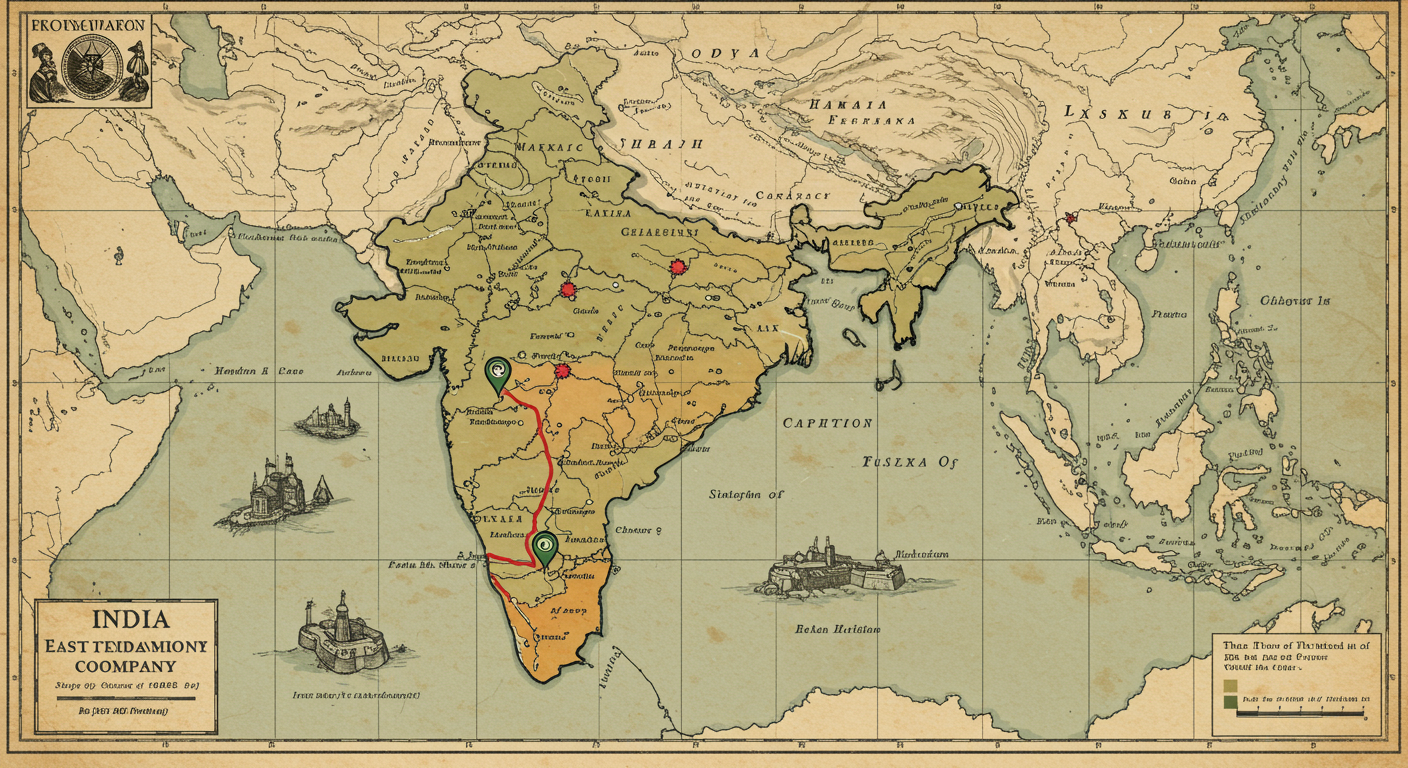
For over 250 years, the East India Company operated as a strange hybrid—part multinational corporation, part colonial state. It minted its own currency, commanded a private army that dwarfed the British military, and ruled over vast swathes of the Indian subcontinent. It wasn’t just trading silk and tea; it was waging wars, collecting taxes, and administering justice. Its story is a complex, often brutal, lesson in how commercial power can morph into sovereign rule.
“The East India Company was an anomaly without a parallel in the history of the world. It was a company of private individuals who had been… permitted to form a government and administer a territory of a hundred and fifty millions of people.” – A contemporary observation highlighting its unique power.
The turning point? The Battle of Plassey in 1757. After this victory, the company’s focus shifted decisively from trade to territory. It became the de facto ruler of India, a period of immense wealth extraction for Britain that ultimately led to the Indian Rebellion of 1857. In the aftermath, the British Crown took direct control, and the company’s extraordinary reign came to an end, officially dissolving in 1874.
⚠️ Watch Out
A common mistake is thinking the East India Company was part of the British government from the start. It wasn’t. It was a private, for-profit enterprise that was granted state-like powers. This distinction is critical to understanding its motivations and actions.
The Modern Gatekeeper: The Export Inspection Council of India
Now, let’s fast forward to 2026. In the world of international business, the EIC full form has a completely different—and vital—meaning: the Export Inspection Council of India.
Forget colonial conquest. This EIC is all about quality, safety, and trust.
Established by the Government of India under the Export (Quality Control and Inspection) Act of 1963, the EIC is the country’s official export certification body. Its mission is straightforward but massive: to ensure that goods shipped from India meet the strict standards of the importing nations. It’s the gatekeeper that protects the reputation of “Brand India” on the global stage.
In our experience working with countless exporters, navigating EIC compliance is one of the first—and most important—hurdles to clear. If you’re selling food, chemicals, or engineering goods abroad, you’ll almost certainly interact with the EIC or its associated agencies.
How the EIC Certification Process Works (A Simplified Overview)
For any business looking to export, understanding this process is non-negotiable. While specifics vary by product, the general workflow follows a clear path to ensure quality.
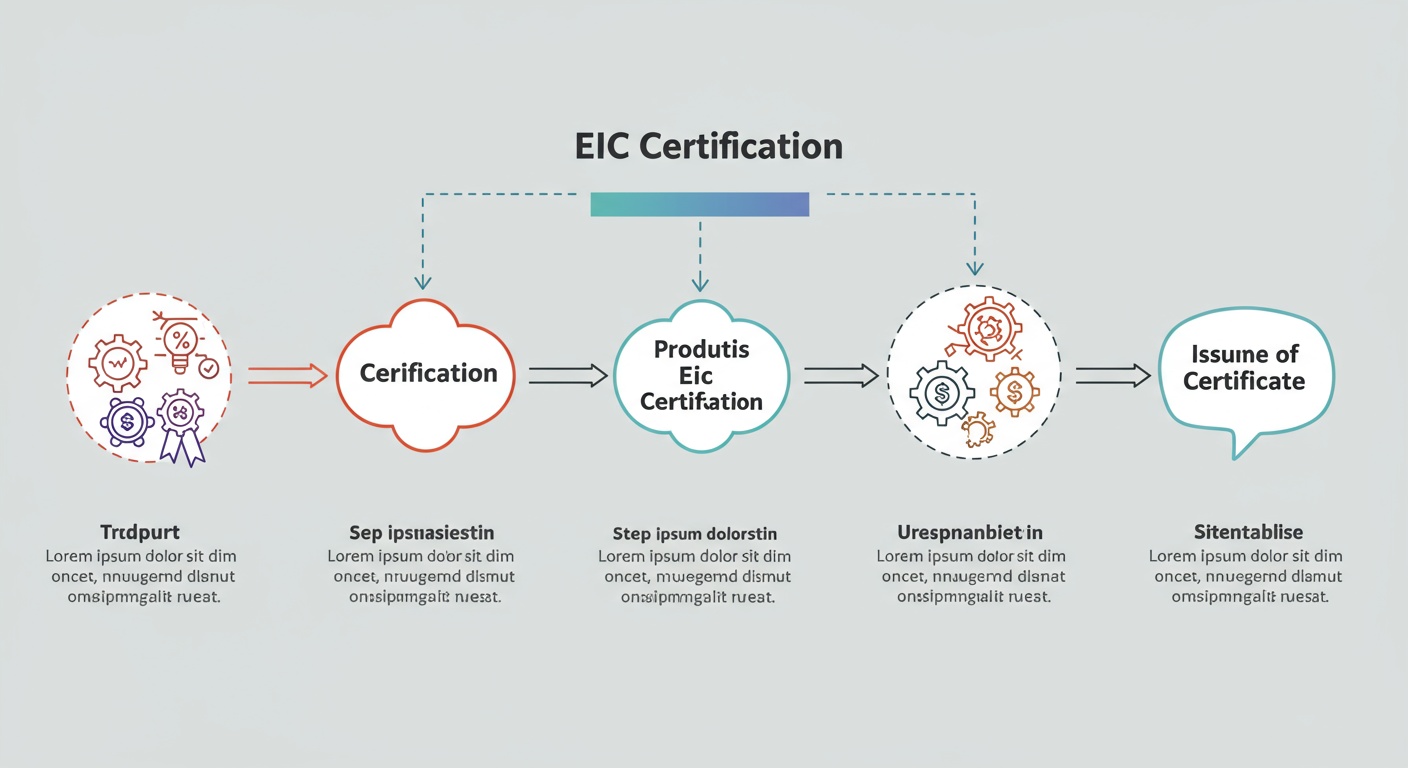
- Product Notification: The Government of India notifies which products require mandatory EIC certification before export.
- Exporter Application: The exporter submits an application for inspection, providing details about the consignment, buyer specifications, and the destination country’s standards.
- Consignment Inspection: An Export Inspection Agency (EIA), under the EIC’s umbrella, conducts a pre-shipment inspection. This can involve checking quality, quantity, packaging, and labeling.
- Sample Collection & Lab Testing: For many products, samples are drawn and sent to NABL-accredited labs. They’re tested for everything from microbial contaminants in food to material composition in engineering goods.
- Issuance of Certificate: If the consignment passes all checks and tests, the EIC issues a Certificate of Inspection. This document is gold—it’s the proof that your goods meet international standards and is often required for customs clearance.
💡 Pro Tip
Don’t treat EIC certification as a last-minute checkbox. Integrate its requirements into your production process from day one. Based on hands-on testing with clients, building quality control in from the start saves enormous time and money compared to failing a pre-shipment inspection.
EIC Head-to-Head: Empire vs. Export
The contrast between these two EICs couldn’t be more stark. Seeing them side-by-side reveals how one acronym can span centuries of change, representing polar opposite concepts. Choosing the Right Structure: Section 8 Company vs Trust vs Society
| Aspect | East India Company (Historical) | Export Inspection Council (Modern) |
|---|---|---|
| Era | 1600 – 1874 | 1963 – Present (2026) |
| Primary Purpose | Trade monopoly, territorial conquest, colonial administration. | Quality control, safety certification, and trade facilitation for Indian exports. |
| Governance | Private joint-stock company with its own army and administrative powers. | Statutory government body under India’s Ministry of Commerce and Industry. |
| Core Activity | Importing goods to Europe; exporting colonial rule. | Certifying goods for export from India. |
| Legacy | Controversial: immense wealth, corporate power, exploitation, and empire-building. | Positive: building global trust, ensuring quality, and boosting India’s trade. |
🎯 Key Takeaway
The EIC full form is a powerful lesson in context. The historical East India Company was a private entity that took from a region through colonial power, while the modern Export Inspection Council is a public body that gives to a nation by ensuring the quality of its exports. Avoiding the Pitfalls: Identifying the common mistakes in GST registration India
Other EIC Meanings You Might Encounter
While the two giants we’ve discussed dominate the conversation, “EIC” can pop up in other specialized fields. Context is everything. If you’re not discussing history or Indian trade, the EIC full form could be one of these:
- Engineer-in-Chief: A common title in military engineering corps (like the U.S. Army Corps of Engineers) or large civil works departments, denoting the highest-ranking engineering officer.
- Engineering Institute of Canada: A federation of Canadian engineering societies dedicated to advancing the profession in Canada.
- Electrical Installation Certificate: In the UK and other regions, this is a crucial safety document an electrician provides after installing or significantly altering an electrical system.
This just proves the point. Never assume. Always verify the context.
💡 Pro Tip
When you encounter an unfamiliar acronym in a professional document, don’t just guess. A quick internal search of the document (Ctrl+F) or a targeted web search like “EIC full form military” or “EIC electrical” will almost always give you the right answer in seconds and prevent embarrassing misunderstandings.
EIC Meaning Comparison by Industry
Here’s a quick-reference table to help you instantly identify the right EIC.
| Industry / Context | Likely EIC Full Form | Primary Function |
|---|---|---|
| World History / Colonial Studies | East India Company | Historical trading & ruling entity |
| International Trade / Indian Exports | Export Inspection Council | Quality and safety certification body |
| Military / Civil Engineering | Engineer-in-Chief | Senior leadership role |
| UK Construction / Electrical Work | Electrical Installation Certificate | Safety compliance document |
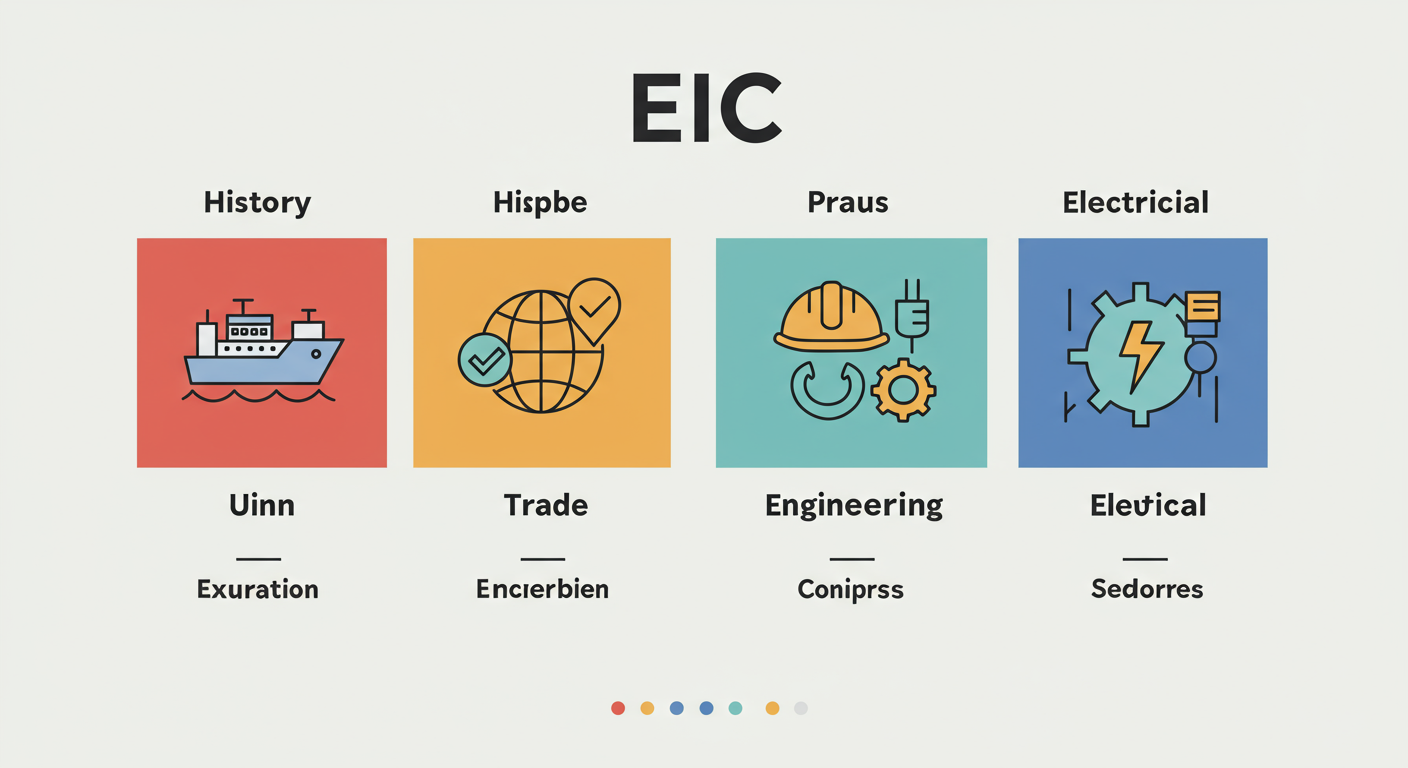
⚠️ Watch Out
Be aware of the “zombie brand.” A modern luxury goods company was launched in 2010 using the East India Company name and coat of arms. This is a completely separate entity and has no connection to the historical corporation or the Export Inspection Council.
❓ Frequently Asked Questions
What is the most common EIC full form?
Historically, the most famous EIC full form is the East India Company. However, in modern business, especially concerning trade from India, the Export Inspection Council is the highly relevant and active meaning.
What does the Export Inspection Council of India actually do?
The EIC is India’s official export certification body. It ensures products being exported meet the quality and safety standards of the destination country through inspection, testing, and certification. Its work is crucial for accessing discerning international markets. You can find more details on their official website.
When was the original East India Company dissolved?
The East India Company’s ruling powers were transferred to the British Crown in 1858 following the Indian Rebellion. The company itself was formally dissolved by an Act of Parliament in 1874.
Why is the EIC (Export Inspection Council) important for my business?
If you export certain categories of goods from India (like food, fish, dairy, or chemicals), obtaining an EIC certificate is often mandatory. It’s a key that unlocks access to global markets by proving your products are safe and meet international standards, as recognized by bodies like the World Trade Organization’s SPS Agreement.
Is the East India Company still active today?
No, the historical company that ruled parts of India is long gone. A new, unrelated luxury brand was launched in 2010 that acquired the rights to the name and coat of arms, but it has no operational or historical continuity with the original corporation.
Conclusion: Context is King
So, we’ve traveled from the 17th century to 2026, from a private army to a public service. The EIC full form isn’t one thing—it’s a mirror reflecting the context you’re in. It can mean a historical empire built on trade and conquest or a modern system built on trust and quality.
Here’s the bottom line: words and acronyms have power, but that power comes from their context. The next time you see “EIC,” don’t just read the letters. Look at the world around them. Are you reading a history book, a trade agreement, or an engineering blueprint?
Answering that question is your first step to true understanding. It’s the difference between simply knowing a fact and possessing real knowledge.