
Let’s be honest: dealing with the Ministry of Corporate Affairs (MCA) compliance calendar can feel like navigating a minefield. Just when you think your company is in the clear, June approaches, and the panic regarding the DPT 3 Form sets in.
Here is the reality check. In 2026, the MCA isn’t just asking for data; they are using AI-driven backend systems to cross-verify your balance sheet against your filed returns. If your borrowings don’t match your DPT-3, you aren’t just looking at a clerical error—you’re looking at a potential adjudication notice.
I’ve seen perfectly healthy Private Limited companies get slapped with massive penalties simply because they misunderstood the difference between a “deposit” and a “loan from a director.” It happens more often than you think.
Whether you are a Director trying to protect your company or a professional ensuring client compliance, this guide cuts through the legal jargon. We are going to break down exactly what the DPT 3 Form is, why the 2026 deadline matters, and how to file it without triggering a regulatory nightmare.
🎯 Key Takeaway
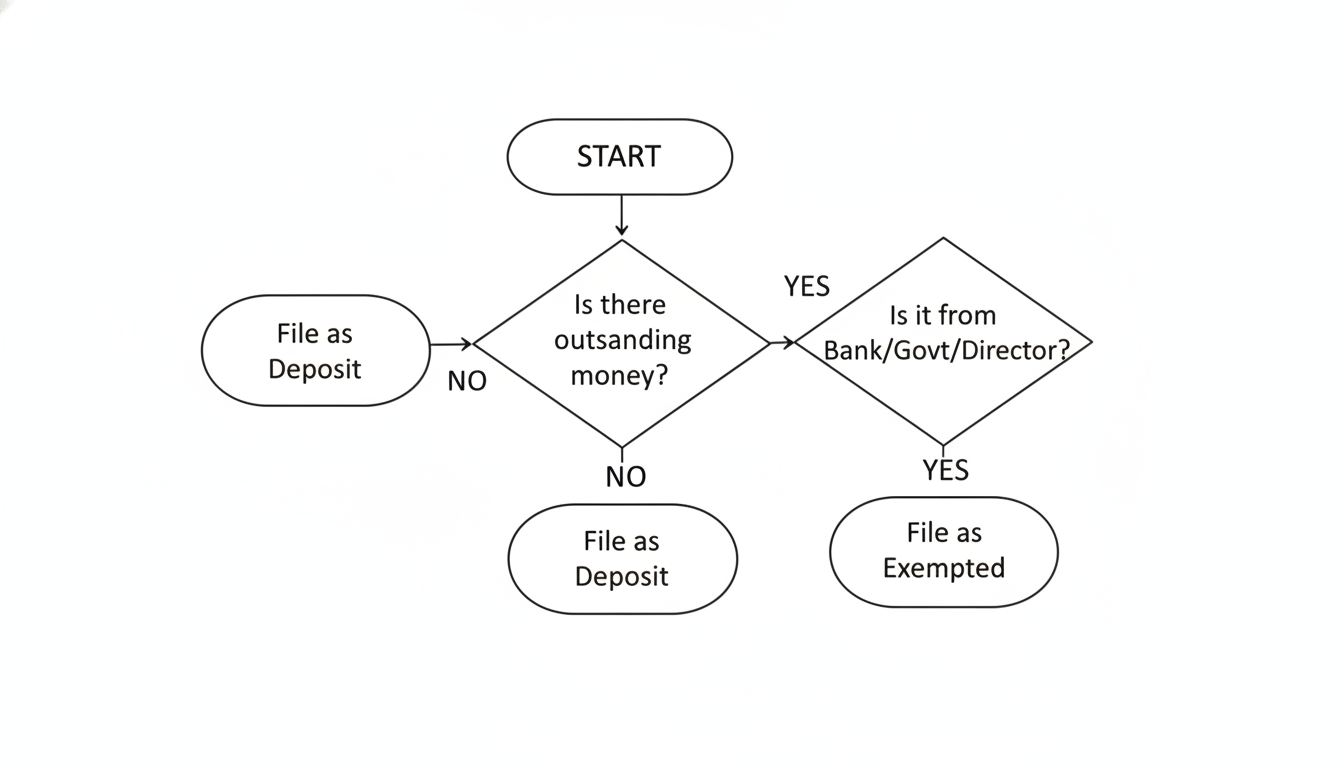
The DPT 3 Form is mandatory for every company (except Government companies) that has any outstanding money—loans, advances, or deposits—as of March 31, 2026. It is not just for companies accepting public deposits. Ignoring this form because you “only took a loan from a friend” is a compliance suicide mission.
What Exactly is the DPT 3 Form? (It’s Not Just for Deposits)
There is a massive misconception that if you haven’t taken money from the general public, you can ignore this form. This is false.
The DPT 3 Form is a “Return of Deposits.” However, its scope was expanded years ago to include “particulars of transactions not considered as deposits.”
Think of it this way: The government wants a snapshot of every single rupee your company owes to anyone other than a bank (and sometimes even banks). They want to know:
- Is it a genuine loan?
- Is it a trade advance?
- Is it a hidden deposit from the public?
In our experience handling compliance for startups and SMEs, the confusion usually stems from the definition of “Exempted Deposits.” These are amounts received that are technically loans but don’t require you to maintain a deposit repayment reserve.
Who Must File DPT 3 in 2026?
If you are running a company in India, assume you need to file this unless you fall into a very specific exclusion list. The requirement applies to:
- Private Limited Companies
- Public Limited Companies
- One Person Companies (OPC)
- Section 8 Companies
Who is Exempt?
You get a pass only if you are:
- A Banking Company.
- A Non-Banking Financial Company (NBFC) registered with the RBI.
- A Housing Finance Company registered with the National Housing Bank.
- A Government Company (in specific cases).
💡 Pro Tip
Even if your company has zero external debt but has an outstanding loan from a Director (even ₹10,000) as of March 31, 2026, you must file DPT 3. The only time you don’t file is if your balance sheet shows absolutely NIL borrowings and NIL advances.
Deposits vs. Exempted Deposits: The Critical Distinction
This is where 90% of errors happen. You need to categorize your borrowings correctly to avoid being accused of accepting illegal public deposits.
| Category | What it Includes | Compliance Risk Level |
|---|---|---|
| Public Deposits | Money raised from the general public or members (if limits exceeded). Requires strict adherence to Section 73. | High (Requires Deposit Insurance, Liquid Assets, Credit Rating) |
| Exempted Deposits | Loans from Directors, Inter-corporate deposits, Bank Loans, Employee Security Deposits (limited), Advance from customers (< 365 days). | Low (Just reporting required in DPT-3) |
| Illegal Deposits | Money taken from friends/relatives (who are not directors) or cash loans unaccounted for. | Critical (Penalties up to ₹10 Crores) |
The 2026 Timeline: Mark Your Calendar
For the financial year ending March 31, 2026, the due date is non-negotiable.
Due Date: June 30, 2026.
You have exactly three months from the close of the financial year to compile your data. While this seems like plenty of time, remember that your provisional balance sheet needs to be ready. You cannot file accurate figures if your accounting for the year isn’t finalized.
⚠️ Watch Out
Do not wait for your Statutory Audit to be completed to file DPT 3. The audit deadline is September, but DPT 3 is due in June. You must file based on provisional audited figures. If the final audit changes the numbers significantly, you might have to revise, but missing the June 30 deadline attracts late fees immediately.
9 Critical Steps to File DPT 3 on the MCA V3 Portal
The transition to the MCA V3 portal has changed the workflow significantly. It is web-based now, meaning you don’t download a PDF, fill it, and upload it. You fill it live.
Step 1: Prepare Your Documents
Before you even log in, ensure you have these files converted to PDF:
- Auditor’s Certificate: Mandatory if you are declaring “Deposits” or “Deposits + Exempted Deposits.” (Highly recommended even for just Exempted Deposits to be safe).
- Proof of Trust Deed: (Only if applicable).
- List of Depositors: Excel sheet converted to PDF showing names, addresses, and amounts.
- Net Worth Calculation: As per the latest audited balance sheet.
Step 2: Login to MCA V3
Go to the official MCA website. Login with your Business User credentials. Note: You cannot file this as a “Registered User”—you need “Business User” status.
Step 3: Navigate to the Form
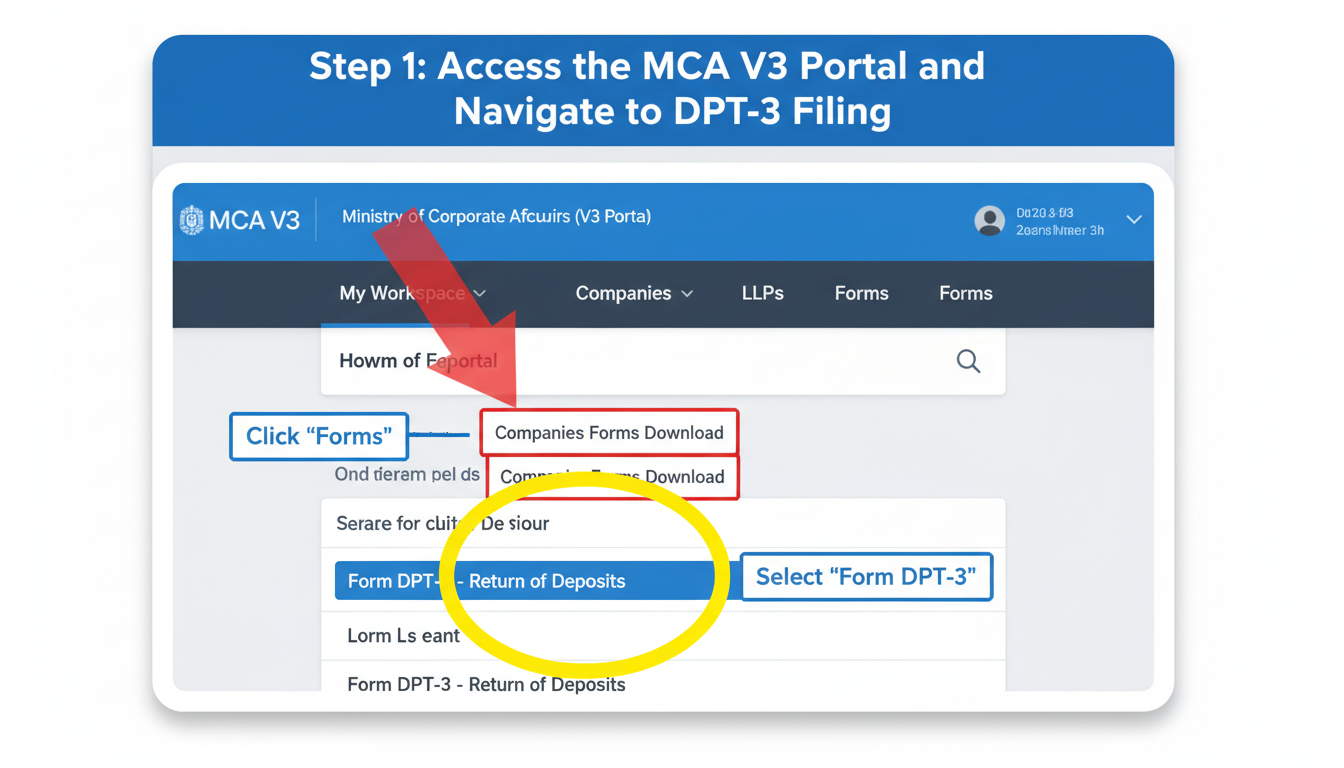
Click on MCA Services > Company e-Filing > Deposits > Form DPT-3. What is GST annual return and how to file it in 2024?
Step 4: Select the “Purpose of Form”
This is the most important click you will make. You will see four options (Radio Buttons). Choose carefully: 10 Essential GST Amendment Rules in India: The 2025 Compliance Guide
- Onetime Return: (Ignore this, it’s for historical data from 2014).
- Return of Deposit: Choose this if you have actual public deposits.
- Particulars of transactions by a company not considered as deposit: Choose this if you only have loans from directors, banks, or other companies. (Most common option).
- Return of Deposit + Particulars of transactions not considered as deposit: Choose this if you have both.
Step 5: Enter Financial Data
Input the CIN of your company. The system will pre-fill the name. You then need to manually enter the total amounts outstanding. Be precise. The system does not allow decimals in some fields, so round off to the nearest Rupee.
Step 6: The “Net Worth” Check
You must enter the Net Worth as per the latest audited balance sheet. This figure is crucial because it determines your borrowing limits under Section 180(1)(c).
Step 7: Attachments & Declaration
Upload your Auditor’s Certificate and other PDFs. The resolution number and date of the Board Meeting where this filing was authorized must be entered.
Step 8: Digital Signatures (DSC)
The form requires the DSC of a Director. If a full-time Company Secretary (CS) is employed, their DSC is also needed. If not, the Director’s DSC suffices (verified by a practicing professional if required based on company size).
Step 9: Payment & SRN Generation
Once submitted, pay the fee based on your authorized capital. Save the SRN (Service Request Number) receipt immediately.
Transactions That Are NOT Deposits (But Must Be Reported)
According to the Institute of Chartered Accountants of India (ICAI) guidelines and Rule 2(1)(c), the following are the most common “Exempted Deposits” you must report:
| Source of Funds | Condition for Exemption |
|---|---|
| Amount from Director | The Director must give a declaration in writing that the money is from their own funds, not borrowed. |
| Bank / FI Loans | Any facility from SBI, Nationalized Banks, or notified Financial Institutions. |
| Inter-Corporate Loan | Money received from another company (Private or Public). |
| Customer Advance | Must be adjusted against supply of goods/services within 365 days. |
| Employee Security Deposit | Must be non-interest bearing and not exceed the employee’s annual salary. |
⚠️ Watch Out
The “Relative” Trap: In a Private Limited Company, you can accept money from a Director’s relative and it is exempt. However, in a Public Company, money from a relative is considered a Public Deposit. Know your company structure!
The Cost of Non-Compliance: Why You Can’t Ignore This
I cannot stress this enough: The penalties for messing up DPT-3 are draconian. The MCA views non-compliance here as a potential fraud risk.
If you accept deposits in contravention of the rules (Section 73 or 76), the penalty is:
- For the Company: Fine of minimum ₹1 Crore, extending up to ₹10 Crores.
- For Every Officer in Default: Imprisonment up to 7 years and fines up to ₹2 Crores.
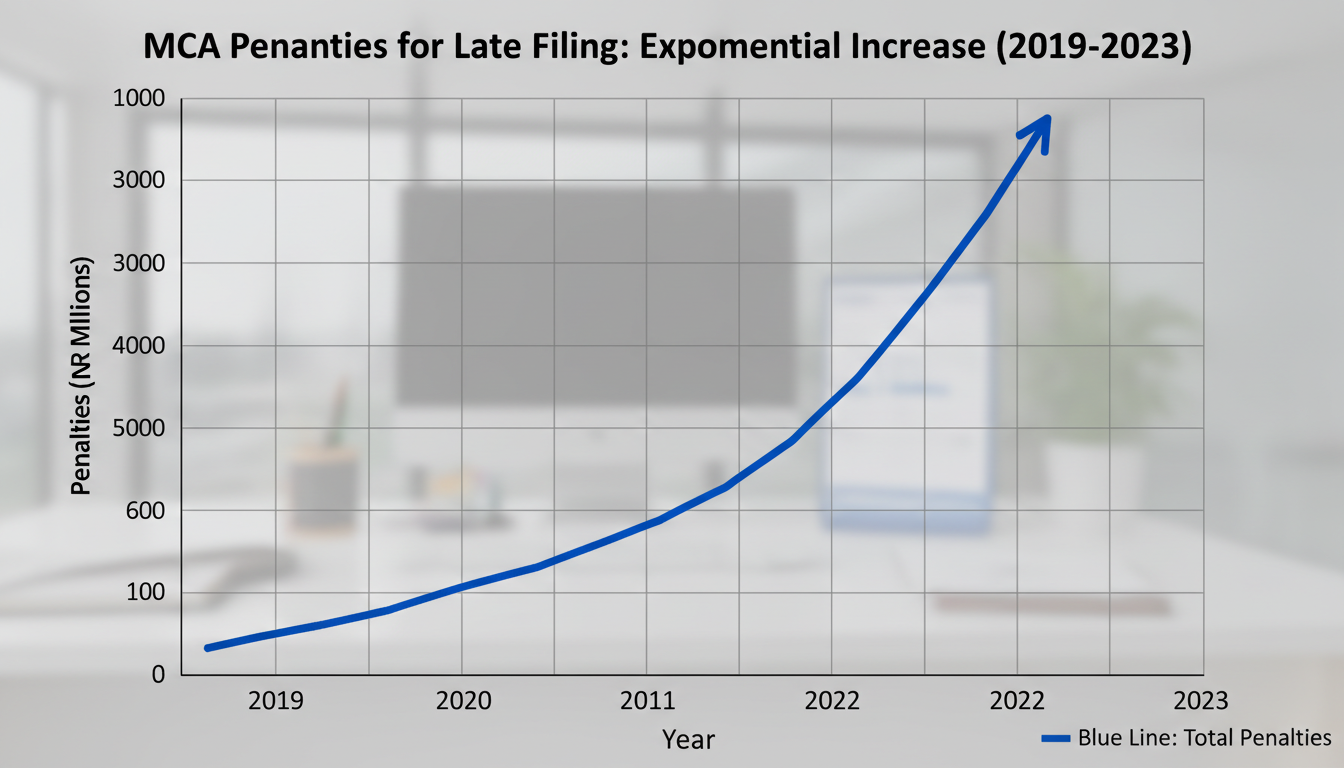
Even for simple late filing, you are looking at additional fees that compound daily. Plus, having a “non-compliant” status on the MCA master data can freeze your ability to file other forms or raise funding.
Conclusion: Stay Audit-Ready
Filing the DPT 3 Form is not just about ticking a box; it is about proving the financial legitimacy of your business. In 2026, transparency is the currency of trust.
Don’t leave this until June 29th. Gather your loan documents, get that declaration from your Directors, and coordinate with your Chartered Accountant today. A clean DPT-3 filing is the best insurance policy against ROC scrutiny.
❓ Frequently Asked Questions
Do I need to file DPT 3 for a Nil return?
Technically, if you have absolutely no outstanding loans, advances, or deposits as of March 31st, filing is not mandatory. However, many professionals recommend filing a “Nil” return just to be safe and keep the compliance record clean, though the V3 portal may restrict this depending on current validation rules.
What happens if I file DPT 3 after June 30, 2026?
You can still file, but you will have to pay additional fees. The fee depends on how many days late you are and your company’s authorized capital. More importantly, late filing raises a red flag with the Registrar of Companies.
Is the Auditor’s Certificate mandatory for “Exempted Deposits”?
By law, the certificate is mandatory only when filing for “Return of Deposits.” However, the MCA V3 portal often asks for an attachment. We strongly advise attaching a certificate from a CA to validate your figures and avoid rejection.
Can a startup accept money from a Director’s friend?
No. A Private Limited company can only accept money from Directors, their relatives, or members (shareholders) under specific limits. Accepting money from a Director’s friend would be treated as a “Public Deposit,” which is illegal for most startups without strict compliance.
Does DPT 3 apply to Share Application Money?
Yes. If share application money has been pending for allotment for more than 60 days, it is treated as a deposit and must be reported (and refunded) according to RBI and MCA norms.