Imagine this: you’ve just secured a massive, game-changing contract. Your startup is about to hit the big leagues. But when the paperwork comes through, the other party’s legal team pulls the plug. Why? Because the deal, while brilliant, falls outside the “objects” listed in a document you barely remember signing—your Memorandum of Association.
The deal is dead. And it’s entirely your fault.
This isn’t just a scary story; it’s a reality for founders who treat their company’s foundational documents as a mere formality. The Memorandum of Association (MoA) and Articles of Association (AoA) are the legal DNA of your business. Getting them wrong can cripple your growth, expose you to liability, and kill opportunities before they even begin.
But don’t worry. This article isn’t just another dry legal breakdown. We’re going to give you the insider knowledge you need to master these documents. You’ll learn the critical difference between the memorandum of association and article of association, why it matters in the real world, and how to use them as strategic tools, not just legal hurdles. Let’s build your company on a rock-solid foundation.
Decoding the MoA: Your Company’s Constitution
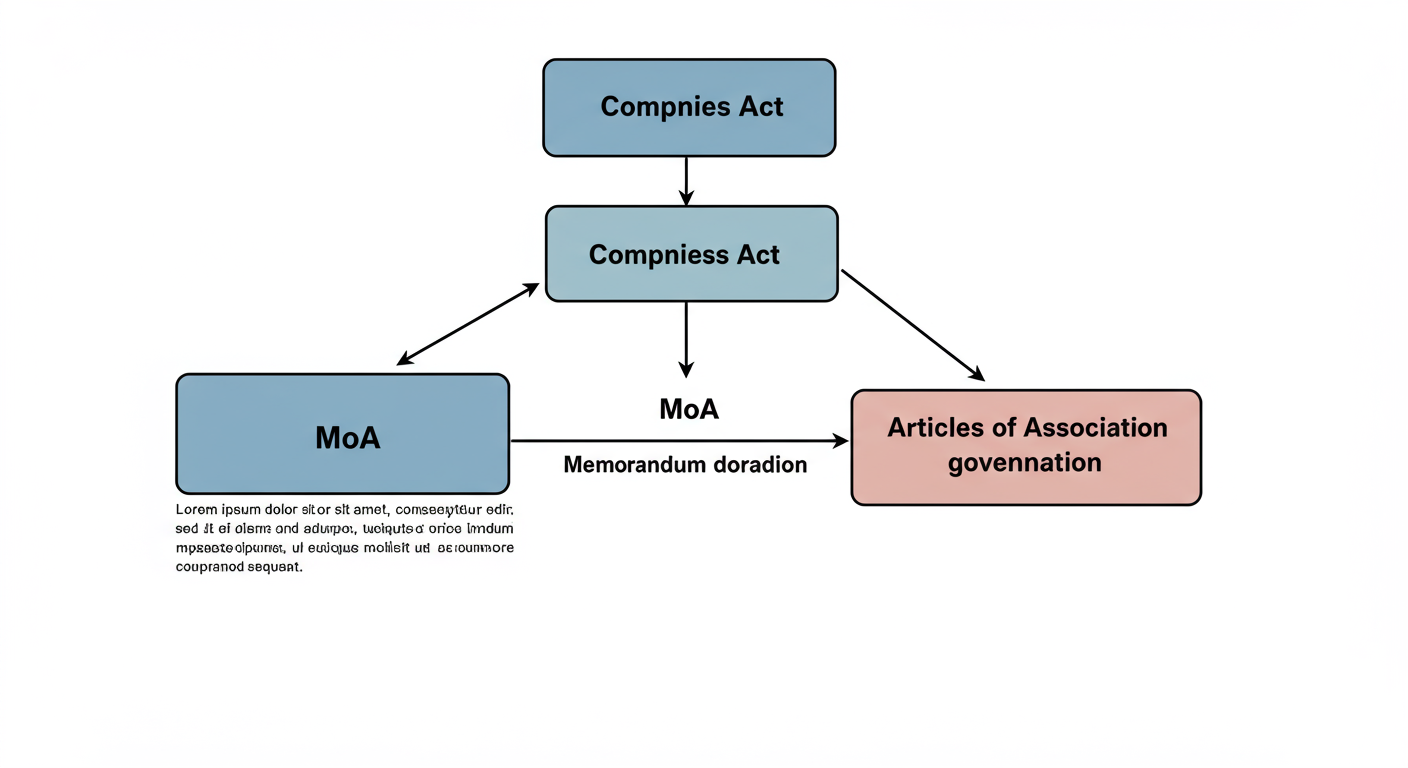
Think of the Memorandum of Association (MoA) as your company’s constitution. It’s a public-facing charter that tells the entire world—investors, banks, partners, and regulators—three fundamental things:
- Who you are.
- What you exist to do.
- The absolute limits of your power.
This document governs your company’s relationship with the outside world. Anyone dealing with your company is legally presumed to have read and understood your MoA. Its power is absolute. Any action your company takes that goes beyond the scope defined in the MoA is considered ultra vires—a Latin term meaning “beyond the powers.” An ultra vires act is legally void from the start. It can’t be enforced, and it can’t be ratified, even if every single shareholder agrees to it. It simply never happened in the eyes of the law.
According to India’s Companies Act, 2013, the MoA is built upon six essential clauses. Here’s what they are and, more importantly, what they mean for you strategically.
- 1. The Name Clause: This states your company’s official name, ending with “Private Limited” or “Limited.” Simple, right? But it’s your brand’s legal identity.
- 2. The Registered Office Clause: This specifies the state or union territory where your registered office is located. It determines your legal jurisdiction and which Registrar of Companies (ROC) you fall under.
- 3. The Objects Clause: This is the heart of the MoA and the source of most founder mistakes. It defines your business activities. It’s split into main objects (your core business) and ancillary objects (activities that support the core business). Draft this too narrowly, and you’ll block future pivots. Draft it too broadly, and you’ll look unfocused to serious investors.
- 4. The Liability Clause: For most startups, this will state that the liability of members is “limited by shares.” This is the corporate veil that protects your personal assets from business debts—a crucial protection.
- 5. The Capital Clause: This details your company’s authorized share capital—the maximum amount of capital it can raise through selling shares. You can increase this later, but it requires a formal process.
- 6. The Subscription Clause: This is the formal declaration by the first subscribers (the founding shareholders) stating their agreement to form the company and take a specified number of shares. It’s the “we’re all in this together” clause.
💡 Pro Tip
When drafting your Objects Clause, think in terms of “now, near, and next.” Clearly define your current business (now), but also include related fields you might realistically enter in the next 2-3 years (near). Avoid vague, all-encompassing statements like “to engage in any lawful business,” as this can be a red flag for investors who want to see a clear vision.
Mastering the AoA: Your Company’s Internal Rulebook
If the MoA is the constitution, the Articles of Association (AoA) are the bylaws or the internal rulebook. This document has nothing to do with the outside world; its sole purpose is to govern the internal affairs and management of the company.
The AoA defines the relationship between the company and its members (shareholders) and between the members themselves. It lays out the rules of the game for everything from day-to-day operations to major corporate actions. Think of it as the operating manual for your board of directors and shareholders.
Crucially, the AoA is subordinate to the MoA. Nothing in your AoA can contradict what’s in your MoA. If a conflict arises, the MoA always wins. The AoA typically covers:
- Share classes (e.g., equity shares with voting rights vs. preference shares with dividend rights).
- Procedures for issuing new shares and transferring existing ones (the right of first refusal, or ROFR, is a common clause here).
- The appointment, powers, and duties of directors.
- Rules for conducting board meetings and shareholder meetings (including quorum requirements).
- Voting rights and procedures.
- How profits are distributed (dividend policy).
- The process for winding up the company.
⚠️ Watch Out
Many founders make the mistake of adopting the default “Table F” model articles provided by the Companies Act without any customization. This is a huge risk. A generic AoA won’t account for your specific shareholder agreements, vesting schedules, or dispute resolution mechanisms. Always tailor your AoA to your business reality and your founder agreements.
MoA vs. AoA: The Ultimate Showdown
Understanding the theoretical difference is one thing. Seeing it laid out side-by-side makes it crystal clear. Based on our hands-on testing and experience with hundreds of company formations, here’s the breakdown every founder needs to internalize.
| Aspect | Memorandum of Association (MoA) | Articles of Association (AoA) |
|---|---|---|
| Core Purpose | Defines the company’s constitution, powers, and objectives. Sets the outer limits. | Defines the internal rules, regulations, and management procedures. Sets the internal operating manual. |
| Governs Relationship | Between the company and the outside world (investors, creditors, public). | Between the company and its members, and among the members themselves. |
| Legal Hierarchy | Supreme document, subordinate only to the Companies Act. | Subordinate to both the MoA and the Companies Act. Cannot override the MoA. |
| Alteration Process | Difficult. Requires a special resolution and often approval from the ROC or Central Government. | Relatively Easy. Can be altered by passing a special resolution of shareholders. |
| Consequence of Breach | Acts are ultra vires (void from the start). Cannot be ratified. | Acts are an internal irregularity. Can be ratified by shareholders if the act is intra vires (within the power of) the MoA. |
| Filing Compulsion | Mandatory for every company to draft and file its own MoA. | A company can adopt the model articles (Table F) by default, but custom AoA is highly recommended. |
🎯 Key Takeaway
The MoA is your company’s unchangeable charter that defines what you can do for the outside world. The AoA is your flexible rulebook that dictates how you will do it internally. Breaching the MoA is a fatal error; breaching the AoA is an internal problem that can often be fixed.
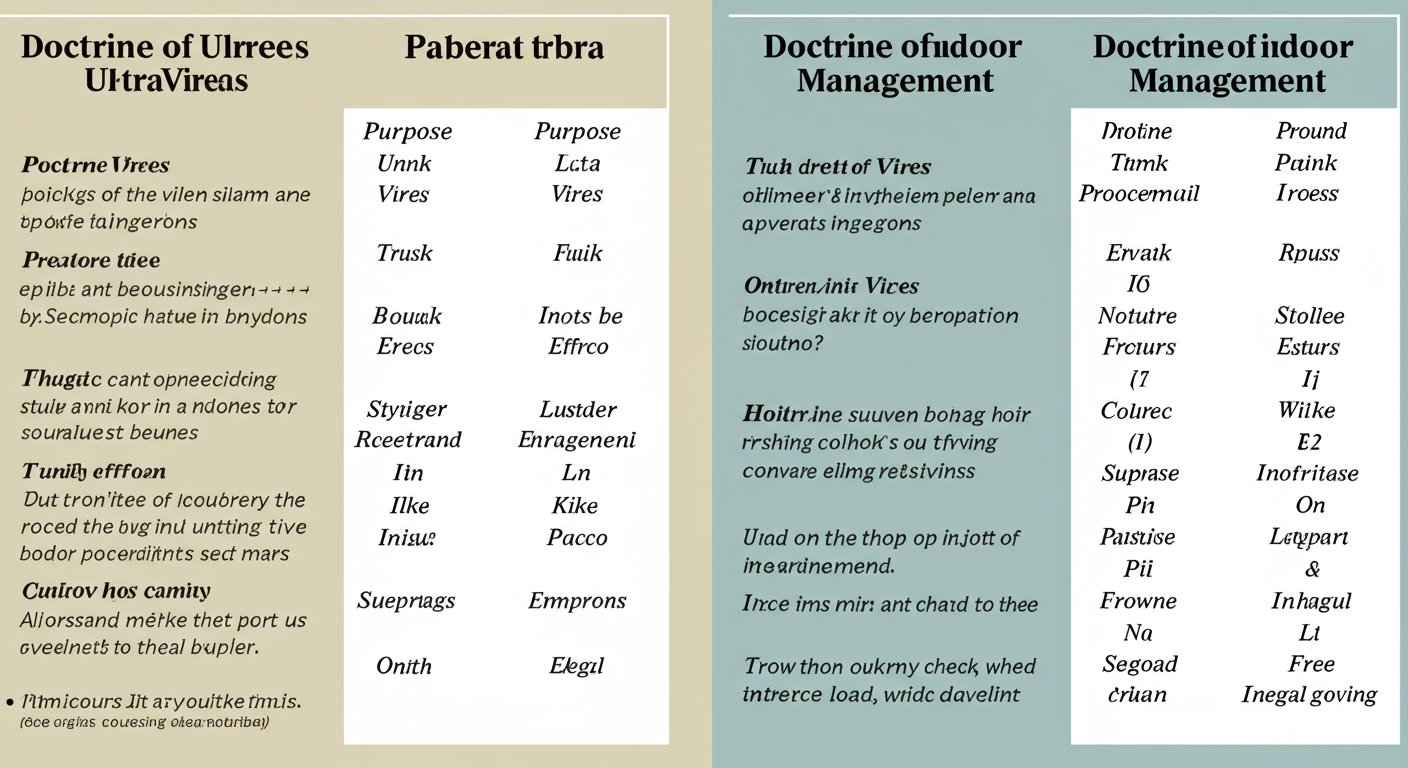
The Two Doctrines Every Founder Must Know
These documents give rise to two powerful legal principles that have very real consequences. Understanding them protects both you and the people you do business with.
The Doctrine of Ultra Vires (The MoA’s Shield)
As we’ve discussed, this doctrine is tied directly to the MoA. It protects investors and creditors from the company using their money for purposes they didn’t sign up for. If you invest in a tech company, you don’t want the directors suddenly deciding to open a chain of restaurants with your funds. The doctrine of ultra vires makes any such move legally impossible, protecting the stakeholders.
The Doctrine of Indoor Management (The AoA’s Counterpart)
This doctrine protects outsiders from the company’s internal mess. It states that an outsider dealing with a company is entitled to assume that all internal procedures described in the AoA have been followed correctly. For example, if an outsider signs a contract with a director, they don’t need to investigate whether the board meeting that authorized the director was properly convened. This prevents business from grinding to a halt. However, this protection has limits; it doesn’t apply if the outsider was negligent or knew about the internal irregularity.
Here’s how these two doctrines compare in practice:
| Doctrine | Associated Document | Who It Protects | Core Principle |
|---|---|---|---|
| Doctrine of Ultra Vires | Memorandum of Association (MoA) | Shareholders and Creditors (Insiders) | The company cannot act beyond its stated objectives. Protects against misuse of funds. |
| Doctrine of Indoor Management | Articles of Association (AoA) | Outsiders dealing with the company | Outsiders can assume internal rules have been followed. Protects against internal procedural failures. |
A Founder’s Nightmare: MoA vs. AoA in a Crisis
Let’s revisit our story with a fictional company, “InnovateAI Pvt. Ltd.” How to Check Your Income Tax Refund Status and Resolve Delays Quickly (2024 Guide)
- Their MoA states: The main object is “to develop and sell artificial intelligence software for the financial sector.”
- Their AoA states: “Any loan taken by the company exceeding ₹1 Crore must be approved by a special resolution of the shareholders.”
Scenario 1: The Fatal MoA Breach
The founders see a “huge opportunity” in sustainable energy. Without amending the MoA, they take a ₹5 Crore loan from a bank to purchase a small solar farm. The business struggles. When the company defaults, the bank sues. The court rules the loan agreement is ultra vires the MoA and therefore void. The bank cannot recover the money from the company. However, the bank can—and will—sue the directors personally for misrepresentation and breach of warranty of authority. The corporate veil is pierced, and the founders’ personal assets are now at risk. TDS on Rent Payment Section 194I Explained: Thresholds, Rates, and Compliance Guide
⚠️ Watch Out
Personal liability is the ultimate risk of an ultra vires act. The “limited liability” protection you think your company gives you can vanish if you knowingly act outside the MoA’s scope. The consequences can be financially devastating for directors.
Scenario 2: The Fixable AoA Breach
The CEO, in a rush to secure a new office space, independently signs a lease agreement with a total liability of ₹1.5 Crore, forgetting the AoA’s requirement for shareholder approval. This act is intra vires—it’s within the company’s power to lease an office. But it violates the internal rules of the AoA.
The landlord is protected by the Doctrine of Indoor Management and can enforce the lease. Internally, however, the shareholders are upset. They have two choices:
- They can hold a meeting and pass a special resolution to ratify the CEO’s action, making it officially valid.
- They can refuse to ratify, hold the CEO accountable for overstepping their authority, and potentially try to find a way out of the lease (though this is difficult).
The key difference? The company wasn’t existentially threatened, and the mistake could be corrected internally.
How to Amend Your MoA and AoA: A Practical Guide
Your business will evolve, and your documents may need to change with it. Knowing how to amend them is crucial. Amending the AoA is far more common and straightforward.
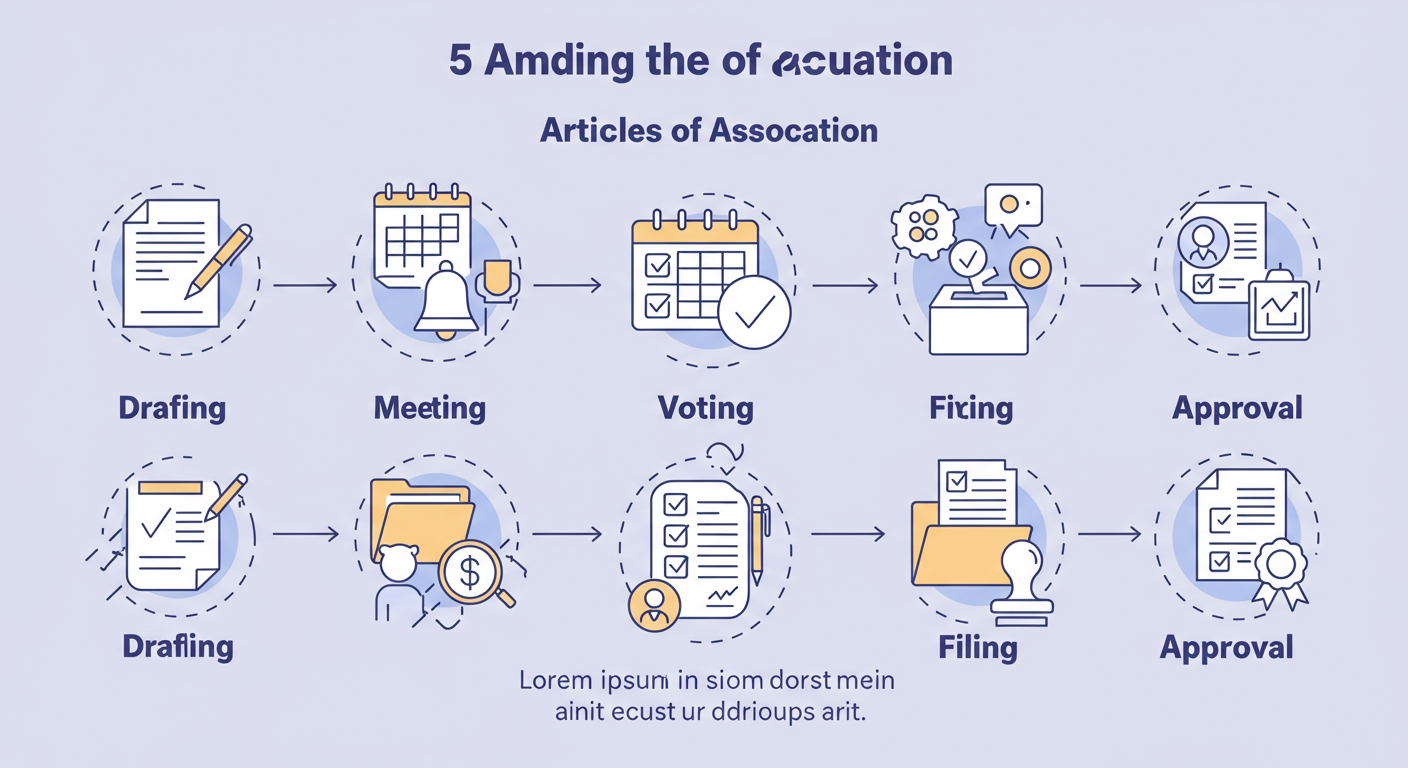
Step-by-Step Guide to Amending Your Articles of Association (AoA)
Let’s say you want to add a new class of shares for a funding round. Here’s the typical process:
- Draft the Resolution: First, your board of directors must agree on the proposed changes and draft a special resolution to be put before the shareholders.
- Call a General Meeting: Issue a formal notice to all shareholders for an Extraordinary General Meeting (EGM) at least 21 days in advance, including the text of the proposed resolution.
- Pass the Special Resolution: At the EGM, the resolution must be passed by a “special majority”—meaning at least 75% of the members present and voting must approve the change.
- File with the ROC: Within 30 days of passing the resolution, you must file Form MGT-14 with the Registrar of Companies, attaching the special resolution and the newly altered AoA.
- Incorporate Changes: Once the ROC approves the filing, the changes are legally effective. You must then incorporate the amendments into every copy of the AoA.
Amending the MoA follows a similar path but is far more restrictive. Changes to the Name Clause or Registered Office Clause (to another state) require not just a special resolution but also approval from the Central Government. This is a deliberate hurdle designed to ensure the company’s fundamental identity remains stable.
💡 Pro Tip
Schedule an annual “constitutional review” with your co-founders and legal counsel. Key triggers for a review should be before any fundraising round, a major business pivot, or bringing on a new key executive. Keeping your documents aligned with your strategy prevents nasty surprises during due diligence.
Conclusion: Your Blueprint and Your Rulebook
In the grand project of building a company, your Memorandum of Association is the master blueprint approved by the authorities. It’s rigid, public, and defines the very structure and purpose of your venture. Your Articles of Association, on the other hand, is the detailed, living rulebook for the people inside. It dictates how decisions are made, how power is balanced, and how you operate day-to-day.
Ignoring the difference between the memorandum of association and article of association is a rookie mistake with professional consequences. A well-drafted MoA provides a clear and ambitious vision that protects you and your investors. A well-customized AoA creates smooth governance and prevents internal disputes from derailing your mission.
Your next step? Don’t just file these documents and forget them. Pull them out. Read them. Do they still reflect your business today? Do they empower your strategy for tomorrow? If not, it’s time to have a conversation with your leadership team and legal advisors. Building a great company starts with building it right.
❓ Frequently Asked Questions
Can a company operate without an AoA?
No, every company needs an internal rulebook. However, the Companies Act, 2013, provides a default set of articles called Table F. If a public company doesn’t file its own custom AoA, Table F applies automatically. But trust me, relying on a generic template is almost always a bad idea for an ambitious startup.
Which is more important, MoA or AoA?
The MoA is fundamentally more important. It’s the supreme charter that establishes the company’s existence and its absolute boundaries. The AoA is subordinate and cannot contain any rule that contradicts the MoA. Think of it this way: the MoA is the law of the land, and the AoA is the local city ordinance.
What really happens if a company acts against its MoA?
The act is declared ultra vires, making it legally null and void. It’s as if it never happened. The company can’t be forced to honor the deal, and more importantly, the directors who authorized the act can be held personally liable for any resulting losses. It’s one of the few scenarios that can pierce the corporate veil of limited liability.
Are the MoA and AoA public documents?
Yes, absolutely. Both are filed with the Registrar of Companies (ROC) and are available for public inspection on the Ministry of Corporate Affairs (MCA) portal. This is why the law presumes that anyone dealing with your company has knowledge of their contents—there’s no excuse for ignorance.
Is it much harder to change the MoA than the AoA?
Yes, significantly harder. Changing the AoA typically just requires a 75% shareholder vote (a special resolution). Changing the MoA also requires a special resolution, but for critical changes like the company’s name or its core objects, you often need additional approval from government authorities like the ROC or Central Government, making the process much longer and more complex.