You just sold some stocks for a tidy profit. Or maybe you finally bought that second rental property. Congratulations. But as the financial year closes, a nagging question appears: “Which ITR form do I file?”
If your financial life has grown beyond a simple salary, you’ve likely outgrown the basic ITR-1 form. Welcome to the next level. This is where the ITR-2 form comes in, and frankly, getting it right is non-negotiable.
This isn’t just another dry tax document breakdown. This is your battle plan. By the end of this guide, you’ll understand precisely what the ITR-2 form is for, determine with 100% confidence if you need to file it, and learn how to navigate its most complex sections—especially capital gains and foreign assets—like a pro. Let’s get you compliant and confident for 2026.
What is ITR-2, Really? The Form for the Modern Investor
Think of your tax forms like levels in a game. ITR-1 is Level 1: perfect for salaried individuals with simple finances. But the moment your financial world expands, you level up. The ITR-2 is the form for Individuals and Hindu Undivided Families (HUFs) who have a diverse income portfolio but do not earn money from a business or profession.
It’s designed for the person who is actively building wealth. You’re investing, you own property, maybe you even have assets abroad. The tax department needs a more detailed picture of your finances, and ITR-2 provides the canvas for that.
The single most important rule to remember? If you have income under the head “Profits and Gains from Business or Profession,” ITR-2 is off-limits. That means no income from freelancing, consulting, or running your own proprietorship. For that, you’d look at ITR-3 or ITR-4.
ITR-1 vs. ITR-2 Showdown: The 2026 Decision Matrix
Still on the fence? This table cuts through the noise. In our experience helping thousands of taxpayers, this direct comparison resolves 90% of the confusion. Find your situation below.
| Criteria | ✅ ITR-1 (Sahaj) | ✅ ITR-2 |
|---|---|---|
| Who Can File? | Resident Individuals Only | Individuals & HUFs (Resident or Non-Resident) |
| Total Income Limit | Up to ₹50 Lakh | No Limit |
| House Property | Income from ONE house property | Income/Loss from MULTIPLE house properties |
| Capital Gains? | No. This is a deal-breaker. | Yes. Mandatory for any capital gains/losses. |
| Foreign Assets/Income? | No. Absolutely not allowed. | Yes. Mandatory for reporting foreign assets/income. |
| Company Director? | No. Ineligible. | Yes. This is the correct form. |
| Unlisted Shares? | No. Ineligible. | Yes. Must be reported here. |
| Agricultural Income | Up to ₹5,000 | Over ₹5,000 |
🎯 Key Takeaway
The moment your finances include Capital Gains (from stocks, mutual funds, property) or Foreign Assets, you have automatically graduated to ITR-2. It’s no longer a choice; it’s a requirement for accurate tax filing.
The ITR-2 Eligibility Checklist: You MUST File This Form If…
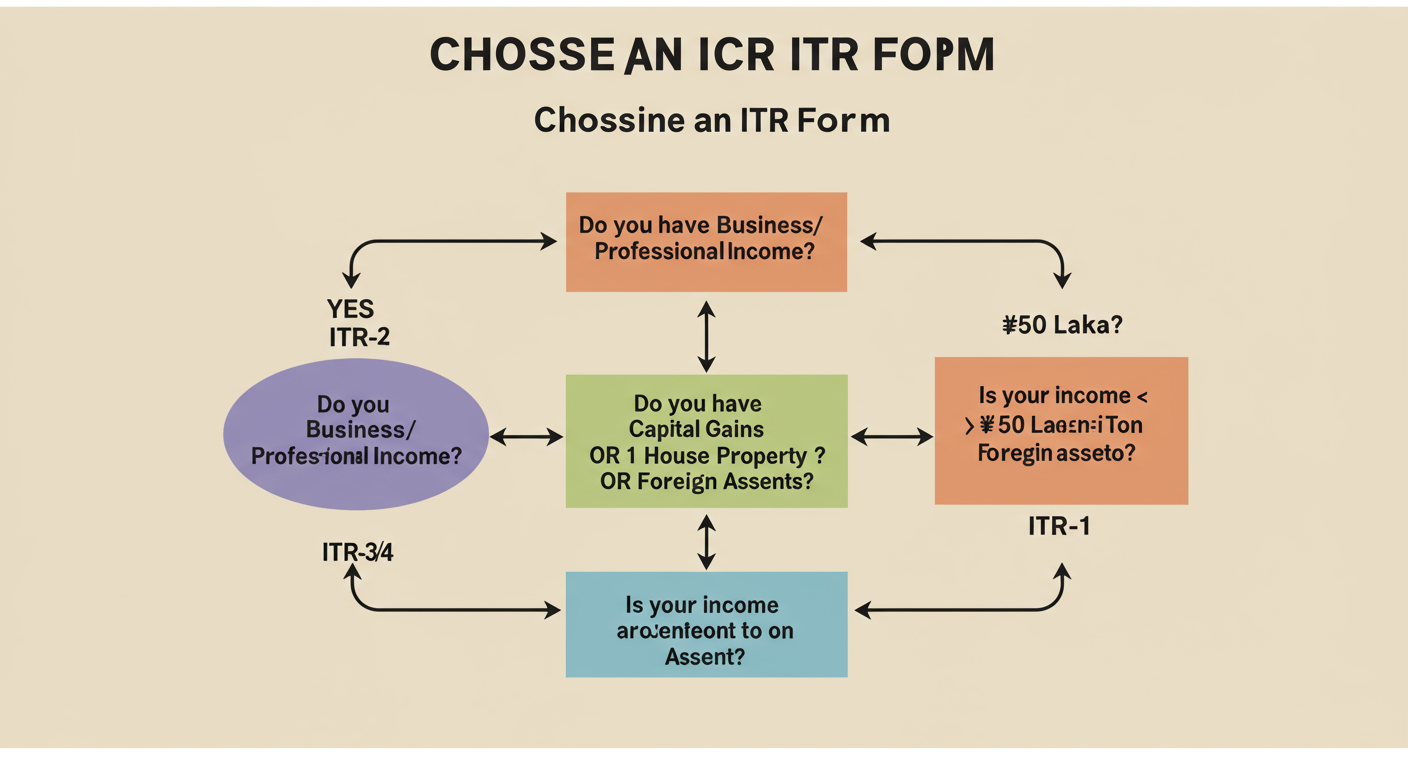
Let’s make this crystal clear. If you check any one of the boxes below, you need to be filing the ITR-2 form for the Assessment Year 2026-27.
- You Earned Capital Gains (or Losses): This is the big one. You sold stocks, equity mutual funds, debt funds, real estate, gold, or any other capital asset. Profit or loss, it doesn’t matter—it must be reported in ITR-2.
- You Own More Than One House Property: Even if one is self-occupied and the other is rented out (or both are rented), you need ITR-2 to declare the income from each property correctly.
- You Have Foreign Income or Assets: You earned income from a source outside India, or you hold any foreign assets like a bank account, stocks, or property. This is a critical compliance point.
- You Are a Director in a Company: If you held a directorship in any company during the financial year, you cannot file ITR-1.
- You Held Unlisted Equity Shares: Invested in a startup or any private company? You must file ITR-2 to declare these holdings.
- Your Agricultural Income is Over ₹5,000: While exempt, higher agricultural income must be reported for rate purposes in ITR-2.
- Your Total Income Exceeds ₹50 Lakh: Even if all your income is from salary, once you cross the ₹50 lakh threshold, ITR-1 is no longer an option.
⚠️ Watch Out
The most common reason for a “defective return” notice is filing ITR-1 when you have capital gains. The tax department’s systems automatically flag this mismatch. Don’t make this mistake; it creates unnecessary hassle and requires you to refile everything.
The Hard Stop: Who Is Barred from Filing ITR-2?
The rule is simple but absolute.
You CANNOT file ITR-2 if you have any income from a business or profession.
This is the dividing line between ITR-2 and ITR-3. It doesn’t matter how small the amount is. If you received income from any of the following activities, you must look at other forms:
- Freelance work (writing, design, coding, etc.)
- Professional services (as a doctor, lawyer, architect)
- Running a proprietorship business (e.g., a small shop, an online store)
- Income or loss as a partner in a partnership firm
Trust me on this one, trying to fit business income into ITR-2 is a recipe for a tax notice. The form simply doesn’t have the required schedules to report this income correctly.
A Step-by-Step Guide to the Key ITR-2 Schedules
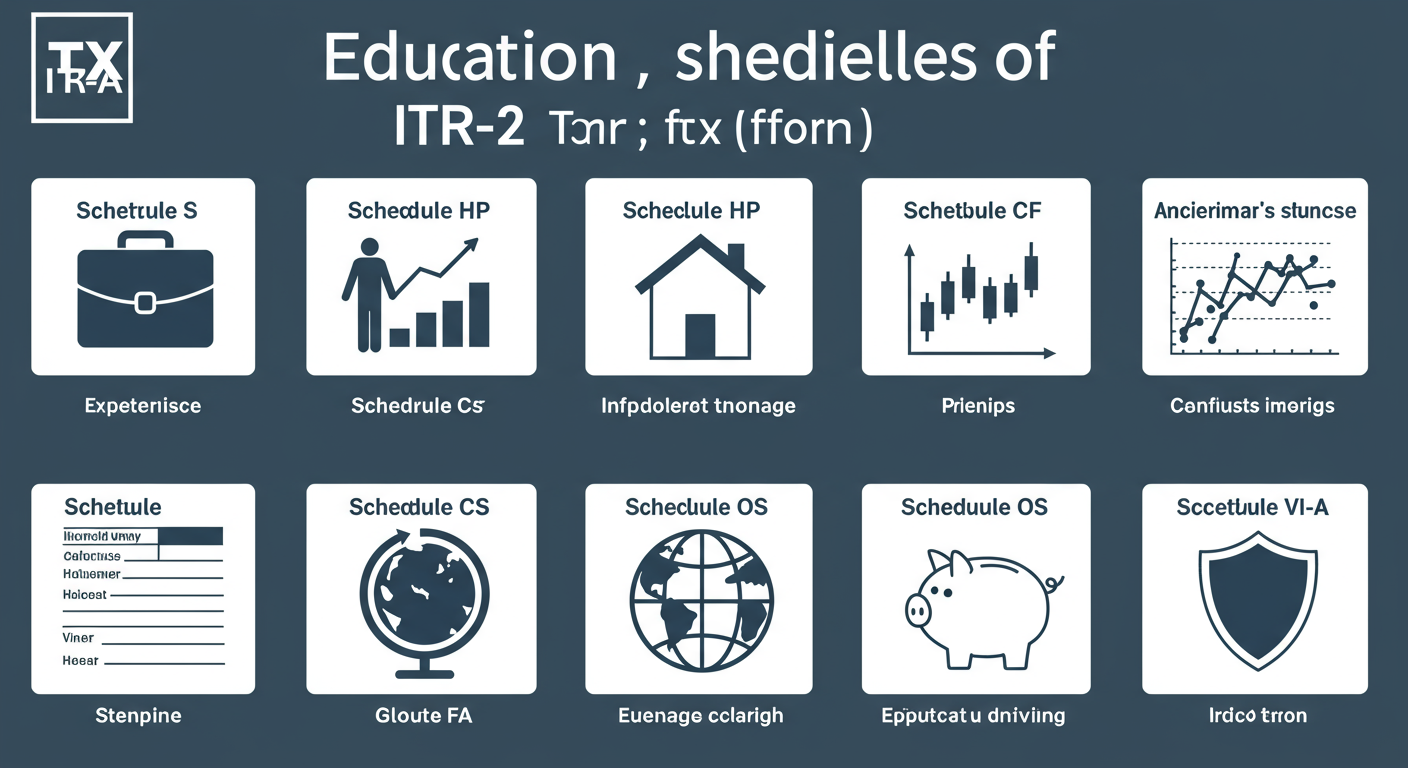
The ITR-2 form is long because it’s thorough. It’s broken down into “Schedules,” which are just sections for different types of income and deductions. Based on our hands-on testing and filing experience, here are the ones you absolutely need to master. How to Register DSC on MCA Portal (2026 V3 Guide)
- Schedule S (Salary): This is straightforward. You’ll transpose the data directly from Part B of your Form 16. Double-check that all allowances and perquisites match.
- Schedule HP (House Property): Here, you must list each property you own. For rented properties, you’ll enter the gross rent, property tax paid, and claim a standard 30% deduction. For a home loan, this is where you claim the deduction for interest paid (up to ₹2 lakh for a self-occupied property).
- Schedule CG (Capital Gains): The most complex schedule. You must report the sale of every single asset separately. This includes breaking down gains by type (short-term, long-term) and asset class (equity, debt, property). This is where you’ll need your broker statements.
- Schedule OS (Other Sources): A catch-all for everything else. This includes interest from savings accounts and fixed deposits, dividends, family pension, and any winnings from lotteries or game shows.
- Schedule FA (Foreign Assets): This is a disclosure-only schedule, but it’s mandatory for all Resident Indians. You must report details of all foreign bank accounts, financial interests, immovable property, or any other capital asset held outside India.
- Schedule VI-A (Deductions): After calculating your gross total income, this is where you claim your popular deductions like Section 80C (PPF, ELSS, Life Insurance), 80D (Health Insurance), 80G (Donations), etc.
💡 Pro Tip
Don’t manually enter every stock sale in Schedule CG. Most top brokers (like Zerodha, Groww, Upstox) provide a consolidated tax P&L statement. You can import this data directly into most tax software or use it to fill the summary figures required in the ITR utility, saving you hours of work and reducing errors. DIR-3 KYC Filing 2026: Avoid the ₹5,000 Penalty (Guide)
The Capital Gains Minefield: A Closer Look at Schedule CG
For most ITR-2 filers, Schedule CG is the main event. Getting this wrong can have significant tax implications. The key is to correctly classify your gains and apply the right tax rates. According to the Income Tax Act, 1961, the holding period determines the classification.
| Asset Sold | Holding Period | Type of Gain | Key Reporting Detail |
|---|---|---|---|
| Listed Equity Shares / Equity MFs | < 12 months | Short-Term (STCG) | Taxed at a flat 15%. |
| Listed Equity Shares / Equity MFs | > 12 months | Long-Term (LTCG) | Gains up to ₹1 lakh are exempt. The rest is taxed at 10% without indexation. |
| Debt Mutual Funds / Gold | < 36 months | Short-Term (STCG) | Added to your total income and taxed at your slab rate. |
| Debt Mutual Funds / Gold / Property | > 36 months | Long-Term (LTCG) | Taxed at 20% after indexation benefit (adjusting purchase price for inflation). |
⚠️ Watch Out
Failure to report foreign assets in Schedule FA can attract severe penalties under the Black Money (Undisclosed Foreign Income and Assets) and Imposition of Tax Act, 2015. The penalty can be a flat ₹10 lakh, plus taxes and further prosecution. Even a dormant foreign bank account with a zero balance must be reported. It’s a disclosure, not a tax liability.
💡 Pro Tip
Always cross-reference your income details with your Annual Information Statement (AIS) and Form 26AS, available on the Income Tax e-filing portal. The tax department already has this data! Use the “pre-fill” option when filing, but always verify every single entry. Sometimes the data can be incorrect or incomplete.
Conclusion: File ITR-2 with Confidence in 2026
Navigating the ITR-2 form doesn’t have to be intimidating. It’s simply a reflection of a more sophisticated financial life—one that involves investments, assets, and a strategy for wealth creation. It’s a good problem to have.
To recap, the path is clear:
- Confirm Your Eligibility: If you have capital gains, multiple properties, or foreign assets, ITR-2 is your form.
- Gather Your Documents: Collect your Form 16, broker’s capital gains statement, home loan interest certificate, and details of all other income.
- Tackle the Schedules: Pay special attention to Schedule CG (Capital Gains) and Schedule FA (Foreign Assets). Be meticulous.
- Verify, Verify, Verify: Use your AIS/26AS to pre-fill but always double-check the data before submitting and e-verifying your return.
By understanding the purpose behind the form and following a structured approach, you can move beyond compliance and take confident control of your financial reporting. You’ve earned it, now report it right.
❓ Frequently Asked Questions
Can a salaried person with crypto gains file ITR-2?
Yes, absolutely. Gains from the transfer of Virtual Digital Assets (VDAs), which includes cryptocurrencies, are taxed at a flat 30%. This income is reported under a specific VDA schedule that is part of the ITR-2 and ITR-3 forms. Since it’s a type of capital gain and not business income, ITR-2 is the correct form for a salaried individual.
What is the main difference between ITR-2 and ITR-3?
The single biggest difference is “Business or Professional Income.” ITR-2 is for individuals/HUFs with varied income sources except for business/profession. ITR-3 includes all the schedules of ITR-2 but adds specific, detailed schedules for reporting income, expenses, and balance sheets related to a business or profession.
I have a foreign bank account from my student days. Do I really need to report it in Schedule FA?
Yes, you must. The requirement is to report all foreign assets for which you are a beneficial owner. It doesn’t matter if the account is dormant or has a low balance. Non-disclosure is a serious compliance issue. For context on how funds are moved abroad, you can review guidelines like the RBI’s Liberalised Remittance Scheme (LRS).
What happens if I file the wrong ITR form by mistake?
If you file an incorrect form, the Income Tax Department will likely mark your return as ‘defective’ under Section 139(9). You’ll receive a notice and will have a limited time (usually 15 days) to rectify the error by filing a revised return using the correct ITR form. It’s better to get it right the first time to avoid this process.
My total income is below the taxable limit, but I have a small long-term capital gain. Do I still need to file ITR-2?
Yes. Filing an income tax return is mandatory if your gross total income (before deductions) exceeds the basic exemption limit. Furthermore, even if your total income is below the limit, you are required to file a return if you have foreign assets or have deposited large amounts in your bank account. If you have capital gains, ITR-2 is the correct form to use for this declaration.