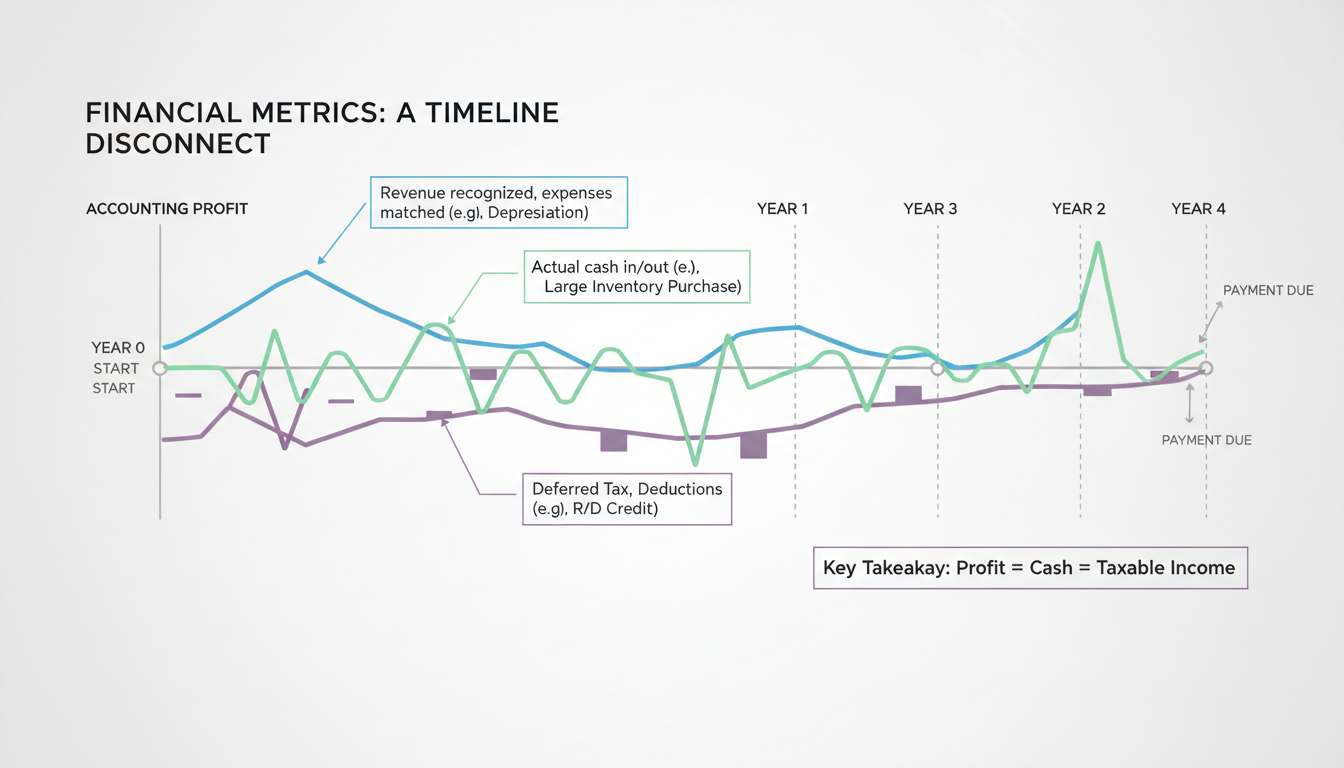
Here’s a brutal truth that keeps most CFOs and business owners up at night: You can be profitable on paper and still go bankrupt.
I’ve seen it happen more times than I care to count. A company has a stellar P&L statement, sales are up, and margins look healthy. Then, tax season hits. Suddenly, they realize all that “profit” is tied up in inventory or unpaid invoices, and the tax authority wants cold, hard cash. Right now.
This is the silent killer of small to mid-sized businesses. Revenue is vanity; profit is sanity; but cash is king.
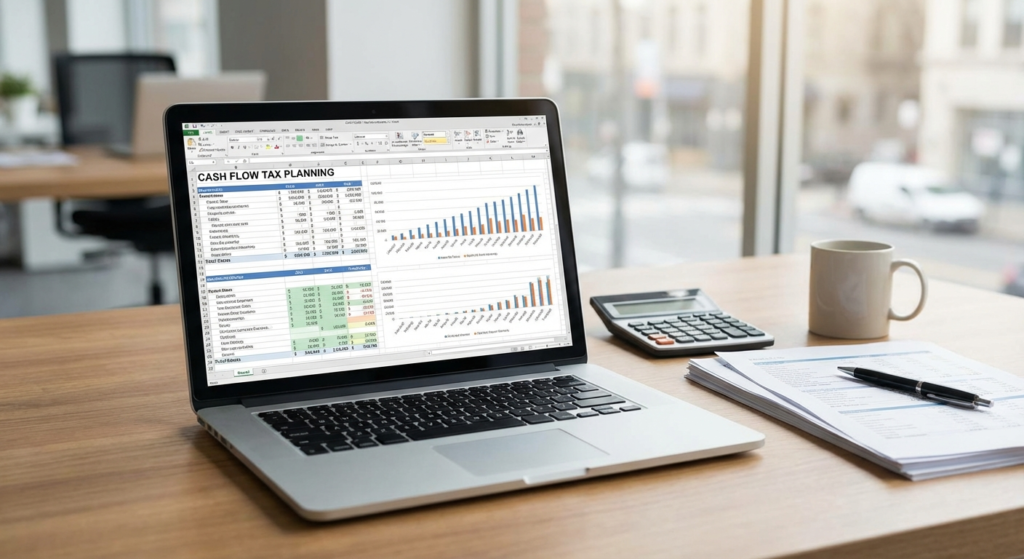
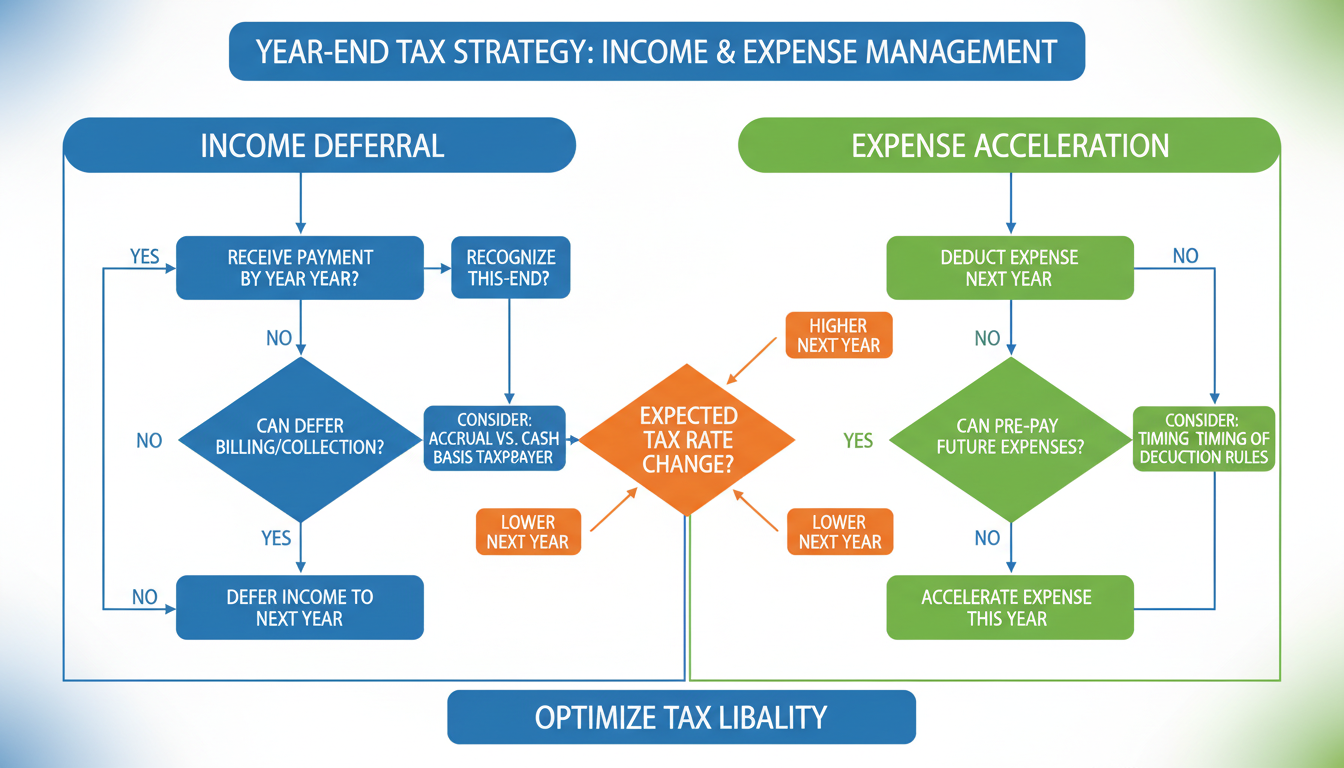
If you are treating tax filing as a once-a-year compliance headache, you are making a strategic error. By shifting your mindset to proactive cash flow tax planning, you stop bleeding liquidity and start using the tax code as a tool to fund your growth. This isn’t about evading taxes—it’s about controlling when that cash leaves your bank account.
In this guide, we’re going to dismantle the traditional view of tax payments and rebuild your strategy to prioritize liquidity.
🎯 Key Takeaway
Effective tax planning isn’t just about lowering your total liability; it’s about timing. By aligning your tax outflows with your cash inflows, you prevent liquidity crunches and keep working capital available for operations when you need it most.
The Strategic Shift: Compliance vs. Planning
Most businesses operate in “Compliance Mode.” They look backward at what happened last year and pay the bill. That’s reactive. Cash flow tax planning is prospective. It looks forward to forecast liabilities so they don’t blindside you.
Think of it this way: Compliance is cleaning up a mess; planning is preventing the spill. When you plan, you are timing income and expenses to minimize tax liability in the current year or defer it to future periods. This frees up working capital right now.
Let’s look at the difference:
| Feature | Traditional Compliance (Reactive) | Cash Flow Tax Planning (Proactive) |
|---|---|---|
| Focus | Historical data (Past) | Forecasting (Future) |
| Action | Filing forms by the deadline | Structuring transactions year-round |
| Cash Impact | Surprise lump-sum payments | Predictable, smoothed outflows |
| Goal | Avoid penalties | Maximize liquidity & ROI |
Without this shift, tax payments blow massive holes in your working capital. Imagine a large quarterly tax payment hitting during your slowest sales month. You might be forced to borrow money at high interest rates just to stay compliant. That’s a disaster.
7 Strategies to Optimize Cash Flow Tax Planning
Ready to get tactical? Based on years of analyzing balance sheets and tax codes, here are the seven most effective levers you can pull to keep cash in your business longer.
1. Master the Art of Depreciation
Depreciation is your best friend. It is a non-cash expense, meaning it reduces your reported profit (and your tax bill) without you having to spend actual cash in that moment (assuming you’ve already bought the asset).
Strategies like Bonus Depreciation or Section 179 (depending on your jurisdiction) allow you to write off the entire cost of equipment in the year you buy it, rather than spreading it out over 10 years. This creates a massive tax deduction immediately, keeping cash in your pocket today.
2. Strategic Inventory Valuation (LIFO vs. FIFO)
How you value the goods sitting in your warehouse changes your tax bill. In an environment where costs are rising (inflation), switching to LIFO (Last-In, First-Out) can be a game-changer.
By assuming you sold your most recently purchased (and more expensive) inventory first, your Cost of Goods Sold (COGS) goes up. Higher COGS means lower taxable income. Lower income means less tax paid now.
3. The “December Invoice” Deferral
If you operate on a cash basis, timing is everything. If you send out a massive invoice on December 28th and get paid on December 30th, that income is taxable this year.
If you wait and send that invoice on January 1st, the income lands in the next tax year. You’ve just deferred the tax on that revenue for a full 12 months. That is an interest-free loan from the government.
💡 Pro Tip
Review your Accounts Receivable in the final month of your fiscal year. If you have hit your revenue targets, consider delaying billing on new projects until the first week of the new year to push that tax liability forward.
4. Accelerate Your Expenses
The flip side of deferring income is accelerating expenses. Do you have software subscriptions, rent, or professional fees due in January or February? Pay them in December.
By prepaying these expenses before year-end, you reduce your taxable income immediately. You were going to spend the money anyway; spending it a few weeks early can save you thousands in current-year taxes.
5. Maximize Retirement Contributions
This is a double win. Contributions to employee retirement plans (like 401(k)s or SEP IRAs) are generally tax-deductible for the business. Not only does this lower your immediate tax burden, but it also boosts employee retention. You are effectively paying your future self (and your team) instead of the tax collector.
6. Harvest Your Tax Losses
Look at your investment portfolio or unused assets. Do you have assets that are worth less than what you paid for them? Sell them to realize a loss. 7 Essential Steps to Master GST Compliance for MSME Success in 2025
These losses can offset capital gains you’ve made elsewhere. If your capital losses exceed your gains, you can often use the excess to offset ordinary income (up to certain limits). This is called “Tax Loss Harvesting,” and it’s a staple of high-level cash flow tax planning. 11 Best Tax Saving Investments India: The Ultimate 2025 Guide to Wealth Creation
7. Manage Withholding and Estimated Payments
Overpaying your quarterly estimated taxes is essentially giving the government an interest-free loan. Underpaying leads to penalties. You need to hit the “Goldilocks” zone. Section 8 Company Registration Online – Quick Process in 2024
Use the “Safe Harbor” rules. generally, if you pay 100% of last year’s tax liability (or 110% for high earners), you avoid penalties. Don’t pay a penny more than necessary during the year. Keep that cash in high-yield savings accounts until the very last second it is due. GST Registration for E-commerce Sellers India 2026: A Comprehensive Compliance Guide
⚠️ Watch Out
Don’t let the “Tax Tail” wag the “Business Dog.” Never spend cash on unnecessary equipment just to get a tax deduction. Spending $10,000 to save $3,000 in taxes still leaves you $7,000 poorer. Only accelerate expenses that bring real value to the business. 12A and 80G Registration for NGOs: Complete Guide 2026
Step-by-Step: Building Your Tax Cash Flow Forecast
You don’t need a degree in accounting to build a basic forecast. You just need a process. Here is how we structure it for clients:
- Gather Real-Time Data: Stop using 6-month-old data. Integrate your cloud accounting software (like Xero or QuickBooks) to get live numbers.
- Project Annual Net Income: Estimate your profit for the remainder of the year based on your current run rate.
- Apply Your Effective Tax Rate: Don’t just use the statutory rate. Look at what you actually paid last year as a percentage of profit to get a realistic baseline.
- Adjust for Non-Cash Items: Add back depreciation and amortization. These reduce profit but don’t consume cash.
- Schedule the Outflows: Map out exactly when tax payments (Quarterly estimates, Sales Tax/GST, Payroll tax) are due on a calendar.
- Stress Test: Ask, “If sales drop 20% next month, do we still have the cash for the tax bill?”
The Impact of Regulatory Compliance (GST/TDS/VAT)
We can’t talk about cash flow without mentioning the “pass-through” taxes like GST, VAT, or Sales Tax. These are strictly enforced outflows.
For example, failing to manage TDS (Tax Deducted at Source) or withholding tax isn’t just a compliance issue—it’s a cash leak due to penalties. If you collect GST/VAT from a customer, that money does not belong to you. It is a liability the moment it hits your account.
⚠️ Watch Out
The “Working Capital” Trap: Many businesses use collected Sales Tax/GST to fund operations, planning to replace it before the due date. This is dangerous. If a client pays late, you might default on your tax payment. Always segregate these funds.
Comparing Strategy Impact
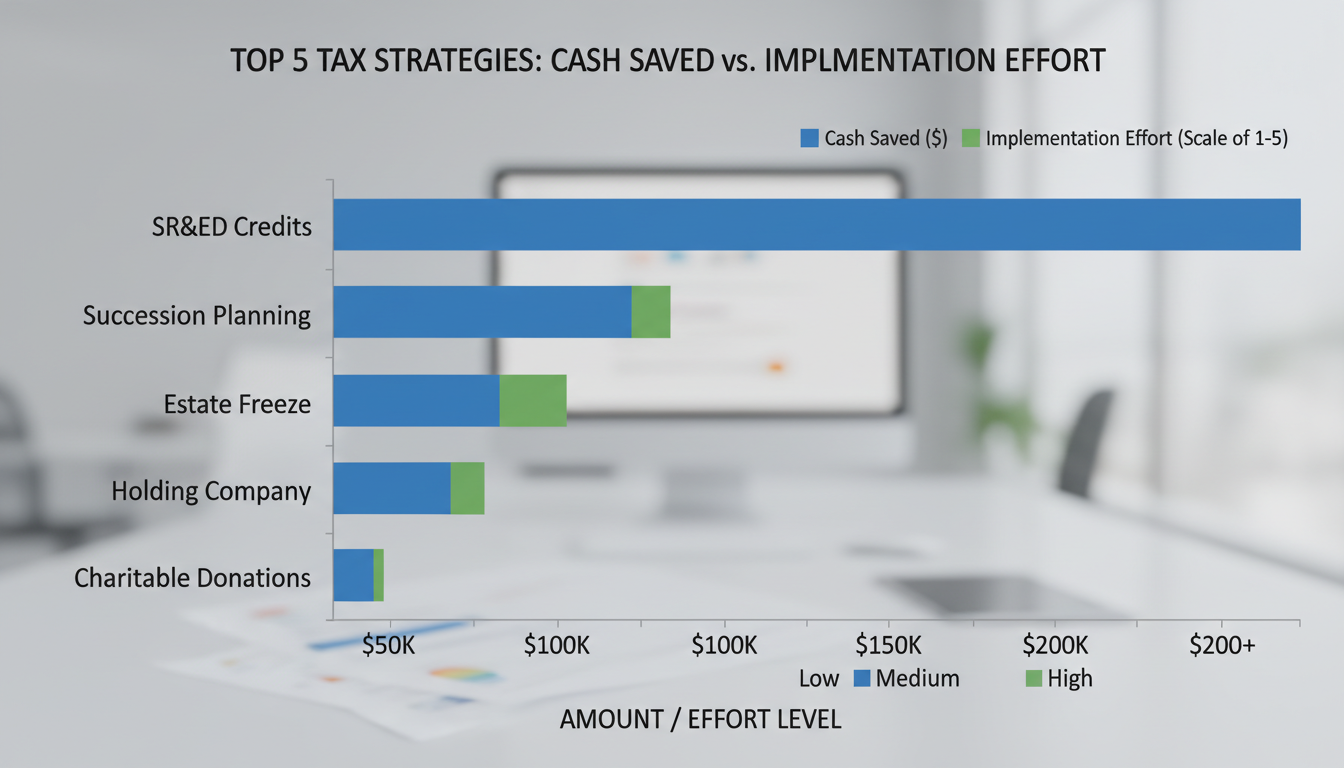
Not all strategies are created equal. Some offer quick wins, while others require complex restructuring. Here is how they stack up:
| Strategy | Cash Flow Impact | Implementation Speed | Complexity |
|---|---|---|---|
| Expense Acceleration | High | Fast (Days) | Low |
| Bonus Depreciation | Very High | Medium (Weeks) | Medium |
| LIFO Inventory | Medium | Slow (Months) | High |
| Retirement Plans | Medium | Medium | Medium |
| Income Deferral | High | Fast | Low |
The Role of Technology
Gone are the days of spreadsheet-based planning. Modern cash flow tax planning relies on real-time data. Cloud accounting software can integrate with tax engines to provide a live view of your estimated liability.
Using technology allows for scenario planning. You can ask questions like, “If we buy this machinery in December versus January, how does it affect our Q4 cash flow?” This level of insight transforms tax from a reactive burden into a proactive strategic element.
💡 Pro Tip
Set up a separate bank account specifically for taxes. Every time you receive a payment, transfer a fixed percentage (e.g., 15-20%) to this account immediately. Out of sight, out of mind—until the tax bill comes due.
Conclusion
Cash flow tax planning is not a luxury; it is a necessity for sustainable business growth. By proactively managing when and how you pay taxes, you preserve the liquidity needed to seize opportunities and weather economic downturns.
Remember, the goal is not tax evasion—it’s tax efficiency. From accelerating expenses to leveraging depreciation and staying on top of compliance, every step you take to align tax obligations with cash inflows strengthens your financial foundation.
Your next step? Schedule a meeting with your tax advisor before Q4 begins. Bring your P&L, your cash flow forecast, and this list of strategies. Ask them specifically: “What can we do right now to optimize our liquidity for the upcoming tax season?”
❓ Frequently Asked Questions
What is the primary goal of cash flow tax planning?
The primary goal is to manage the timing of income and expenses to minimize tax liabilities and ensure that cash is available to pay taxes when they are due, without disrupting business operations.
How does depreciation assist in cash flow?
Depreciation is a non-cash deduction that lowers taxable income. By reducing the amount of tax owed without requiring an immediate cash outflow, it effectively retains more cash within the business for reinvestment.
Is it better to pay taxes early or late?
Generally, businesses try to defer taxes as long as legally possible to retain cash for operations (the “time value of money” principle). However, you must pay enough to avoid underpayment penalties.
Can I use these strategies for any business size?
Yes, strategies like expense acceleration and income deferral apply to freelancers and massive corporations alike. However, complex strategies like LIFO inventory valuation are typically better suited for larger entities with significant stock.
How often should I review my tax plan?
We recommend a quarterly review at minimum. This allows you to adjust estimated payments based on actual profitability and adapt to any new tax laws or changes in business revenue.
Read Also:
- Avoid Huge Fines: Your 2026 AOC 4 Guide
- Beyond Salary: Your 2026 Hidden Income Guide
- Ace Your 2026 Tax Notice Reply
- 7 Master Strategies for Effective Cash Flow Tax Planning in 2024 – Visual Story
- Stamp Duty on Transfer of Shares: The Definitive 2026 Guide
- e Prerana Scholarship 2026: The Ultimate Guide to Apply