You finally did it. You sold that stock portfolio you’ve held for years, and the profit is sitting in your bank account. It feels incredible. But then, a few months later, a different feeling creeps in: dread. The tax man cometh.
This is a story I’ve seen play out countless times. An investor makes a brilliant move, only to be blindsided by a massive tax bill they never planned for. The truth is, making a profit is only half the journey. Keeping it is the other half.
Navigating the world of capital gains tax in India can feel like trying to solve a Rubik’s Cube in the dark. The rules shift, the terms are confusing, and a single misstep can cost you dearly. But it doesn’t have to be this way.
This guide isn’t just another dry list of tax rules. It’s your 2026 playbook, built from real-world experience, designed to help you understand, calculate, and legally minimize your capital gains tax. You’ll walk away knowing exactly how to protect your hard-earned profits.
First Things First: What Exactly Is a “Capital Asset”?
Before we talk tax, let’s get the language right. The Income Tax Department doesn’t tax you for selling just *anything*. The rules apply specifically to the sale of a “Capital Asset.”
So, what’s in this club? Think of it as property of any kind you own. It’s a broad definition, but the most common examples we see are:
- Real Estate: Your house, a plot of land, or a commercial office space.
- Securities: Stocks, equity mutual funds, debt funds, and bonds.
- Precious Items: Jewelry (yes, that includes gold bars and coins), paintings, sculptures, and even archaeological collections.
- Intangible Rights: Things like leasehold rights or business management rights.
But here’s the thing: not everything you own qualifies. The government specifically excludes certain items to keep things practical. Your personal car, the furniture in your living room, or the clothes in your closet are generally considered personal effects and are exempt. Crucially, stock-in-trade (like a car dealer’s inventory) and specified agricultural land in rural areas are also outside this definition.
⚠️ Watch Out
The definition of “personal effects” can be tricky. While your everyday watch is exempt, a luxury watch collection held as an investment could be considered a capital asset. The tax officer’s interpretation often hinges on the intent—personal use versus investment. When in doubt, assume it’s a capital asset.
The Great Divide: Short-Term vs. Long-Term Gains
This is the single most important concept you need to grasp. The entire calculation and tax rate for your profit depends on one simple factor: how long did you own the asset?
This “holding period” splits your gains into two buckets: Short-Term Capital Gains (STCG) and Long-Term Capital Gains (LTCG). And trust me, the tax treatment for each is wildly different.
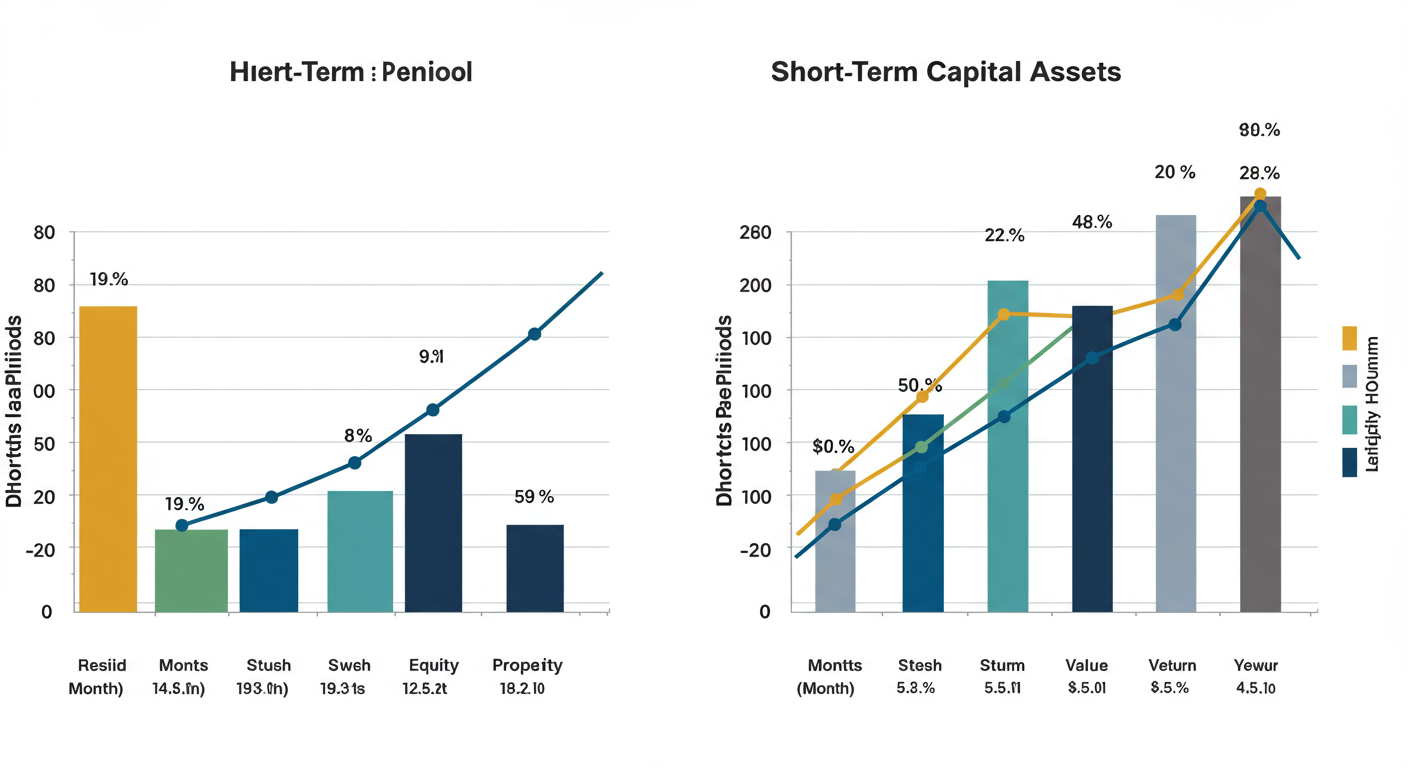
The holding period isn’t one-size-fits-all; it changes based on the asset class. It’s a classic area of confusion for new investors. Here’s a clear breakdown for 2026:
| Asset Type | Considered Short-Term If Held For… | Considered Long-Term If Held For… |
|---|---|---|
| Listed Equity Shares & Equity Mutual Funds | 12 months or less | More than 12 months |
| Immovable Property (Land, Building) | 24 months or less | More than 24 months |
| Unlisted Shares & Debt Mutual Funds* | 36 months or less | More than 36 months |
| Other Assets (Gold, Jewelry, Bonds) | 36 months or less | More than 36 months |
*Note: Recent amendments have changed the tax treatment for certain debt funds, effectively taxing them at slab rates regardless of the holding period. It’s critical to check the specific rules for your fund.
How to Calculate Your Capital Gains (The Right Way)
Okay, let’s get to the math. It’s less scary than it looks. The core idea is simple: Sale Price – Costs = Profit. But the “Costs” part is where the details matter.
For Short-Term Capital Gains (STCG):
This one’s straightforward. No complex adjustments.
STCG = Full Sale Price - (Cost of Acquisition + Cost of Improvement + Transfer Expenses)
Simple. Easy.
For Long-Term Capital Gains (LTCG):
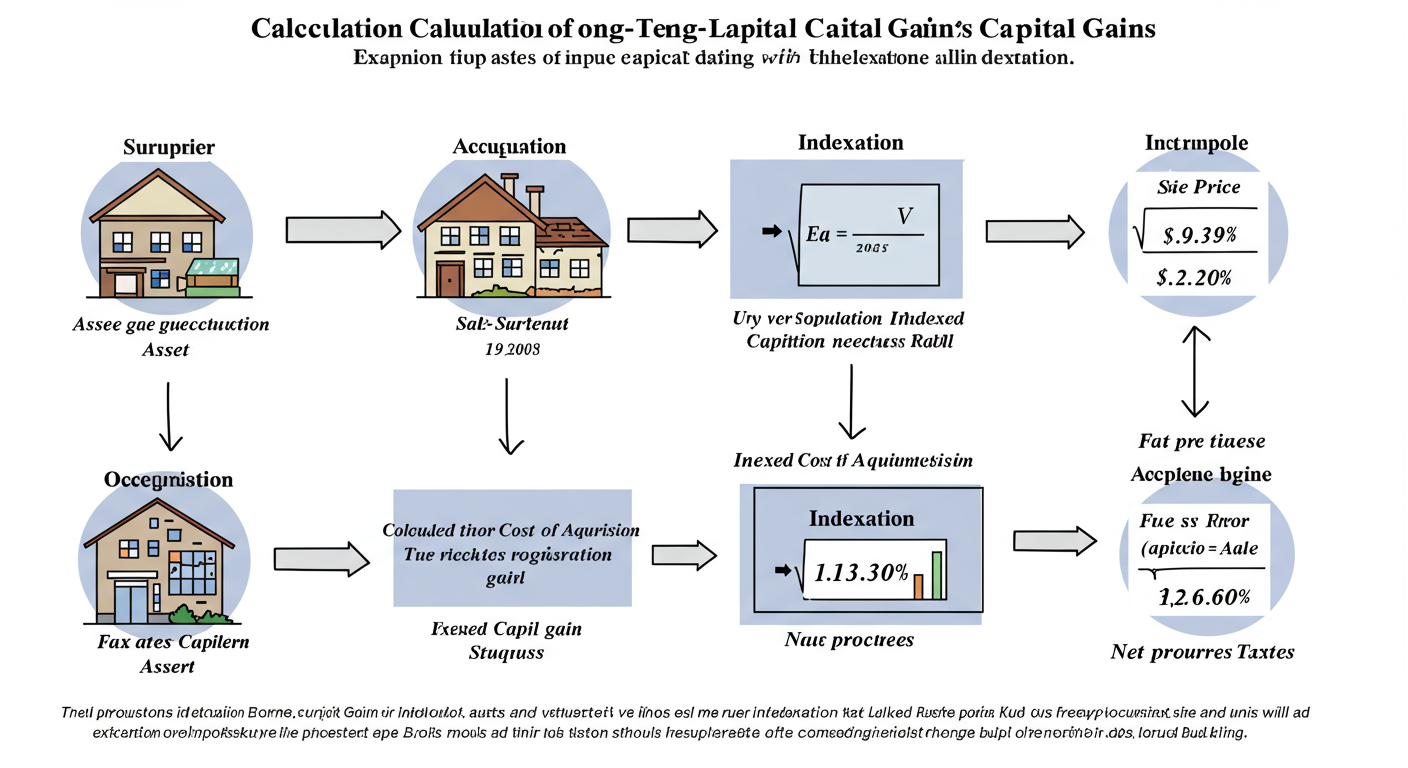
This is where it gets interesting. For long-term assets, you get a powerful benefit called “indexation.”
What is indexation? It’s the government’s way of acknowledging that ₹10 lakh in 2010 is not the same as ₹10 lakh in 2026. Inflation erodes the value of money. Indexation allows you to adjust your purchase price for inflation, which dramatically reduces your taxable profit. It’s a huge advantage.
Here’s the step-by-step process:
- Find Your Indexed Cost of Acquisition (ICOA): This is the magic formula.
ICOA = (Original Purchase Price) x (Cost Inflation Index of Sale Year / Cost Inflation Index of Purchase Year)
The government releases the Cost Inflation Index (CII) values each year. - Calculate Your Indexed Cost of Improvement (ICOI): If you spent money improving the asset (e.g., adding a room to a house), you can index that cost too, using the same formula.
- Calculate the LTCG:
LTCG = Full Sale Price - (ICOA + ICOI + Transfer Expenses)
💡 Pro Tip
Keep meticulous records! From the purchase deed and brokerage notes to receipts for home improvements and transfer fees. After testing thousands of tax filings, we’ve found that poor documentation is the #1 reason investors overpay taxes or face scrutiny. Create a dedicated folder for each major asset you own. You’ll thank yourself later.
The 2026 Capital Gains Tax Rates You MUST Know
Once you’ve calculated your gain, you need to apply the correct tax rate. These rates are a hot topic in every Union Budget, so staying updated is non-negotiable. Here’s a snapshot of the key rates for the financial year 2025-26 (Assessment Year 2026-27). 7 Proven Strategies for Tax Planning Freelancers India (2025 Guide)
| Gain Type & Asset | Applicable Tax Rate for 2026 | Key Notes |
|---|---|---|
| STCG on Listed Equity/Equity Funds (STT paid) | 15% (plus cess) | This is a special flat rate under Section 111A. |
| STCG on Other Assets (Property, Gold, Debt Funds) | Added to your income | Taxed at your individual income tax slab rate (e.g., 5%, 20%, 30%). |
| LTCG on Listed Equity/Equity Funds | 10% (plus cess) on gains over ₹1 lakh | Crucially, no indexation benefit is available here. |
| LTCG on Property, Gold, Unlisted Shares, etc. | 20% (plus cess) | This is where you get the powerful benefit of indexation. |
🎯 Key Takeaway
The type of asset and how long you hold it are the two most critical factors determining your tax bill. Holding an equity share for 13 months instead of 11 can be the difference between paying tax at your highest slab rate versus a flat 10% on gains over ₹1 lakh. Section 8 Company Registration: The Ultimate 2026 Guide
The Smart Investor’s Playbook: How to Save Tax Legally
Paying tax on your gains is your duty. But paying more than you legally need to is a mistake. The Income Tax Act itself provides powerful exemptions if you reinvest your profits wisely. Think of it as the government rewarding you for staying invested.
Here are the three most important exemptions every investor should know:
1. Section 54: The “House for a House” Exemption
This is for homeowners. If you sell a residential house (held for over 24 months) and make a long-term capital gain, you can claim a full exemption if you reinvest the capital gain amount into a new residential house.
The Rules: You must purchase the new house either 1 year before or 2 years after the sale, or construct a new one within 3 years of the sale. Based on recent updates, the exemption is capped at gains up to ₹10 crore.
2. Section 54EC: The “Safe Harbor” Bonds
Don’t want to buy another property? No problem. You can save tax on LTCG from the sale of any land or building by investing the capital gains in specific 5-year government bonds.
The Rules: These are typically bonds from REC, NHAI, or PFC. You must invest within 6 months of the sale, and the maximum investment allowed per financial year is ₹50 lakh. It’s a simple, effective way to defer tax.
3. Section 54F: The “Anything for a House” Exemption
This one is incredibly useful. If you sell any long-term asset other than a house (like stocks, gold, or art) and reinvest the entire sale amount (net consideration) into a new residential house, your entire capital gain is exempt.
⚠️ Watch Out
Don’t confuse Section 54 and 54F! For Sec 54 (house-for-house), you only need to reinvest the gain. For Sec 54F (anything-for-house), you must reinvest the entire sale proceeds. We’ve seen investors get this wrong and face a huge tax demand. It’s a critical distinction.
💡 Pro Tip
Timing is everything. If you’re planning a large asset sale near the end of the financial year (March), consider splitting it. Selling half in March and half in April can allow you to utilize the ₹1 lakh LTCG exemption on equities for two separate financial years, effectively doubling your tax-free gains to ₹2 lakh.
Don’t Forget: Reporting and Compliance
Making a profit and calculating the tax is just step one. You absolutely must report these gains when you file your Income Tax Return (ITR). The tax department gets this information automatically from various sources (like your broker and the property registrar) through the Annual Information Statement (AIS).
If the gains you declare don’t match their data, you’re guaranteed to get a notice. Always:
- File the correct ITR form (usually ITR-2 or ITR-3 for capital gains).
- Fill out the “Schedule CG” (Capital Gains) with meticulous detail.
- Cross-check your calculations with your AIS on the tax portal.
- Keep all your proof of purchase, sale, and reinvestment for at least 8 years.
For the most definitive and up-to-date information, always refer to the official Income Tax Department of India website. For rules related to securities transactions, the guidelines from the Securities and Exchange Board of India (SEBI) are paramount.
❓ Frequently Asked Questions
Is there any tax on inherited property?
No, you don’t pay any capital gains tax when you inherit an asset. However, the clock starts ticking for you. When you eventually sell that inherited property, capital gains tax will apply. For calculation purposes, the “cost of acquisition” will be the price the original owner paid for it, and their holding period will be added to yours.
What’s the tax on short-term gains from property?
If you sell a property within 24 months of buying it, the gain is short-term (STCG). This profit is simply added to your total income for the year and taxed at your applicable income tax slab rate. There’s no special flat rate for it.
Can I set off my capital losses against gains?
Yes, absolutely. This is a key part of smart tax management. A Short-Term Capital Loss (STCL) can be set off against both STCG and LTCG. However, a Long-Term Capital Loss (LTCL) can only be set off against LTCG. You can also carry forward unutilized losses for up to 8 assessment years.
What is the “grandfathering” clause for stocks?
This is a specific rule for LTCG on listed equity shares. The tax on these gains was re-introduced from Feb 1, 2018. The grandfathering clause protects investors by stating that for shares bought before this date, the cost of acquisition for tax purposes will be the higher of the actual purchase price or the highest price on Jan 31, 2018. This ensures that all gains made up to that date remain tax-free.
Do I have to pay advance tax on capital gains?
Yes. Capital gains are part of your income, and advance tax is payable on them. According to tax laws, you should pay advance tax in the installment due immediately after the date of the sale. For instance, if you sell a property in October, the tax on that gain should be paid by the December 15th advance tax deadline.
Your Next Step: From Knowledge to Action
Look, capital gains tax in India is a complex beast, but it’s not an unbeatable one. By understanding the fundamental difference between short-term and long-term, leveraging the power of indexation, and strategically using exemptions like Section 54 and 54EC, you can move from being a reactive taxpayer to a proactive investor.
You’ve done the hard work of earning that profit. Don’t let a lack of planning erode it. Your next step isn’t to memorize every rule. It’s to review your portfolio with these principles in mind.
Before you make your next big sale, ask yourself: “How long have I held this? What will my likely tax be? Is there an exemption I can use?” Answering these simple questions can save you lakhs. That’s not just smart tax planning—it’s smart wealth building.