Starting a new venture is easily one of the most exciting things you’ll ever do. But before you get carried away designing that perfect logo or making your first sale, we need to talk about something slightly less sexy but infinitely more important: your legal foundation.
Choosing the right business structure in India isn’t just about filing paperwork with the government. It’s a strategic move that dictates how much tax you pay, whether your personal house is safe if the business goes bust, and even if investors will give you the time of day. I’ve seen too many founders rush this step, only to spend months (and a fortune) fixing it later.
Whether you’re freelancing from your bedroom or planning to be the next unicorn on the stock market, the Indian regulatory framework has a specific box for you. Let’s figure out which one fits.
Understanding the Landscape of Business Structure in India
When we talk about a business structure in India, we’re talking about your legal identity. Are you and the business the same person? Or is the business a separate entity? The Ministry of Corporate Affairs (MCA) regulates this, and your choice here impacts everything from compliance to credibility.
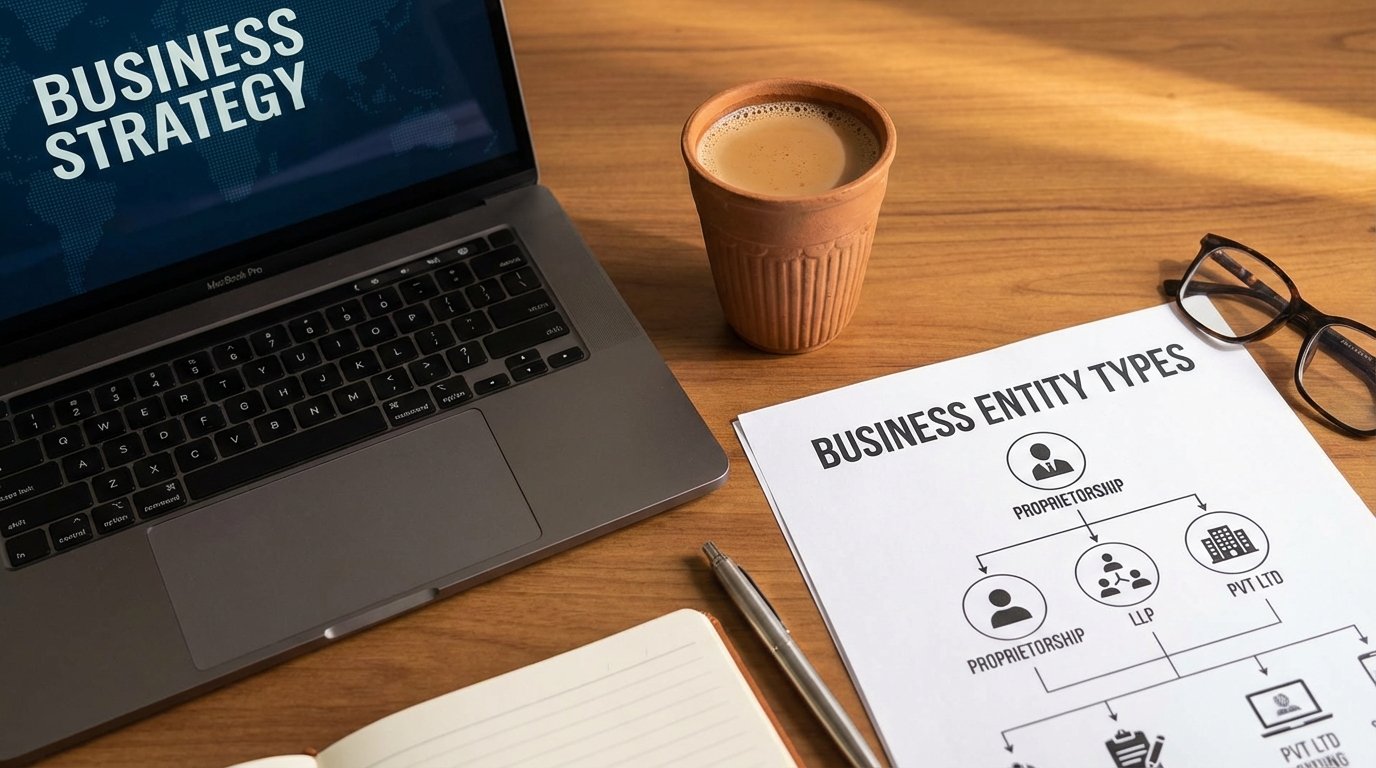
Generally, we divide these into two buckets: the Unorganized sector (like Sole Proprietorships) and the Organized sector (like LLPs and Private Limited Companies). The former is easier to start; the latter is easier to scale.
The Key Players
- Sole Proprietorship: Just you. Simple, cheap, but risky.
- Partnership Firm: You and a friend (or a few). governed by a simple deed.
- Limited Liability Partnership (LLP): The sweet spot. Limited liability like a company, but flexible like a partnership.
- Private Limited Company (Pvt Ltd): The gold standard for startups raising funds.
- One Person Company (OPC): For the solo founder who wants a corporate structure.
Comparison: Which One Wins?
To help you decide, let’s look at how the most popular forms of business structure in India stack up against each other.
Sole Proprietorship
Best For: Freelancers, shop owners, and home businesses.
The Good: Zero hassle to start. Minimal compliance.
The Bad: Unlimited liability. If the business fails, your personal assets are on the line.
Limited Liability Partnership (LLP)
Best For: Lawyers, architects, and small businesses not seeking VC money.
The Good: Protects your personal assets. No audit needed if turnover is low.
The Bad: Investors hate it. You can’t issue stock.
Private Limited Company
Best For: Tech startups and high-growth ventures.
The Good: Separate legal entity. Investors love it. High credibility.
The Bad: High compliance. You’ll need a good CA on speed dial.
3 Factors That Should Dictate Your Choice
When I advise entrepreneurs on the ideal business structure in India, I always look at three specific areas. Ignore these at your own peril.
1. Are You Worried About Liability?
This is the big one. In a Sole Proprietorship, you are the business. If you take a loan and can’t pay it back, the bank can take your car or your house. In a Private Limited Company or LLP, your liability is “limited” to whatever you invested in the business. Your personal savings are safe. For most people taking risks, this safety net is non-negotiable.
2. Do You Need Funding?
If you’re building the next big app and plan to raise money from Venture Capitalists (VCs), stop looking at other options: you need a Private Limited Company. VCs need to buy equity (shares) in your company. You can’t sell shares in a Proprietorship or an LLP. If you stay small and family-owned, however, an LLP is fantastic.
3. How Much Tax Will You Pay?
Taxation is tricky. Sole proprietors pay tax at individual slab rates. This is great if your profit is low. Companies pay a flat corporate tax rate, which is better if your profits are huge. Before you incorporate, make sure your personal tax identity is sorted. You might need to check how to apply for a PAN card online to ensure your directors are ready to go.
Compliance: The Boring (But Necessary) Stuff
Every business structure in India comes with homework. A Private Limited Company is demanding—you have to hold board meetings, file annual returns with the MCA, and get audited every single year. Miss a deadline? The penalties are steep.
Proprietorships are much more relaxed. But remember, compliance builds trust. If you want government subsidies or loans, being organized helps. Specifically, businesses falling under the MSME category get great perks. It’s worth reading up on the impact on the MSME sector to see if registering via Udyam makes sense for your chosen structure.
Steps to Register Your Entity
Once you’ve picked your winner, here is the rough roadmap to making it official:
- Digital Signature Certificate (DSC): You can’t sign physical papers for online filings. You need a digital key.
- Name Approval: You need a unique name. If you want “TechSolutions India,” you have to check the MCA portal to ensure it’s not taken.
- Incorporation Docs: This involves drafting the MoA and AoA (the constitution of your company).
- Licenses: Get your PAN, TAN, and GST registration sorted immediately after incorporation.
For official forms, always stick to the Ministry of Corporate Affairs (MCA) website.
Can You Change Your Structure Later?
Short answer: Yes.
Real answer: It’s a headache.
Many folks start as a Sole Proprietorship to save money and plan to convert to a Private Limited Company later. While this is a common path for a business structure in India, the conversion process is tedious. You have to transfer all assets, close bank accounts, and re-do contracts. If you anticipate rapid growth in year one, bite the bullet and incorporate from day one. It saves you administrative misery later.
Final Thoughts
Selecting the right business structure in India is a balancing act between your current budget and your future dreams. A Proprietorship offers freedom; an LLP offers safety; a Pvt Ltd Company offers growth. Don’t view this as just paperwork—view it as the foundation of your legacy. Choose wisely.
Frequently Asked Questions
If you plan to raise funds from investors, a Private Limited Company is your only real option. It allows for equity distribution and is the preferred format for VCs.
Yes, but it involves significant paperwork, asset transfers, and costs. It’s often better to start as a company if you expect high growth early on.
A Sole Proprietorship is the cheapest. You often just need a GST registration or a Shop & Establishment license to get started.
No. Proprietorships and LLPs only need audits if they cross certain turnover thresholds. However, Private Limited Companies must be audited every year, regardless of income.
Ownership and funding. An LLP is owned by partners and cannot issue stock (equity). A Private Limited Company is owned by shareholders and can easily raise capital by selling shares.