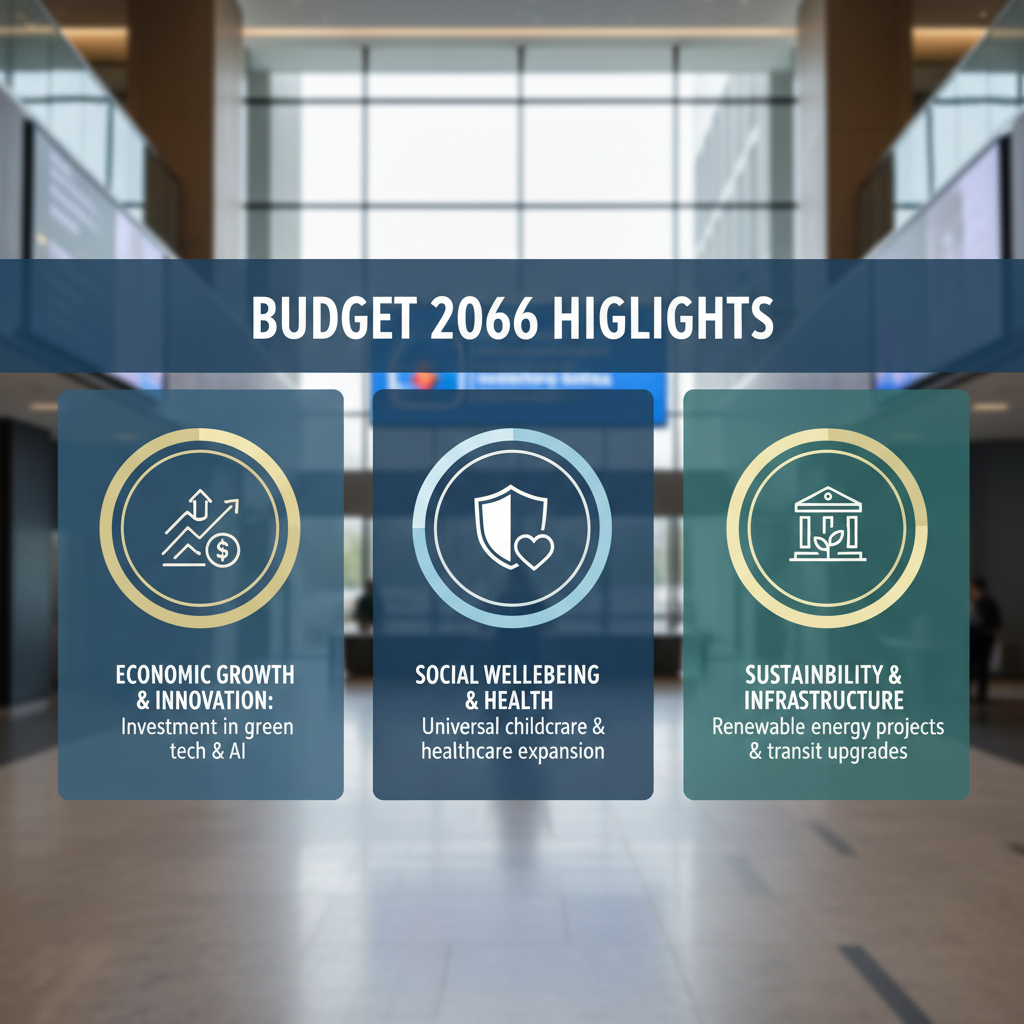
As the Indian economy continues its robust trajectory towards becoming a global powerhouse, the anticipation surrounding the Union Budget grows with every fiscal year. While the official presentation is a future event, financial analysts and economists are already mapping out the trajectory based on current economic indicators. The budget 2026 highlights are expected to focus heavily on sustaining growth, fiscal consolidation, and preparing the nation for the ‘Viksit Bharat’ (Developed India) vision of 2047.
For taxpayers, investors, and business owners, understanding the potential direction of government policy is crucial for long-term planning. The budget 2026 highlights will likely serve as a critical bridge, balancing populist measures with prudent economic discipline. Whether you are a salaried employee looking for tax relief or an MSME owner hoping for easier compliance, the upcoming financial roadmap promises to be significant. In this comprehensive guide, we analyze the projected trends, sector-specific expectations, and key takeaways that will likely define the financial narrative of 2026.
The Core Pillars of the Expected Budget 2026 Highlights
The government has consistently emphasized a few core themes in recent years: infrastructure development, digital acceleration, and green energy. It is highly probable that the budget 2026 highlights will continue to build upon these pillars. The focus is shifting from mere recovery to accelerated expansion, aiming to solidify India’s position as the third-largest economy in the world.
Experts predict that capital expenditure (Capex) will remain a primary tool for driving growth. By investing heavily in roads, railways, and defense, the government aims to create a multiplier effect on the economy. Furthermore, the budget 2026 highlights are expected to introduce next-generation reforms in the agricultural sector to boost rural consumption.
Infrastructure Push
Expect continued aggressive allocation towards highways, railways, and logistics to reduce the cost of doing business and improve connectivity.
Green Mobility
Significant incentives for Electric Vehicles (EVs) and green hydrogen are anticipated to meet India’s net-zero carbon goals.
Digital India 2.0
Focus on AI integration in governance, cybersecurity, and expanding digital public infrastructure to rural areas.
Income Tax Reforms: What to Expect in Budget 2026 Highlights
One of the most eagerly awaited sections of any finance bill is the direct tax proposal. The budget 2026 highlights regarding personal income tax are expected to lean heavily towards making the New Tax Regime the default and most attractive option. The government has been signaling a move towards a simplified tax structure with lower rates and fewer exemptions.
Taxpayers can anticipate a possible revision in the standard deduction limits to account for inflation. There is also speculation that the basic exemption limit might be raised to put more disposable income in the hands of the middle class. To understand how previous policies have shaped this direction, one can look at the trends from the Interim Budget 2024, which set the stage for stability and continuity in tax administration.
Potential Changes in Tax Slabs within Budget 2026 Highlights
The rationalization of tax slabs is a key area of interest. In the budget 2026 highlights, we may see a widening of the income brackets. For instance, the income range taxed at 10% or 15% might be expanded. This would be a strategic move to provide relief to the salaried class while ensuring tax buoyancy remains unaffected. Additionally, simplification of the capital gains tax regime is a long-standing demand that might finally be addressed to encourage retail investment in equity and property markets.
Sector-Wise Analysis of Budget 2026 Highlights
Different sectors react differently to policy announcements. The manufacturing and service sectors, in particular, will be parsing the budget 2026 highlights for announcements related to the Production Linked Incentive (PLI) schemes. As global supply chains diversify, India aims to become a manufacturing hub, and the budget is the primary instrument to facilitate this shift.
Manufacturing & PLI
Expansion of PLI schemes to labor-intensive sectors like leather, textiles, and toys to boost employment numbers.
Real Estate
Expectations of higher tax deductions on home loan interest to revive affordable housing demand.
Healthcare
Increased allocation for R&D in pharmaceuticals and medical devices to reduce import dependency.
Renewable Energy in Budget 2026 Highlights
Sustainability is no longer optional; it is an economic imperative. The budget 2026 highlights will likely feature substantial subsidies and policy frameworks for the renewable energy sector. This includes support for solar panel manufacturing, wind energy projects, and the burgeoning green hydrogen ecosystem. For investors, this signals a clear long-term trend: companies aligned with the government’s green vision are likely to see sustained support.
Impact on MSMEs and Startups
Micro, Small, and Medium Enterprises (MSMEs) are the backbone of the Indian economy. The budget 2026 highlights are expected to address the liquidity crunch often faced by small businesses. Measures could include easier access to credit, reduced compliance burdens, and integration with the Open Network for Digital Commerce (ONDC).
Furthermore, GST rationalization is often discussed in conjunction with the budget. While GST rates are decided by the GST Council, the budget speech often outlines the roadmap for indirect taxation. Small businesses should keep an eye on eligibility criteria changes. For those unclear about current structures, understanding who is eligible for the GST composition scheme is essential to maximizing benefits before new policies kick in.
Strategic Checklist: Preparing for the Financial Year 2026-27
Navigating the changes brought about by the budget requires preparation. Regardless of the specific announcements in the budget 2026 highlights, financial discipline remains paramount. Here is a step-by-step checklist to ensure you are financially prepared for the upcoming fiscal year:
- Review Your Tax Regime: Analyze whether the Old or New Regime works better for you before the fiscal year begins.
- Diversify Investments: Ensure your portfolio is balanced between equity, debt, and gold, keeping potential capital gains tax changes in mind.
- Maximize Section 80C (if applicable): If you are still in the Old Regime, ensure your investments in PPF, ELSS, and LIC are maxed out early in the year.
- Audit Your Business Compliance: For business owners, ensure all GST and TDS filings are up to date to avoid penalties that might be made stricter.
- Emergency Fund: Maintain liquidity. Economic policies can sometimes cause short-term market volatility.
It is also advisable to consult with financial experts to decode the fine print once the finance bill is passed. If you need personalized assistance with tax planning or filing, do not hesitate to contact us for expert guidance.
The Road Ahead: Economic Outlook
The budget 2026 highlights will not just be about numbers; they will be a statement of intent. With the global economy facing headwinds from geopolitical tensions and supply chain disruptions, India’s internal consumption story remains its biggest strength. The government is likely to focus on keeping inflation within the tolerance band of the Reserve Bank of India (RBI) while pushing for aggressive growth.
We can expect a budget that is “pro-poor, pro-farmer, and pro-business.” The balancing act will be tricky, but the trend of the last few years suggests a government willing to take hard decisions for long-term gains rather than short-term populist wins. For accurate and official updates, always refer to the Ministry of Finance website.
Conclusion
In summary, the budget 2026 highlights are anticipated to reinforce the foundations of a modern, digital, and sustainable India. From income tax relief for the common man to massive infrastructure spending for industrial growth, the blueprint for the future is being drawn today. As we approach the presentation date, staying informed and adaptable is the best strategy for capitalizing on new opportunities.
Whether you are an individual taxpayer or a corporate entity, the key to navigating the budget season lies in understanding the broader economic vision. By aligning your financial goals with the nation’s growth trajectory, you can ensure stability and prosperity in the fiscal year 2026-27 and beyond.
Frequently Asked Questions (FAQs)
The Union Budget for the fiscal year 2026-27 is expected to be presented by the Finance Minister on February 1, 2026, in the Parliament.
While official announcements are pending, experts predict potential revisions in tax slabs under the New Tax Regime to provide relief to the middle-class taxpayers and combat inflation.
The budget is expected to focus on MSME credit access, simplification of GST compliance, and the expansion of the PLI schemes to include more labor-intensive small-scale industries.
Infrastructure, Renewable Energy, Defence, and Digital Technology sectors are expected to be the primary beneficiaries, receiving significant allocation and policy support.
Currently, the government has not scrapped the Old Tax Regime, but the policy focus is heavily shifted towards making the New Tax Regime the default and more attractive option for the majority of taxpayers.
Read Also:
- Decoding the Budget 2026 Impact on Income Tax: A Comprehensive Guide for Taxpayers
- The Essential Guide to the 12A 80G Registration Process for NGOs and Charitable Trusts
- Unveiling the Budget 2026 Highlights: A Complete Guide to Tax Reforms and Economic Growth
- Optimizing Your Compliance: Understanding the CMP-08 Filing Due Date and Composition Scheme Returns
- Budget 2026: Analyzing the Critical Budget Impact on MSME Sector Growth and Stability
- AOC-4 Deadline 2026: Avoid Costly Fines
- Your 2026 ITR Password Revealed!
- Big Four Companies in India 2026: An Insider’s Ultimate Guide
- Small Company Definition 2026: Are You Missing These Benefits?
- Maharashtra Professional Tax Online Payment 2026: A 5-Step Guide
- AOA Full Form: Your Company’s Rulebook Explained (2026)
- EIC Full Form 2026: From Colonial Empire to Modern Trade
- Complete Guide to Income Tax Slab Rates India 2025: Old vs New Regime Explained – Visual Story