
Imagine losing ₹36,500 of your company’s hard-earned revenue just because you missed a deadline by a year. Sounds painful, right? In the world of Indian corporate compliance, that’s exactly what happens when you ignore the ticking clock on your financial statements.
Here’s the reality: Running a company in 2026 isn’t just about sales and marketing. It’s about keeping the Ministry of Corporate Affairs (MCA) happy. And the biggest annual hurdle? The AOC 4 filing.
Whether you’re a startup founder in Bangalore or a compliance officer in a Mumbai conglomerate, this form is your company’s annual report card. Get it right, and you’re in the clear. Get it wrong, or file it late, and the penalties are mathematically ruthless—they don’t stop accumulating.
In this guide, we aren’t just going to recite the law. We’re going to walk you through the trenches of the MCA V3 portal, decode the jargon, and give you a battle-tested strategy to file your AOC 4 flawlessly in 2026.
🎯 Key Takeaway
AOC 4 is the mandatory form for filing audited financial statements with the ROC. In 2026, strict adherence to the MCA V3 portal workflows and the 30-day post-AGM deadline is critical to avoiding the uncapped ₹100/day penalty.
What Exactly is Form AOC 4? (And Why It Matters)
Think of Form AOC 4 as a transparency tool. Under Section 137 of the Companies Act, 2013, every company is legally bound to share its financial health with the Registrar of Companies (ROC). It’s not just paperwork; it’s public proof that your business is legitimate, solvent, and operational.
When you file this form, you are essentially uploading your Board’s Report, Auditors’ Report, and financial statements to the public registry. Investors, creditors, and even your competitors can access this data. That’s why accuracy is just as important as timeliness.
In our experience dealing with compliance since the shift to the V3 portal, the government has tightened the screws. The automated scrutiny of these documents is sharper than ever before.
Which AOC 4 Variant Do You Need?
One size does not fit all. We see companies get rejected constantly because they picked the wrong version of the form. In 2026, the segmentation is strict.
Here is a breakdown of which form applies to your business structure:
| Form Variant | Who Must File This? | Key Requirement |
|---|---|---|
| Form AOC-4 | Most Small Companies, Private Limited, and OPCs. | Standard PDF filing of financial statements. |
| AOC-4 XBRL | Listed companies, or those with Paid-up Capital ≥ ₹5 Cr OR Turnover ≥ ₹100 Cr. | Data must be in eXtensible Business Reporting Language (machine-readable). |
| AOC-4 CFS | Companies with subsidiaries or associate companies. | Must file Consolidated Financial Statements in addition to standalone. |
| AOC-4 NBFC | Non-Banking Financial Companies. | Compliant with IND AS accounting standards specific to NBFCs. |
If you are running an LLP, stop right here. You need Form 8, not AOC 4. For a deeper dive into structure choices, check out our guide on the difference in compliance between LLPs and Private Limited companies.
The “Must-Have” Document Checklist
You can’t cook a meal without ingredients, and you can’t file AOC 4 without these documents. We recommend creating a dedicated folder on your drive labeled “FY 2025-26 Compliance” and gathering these items before you even log in to the MCA portal.
Missing even one of these will trigger a resubmission request:
- Audited Balance Sheet & Profit/Loss Account: Must be signed by at least two directors.
- Cash Flow Statement: Mandatory for all except OPCs, Small Companies, and Startups.
- Auditor’s Report: This must include the UDIN (Unique Document Identification Number).
- Board’s Report: Including the MGT-9 extract (if applicable).
- Notice of AGM: The official invitation sent to shareholders.
- CSR Report: Only if your net worth, turnover, or profit triggers CSR applicability.
- Subsidiary Details: Form AOC-1 if you have subsidiaries.
💡 Pro Tip
Always double-check the UDIN generated by your Chartered Accountant. In 2026, the MCA system validates the UDIN in real-time against the ICAI registry. If there’s a mismatch, your form won’t just be rejected—it might flag your company for a compliance audit.
AOC 4 XBRL: The Technical Beast
Let’s talk about XBRL. If your company falls into the “big league” criteria (Listed, ₹5Cr+ Capital, or ₹100Cr+ Turnover), you cannot file a simple PDF. You must use XBRL (eXtensible Business Reporting Language).
Why? Because the government wants to analyze your data using AI, and PDFs are too hard to read. XBRL tags every single number in your balance sheet with a specific code.
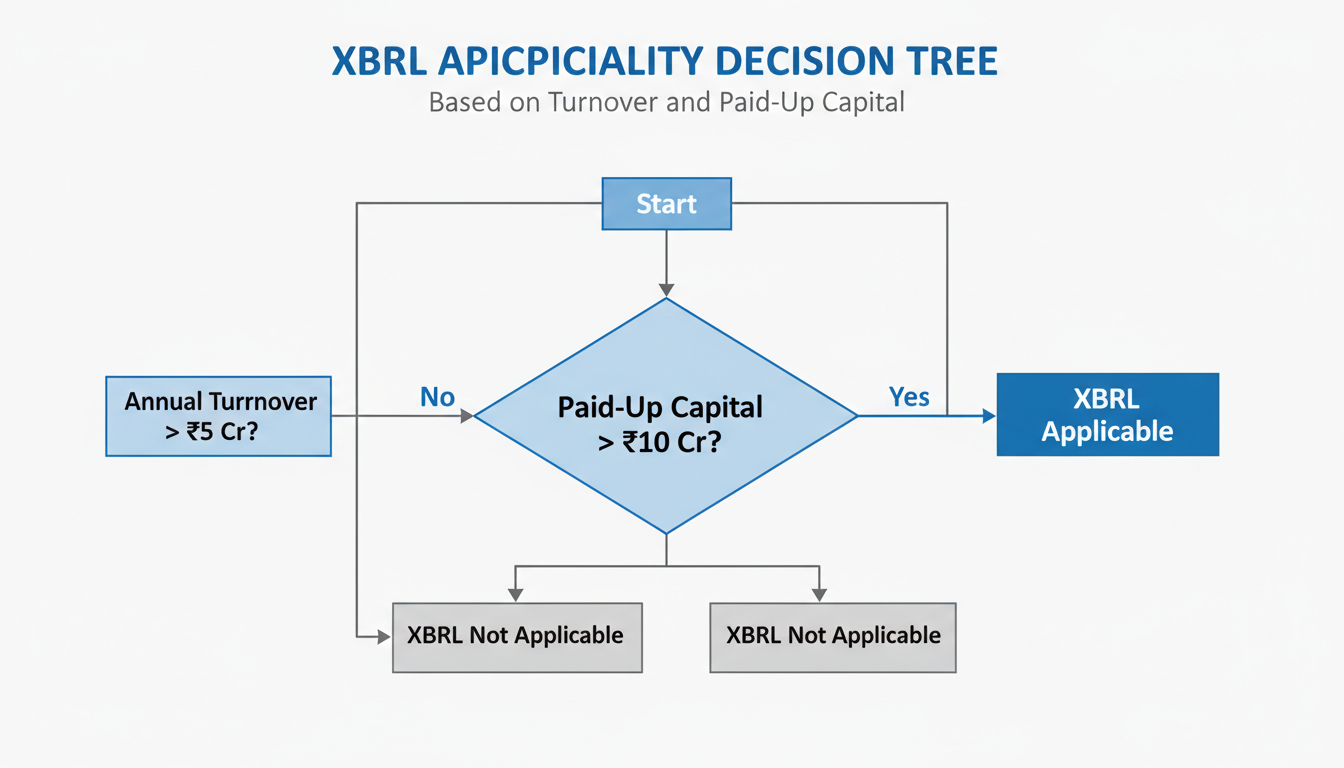
Warning: XBRL filing requires specialized software. You cannot do this manually. Ensure your Company Secretary or CA has the latest taxonomy update for 2026.
Step-by-Step Guide to Filing on MCA V3 (2026 Update)
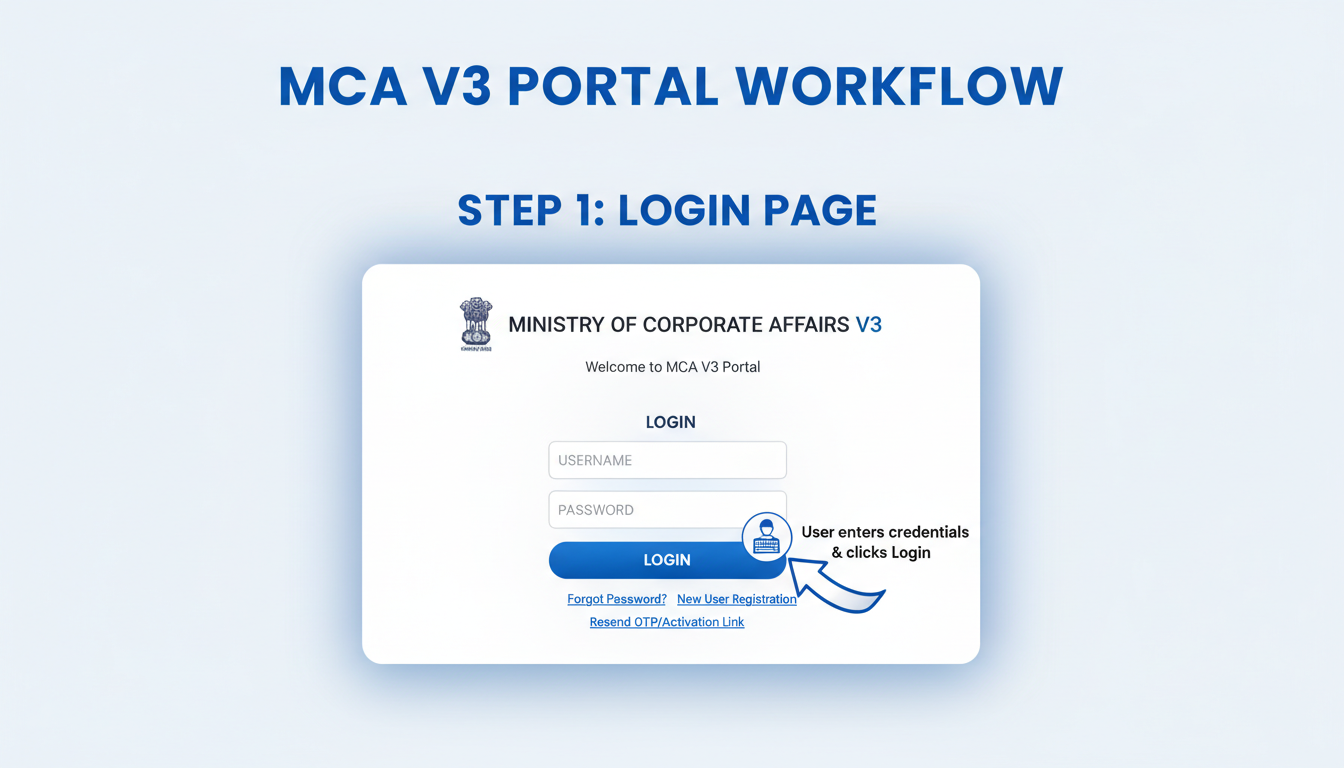
The transition to the MCA V3 portal changed the game. It’s no longer just “upload and forget.” It’s a web-based form process. Here is the workflow you need to follow:
Step 1: The Pre-Requisites
Ensure your company’s status is ‘Active’ and all directors have valid DINs. You also need a registered Business User account on the MCA V3 portal. You can no longer file through a ‘Registered User’ account for many forms.
Step 2: Web-Form Data Entry
Log in and navigate to MCA Services > Company e-Filing > Financial Statements > AOC 4. Enter your CIN (Corporate Identity Number). The system will pre-fill basic data like the company name and address.
Step 3: Attachment & Review
This is where most errors happen. Upload your financial statements as high-quality PDFs. The system has a size limit (usually 6MB to 10MB per file), so compress your files without losing clarity. Wheelchair Tennis Paralympics: Ultimate Guide
⚠️ Watch Out
Do not use special characters in your PDF filenames (like “Balance_Sheet_Final(1).pdf”). The MCA server often rejects these. Stick to simple alphanumerics like “BalanceSheet2026.pdf”.
Step 4: Certification & DSC
Once the form is saved, it must be digitally signed. First by the Director, and then by the practicing professional (CA/CS). The Digital Signature Certificate (DSC) must be registered on the V3 portal beforehand. Need help with signatures? Read about Digital Signature Certificate types here.
Step 5: Payment & SRN Generation
Pay the filing fee. Once successful, an SRN (Service Request Number) is generated. Save this receipt. It is your only proof of filing.
Deadlines and The “Late Fee” Trap
This is the section that saves you money. The standard deadline is crystal clear, yet thousands of companies miss it every year.
The Golden Rule: File within 30 days of your Annual General Meeting (AGM).
| Event | Typical Date (FY 2025-26) | AOC 4 Due Date |
|---|---|---|
| Financial Year End | March 31, 2026 | N/A |
| AGM Deadline | September 30, 2026 | October 30, 2026 |
| OPC Deadline | September 27, 2026 (180 days) | September 27, 2026 |
The Cost of Procrastination
In the past, you could pay a lump sum penalty and move on. Not anymore. The penalty is now ₹100 per day.
Let’s do the math. If you delay filing by just 6 months:
- 180 days x ₹100 = ₹18,000.
This applies in addition to the normal filing fee. And remember, this penalty applies to the company. Directors can face separate fines under the Ministry of Corporate Affairs regulations. There is no maximum cap on this daily penalty for the company.
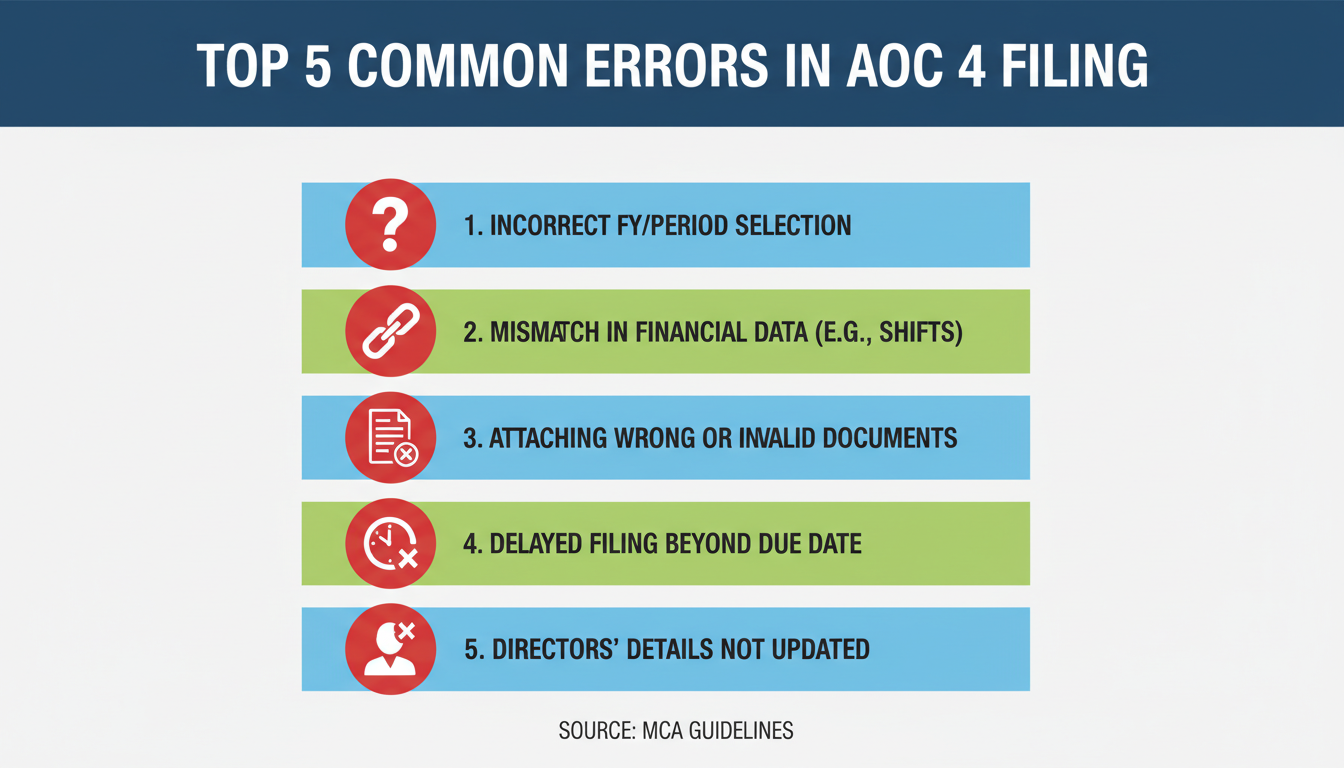
Common Mistakes That Cause Rejections
We’ve analyzed hundreds of rejected filings. Here are the top reasons why forms get sent back:
- Blurry Scans: If the ROC officer can’t read the numbers, they won’t approve it.
- Incorrect AGM Date: If the date in the form doesn’t match the Notice of AGM attached, it’s an instant rejection.
- Missing Director’s Report: Specifically, the section explaining the state of company affairs.
- Auditor Mismatch: The auditor signing the form must be the same one appointed via Form ADT-1.
Conclusion
Filing AOC 4 isn’t just about avoiding a ₹100 daily fine. It’s about corporate hygiene. In an era where data is transparent and accessible, your financial filings tell the world that your business is trustworthy, compliant, and managed professionally.
Don’t wait until October 29th to start calling your accountant. Gather your documents now, verify your DSC validity, and get that SRN generated well before the deadline. Trust me, your future self (and your bank account) will thank you.
For specific accounting standards, always refer to the Institute of Chartered Accountants of India (ICAI) guidelines to ensure your financial statements are compliant before you even attempt to file.
❓ Frequently Asked Questions
What happens if I don’t hold an AGM? Do I still file AOC 4?
Yes. Even if you fail to hold an AGM, you must file the financial statements within 30 days of the date the AGM should have been held (typically by October 30th). You must also attach a reason for not holding the meeting.
Can I file AOC 4 myself, or do I need a professional?
While you can technically fill the form, it requires certification (digital signature) from a practicing Chartered Accountant (CA), Company Secretary (CS), or Cost Accountant. Small companies and OPCs are exceptions where self-certification by directors might suffice, but professional review is highly recommended to avoid errors.
Is the penalty of ₹100 per day applicable to One Person Companies (OPC)?
Yes. The penalty structure is uniform. If an OPC fails to file within 180 days from the close of the financial year, the ₹100 per day penalty applies until the default is made good.
What is the difference between AOC 4 and MGT 7?
Think of AOC 4 as the “Financial Report” (Balance Sheet, P&L) and MGT 7 as the “Governance Report” (Shareholders, Directors, Meetings). Both are annual mandatory filings but serve different purposes.
Can I revise a filed AOC 4?
Revising financial statements is not simple. Under Section 131 of the Companies Act, 2013, you can only revise financials after obtaining approval from the National Company Law Tribunal (NCLT). You cannot simply upload a new form to overwrite the old one.