Let’s be honest: nobody wakes up in the morning excited to pay taxes. It’s painful enough watching that chunk of money leave your bank account once a year. But you know what’s significantly worse? Paying that tax plus a hefty interest penalty simply because you didn’t pay it at the right time.
This is the reality for thousands of Indian taxpayers every year who misunderstand the rules of advance tax payment India. Many assume that filing their Income Tax Return (ITR) in July is the only deadline that matters. They are wrong.
If your tax liability exceeds ₹10,000 in a financial year, the Income Tax Department expects you to pay as you earn. Wait until the end of the year, and you’ll be hit with monthly interest charges under Sections 234B and 234C that can inflate your tax bill by 10% to 15% unnecessarily.
I’ve spent two decades advising clients—from high-net-worth investors to freelance designers—on how to navigate these waters. In this guide, I’m not just going to recite the rulebook. I’m going to show you exactly how to calculate your liability, how to manage unpredictable income, and how to keep your hard-earned money out of the penalty pot.
What Is Advance Tax Payment India and Why Does It Exist?
Think of advance tax as an installment plan for your income tax. Instead of paying a lump sum at the end of the year, the government wants its share in four quarterly chunks. This system, known as the "Pay As You Earn" scheme, ensures the government has a steady cash flow to run the country throughout the year.
For you, the taxpayer, it actually serves a dual purpose. Yes, it’s a compliance requirement, but it also prevents the massive financial shock of having to pay, say, ₹5 lakhs in tax all at once in July. Spreading it out makes cash flow management significantly easier.
Who Is Liable? (It’s Not Just Business Owners)
One of the most common myths I hear is, "I’m a salaried employee, so I don’t need to worry about this." This is dangerous thinking. While it is true that employers deduct TDS on salary, your employer might not know about your other income unless you’ve declared it.
Let’s break down exactly who needs to pay advance tax payment India based on different taxpayer profiles.
1. The Salaried Employee with a Side Hustle
If your only income is your salary, your employer likely covers your tax liability through TDS. However, if you earn extra money from:
- Capital Gains: Made a profit selling stocks or mutual funds?
- Interest Income: Significant interest from Fixed Deposits or Savings Accounts?
- Rental Income: Owning a property that generates rent?
- Moonlighting/Freelancing: Consulting on the weekends?
If the tax on this extra income pushes your outstanding liability over ₹10,000, you must pay advance tax on it. Your employer won’t deduct tax on your stock market profits automatically.
2. Freelancers and Professionals (Doctors, Architects, Consultants)
This is the group that gets hit the hardest with penalties. Since your clients typically deduct TDS at only 10% (under Section 194J), and your actual tax slab might be 30%, you are almost guaranteed to have a shortfall. You are the prime candidate for advance tax.
3. Business Owners and Corporates
All businesses—whether sole proprietorships, partnerships, LLPs, or Private Limited companies—must estimate their profits and pay advance tax. There are no exceptions here.
4. NRIs (Non-Resident Indians)
Yes, the rules apply to you too. If you have income arising in India (like rent from a Bangalore apartment or interest from an NRO account) and your liability exceeds ₹10,000, you are on the hook for advance tax payment India.
The Critical Due Dates: Mark Your Calendar
Missing a deadline is where the financial pain begins. The Income Tax Department doesn’t just want your money; they want it on a specific schedule. If you delay, interest under Section 234C kicks in instantly.
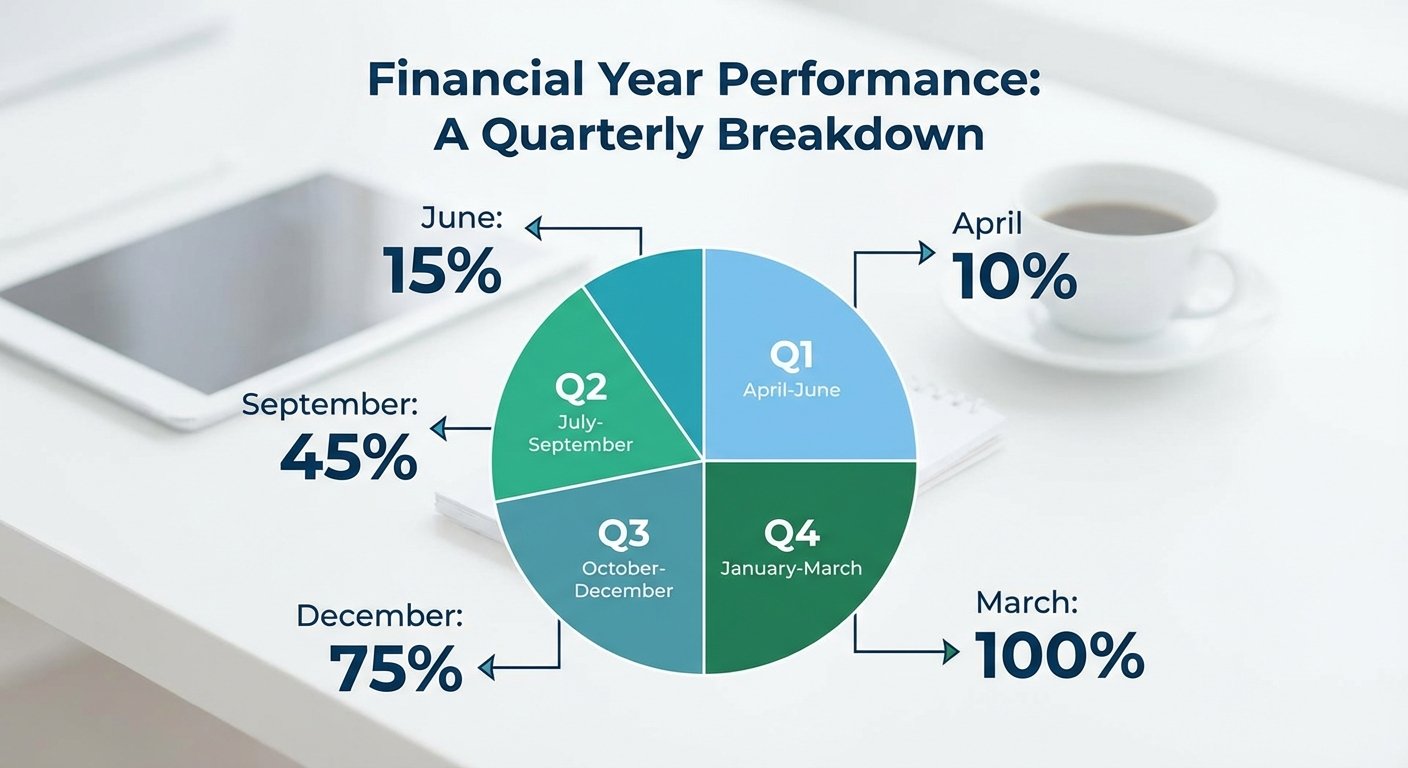
Here is the schedule you must follow for the Financial Year (FY) 2024-25:
| Deadline | Amount Payable (% of Estimated Tax) |
|---|---|
| On or before 15th June | 15% |
| On or before 15th September | 45% (minus amount already paid) |
| On or before 15th December | 75% (minus amount already paid) |
| On or before 15th March | 100% (minus amount already paid) |
The "Presumptive Taxation" Loophole (Section 44AD/44ADA)
If you are a freelancer, small business owner, or professional opting for the Presumptive Taxation Scheme (where you declare a flat % of your turnover as profit), the government cuts you some slack.
You do not have to pay in four installments. You can pay 100% of your advance tax payment India liability in a single shot on or before 15th March. This is a massive relief for freelancers who often have irregular cash flows and find it hard to estimate income in June.
Step-by-Step Calculation: A Real-World Scenario
The theory is fine, but let’s look at the math. This is where most people get stuck: "How do I pay tax on income I haven’t earned yet?"
The answer is estimation. You have to project your annual income. Let’s take a hypothetical example: Rohan, a freelance graphic designer.
- Estimated Gross Receipts (FY 2024-25): ₹20,00,000
- Estimated Expenses (Software, Rent, etc.): ₹5,00,000
- Net Taxable Business Income: ₹15,00,000
- Income from FD Interest: ₹50,000
- Total Income: ₹15,50,000
Step 1: Deductions
Rohan invests ₹1.5 Lakh in PPF (Section 80C) and pays ₹25,000 for health insurance (Section 80D).
Net Taxable Income = ₹15,50,000 – ₹1,75,000 = ₹13,75,000.
Step 2: Calculate Tax
Based on the tax slabs (assuming the old regime for this example), the tax on ₹13.75 Lakh is approximately ₹2,25,000 + 4% cess = ₹2,34,000.
Step 3: Subtract TDS
Rohan’s clients have already deducted TDS of ₹1,50,000 throughout the year.
Net Tax Payable = ₹2,34,000 – ₹1,50,000 = ₹84,000.
Since ₹84,000 > ₹10,000, Rohan MUST pay advance tax.
Rohan’s Payment Schedule:
- June 15th: Pay 15% of ₹84,000 = ₹12,600
- Sept 15th: Pay 45% of ₹84,000 = ₹37,800 (Less ₹12,600 already paid) = ₹25,200
- Dec 15th: Pay 75% of ₹84,000 = ₹63,000 (Less ₹37,800 already paid) = ₹25,200
- March 15th: Pay 100% of ₹84,000 = ₹84,000 (Less ₹63,000 already paid) = ₹21,000
The Sting of Penalties: Section 234B and 234C Explained
I cannot stress this enough: the interest penalties are not a one-time fine. They are monthly compounding interest charges that continue until you pay the tax.
Section 234C: The Deferment Penalty
This penalty hits you if you miss the quarterly deadlines. Even if you pay your full tax by March 31st, if you missed the June or September installments, you will still pay 234C interest for those specific months.
- Interest Rate: 1% per month.
- Calculation: Charged on the shortfall amount for a period of 3 months (for June, Sept, Dec installments) and 1 month (for March installment).
Section 234B: The Default Penalty
This is the big one. If by March 31st, you have not paid at least 90% of your total assessed tax liability, Section 234B kicks in. You will be charged 1% interest per month from 1st April of the assessment year until the day you actually pay the tax.
Example: If you owe ₹1 Lakh in tax and don’t pay anything until filing your return in July, you will owe 4 months of interest (April, May, June, July) at 1% per month. That’s an extra 4% flat gone from your pocket.
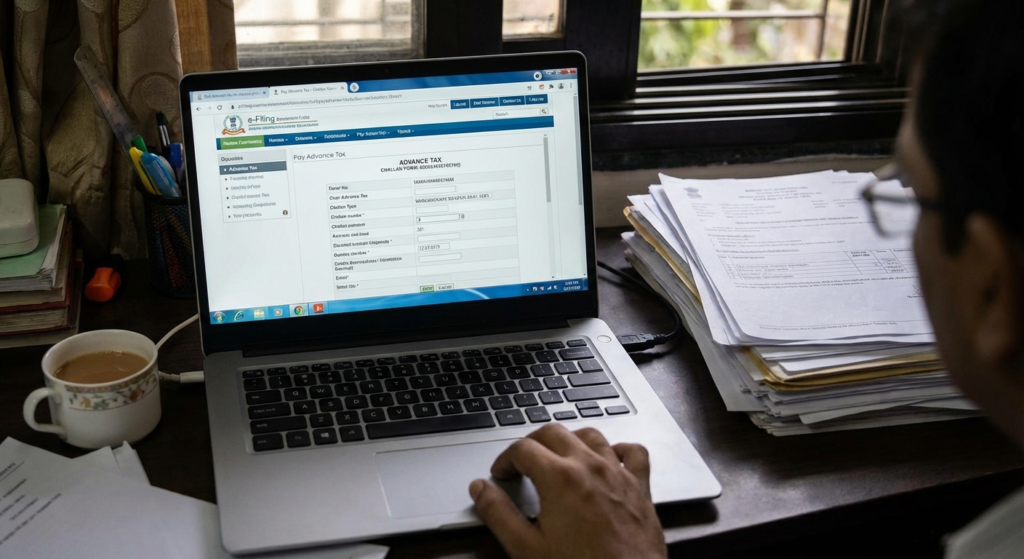
How to Pay Advance Tax Online: A 2024 Walkthrough
Gone are the days of filling out paper challans at the bank. The new Income Tax e-filing portal is robust and user-friendly. Here is the exact workflow I use for my clients:
- Log In or Go Direct: You don’t even need to log in. You can use the ‘e-Pay Tax’ feature on the Income Tax e-Filing portal homepage.
- Enter Details: Input your PAN and re-enter it to confirm. Add your mobile number for OTP verification.
- Select Tax Payment: Once verified, you will see tiles for different payments. Click on the first tile labeled "Income Tax".
- Choose Assessment Year (Crucial Step): This is where people mess up. For Financial Year 2023-24, you must select Assessment Year (AY) 2024-25. Remember, AY is always one year ahead of FY.
- Select Payment Type: Choose "Advance Tax (100)" from the list of payment types.
- Enter Amount: Fill in the tax breakdown (Tax, Surcharge, Cess). Usually, you just enter the total tax figure in the first column.
- Payment Gateway: You can pay via Net Banking, Debit Card, UPI, or even RTGS/NEFT. The Payment Gateway option (using UPI or Credit Card) is usually the fastest.
- Download Challan: Once paid, you get a Challan Receipt (CRN). Download this PDF immediately. You will need the BSR Code and Challan Serial Number when you file your ITR to prove you paid.
For a broader understanding of how these payments fit into your overall compliance, check out our guide on mastering TDS return filing, which is the other side of the tax coin.
Common Mistakes to Avoid
Even smart investors make simple errors with advance tax payment India. Here are the pitfalls I see most often:
- Ignoring Capital Gains: People assume capital gains tax is paid at the end. Wrong. If you sold shares in August, the tax on that gain is due in the September installment.
- Forgetting Interest Income: TDS on FDs is deducted at 10%. If you are in the 30% slab, you owe the remaining 20% as advance tax. Don’t wait for the bank to tell you this.
- Selecting the Wrong Year: Paying for AY 2023-24 instead of AY 2024-25. If you do this, you have to go through a tedious rectification process to move the credit to the correct year.
- Waiting for the Last Day: Server crashes on March 15th are legendary. Pay a few days early.
What If You Estimate Wrong?
It happens. Business is unpredictable. The Income Tax Act understands this to an extent.
Scenario A: You Paid Too Much
Great news! The excess amount will be refunded to you when you file your ITR. Even better, the government pays you interest (0.5% per month) on that refund under Section 244A.
Scenario B: You Paid Too Little
You will have to pay the remaining balance along with the interest penalties mentioned above. However, if the shortfall is due to an unexpected capital gain or winning the lottery after a due date passed, you are generally excused from paying interest for the earlier quarters, provided you pay the tax in the remaining installments.
For senior citizens managing their cash flow, ensuring you don’t get hit with unnecessary TDS is also vital. Make sure you understand the difference between Form 15G and Form 15H to keep your liquidity high.
Conclusion: Pay Now, Relax Later
Mastering advance tax payment India is less about accounting and more about discipline. It forces you to look at your finances quarterly rather than annually, which is a healthy habit for any business owner or investor.
Don’t look at advance tax as a burden. Look at it as a way to avoid giving the government a 10% tip in the form of interest penalties. Run your numbers, mark your calendar for June, September, December, and March, and clear your dues. Your future self (filing ITR in July) will thank you.
If you are running a business and need to ensure you are 100% compliant across all fronts, take a moment to explore our business compliance strategies.
FAQs on Advance Tax Payment India
Yes! The new income tax portal supports payment gateways that allow UPI, GPay, PhonePe, and credit cards. It is often faster than traditional Net Banking.
You can still pay the tax on or before March 31st. It will still be counted as advance tax, helping you reduce the Section 234B penalty. However, you will be liable for Section 234C interest for deferring the last installment.
No. If your estimated tax liability is fully covered by the TDS deducted by your employer or clients, and the remaining payable amount is less than ₹10,000, you do not need to pay advance tax.
Since capital gains are unpredictable, you are not penalized for not anticipating them. However, once the gain occurs (e.g., you sell a property in October), you must include the tax on that gain in the subsequent installments (December and March).
No. Resident senior citizens (60+ years) who do not have any income from a business or profession are exempt from paying advance tax. They can pay self-assessment tax at the time of filing their return.
Read Also:
- Solo Founder? Launch Your OPC in 2026
- Master Indian TDS: Your 2026 Survival Guide
- Beyond Salary: Your 2026 Hidden Income Guide
- Income Tax Scrutiny Assessment 2026: A Step-by-Step Guide
- TDS Rates FY 2020-21: The Definitive Guide (Updated 2026)
- Projected Budget 2026 Highlights: A Comprehensive Roadmap for India’s Economic Future – Visual Story
- EIC Full Form 2026: From Colonial Empire to Modern Trade