Imagine this. You’ve poured your life savings into a brilliant new venture. You land a game-changing contract, but just as you’re about to celebrate, your lawyer calls. The contract is void. Why? Because the deal falls outside a single sentence buried in a legal document you signed months ago and barely understood.
This isn’t a scare tactic. It’s a real-world risk for founders who misunderstand the two most fundamental documents in a company’s life: the Memorandum of Association (MOA) and the Articles of Association (AOA).
Think of them as your company’s DNA. They dictate everything from what your business can legally do to how you fire a director. Getting them wrong can cripple your growth, scare away investors, and even expose you to personal liability. But getting them right? It’s like building your corporate house on a foundation of solid rock.
In this deep dive, we’re cutting through the legal jargon. You’ll learn:
- The simple, crucial difference between the MOA and AOA.
- Why the “Objects Clause” in your MOA can make or break your company’s future.
- How to avoid the common pitfalls that trip up 90% of new entrepreneurs.
- A step-by-step guide to altering these documents as your business evolves.
Let’s make sure your company’s foundation is built to last.
MOA vs. AOA: The Constitution and the Rulebook
Forget the legalese for a moment. The easiest way to understand the MOA vs AOA distinction is with a simple analogy.
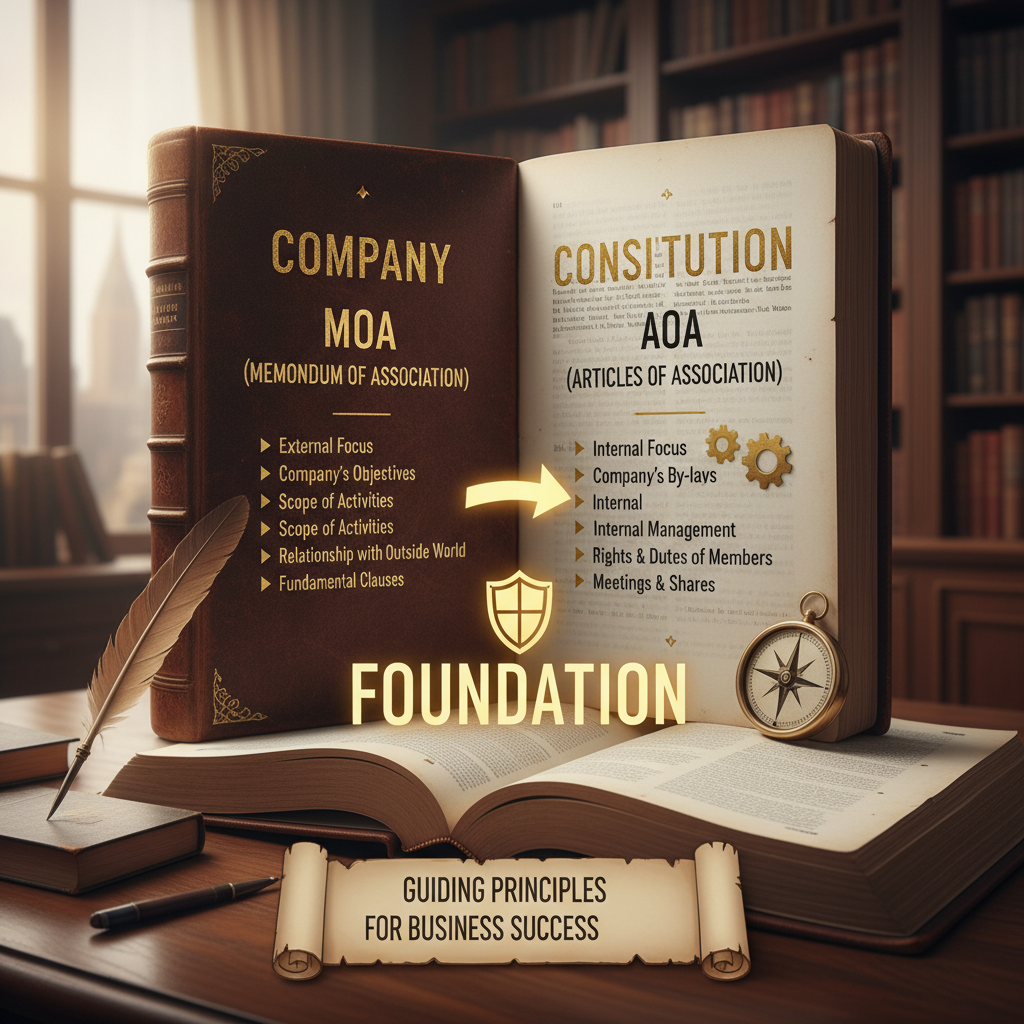
- The Memorandum of Association (MOA) is your company’s Constitution. It’s a public document that defines the company’s existence and its boundaries. It tells the outside world—investors, banks, customers—what your company is, what it can do, and the limits of its power. It’s the big picture.
- The Articles of Association (AOA) is your company’s internal Rulebook. It details how your company will achieve the goals set out in the Constitution. It governs internal affairs, like board meetings, voting rights, and director duties. It’s the day-to-day operational guide.
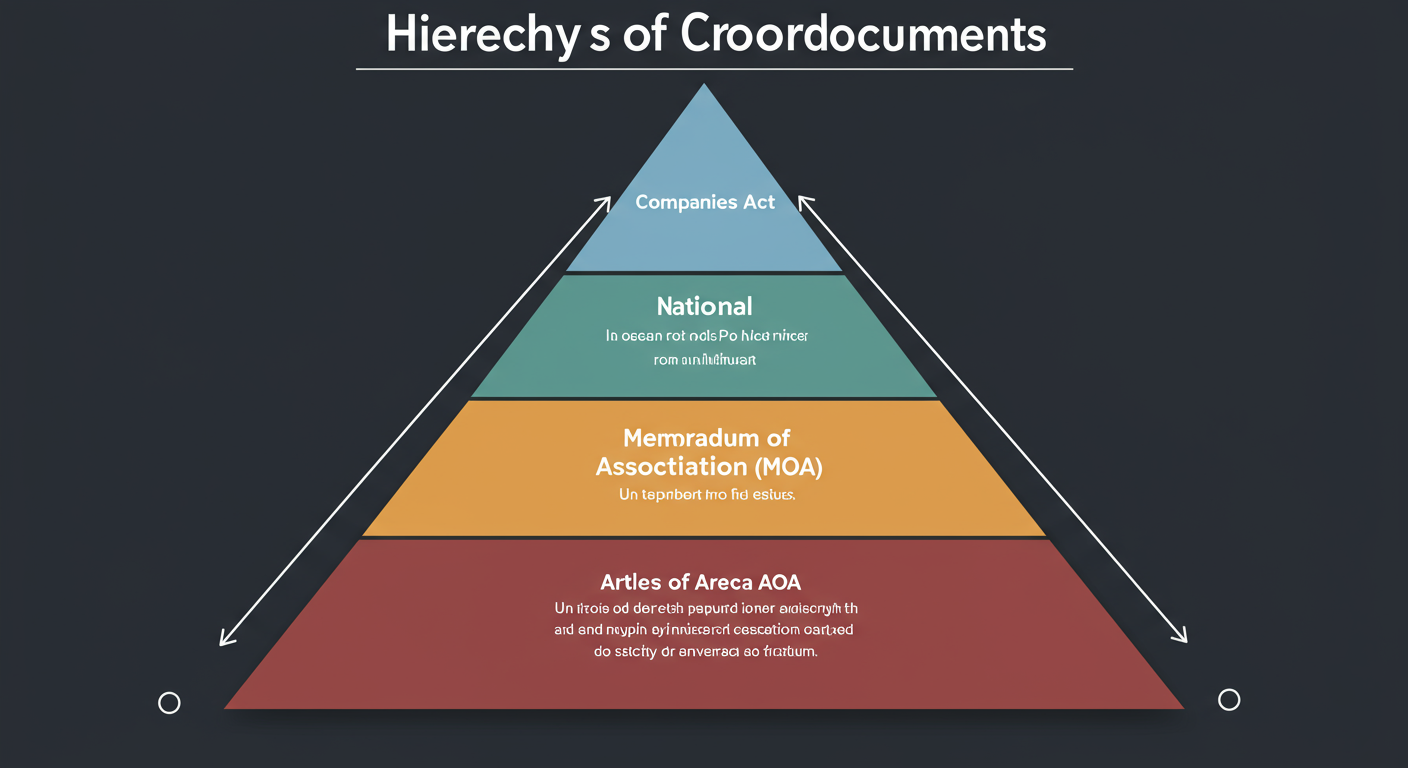
The Constitution (MOA) always trumps the Rulebook (AOA). You can’t have a rule in your AOA that contradicts a fundamental power or limitation defined in your MOA. It’s a strict hierarchy.
Deep Dive: The MOA, Your Company’s Constitution
The MOA is the foundational charter. It’s the document filed with the government registrar (like the Registrar of Companies in India or Companies House in the UK) that officially brings your company into existence. Its primary job is to define the company’s relationship with the outside world.
Based on our experience helping hundreds of companies incorporate, the MOA is the document investors and lenders scrutinize first. It has six core components, often called “clauses.”
The 6 Mandatory Clauses of the MOA
- The Name Clause: This states the full, legal name of your company, ending with “Private Limited,” “Limited,” or the equivalent required in your jurisdiction. It must be unique.
- The Registered Office Clause: This specifies the state or territory where your company’s registered office is located. This is crucial as it determines which laws and courts have jurisdiction over your company.
- The Objects Clause: This is the big one. It details the business activities your company is authorized to undertake. It’s broken into main objects and ancillary objects. Anything not in here is off-limits.
- The Liability Clause: This declares that the liability of the members (shareholders) is limited. It’s the entire point of forming a company—to protect your personal assets. It usually states liability is “limited by shares” or “limited by guarantee.”
- The Capital Clause: This specifies the maximum amount of share capital the company is authorized to raise (the “authorized capital”) and how it’s divided into shares. You can’t issue shares beyond this limit without formally increasing it.
- The Subscription Clause: This is a declaration by the first subscribers (the founding members) stating their intention to form a company and their agreement to take at least one share each.
⚠️ Watch Out
Don’t draft your Objects Clause too narrowly. I’ve seen tech startups define their object as “mobile app development” only to be legally blocked from pivoting to a more lucrative SaaS platform or AI consulting later. Be specific enough to give clarity, but broad enough to allow for future growth.
Unpacking the AOA: Your Internal Rulebook
If the MOA sets the playground, the AOA sets the rules of the game inside it. The Articles of Association are the bylaws that govern the company’s internal management and administration. They are subordinate to the MOA and the governing corporate law, like the Companies Act, 2013 in India.
The AOA dictates the nitty-gritty of running the company. Think of it as the answer to all the “how do we…” questions.
Key Areas Governed by the AOA:
- Share Capital & Transfer: How are new shares issued? What’s the process for a shareholder to sell or transfer their shares? What happens if a shareholder passes away?
- Director’s Powers & Duties: How are directors appointed, remunerated, and removed? What decisions can the board make without shareholder approval? What constitutes a conflict of interest?
- Meetings: The rules for calling and conducting Board Meetings and General Meetings (AGMs, EGMs), including notice periods, quorum (minimum number of attendees), and voting procedures.
- Voting Rights: Defines how voting power is distributed. Do all shares get one vote? Are there different classes of shares with different rights?
- Dividends: The procedure for declaring and distributing profits to shareholders.
- Winding Up: The process for dissolving the company if it ever comes to that.
💡 Pro Tip
Don’t just accept the standard “template” AOA (often called Table F in India). For any serious startup, especially one seeking investment, you need a customized AOA. A well-drafted AOA with clear clauses on share transfers, drag-along/tag-along rights, and board composition is a massive signal of professionalism to VCs.
MOA vs. AOA: Head-to-Head Comparison
Let’s put it all together. The real-world implications of the MOA vs AOA battle come down to a few key differences. Understanding these is non-negotiable for any director or founder.
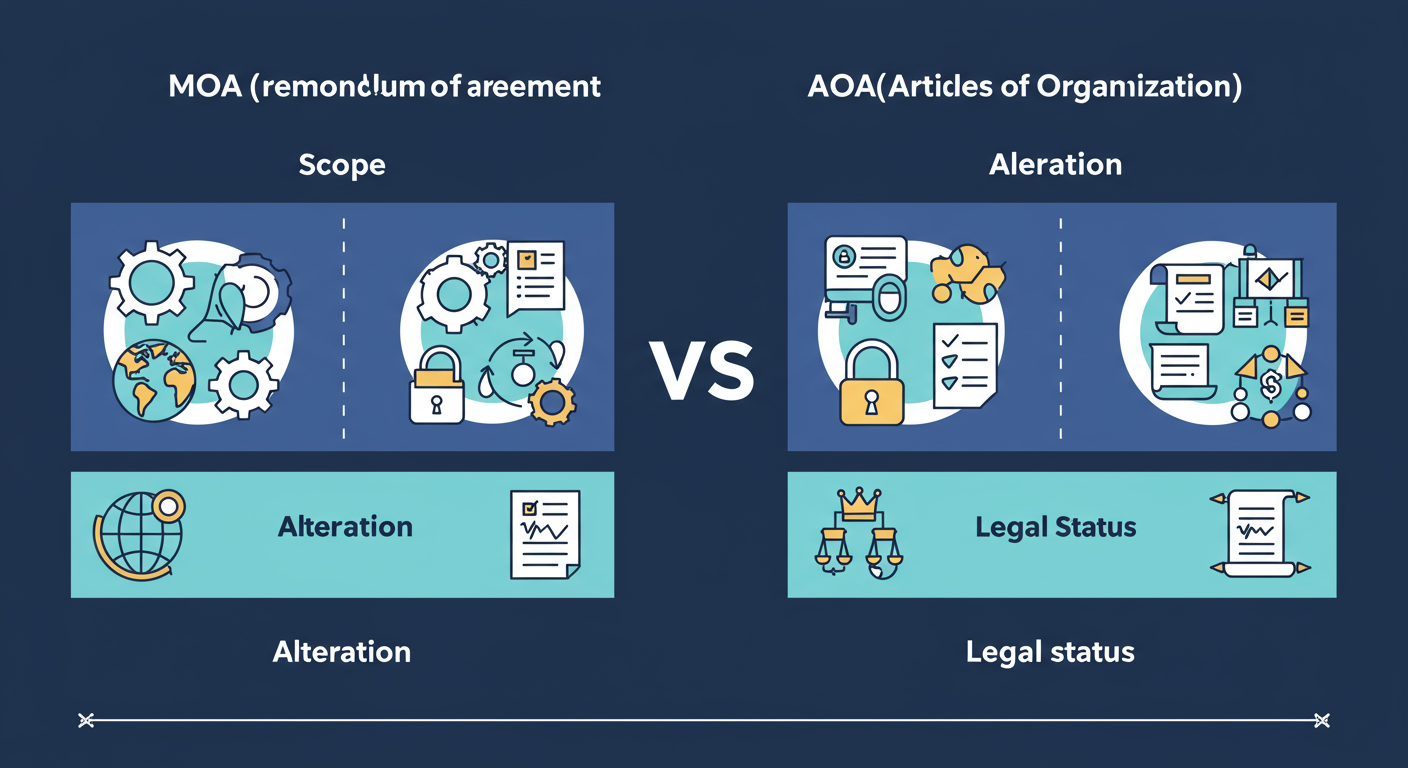
| Basis of Comparison | Memorandum of Association (MOA) | Articles of Association (AOA) |
|---|---|---|
| Primary Purpose | Defines the company’s charter, scope, and powers. Sets external boundaries. | Defines the internal rules, regulations, and management procedures. |
| Analogy | The Constitution | The Rulebook / Bylaws |
| Legal Status | Supreme document. Overrides the AOA. | Subordinate to the MOA and the Companies Act. |
| Relationship Governed | Company ↔ External World (Investors, Creditors, Public) | Company ↔ Members, and Members ↔ Members |
| Alteration Difficulty | Very Difficult. Requires a Special Resolution and often approval from a central government body or tribunal. | Relatively Easy. Requires a Special Resolution but typically no external approval is needed. |
| Associated Legal Doctrine | Doctrine of Ultra Vires (acts beyond its powers are void). | Doctrine of Indoor Management (outsiders can assume internal rules are followed). |
🎯 Key Takeaway
The MOA defines what your company can do, setting its absolute limits. The AOA defines how your company will do it, managing its internal operations. Any action must be permitted by the MOA and executed according to the AOA.
The “Ultra Vires” Trap: A Founder’s Nightmare
So what happens if you ignore the MOA’s boundaries? You fall into the “ultra vires” trap.
Ultra vires is a Latin term meaning “beyond the powers.” Any action taken by a company that falls outside the scope of its Objects Clause in the MOA is legally void. It’s as if it never happened. The consequences are severe: Comprehensive Form 27EQ Filing Guide 2024-25: TCS Return Basics, Due Dates, and Compliance
- Void Contracts: The contract is unenforceable. The third party cannot sue the company to enforce it.
- Personal Liability: Directors who authorized the act can be held personally liable for any losses incurred by the company.
- No Ratification: Shareholders cannot “approve” an ultra vires act after the fact, not even with a 100% vote. The act is fundamentally void.
“The Memorandum gives the company life, but the Articles give it the ability to function daily. The doctrine of ultra vires ensures the company doesn’t live a life it was never authorized to have.” – A sentiment shared by corporate law experts.
Altering Your Corporate DNA: A Step-by-Step Guide
Businesses pivot. Markets change. Your founding documents must be able to evolve. Here’s a simplified guide to the alteration process. Note: Always consult a legal professional, as specific procedures vary by jurisdiction. AGM Compliance for Private Limited Company: Rules and Penalties
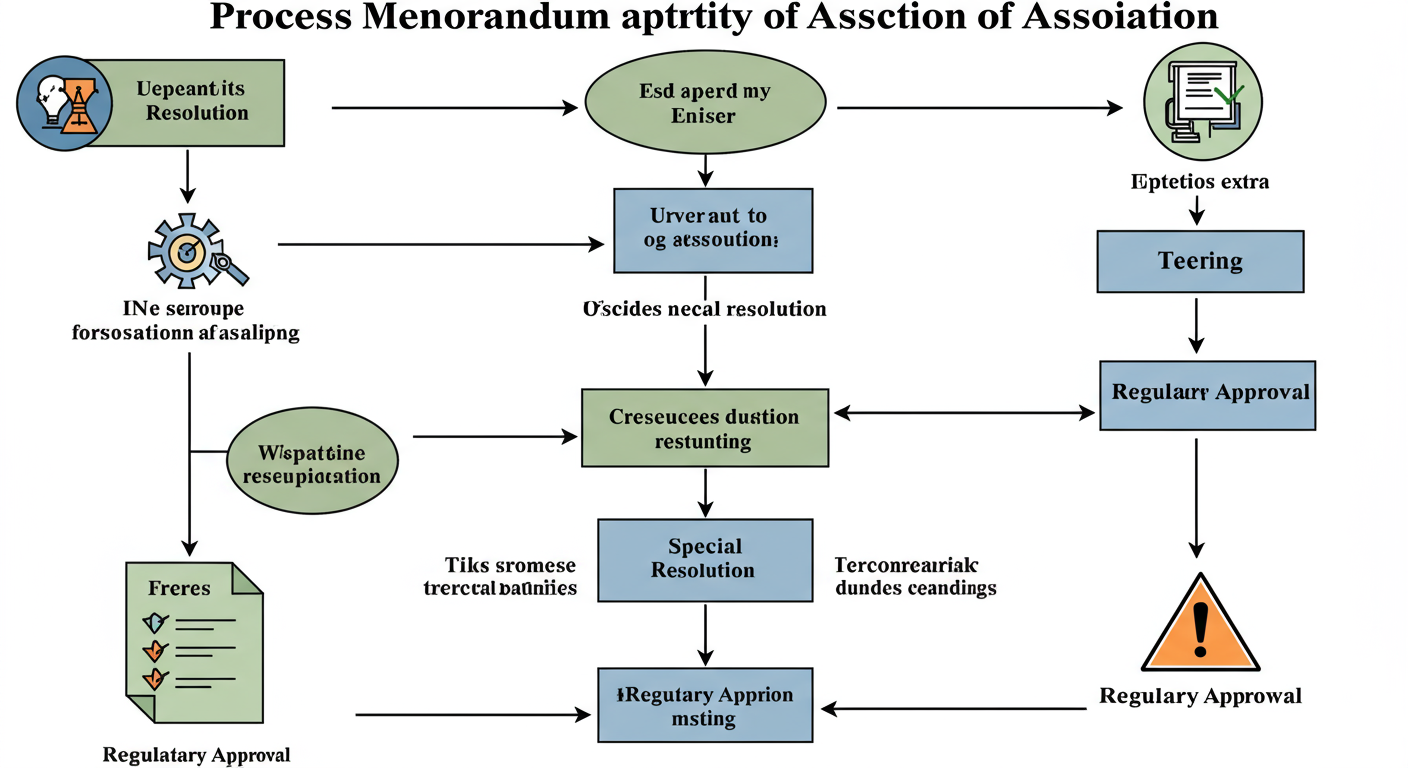
How to Alter Your MOA (The Hard Path)
Altering the MOA is a serious, deliberate process because it affects the company’s fundamental identity.
- Board Approval: The Board of Directors must first approve the proposed alteration and call for a General Meeting of shareholders.
- Shareholder Approval: A Special Resolution must be passed at the General Meeting. This typically requires a 75% majority of members present and voting.
- File with Registrar: The Special Resolution and the altered MOA must be filed with the Registrar of Companies within a specific timeframe (e.g., 30 days).
- Central Government/Tribunal Approval (If Required): For major changes, like shifting the registered office to another state or a significant change in the main objects, you may need approval from a regional director or the National Company Law Tribunal (NCLT). This is the most time-consuming and complex step.
How to Alter Your AOA (The Easier Path)
Changing your internal rulebook is much more straightforward.
- Board Approval: The Board must approve the proposed changes.
- Shareholder Approval: A Special Resolution (usually 75% majority) is required from the shareholders.
- File with Registrar: The altered AOA and the resolution must be filed with the Registrar. That’s typically it. No external tribunal approval is needed unless the change involves converting a public company to a private one.
⚠️ Watch Out
Altering the MOA, especially the Objects or Name clause, isn’t just paperwork. It involves legal fees, filing costs, and significant time. From our hands-on testing of the process, it can take anywhere from a few weeks to several months if tribunal approval is needed. Plan accordingly.
Before and After: The Power of a Well-Drafted AOA
A generic AOA can lead to internal chaos. A well-drafted one provides clarity and prevents disputes. Here’s a practical before-and-after scenario we’ve seen play out in real companies.
| Scenario | “Before”: Vague, Template AOA | “After”: Specific, Custom AOA |
|---|---|---|
| A Founder Wants to Exit | The AOA is silent on share transfers. The founder can sell to anyone, including a competitor, causing chaos. Other shareholders have no say. | The AOA includes a “Right of First Refusal” (ROFR) clause. The exiting founder must offer their shares to existing shareholders first, protecting the company’s integrity. |
| Appointing a New Director | The AOA just says “directors are appointed by ordinary resolution.” This can lead to a 51% shareholder stacking the board against the minority. | The AOA specifies that certain investors or founder groups have the right to appoint one director each, ensuring balanced representation on the board. |
| A Major Asset Sale | The AOA gives the board broad powers. The board can sell a critical company asset without consulting shareholders, who may disagree with the strategy. | The AOA lists “Reserved Matters,” specifying that major decisions like selling assets above a certain value require a Special Resolution (75% shareholder approval). |
💡 Pro Tip
Schedule an annual review of your MOA and AOA with your leadership team and legal counsel. Ask one simple question: “Do these documents still reflect who we are and where we are going?” This proactive step can save you immense legal headaches down the road.
Conclusion: Your Blueprint for Success
The MOA and AOA aren’t just legal formalities you sign and forget. They are living documents that form the very blueprint of your company. The MOA is your unshakeable foundation, defining your purpose and limits for the world to see. The AOA is your internal operating system, ensuring smooth, fair, and efficient governance.
Ignoring the distinction is a rookie mistake. Embracing their strategic importance is a hallmark of a savvy founder. As you build your empire, remember that true strength comes from a solid core. For a business, that core is a well-drafted, fully understood Memorandum and Articles of Association.
Your next step? Don’t just file these documents away. Pull them out. Read them. If you’re a new founder, challenge every clause. Ask your legal advisor, “How does this protect us? How could this limit us in 2026 and beyond?” Building a great company starts with building it on the right legal foundation.
❓ Frequently Asked Questions
What happens if a company acts outside its AOA but within its MOA?
An act that is permitted by the MOA but violates the AOA is an “internal irregularity.” It’s not void like an ultra vires act. The shareholders can usually ratify (approve) it later. However, third parties who are unaware of the internal rule-breaking are protected by the Doctrine of Indoor Management and can generally enforce their contracts with the company.
Is the AOA always a public document?
Yes. Both the MOA and AOA are filed with the public registrar upon incorporation. This means anyone, including potential investors, competitors, or customers, can look them up. This transparency is a key principle of corporate law, as it allows outsiders to understand the company’s powers and internal structure before dealing with it.
Can a private company have a more restrictive AOA?
Absolutely. In fact, it’s common. A private company’s AOA must, by law, contain certain restrictions, such as limiting the number of members and restricting the right to transfer shares. Beyond that, founders often add more specific clauses to control ownership and management, which is a key advantage of the private company structure.
Which is more important for an investor, the MOA or AOA?
Both are critical, but they look at them for different reasons. Investors first check the MOA’s Objects Clause to ensure the company is legally authorized to do what it claims. Then, they perform a deep dive into the AOA to scrutinize shareholder rights, board composition, share transfer restrictions, and anti-dilution provisions. A weak AOA is a major red flag for most professional investors.
Do all types of companies need an MOA and AOA?
For incorporated entities like Private Limited and Public Limited companies, yes, both are mandatory. However, other business structures have different requirements. For example, a Sole Proprietorship doesn’t need them at all, and a Limited Liability Partnership (LLP) has an “LLP Agreement,” which serves a similar function. For more on corporate structures, the Legal Information Institute at Cornell Law provides excellent overviews.