Understanding the Impact of GST Input Tax Credit Common Mistakes
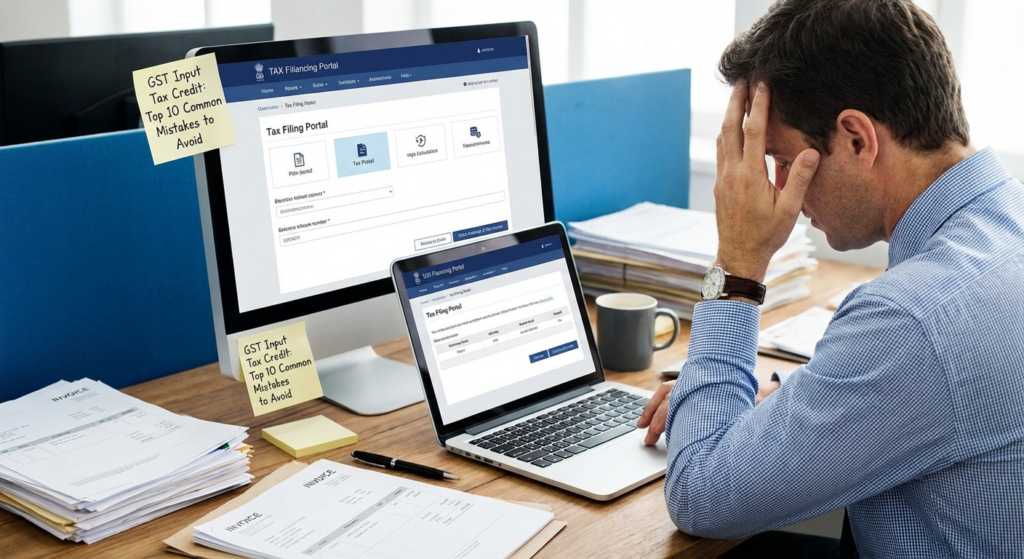
Navigating the complex landscape of the Goods and Services Tax (GST) in India requires precision, especially when it involves claiming Input Tax Credit (ITC). ITC is essentially the backbone of the GST regime, designed to prevent the cascading effect of taxes. However, many businesses inadvertently fall into GST input tax credit common mistakes that can lead to severe financial and legal repercussions. When a business claims credit that it is not entitled to, or fails to claim credit that it is, the bottom line is directly affected.
The primary objective of ITC is to allow a registered person to take credit for the tax paid on inward supplies of goods or services used in the course of business. While the concept sounds straightforward, the execution is laden with technicalities. From matching invoices with GSTR-2B to ensuring suppliers have paid their taxes, the compliance burden is significant. In this comprehensive guide, we will explore the most frequent errors made by taxpayers and provide actionable strategies to ensure your GST Return Filing remains error-free and compliant with the latest regulations.
Top 10 GST Input Tax Credit Common Mistakes to Watch Out For
To maintain a healthy cash flow and avoid the prying eyes of tax authorities, it is essential to recognize where things usually go wrong. Below are the top ten mistakes that businesses frequently encounter when dealing with ITC.
1. Claiming ITC on Blocked Credits (Section 17(5))
One of the most prevalent GST input tax credit common mistakes is claiming credit on items specifically blocked under Section 17(5) of the CGST Act. Many taxpayers assume that any business-related expense is eligible for ITC, but the law states otherwise. Common blocked items include motor vehicles (with specific exceptions), food and beverages, outdoor catering, beauty treatment, health services, and life insurance. Additionally, goods lost, stolen, destroyed, or written off are also ineligible. Claiming ITC on these items often triggers automated notices from the GST department.
2. Failing to Reconcile with GSTR-2B
With the introduction of Rule 36(4), the dynamic nature of GST compliance has shifted heavily toward GSTR-2B. Previously, taxpayers relied on GSTR-2A, but GSTR-2B is now the static statement that determines your eligibility for ITC in a particular month. A frequent mistake is claiming ITC based solely on purchase registers without verifying if the supplier has uploaded the invoice. If the invoice does not appear in your GSTR-2B, you cannot legally claim the credit. Regular reconciliation is no longer optional; it is a necessity for survival.
3. Ignoring the 180-Day Payment Rule
According to the GST law, a recipient of goods or services must pay the supplier the value of the supply along with the tax within 180 days from the date of the invoice. If the payment is not made within this timeframe, the ITC already claimed must be reversed in GSTR-3B, along with interest. Many businesses forget to track these aging creditors, leading to non-compliance. Once the payment is finally made, the credit can be re-claimed, but the interest paid during the reversal is a permanent loss.
4. Errors in GST Invoice Details
A valid tax invoice is the fundamental document for claiming ITC. Mistakes in the GST invoice format, such as an incorrect GSTIN, missing HSN codes, or wrong tax rates, can invalidate your claim. If your supplier enters your GSTIN incorrectly, the credit will flow to the wrong account, and you will see nothing in your GSTR-2B. Ensuring that your suppliers have your correct details and that the invoices meet all semantic requirements is crucial for a smooth ITC flow.
5. Claiming ITC on Personal Expenses
It is a fundamental rule that ITC can only be claimed for goods or services used “in the course or furtherance of business.” However, business owners sometimes mix personal expenses—such as home internet bills, personal travel, or household furniture—with business accounts. This is a red flag for auditors. If an expense has a dual purpose, it must be apportioned correctly, and only the business portion should be considered for ITC.
6. Incorrect Bifurcation of Inputs, Capital Goods, and Services
In GSTR-3B, taxpayers are required to categorize their ITC into inputs, capital goods, and input services. A common error is misclassifying capital goods as regular inputs. This is important because the rules for reversing ITC (such as when goods are used for both exempt and taxable supplies) differ between inputs and capital goods. Furthermore, if you claim depreciation on the tax component of capital goods under the Income Tax Act, you cannot claim ITC on that same amount under GST.
7. Misunderstanding the Place of Supply Rules
The Place of Supply (PoS) determines whether you should pay CGST/SGST or IGST. If a supplier incorrectly charges IGST instead of CGST/SGST (or vice versa) due to a misunderstanding of the PoS rules, the recipient may not be able to claim that credit. For instance, if you stay in a hotel in a different state for business, the hotel will charge CGST and SGST of that state. Since you are registered in another state, you generally cannot claim that ITC. Ignoring these nuances is among the GST input tax credit common mistakes that lead to lost tax benefits.
8. Claiming ITC on Exempted Supplies
If your business provides both taxable and exempted supplies, you cannot claim full ITC on your purchases. You must follow the formula prescribed under Rules 42 and 43 of the CGST Rules to reverse the proportionate credit attributable to exempted supplies. Many taxpayers claim the full amount and fail to perform this monthly reversal, leading to significant interest liabilities during audits.
9. Missing the Deadline for Claiming ITC
There is a strict time limit for claiming ITC. Under Section 16(4), you cannot claim ITC for a financial year after the 30th of November of the following year or the date of filing the annual return, whichever is earlier. Many businesses discover old invoices during their annual audit, only to realize that the deadline for claiming that credit has already passed. This results in a direct financial loss that could have been avoided with better document management.
10. Non-Compliance by Suppliers
Your ITC is only as good as your supplier’s compliance. If your supplier collects tax from you but fails to file their GSTR-1 or pay their GSTR-3B taxes, the government may deny you the credit. This “taxpayer-responsibility” model means you must vet your vendors regularly. Dealing with “fly-by-night” operators who do not file their returns is a major risk factor for businesses today.
Consequences of Frequent GST Input Tax Credit Common Mistakes
The repercussions of making these errors extend beyond mere paperwork. The GST department uses sophisticated data analytics to identify discrepancies between GSTR-1, GSTR-2B, and GSTR-3B. When a mismatch is detected, the system automatically generates notices like the ASMT-10. If the explanation provided is not satisfactory, it can lead to a formal audit, demand for tax reversal with 18% to 24% interest, and penalties ranging from 10% to 100% of the tax amount involved. According to the Central Board of Indirect Taxes and Customs (CBIC), maintaining clean records is the best defense against such administrative actions.
Practical Solutions for GST Input Tax Credit Common Mistakes
To mitigate these risks, businesses should adopt a proactive approach. This includes implementing robust accounting software, conducting monthly reconciliations, and establishing a vendor rating system. As noted by experts at The Economic Times, the cost of compliance is always lower than the cost of non-compliance. By automating the reconciliation process, you can identify missing invoices early and follow up with suppliers before the filing deadlines.
Internal Audit Checks
Perform monthly internal audits to ensure that no blocked credits under Section 17(5) have been claimed inadvertently by the accounting team.
Vendor Communication
Maintain a communication channel with vendors to ensure they file their GSTR-1 on time, ensuring the credit reflects in your GSTR-2B.
Payment Tracking
Use automated alerts to track the 180-day payment window for every invoice to avoid the mandatory reversal of input tax credit.
Document Verification
Verify every physical invoice against the digital data to ensure HSN codes, GSTINs, and tax calculations are 100% accurate.
Final Thoughts on Avoiding GST Input Tax Credit Common Mistakes
In conclusion, managing GST Input Tax Credit is a continuous process that requires diligence and technical knowledge. By avoiding the GST input tax credit common mistakes highlighted above—such as claiming blocked credits, ignoring GSTR-2B reconciliation, or missing the 180-day payment deadline—you can safeguard your business from unnecessary litigation. The key is to stay updated with the latest circulars and notifications issued by the GST Council. Remember, a well-managed ITC system not only ensures compliance but also optimizes your tax liability, providing more liquidity for your business operations. If the process feels overwhelming, seeking professional assistance for your tax filings can be a wise investment to ensure every rupee of eligible credit is claimed correctly.
FAQs
If you claim ITC on blocked items under Section 17(5), you will likely receive a notice from the GST department. You will be required to reverse the credit and pay interest (usually 18%) from the date the credit was utilized until the date of reversal.
No, as per current GST laws and Rule 36(4), you cannot claim ITC unless the invoice is reflected in your GSTR-2B. This statement is generated based on the GSTR-1 filed by your suppliers.
The 180-day rule requires the recipient to pay the supplier within 180 days of the invoice date. Failure to do so requires the recipient to reverse the ITC claimed, along with interest. The credit can be reclaimed once the payment is made.
Yes, ITC is generally available on office rent, provided the premises are used for business purposes and the landlord issues a valid GST invoice with your GSTIN mentioned on it.
Generally, ITC on motor vehicles for transportation of persons having a seating capacity of not more than 13 persons is blocked under Section 17(5), unless they are used for further supply of such vehicles, transportation of passengers, or imparting training on driving.
Read Also:
- Refund Policy
- GST Registration for E-commerce Sellers India 2026: A Comprehensive Compliance Guide
- TDS Section 194C Contractor Payment Rules Explained with Comprehensive Examples
- Income Tax Audit Deadlines Extended for A.Y. 2024-25 till 07.10.2024
- 7 Essential Steps to Master GST Compliance for MSME Success in 2025
- Master the GST Refund Process India: 7-Step Comprehensive Guide (2025)
- 7 Critical GST Amendment Rules in India: A Comprehensive Guide (2025) – Visual Story
- FSSAI 2026: Renew or Risk It All
- Blogs