Navigating the Landscape of GST E-Way Bill Generation Rules India
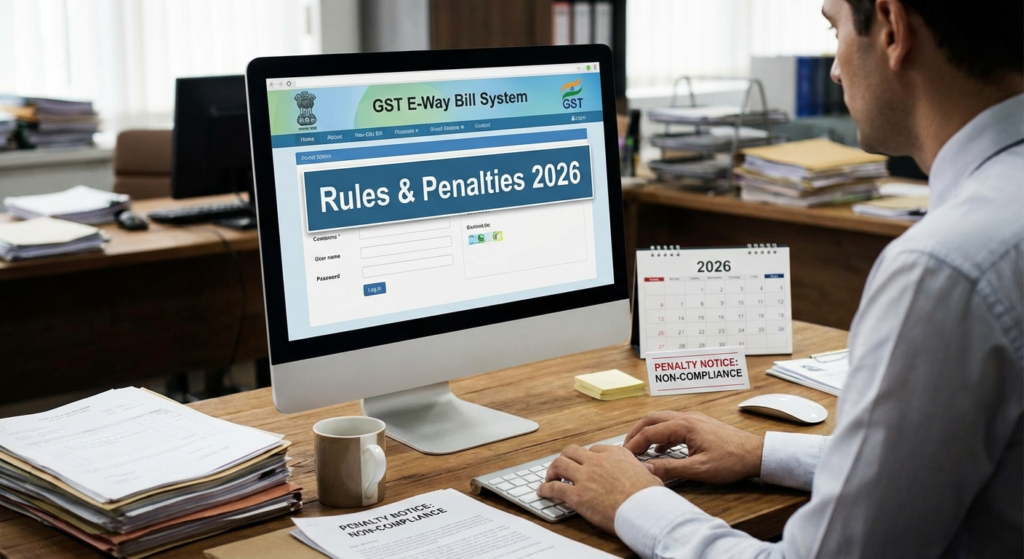
As the Indian economy continues to digitize and formalize, the movement of goods across state borders has become more streamlined yet strictly regulated. For businesses, logistics providers, and tax professionals, staying updated with the GST e-way bill generation rules India is not just a matter of operational efficiency but a critical component of legal compliance. An e-way bill is an electronic document generated on the GST portal evidencing the movement of goods. In 2026, the integration of technology like RFID and real-time tracking has made the enforcement of these rules tighter than ever before. Proper GST Compliance ensures that your supply chain remains uninterrupted and free from legal hurdles.
The primary objective of the e-way bill system is to eliminate tax evasion and ensure that goods in transit are backed by appropriate tax invoices. Whether you are a manufacturer, a wholesaler, or a retailer, understanding when and how to generate this document is paramount. As we delve into the specifics of the 2026 guidelines, it is essential to recognize that even minor errors in the generation process can lead to significant delays and financial liabilities. This guide provides an exhaustive look at the current regulations, the generation process, and the repercussions of non-compliance.
What is an E-Way Bill?
It is a mandatory electronic document required for the movement of goods worth more than ₹50,000. It contains details of the goods, the consignor, the consignee, and the transporter.
Who Must Generate It?
Registered persons (suppliers or recipients) or transporters must generate the bill before the commencement of movement. Even unregistered persons must comply if they supply to a registered person.
The 2026 Update
Recent updates emphasize the mandatory linking of e-way bills with E-invoicing for eligible taxpayers, ensuring data consistency across all GST platforms.
Understanding the Core GST E-Way Bill Generation Rules India
The fundamental trigger for an e-way bill is the ‘movement’ of goods. This movement could be in relation to a supply, for reasons other than supply (such as sales returns or branch transfers), or due to an inward supply from an unregistered person. Under the GST e-way bill generation rules India, the threshold limit of ₹50,000 applies to the invoice value, which includes the applicable GST but excludes the value of exempt supplies if the invoice contains both taxable and exempt goods.
One of the most critical aspects of the 2026 rules is the distinction between inter-state and intra-state movement. While the central limit is ₹50,000, several states have modified the threshold for intra-state (within the same state) movement to reduce the compliance burden on small local businesses. However, for inter-state movement, the ₹50,000 limit remains a non-negotiable standard across India. Furthermore, certain goods like handicraft items or goods sent for job work require an e-way bill regardless of the consignment value when moving across state lines.
To ensure accuracy, businesses must accurately find GST HSN code for their products, as this information is a mandatory field in Part A of the e-way bill. Incorrect HSN codes can lead to the document being flagged as invalid during transit inspections.
Threshold Limits Under GST E-Way Bill Generation Rules India
The threshold is calculated based on the consignment value. It is important to note that if a single vehicle carries multiple consignments, and the aggregate value exceeds ₹50,000, the transporter may need to generate a consolidated e-way bill, even if individual invoices are below the limit. This rule ensures that large shipments are not broken down into smaller pieces simply to circumvent tax monitoring.
Step-by-Step Guide to GST E-Way Bill Generation Rules India
Generating an e-way bill involves a two-part process on the official portal. Part A collects the details of the consignment, such as the GSTIN of the recipient, the place of delivery, invoice number, date, and HSN codes. Part B consists of the transporter details, including the vehicle number or the transporter ID. The GST e-way bill generation rules India dictate that an e-way bill is only valid once Part B is updated, except in cases where the goods are being transported for a distance of less than 50 kilometers within the same state from the place of the consignor to the place of the transporter for further delivery.
- Login to the Portal: Access the official e-way bill portal using your credentials.
- Enter Consignment Details: Fill in Part A with the invoice details and the recipient’s information.
- Transportation Mode: Select whether the goods are being moved by road, rail, air, or ship.
- Vehicle Information: Provide the vehicle number if the transport is by road. For other modes, provide the transporter document number.
- Submit and Generate: Once submitted, a unique E-Way Bill Number (EBN) is generated, which can be shared with the transporter and the recipient.
In 2026, the system has introduced enhanced ‘Auto-population’ features. If a business has already generated an E-invoice, the data for Part A of the e-way bill is automatically pulled, reducing manual entry errors and saving time for the logistics department. This integration is a cornerstone of the government’s strategy to simplify the GST e-way bill generation rules India for compliant taxpayers.
Validity: Regular Cargo
For every 200 km or part thereof, the e-way bill is valid for 1 day. This ensures that the time allowed for transport is proportional to the distance.
Validity: Over Dimensional Cargo
For heavy or oversized cargo (ODC), the validity is 1 day for every 20 km. This accounts for the slower speed of specialized transport vehicles.
Validity Periods and Distance Rules
The validity of an e-way bill is strictly tied to the distance the goods need to travel. According to the GST e-way bill generation rules India, the validity period begins the moment the EBN is generated. If the goods cannot be delivered within the validity period due to exceptional circumstances like vehicle breakdown or natural calamities, the transporter can extend the validity by updating the details on the portal, usually within 8 hours before or after the expiry time.
According to the Central Board of Indirect Taxes and Customs (CBIC), the distance is calculated based on the PIN code of the source and destination. The system automatically suggests the distance, though a deviation of up to 10% is generally permitted to account for route changes. Keeping a close eye on these timelines is vital because an expired e-way bill is treated as a movement without a bill, attracting heavy penalties.
Legal Consequences: Penalties for Violating GST E-Way Bill Generation Rules India
Non-compliance with the GST e-way bill generation rules India can lead to severe financial and legal repercussions. The authorities have the power to intercept any vehicle in transit to verify the e-way bill and accompanying documents. If goods are found moving without a valid e-way bill, or if the details in the bill do not match the physical goods, the consequences are immediate.
As per Section 122 of the CGST Act, a taxable person who transports any taxable goods without the cover of specified documents (like the e-way bill) is liable to pay a penalty of ₹10,000 or the amount of tax sought to be evaded, whichever is higher. Furthermore, under Section 129, the goods and the vehicle carrying them can be detained or seized. To release the goods, the owner must pay a penalty equal to 200% of the tax payable on such goods. If the owner does not come forward, the penalty increases, and the goods may eventually be confiscated and auctioned by the department.
In 2026, the use of ‘Anomalies Detection’ software by the tax department means that mismatches between GSTR-1 filings and e-way bill data are flagged automatically. This makes it impossible for businesses to hide discrepancies for long. For more information on the official guidelines, you can visit the National Informatics Centre (NIC) E-Way Bill Portal.
Minor Errors
Errors in vehicle numbers (like ‘DL 01 AB 1234’ vs ‘DL 1 AB 1234’) or minor spelling mistakes in names may attract a smaller penalty of ₹1,000 per act, provided the documents are otherwise correct.
Major Violations
Transporting goods without a bill or with a completely fake bill leads to seizure of goods and a 200% tax penalty, often halting business operations for weeks.
Special Cases in E-Way Bill Generation
There are several scenarios where the standard GST e-way bill generation rules India might seem complex. For instance, in ‘Bill To Ship To’ transactions, where the person ordering the goods is different from the person receiving them, the system allows for the generation of a single e-way bill with the details of both parties. This prevents the need for multiple documents for a single physical movement of goods.
Another common scenario is the ‘Transshipment’ of goods. If the vehicle is changed during transit, the transporter must update the new vehicle details in Part B of the e-way bill on the portal. Failure to update the vehicle number is one of the most common reasons for penalties during road inspections. Similarly, if goods are being moved via multiple modes of transport (e.g., road to rail to road), the e-way bill must be updated at each leg of the journey to reflect the current mode and document number.
“The e-way bill system is the backbone of a transparent supply chain in India. It ensures that every rupee of tax is accounted for while providing the government with real-time data on economic activity.” — This sentiment, shared by many tax experts, highlights why the government remains so stringent about these rules. As we move further into 2026, we might see even more integration with AI-driven monitoring systems to predict and prevent tax leakage.
Conclusion: Staying Ahead of the Compliance Curve
Mastering the GST e-way bill generation rules India is essential for any business involved in the trade of physical goods. By ensuring that every shipment is backed by a valid, accurate, and timely e-way bill, you protect your business from the risks of detention, seizure, and heavy financial penalties. The 2026 landscape demands a proactive approach—leveraging automation, verifying HSN codes, and training logistics staff to handle the portal efficiently.
In summary, always remember the ₹50,000 threshold, keep a close watch on the validity periods based on distance, and never move a vehicle without updating Part B. Compliance is not just a legal requirement; it is a competitive advantage that ensures your goods reach your customers on time, every time. By integrating these practices into your daily operations, you can navigate the complexities of GST with confidence and ease.
FAQs
No, according to the GST e-way bill generation rules India, goods that are specifically exempted from GST do not require an e-way bill, regardless of the consignment value.
Yes, if the goods were never transported or there are errors in the bill, it can be cancelled within 24 hours of generation. However, it cannot be cancelled if it has been verified in transit by an officer.
If the vehicle breaks down and the goods are transferred to a new vehicle, the transporter must update the new vehicle details in Part B of the existing e-way bill. If the validity is about to expire, they must apply for an extension.
While Part B (vehicle details) is not mandatory for distances less than 50 km within the same state when moving goods from the consignor to the transporter, Part A must still be generated if the value exceeds the threshold.
A consolidated e-way bill is a document containing multiple e-way bills for different consignments being carried in a single vehicle. It allows the transporter to carry one document instead of several for the entire trip.
Read Also:
- Choosing the Right Structure: Section 8 Company vs Trust vs Society
- Section 8 Company vs Trust vs Society: Which NGO Structure is Best?
- Thank You
- Niti Aayog Darpan Registration Process: A Complete Step-by-Step Guide for NGOs
- 7 Essential Facts About GST Composition Scheme India: A Complete 2025 Guide
- 10 Essential Rules of GST for E-Commerce Sellers: The Ultimate Compliance Guide
- Director Check 2026: Your 60-Second Guide
- 10 Essential Rules for Startup Tax Compliance India: The Complete 2024 Guide – Visual Story
- Avoid This Costly 2026 Director Filing Mistake
- How to Download GST Certificate in 2026: The Official Guide