Ever get that sinking feeling when a tax notice for a past year lands on your desk? Or maybe you’re finally getting around to filing a belated return and hit a wall. The year is 2026, but you’re stuck trying to decipher the tax rules of 2020.
You’re not alone. The financial year 2020-21 (Assessment Year 2021-22) was unlike any other. It had a bizarre, two-tiered tax system that still trips up professionals today.
Why? Because in response to the COVID-19 pandemic, the government temporarily slashed many TDS rates mid-year. This created mass confusion. A payment in April 2020 had a different TDS rate than the exact same payment in June 2020.
Forget hunting for a confusing, outdated TDS rates for FY 2020-21 PDF. This guide is your definitive 2026 resource. We’ll break down exactly what changed, when it changed, and how you can verify your records today to ensure you’re 100% compliant. No jargon, just clear answers.
Why FY 2020-21 Was a TDS Headache: The Two-Rate System
The core of the confusion for FY 2020-21 boils down to one government announcement. As part of the Atmanirbhar Bharat Abhiyan economic package, a critical decision was made to boost liquidity during the pandemic’s peak uncertainty.
The government temporarily cut the rates of Tax Deducted at Source (TDS) and Tax Collected at Source (TCS) for a huge range of non-salaried payments. Specifically, the existing rates were reduced by 25%.
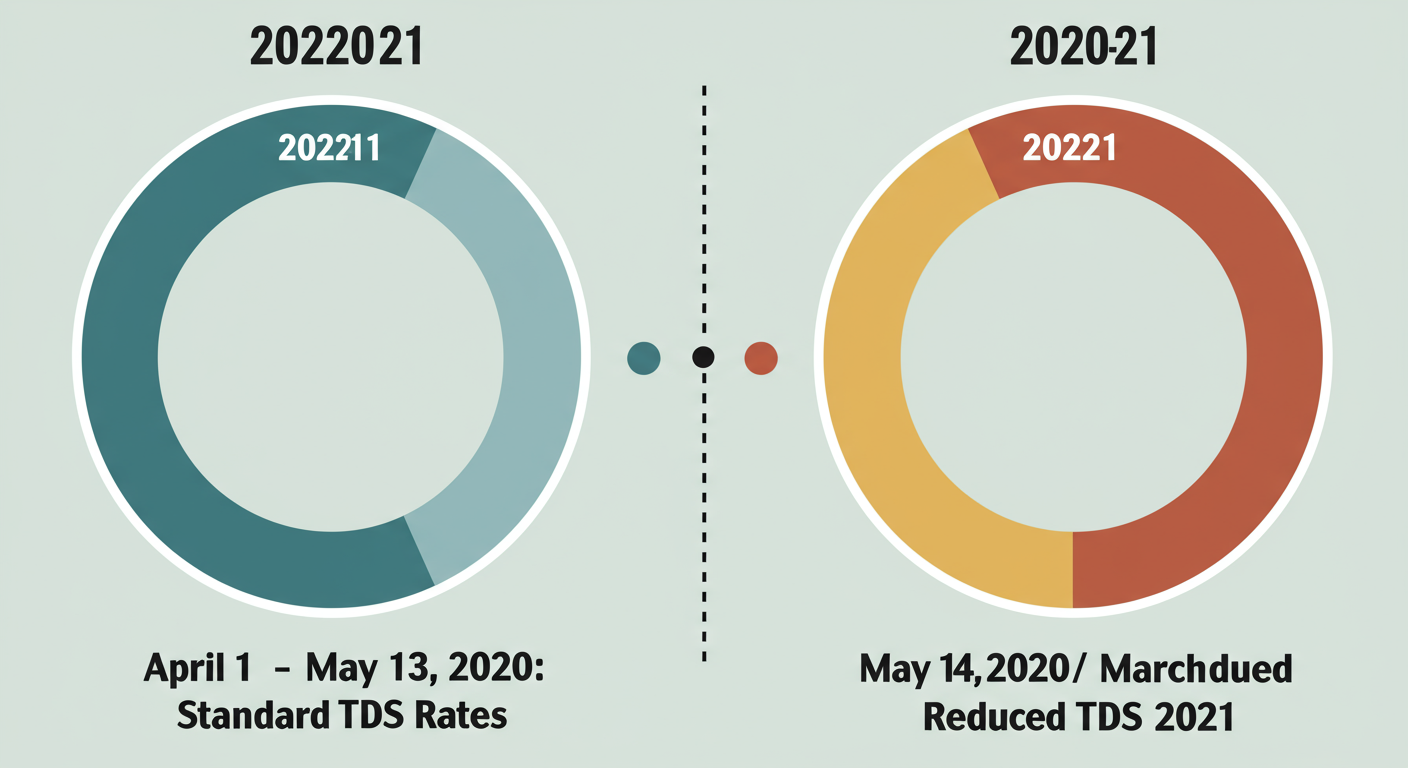
This created a split financial year:
- Period 1 (Standard Rates): From April 1, 2020, to May 13, 2020. During this time, the original, pre-pandemic TDS rates were in effect.
- Period 2 (Reduced Rates): From May 14, 2020, to March 31, 2021. During this window, the new, 25%-reduced rates applied.
This dual-rate system is precisely why so many discrepancies arise when looking back. A simple invoice date could change the tax math completely. Based on our experience helping clients with tax reconciliations, this is the single biggest source of errors for that period.
⚠️ Watch Out
This rate reduction did not apply to all payments. TDS on salaries (Section 192) and payments to non-residents remained unchanged. If your salary TDS looks the same throughout 2020, that’s correct. Don’t assume the 25% cut applied to you.
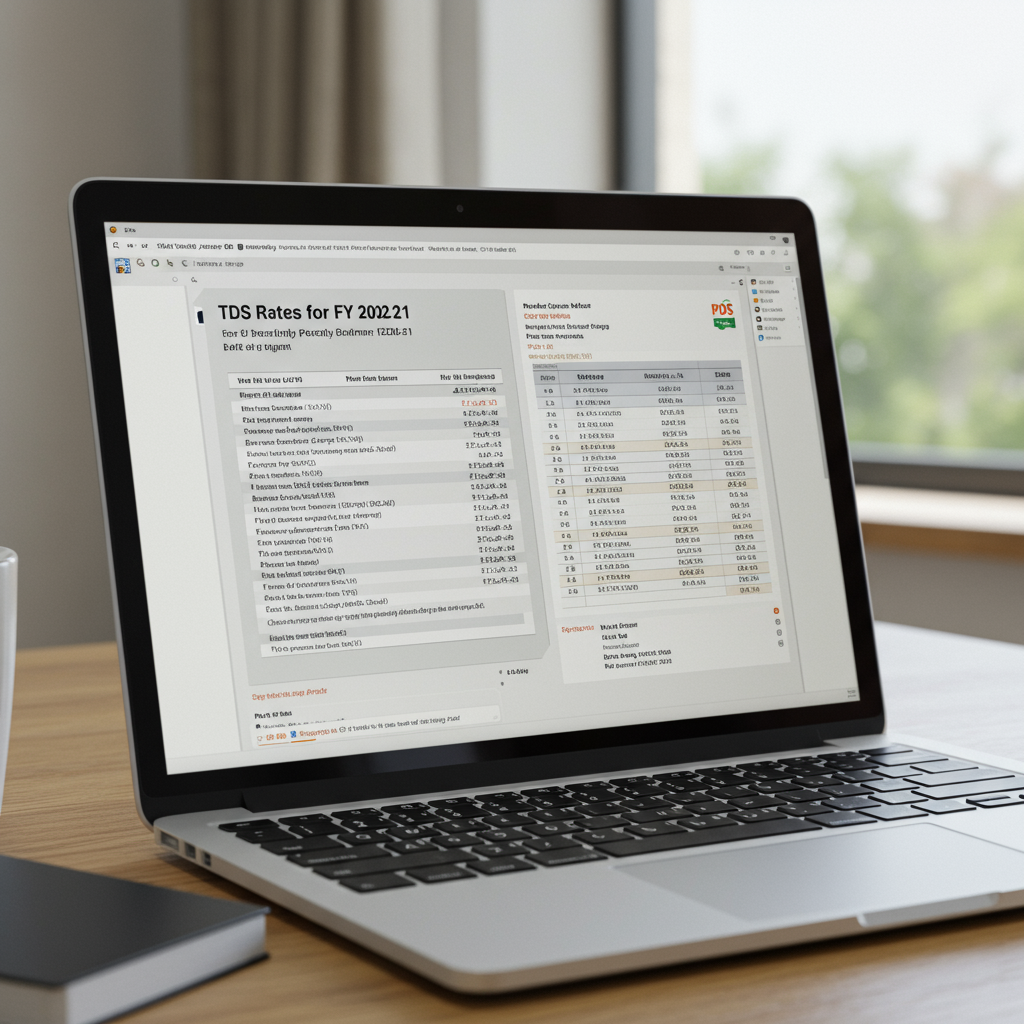
Complete TDS Rate Chart for FY 2020-21 (AY 2021-22)
Here’s the only chart you need. It clearly shows the standard rate, the reduced rate, and the period they applied to. This is far more practical than any static PDF you’ll find.
| Section & Nature of Payment | Threshold Limit | Standard Rate (Apr 1 – May 13, 2020) | Reduced Rate (May 14, 2020 – Mar 31, 2021) |
|---|---|---|---|
| 193: Interest on Securities | Varies | 10% | 7.5% |
| 194: Dividend | ₹5,000 | 10% | 7.5% |
| 194A: Interest (Banks, etc.) | ₹40,000 (₹50k for seniors) | 10% | 7.5% |
| 194C: Payment to Contractors (Individual/HUF) | ₹30,000 single / ₹1,00,000 aggregate | 1% | 0.75% |
| 194C: Payment to Contractors (Others) | ₹30,000 single / ₹1,00,000 aggregate | 2% | 1.5% |
| 194H: Commission or Brokerage | ₹15,000 | 5% | 3.75% |
| 194-I: Rent (Plant & Machinery) | ₹2,40,000 | 2% | 1.5% |
| 194-I: Rent (Land, Building, Furniture) | ₹2,40,000 | 10% | 7.5% |
| 194J: Professional / Technical Fees | ₹30,000 | 10% (Professional) / 2% (Technical) | 7.5% (Professional) / 1.5% (Technical) |
| 194DA: Life Insurance Policy Payout | ₹1,00,000 | 5% | 3.75% |
This table covers the most common sections. For a complete list, it’s always wise to consult the official Income Tax Department of India portal.
Real-World Impact: A Freelancer’s Scenario
Let’s make this real. Imagine you’re a freelance consultant who billed a client ₹1,00,000 for a project in FY 2020-21. This falls under Section 194J (Professional Fees).
Here’s how the TDS deduction would have changed:
| Scenario | Invoice Date | Applicable TDS Rate | TDS Deducted | Amount Credited to You |
|---|---|---|---|---|
| Before Relief Measures | April 30, 2020 | 10% | ₹10,000 | ₹90,000 |
| During Relief Measures | June 15, 2020 | 7.5% | ₹7,500 | ₹92,500 |
That’s a ₹2,500 difference in your bank account for the exact same work. Now, multiply that across all your clients for nearly 11 months. It adds up. When you’re reconciling old accounts, you need to check if the deductor correctly applied this 7.5% rate.
💡 Pro Tip
What if a client deducted 10% after May 14, 2020? Don’t panic. As long as that 10% is reflected in your Form 26AS, you can claim the full amount as a tax credit when filing your return. You didn’t lose the money; you just paid more tax upfront. The key is ensuring what they deducted matches what the government received.
🎯 Key Takeaway
The financial year 2020-21 operated on a dual-TDS-rate system due to COVID-19 relief. For most non-salaried payments, the rate was reduced by 25% from May 14, 2020, to March 31, 2021. Verifying which rate was applied in your Form 26AS is the most critical step for accurate tax filing for that year.
How to Verify Your TDS for FY 2020-21 Today (A 2026 Guide)
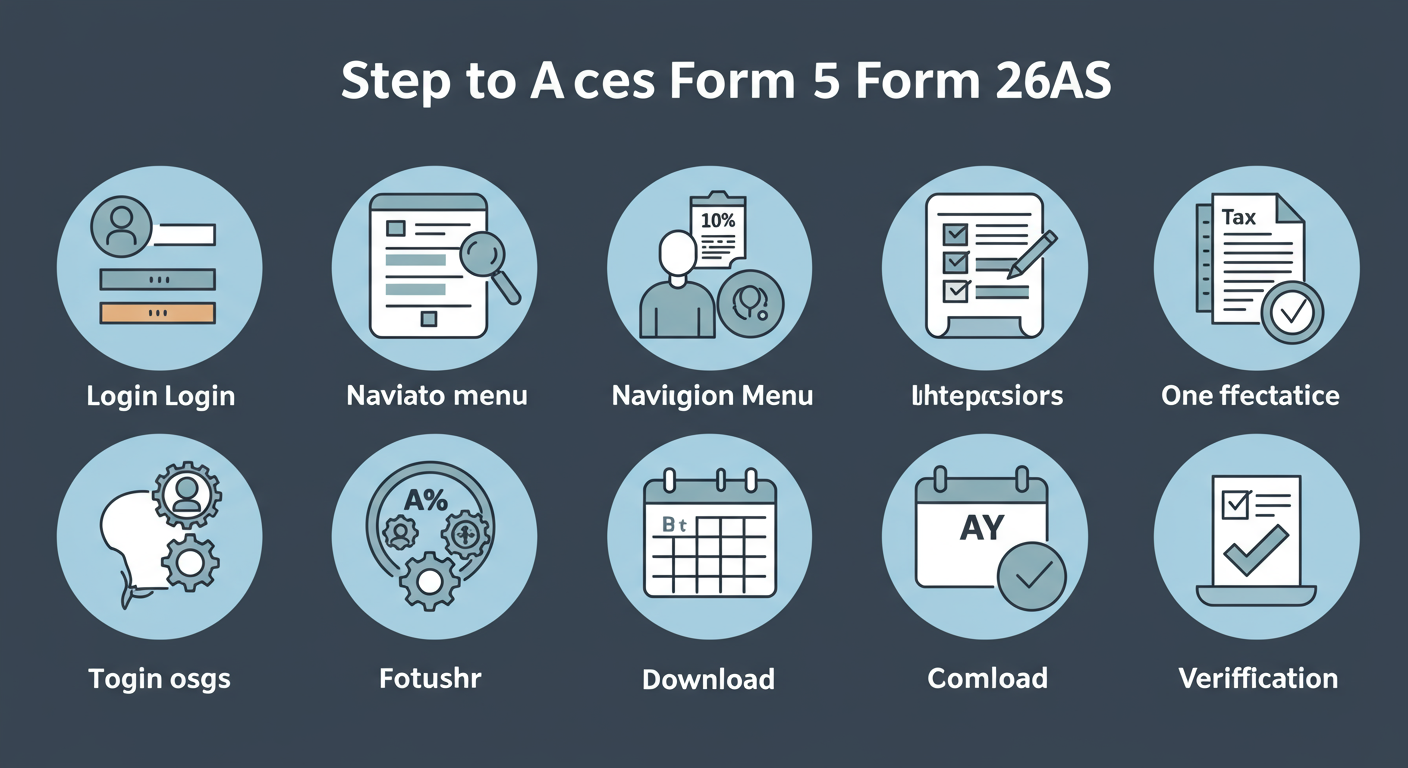
Your memory of 2020 might be hazy, but the tax portal’s records are crystal clear. Your Form 26AS is the official tax statement that shows all TDS deducted against your PAN. Here’s how to access and verify it in 2026. FSSAI Registration Online 2024: Easy Food Licensing
- Log in to the e-Filing Portal: Go to the official Income Tax e-Filing website and log in with your PAN.
- Navigate to Form 26AS: Go to the ‘e-File’ menu, select ‘Income Tax Returns’, and then click ‘View Form 26AS’. You’ll be redirected to the TRACES website.
- Select the Correct Assessment Year: This is the most common mistake. For the Financial Year (FY) 2020-21, you must select the Assessment Year (AY) 2021-22.
- Download and Review: View the form as HTML and also download the PDF for your records.
- Cross-Reference and Verify: Go through ‘Part A’ of the form. For every payment you received between May 14, 2020, and March 31, 2021, check the “Rate at which deducted” column. Does it reflect the reduced rate (e.g., 7.5%, 3.75%, 1.5%)? Compare the TDS amount with your invoices and bank statements.
⚠️ Watch Out
The PAN trap was real. If you failed to provide your PAN to a client in FY 2020-21, they were required to deduct TDS at a flat, punitive rate of 20% under Section 206AA. The COVID-19 rate reduction did not apply in these cases. If you see a 20% deduction, this is likely why. Mastering the GST Late Fee Calculation: Penalenses, Caps, and How to Minimize Compliance Costs
Special Cases and Considerations
Tax is never simple, is it? Beyond the main rate changes, a few other points are crucial for a complete picture of FY 2020-21.
Non-Resident Indians (NRIs)
As mentioned, the 25% rate reduction was a domestic relief measure. It did not apply to payments made to non-residents. For NRIs, TDS rates continued to be governed by the Income Tax Act or the Double Taxation Avoidance Agreement (DTAA) rate, whichever was more beneficial. From our experience, this is a frequent point of confusion for companies working with international freelancers.
Understanding TDS Basics
If you’re new to this, Tax Deducted at Source is a mechanism where the person making a specified payment (like a company paying a freelancer) deducts a certain percentage as tax before paying the balance. This deducted amount is a pre-payment of tax on behalf of the recipient. It’s designed to ensure a steady flow of revenue to the government and track financial transactions.
💡 Pro Tip
Found a mismatch in your Form 26AS from FY 2020-21? The first step is to immediately contact the deductor (the client or company that paid you). They may need to file a revised TDS return to correct the error. If they are unresponsive, you can still file your ITR with the correct details and raise a grievance on the tax portal, but be prepared to provide proof like invoices and bank statements.
❓ Frequently Asked Questions
What was the single biggest change to TDS rates in FY 2020-21?
The biggest change was the temporary 25% reduction in TDS rates for most non-salaried payments to residents. This was a COVID-19 relief measure effective from May 14, 2020, to March 31, 2021. For instance, the TDS rate on professional fees (Sec 194J) dropped from 10% to 7.5% during this period.
Did the TDS rate on salary change in FY 2020-21?
No. The 25% rate reduction did not apply to TDS on salary under Section 192. TDS on salary was calculated as usual based on the employee’s applicable income tax slab rates for the year.
Which Assessment Year corresponds to Financial Year 2020-21?
The Assessment Year (AY) is the year following the Financial Year (FY). Therefore, for FY 2020-21 (April 1, 2020 – March 31, 2021), the corresponding Assessment Year is AY 2021-22. You must select AY 2021-22 when checking your Form 26AS.
What happened if PAN was not provided in FY 2020-21?
If a person failed to furnish their PAN, the deductor was required to deduct TDS at a higher rate of 20% (as per Section 206AA). The benefit of the reduced COVID-19 rates was not available in such cases.
Where can I find the official government announcement for these rate cuts?
The official announcement was made by the Ministry of Finance. You can refer to the Press Information Bureau (PIB) press release from May 13, 2020, which details the 25% reduction in TDS/TCS rates.
It’s 2026. What if I find an error in my TDS for FY 2020-21 now?
First, contact the deductor to have them file a corrected TDS return. If that’s not possible, you can file an updated income tax return (ITR-U) for AY 2021-22, provided you meet the conditions. It’s best to consult a tax professional, as there are specific rules and potential additional taxes involved with filing an ITR-U.
Your Next Step to Tax Clarity
Tackling old tax records can feel like archaeology, but it doesn’t have to be intimidating. The story of FY 2020-21 is one of a unique, two-part system. Your mission, should you choose to accept it, is simple: verify.
Use the step-by-step guide in this article to pull up your Form 26AS for AY 2021-22. Check the rates. Compare the numbers. Trust me on this one, an hour of verification today can save you from weeks of stress and potential tax notices tomorrow.
You now have the knowledge and the tools to close the books on FY 2020-21 with confidence. Go get it done.